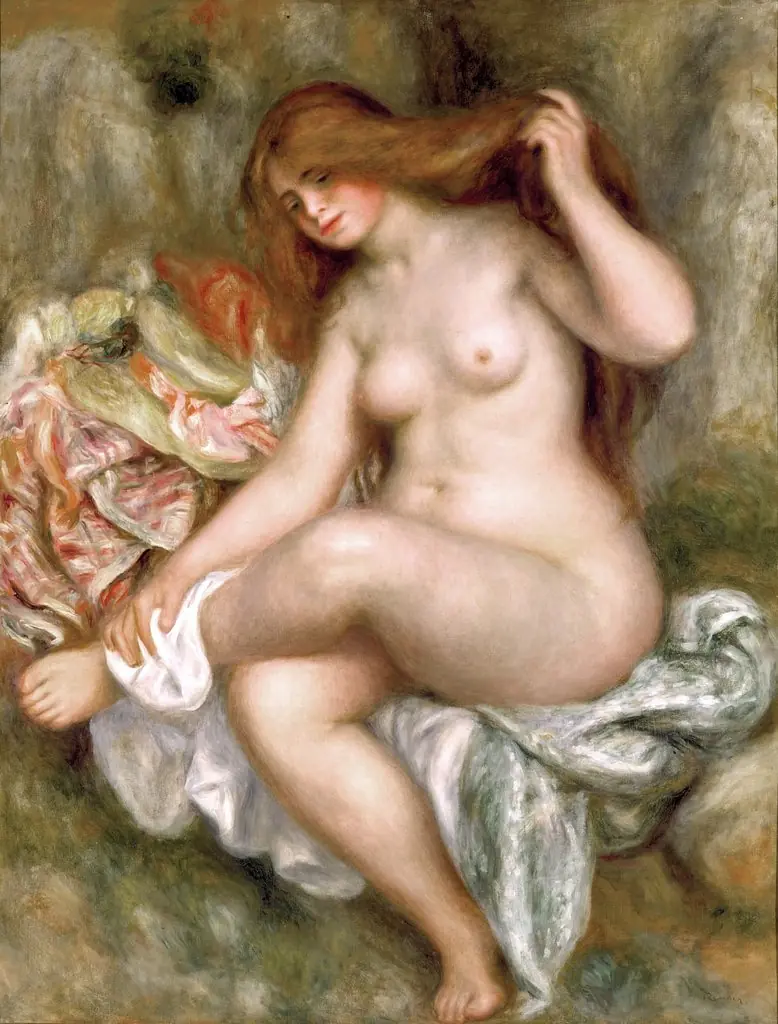
Artwork
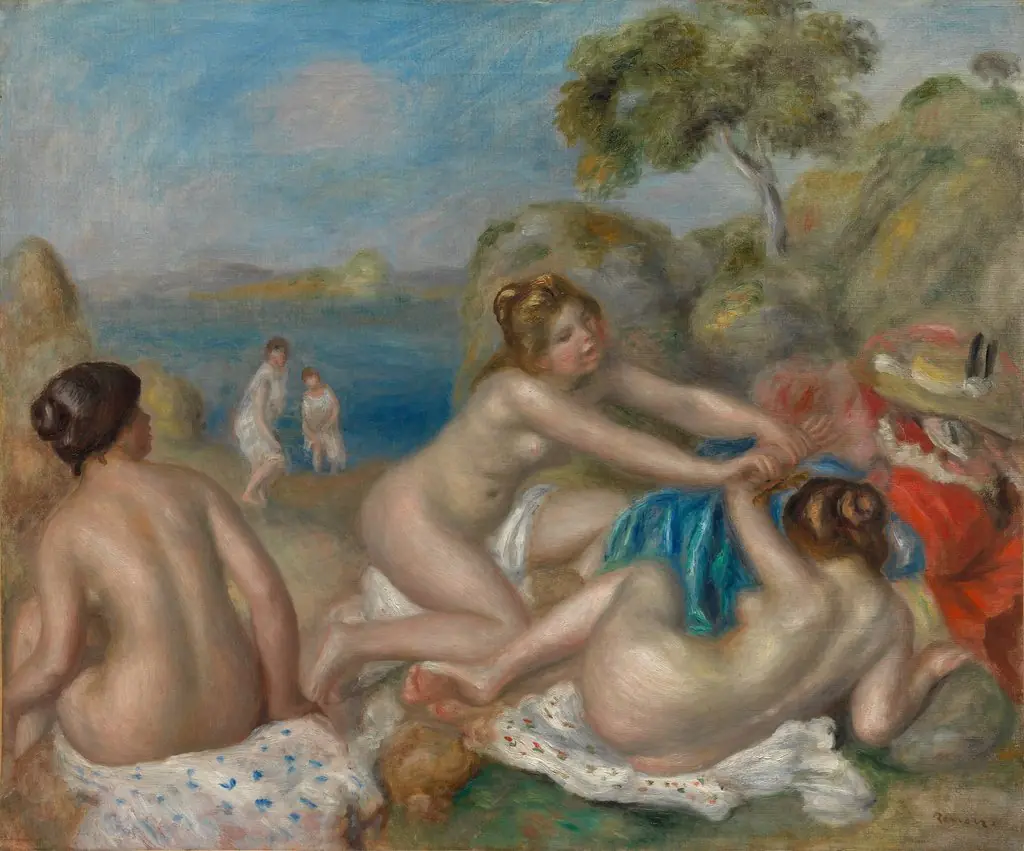
Bathers Playing with a Crab
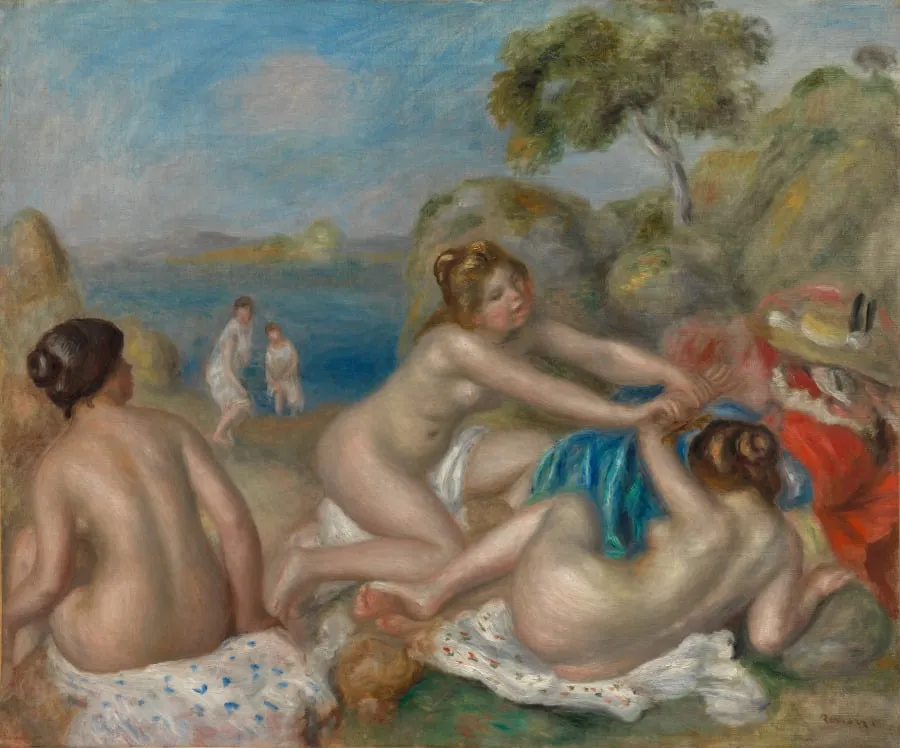
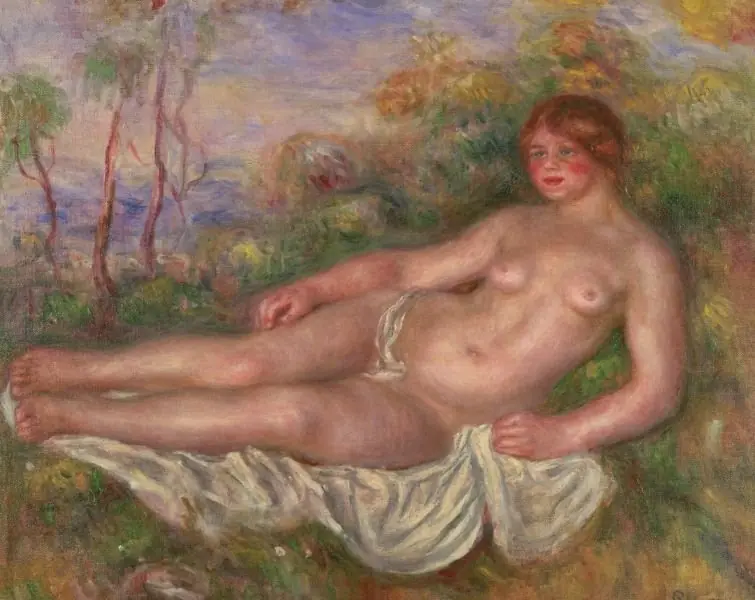
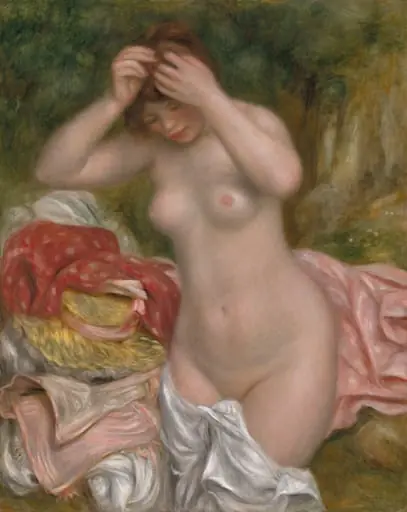
Bathers Playing with a Crab is an unspecified painting by the Impressionist artist Auguste Renoir. It dates from 1897 and is held in the collection of the Cleveland Museum of Art.
About this work
Overview
Painted in 1883–1884, Bathers Playing with a Crab marks a turning point in Renoir’s career following his exposure to Renaissance art during a trip to Italy.
Painted in 1883–1884, Bathers Playing with a Crab marks a turning point in Renoir’s career following his exposure to Renaissance art during a trip to Italy. He sought to reconcile the luminous brushwork of Impressionism with the enduring structure of classical form. The painting belongs to a prolonged series of nude bathers that occupied him for decades, reflecting his evolving interest in harmony, balance, and the human figure within natural settings.
Subject & Meaning
The scene depicts three women on a riverbank, engaged in a moment of quiet play: one holds up a small crab, while the others react with amusement. The intimacy of the interaction, devoid of narrative grandeur, emphasizes naturalism and shared human experience. The crab, nearly hidden in the composition, introduces a subtle, spontaneous detail that grounds the scene in everyday life, resisting idealization while preserving grace.
Technique & Style
Renoir retained the vibrant, broken brushwork of Impressionism but infused the figures with sculptural solidity, using broader strokes and heightened contours. He employed impasto to model skin and fabric, allowing light to catch raised pigment and create a tactile sense of volume. The background remains softly blurred, preserving atmospheric depth, while the bodies emerge with renewed weight and presence, bridging modern observation with classical tradition.
History & Provenance
Created shortly after Renoir’s return from Italy in 1881, the painting was part of his deliberate shift away from pure optical effects toward more structured compositions. It was exhibited in the 1884 Salon and later entered private collections before being acquired by the Museum of Fine Arts, Boston in 1919. Its trajectory reflects growing recognition of Renoir’s synthesis of modern and classical ideals during his later years.
Context
In the early 1880s, many artists questioned the fleeting nature of Impressionism, seeking more enduring forms. Renoir’s engagement with Renaissance masters like Raphael and Titian coincided with broader European interest in reviving classical ideals. His bathers series responded to this cultural moment, offering a middle path between avant-garde experimentation and timeless composition that resonated with emerging modernists.
Legacy
Renoir’s bathers, including this work, influenced 20th-century artists who sought to reconcile modern sensibilities with classical form. His ability to merge light, texture, and anatomical presence without sacrificing spontaneity became a reference point for painters exploring figuration beyond abstraction. The painting endures as a quiet testament to his lifelong pursuit of balance between observation and idealization.
Artist & collection

Artist
Pierre-Auguste Renoir was born on 25 February 1841 in Limoges, the son of a tailor and a seamstress.