Artwork
Jupiter and Antiope
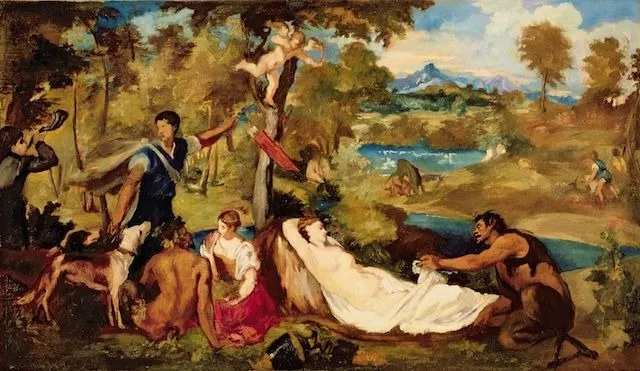
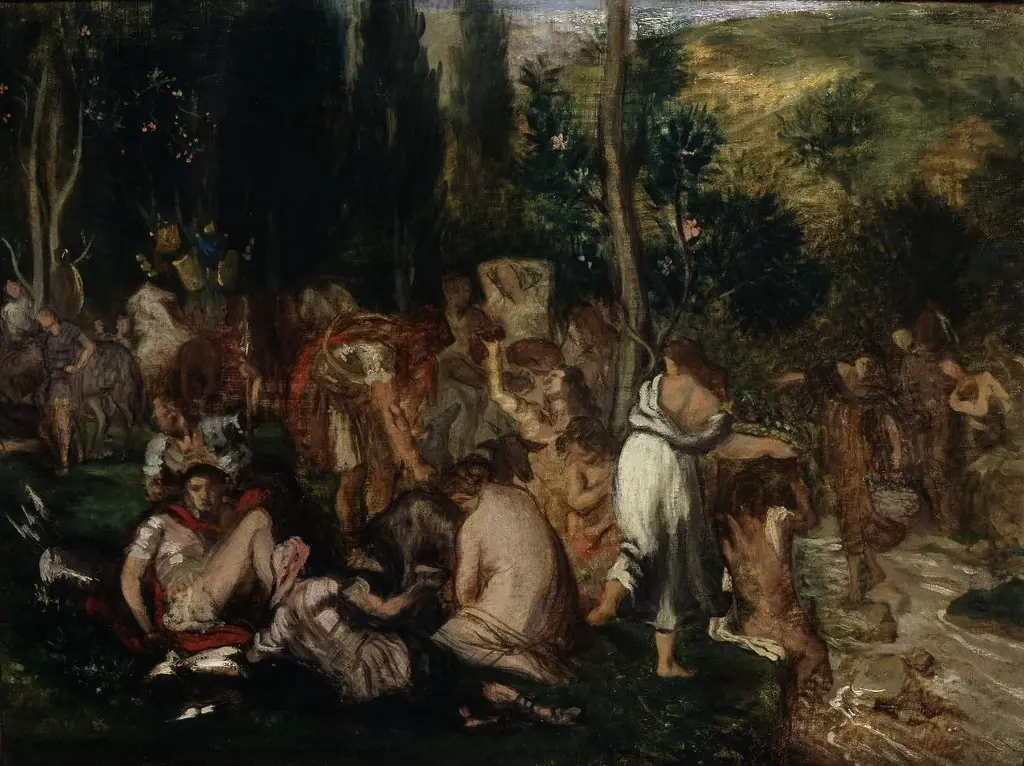
Jupiter and Antiope is an oil painting by the Realist artist Edouard Manet. It dates from 1856 and is held in the collection of the Musée Marmottan Monet.
About this work
Overview
Jupiter and Antiope is a mythological oil painting created by Édouard Manet in 1856, currently housed at the Musée Marmottan Monet.
Subject & Meaning
The painting depicts a serene outdoor scene with two central figures: a standing man in dark attire and a reclining woman in white, accompanied by a small dog. The composition conveys an atmosphere of calmness and tranquility.
Technique & Style
Manet employed oil paint to craft a detailed, realistic landscape with lush vegetation, distant water, mountains, and a clouded blue sky, juxtaposing the natural setting with the figurative elements.
History & Provenance
Created in 1856, the work is part of the collection at the Musée Marmottan Monet, though specific details of its acquisition or earlier ownership are not provided here.
Context
While the mythological title references Jupiter and Antiope, the painting's focus on serene, everyday interaction between the figures and their natural surroundings reflects Manet's approach to reinterpreting classical themes.
Legacy
As one of Manet's earlier works, Jupiter and Antiope contributes to the broader understanding of his development in depicting mythological subjects within landscapes, though its specific impact on his later, more revolutionary pieces is not explicitly defined.
Artist & collection

Artist
Édouard Manet didn’t have much time to make his mark—he died at 51—but he used every year.