Artwork
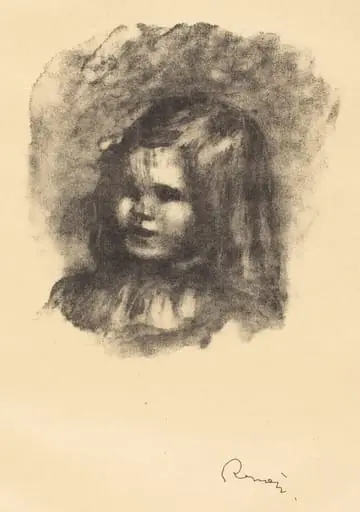
Claude Renoir, Turned to the Left
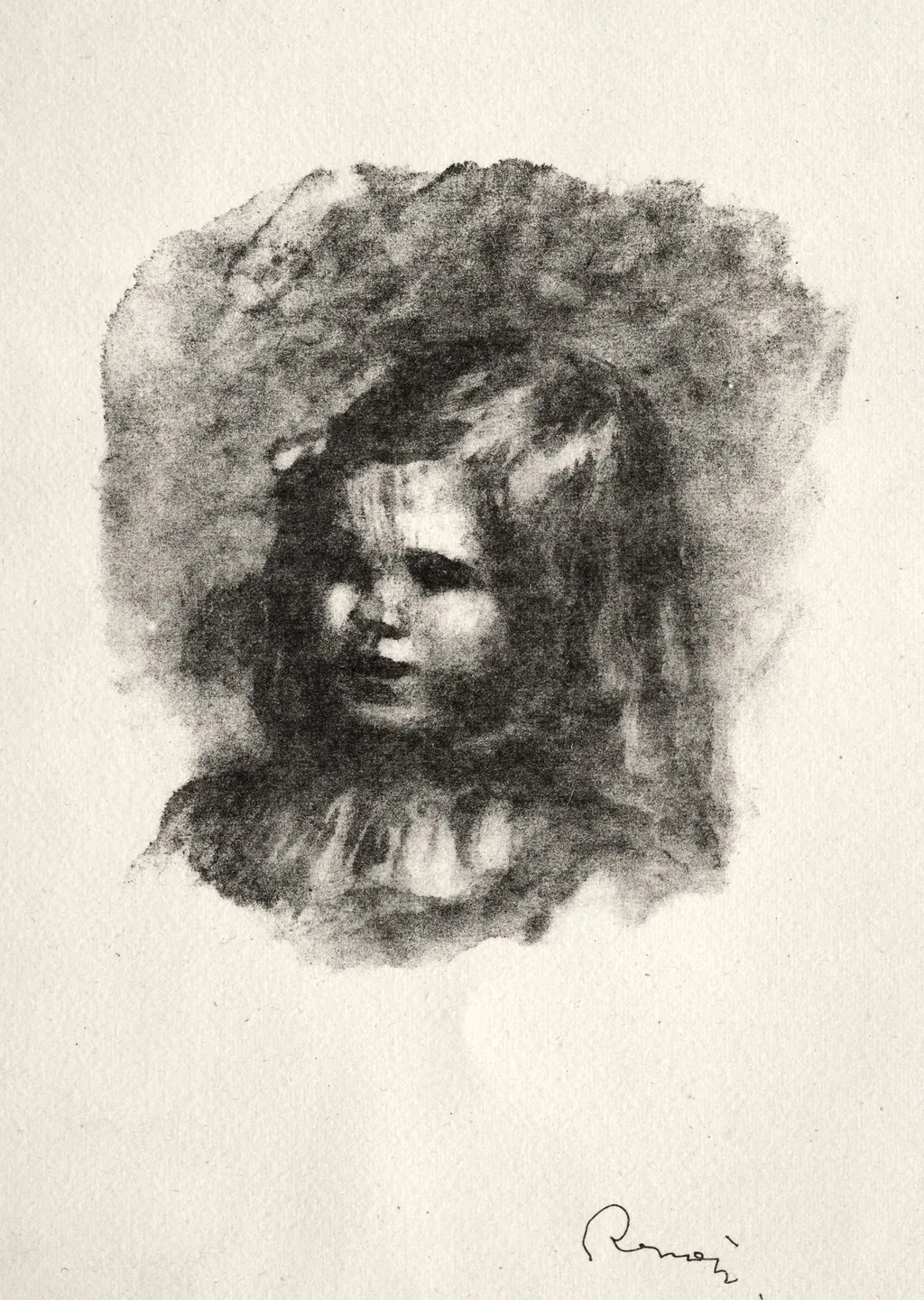
Claude Renoir, Turned to the Left is a print by Auguste Renoir. It dates from 1904 and is held in the collection of the Cleveland Museum of Art.
About this work
This was painted in 1904, when Renoir was older and often worked in loose, sketchy styles.
This sketch shows a young girl looking down and slightly to the left. Her hair is pulled back, and she wears a simple collar that’s just visible. The drawing is soft and smudged, with no sharp lines—just gentle shading.
The artist left her face mostly in shadow, making her look thoughtful. This was painted in 1904, when Renoir was older and often worked in loose, sketchy styles.
If you like this style, look up Pierre-Auguste Renoir for more of his work.
Overview
Created in 1904, this graphite drawing by Pierre-Auguste Renoir depicts a young girl turned slightly to the left, her gaze lowered. Executed in a loose, atmospheric manner, the work captures a quiet, introspective moment. It is part of the collection at The Cleveland Museum of Art and reflects the artist’s later approach to figure studies, emphasizing mood over detail.
Subject & Meaning
The subject is a young girl, her posture and downcast eyes suggesting contemplation. Her hair is neatly gathered, and a faint suggestion of a collar hints at modest dress. Renoir avoids defining features, instead using soft shading to imply presence and stillness. The shadowed face deepens the sense of inwardness, inviting quiet reflection rather than narrative.
Technique & Style
Renoir employed graphite with minimal line work, relying on smudged tones and subtle gradations to model form. Edges dissolve into haze, and contours are suggested rather than drawn. This approach reflects his mature style, where spontaneity and tactile sensitivity replaced the polished finish of his earlier Impressionist years.
History & Provenance
The drawing was made in 1904 during Renoir’s later years, when he increasingly turned to intimate, rapid studies. It entered the Cleveland Museum of Art’s collection through established acquisition channels, likely as part of a broader effort to document the artist’s graphic output. Its provenance remains unremarkable, consistent with private sketches of the period.
Context
In his final decades, Renoir focused on figure studies, often of children and family members, as arthritis limited his mobility. These works, though smaller in scale, reveal his enduring interest in the human form. This drawing aligns with a series of tender, unposed observations made in his home and garden, away from public commissions.
Legacy
This drawing exemplifies Renoir’s late shift toward expressive simplicity. While not widely exhibited, it contributes to understanding his evolution from Impressionist painter to a more tactile, intimate draftsman. Its quiet presence continues to inform scholarly views of his graphic work and the emotional depth achievable through minimal means.
Artist & collection
Artist
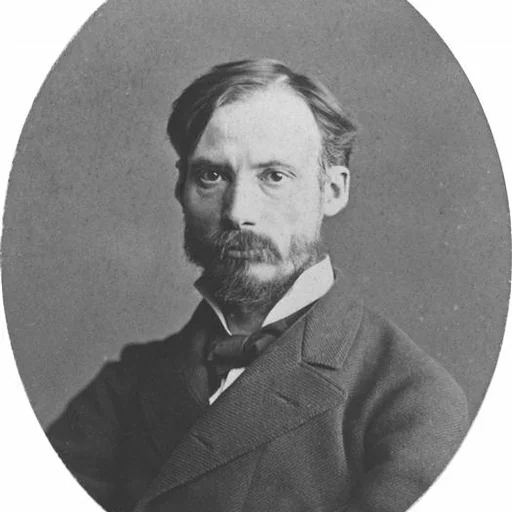
Pierre-Auguste Renoir was born on 25 February 1841 in Limoges, the son of a tailor and a seamstress.

 Claude Renoir, turned left (Claude Renoir, tourne a gauche)
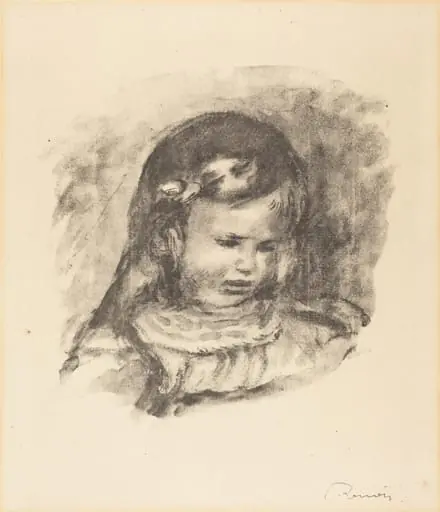 Claude Renoir, with Lowered Head
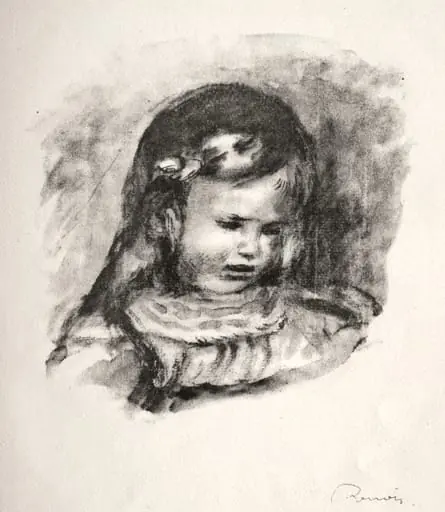 Claude Renoir, la tête baissée
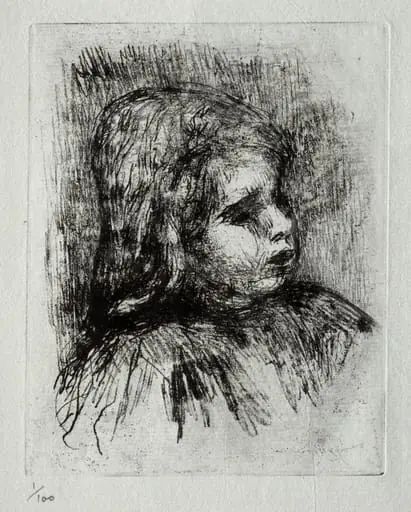 Claude Renoir, de trois-quarts à droite
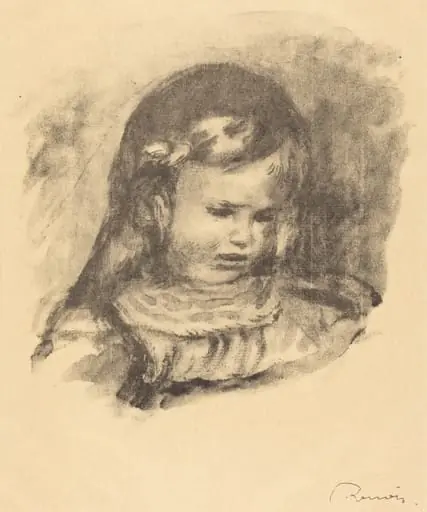 Claude Renoir, head lowered (Claude Renoir, la tete baissee)
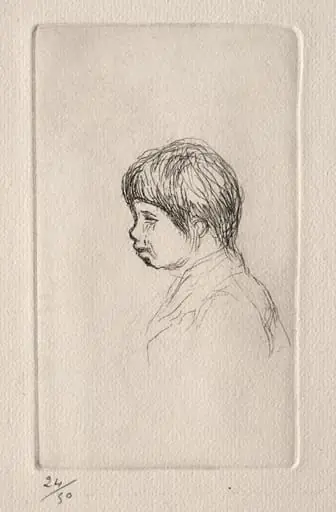 Claude Renoir, the Artist's Son, in Profile
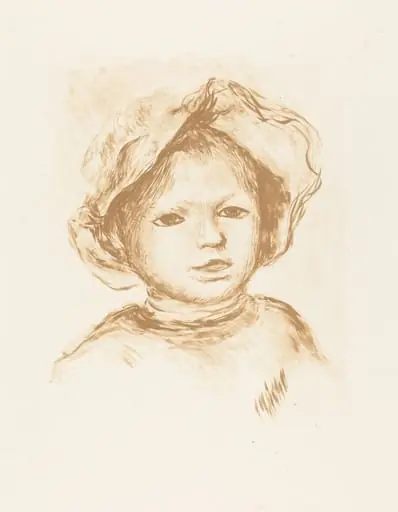 Pierre Renoir
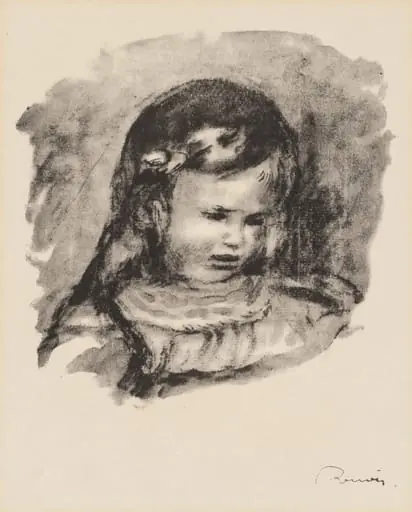 Claude Renoir, the Head Lowered (Claude Renoir, la tête baissée)
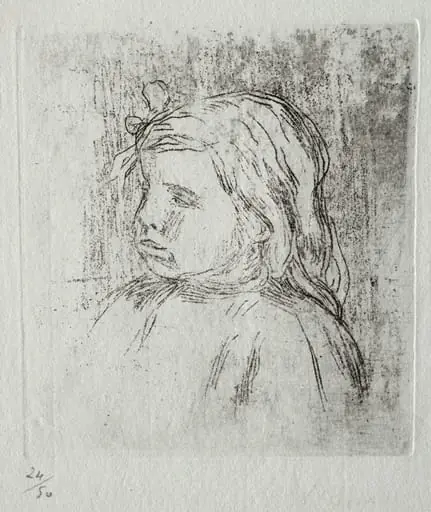 Claude Renoir, de trois-quarts à gauche