Artwork
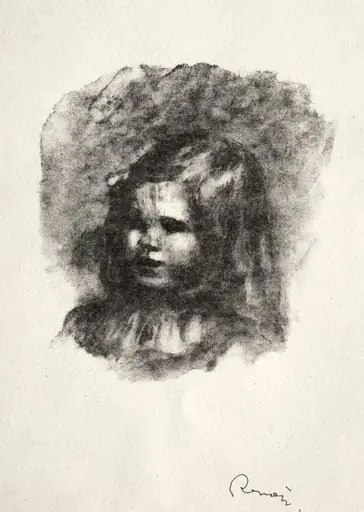
Claude Renoir, turned left (Claude Renoir, tourne a gauche)
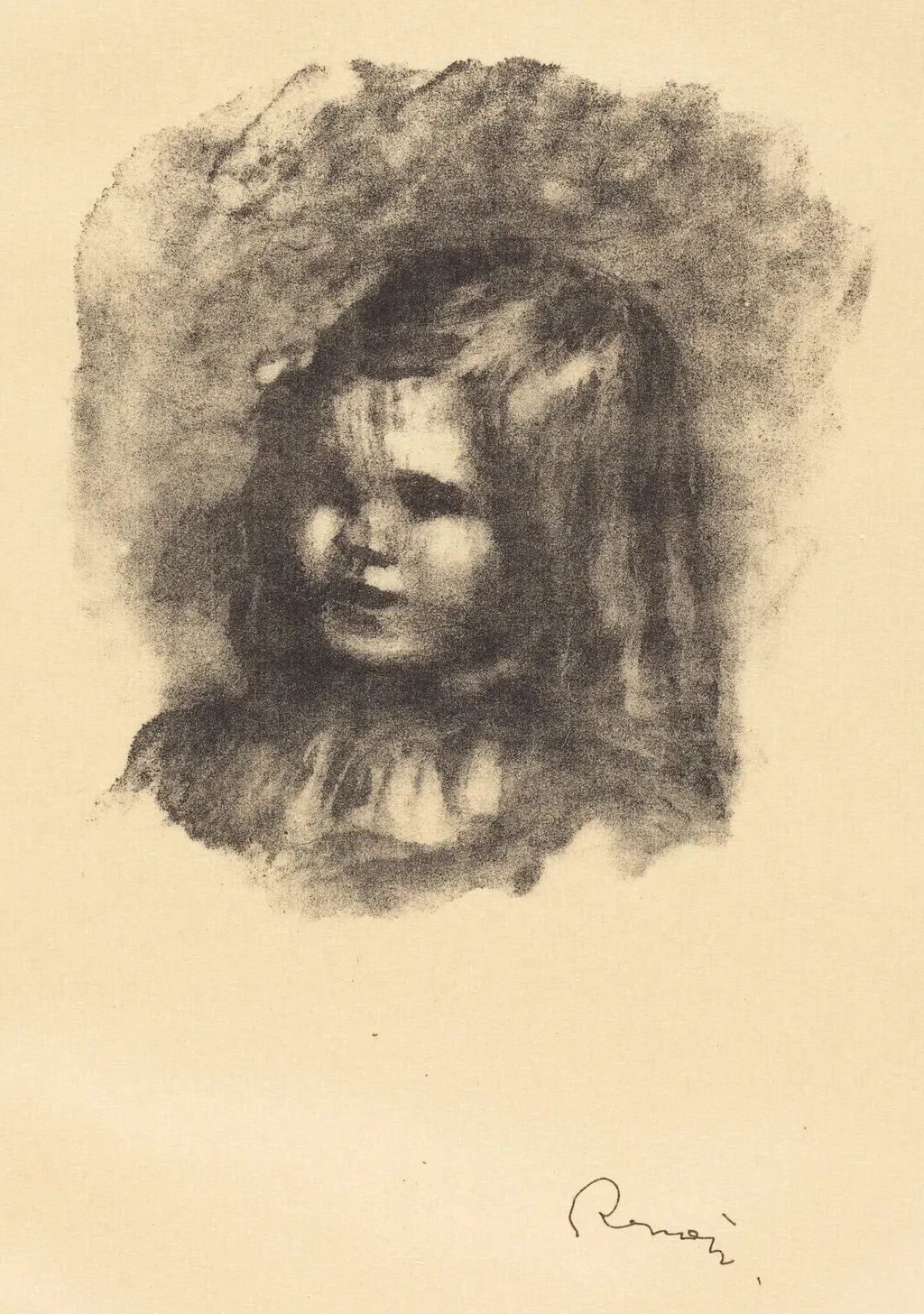
Claude Renoir, turned left (Claude Renoir, tourne a gauche) is an ink print by the Impressionist artist Auguste Renoir. It dates from 1904 and is held in the collection of the National Gallery of Art.
About this work
Overview
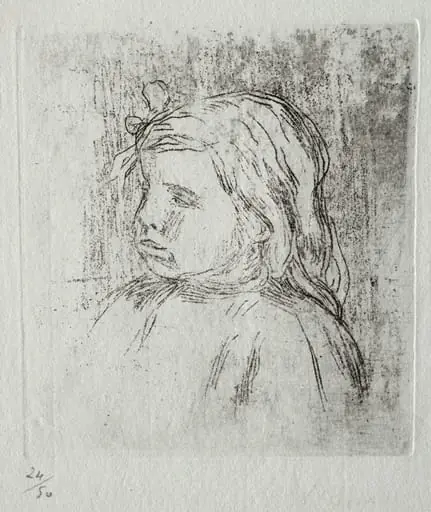
Auguste Renoir's 'Claude Renoir, turned left' is a 1904 lithograph on japan paper, existing as a trial proof. The work depicts a portrait of Claude Renoir, the artist's son, captured in a slight leftward turn.
Subject & Meaning
The subject is Claude Renoir, portrayed informally with a focus on capturing a fleeting pose rather than precise detail, reflecting the artist's emphasis on spontaneity.
Technique & Style
Characterized by a rough, smudgy quality with soft edges, the lithograph exhibits a quick, sketchy style reminiscent of a preliminary draft. Uneven lighting adds depth, with darker areas contrasting softer, blurred elements like hair and collar.
History & Provenance
Created in 1904, this piece is an early trial proof in the lithographic process, showcasing an initial step in the printmaking sequence.
Context
Reflecting Renoir's exploration of lithography, the work demonstrates his adaptation of the medium for spontaneous, expressive portraits, distinct from more refined final prints.
Legacy
As a trial proof, its significance lies in illustrating Renoir's creative process and experimentation with lithography, offering insight into his artistic development in this medium.
Own this work as a print
Artist & collection
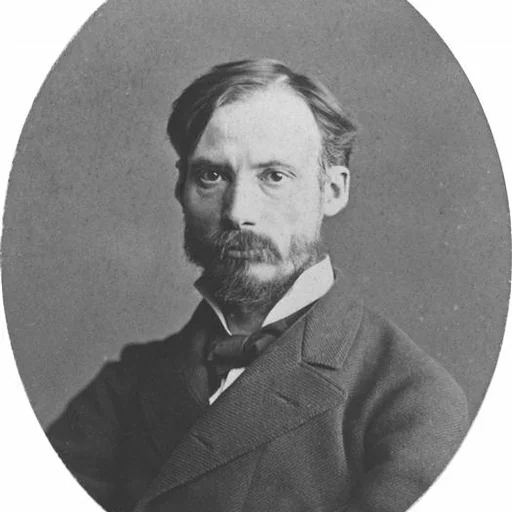
Artist
Pierre-Auguste Renoir was born on 25 February 1841 in Limoges, the son of a tailor and a seamstress.

 Claude Renoir, Turned to the Left
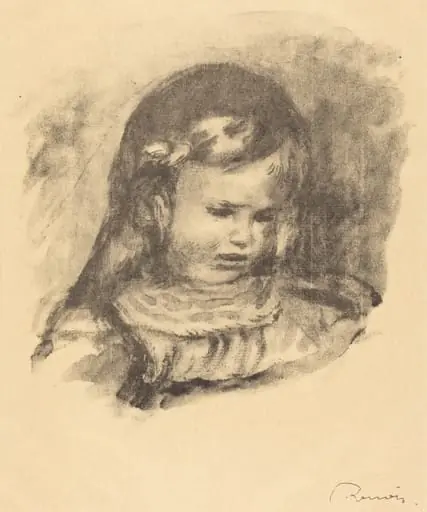 Claude Renoir, head lowered (Claude Renoir, la tete baissee)
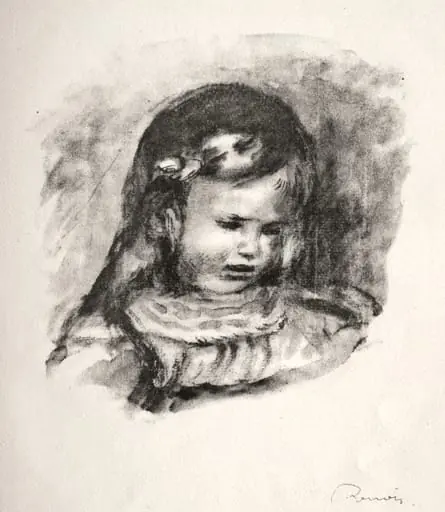 Claude Renoir, la tête baissée
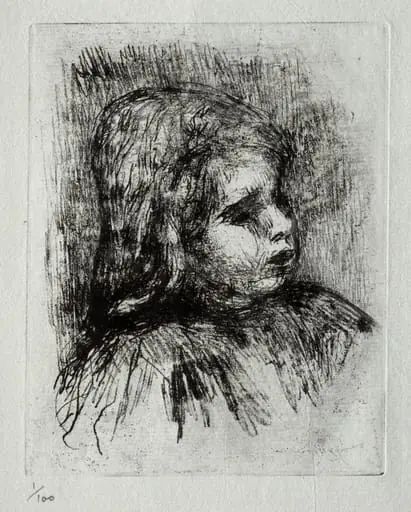 Claude Renoir, de trois-quarts à droite
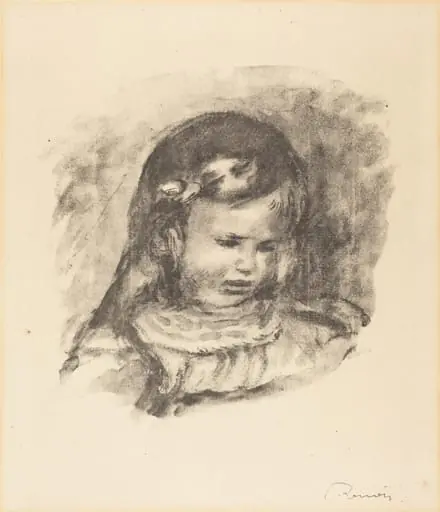 Claude Renoir, with Lowered Head
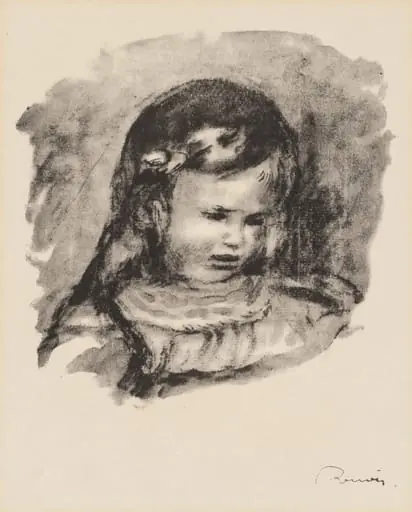 Claude Renoir, the Head Lowered (Claude Renoir, la tête baissée)
 Claude Renoir, de trois-quarts à gauche
 Pierre Renoir
 Claude Renoir, the Artist's Son, in Profile