Artwork
Pierre Renoir
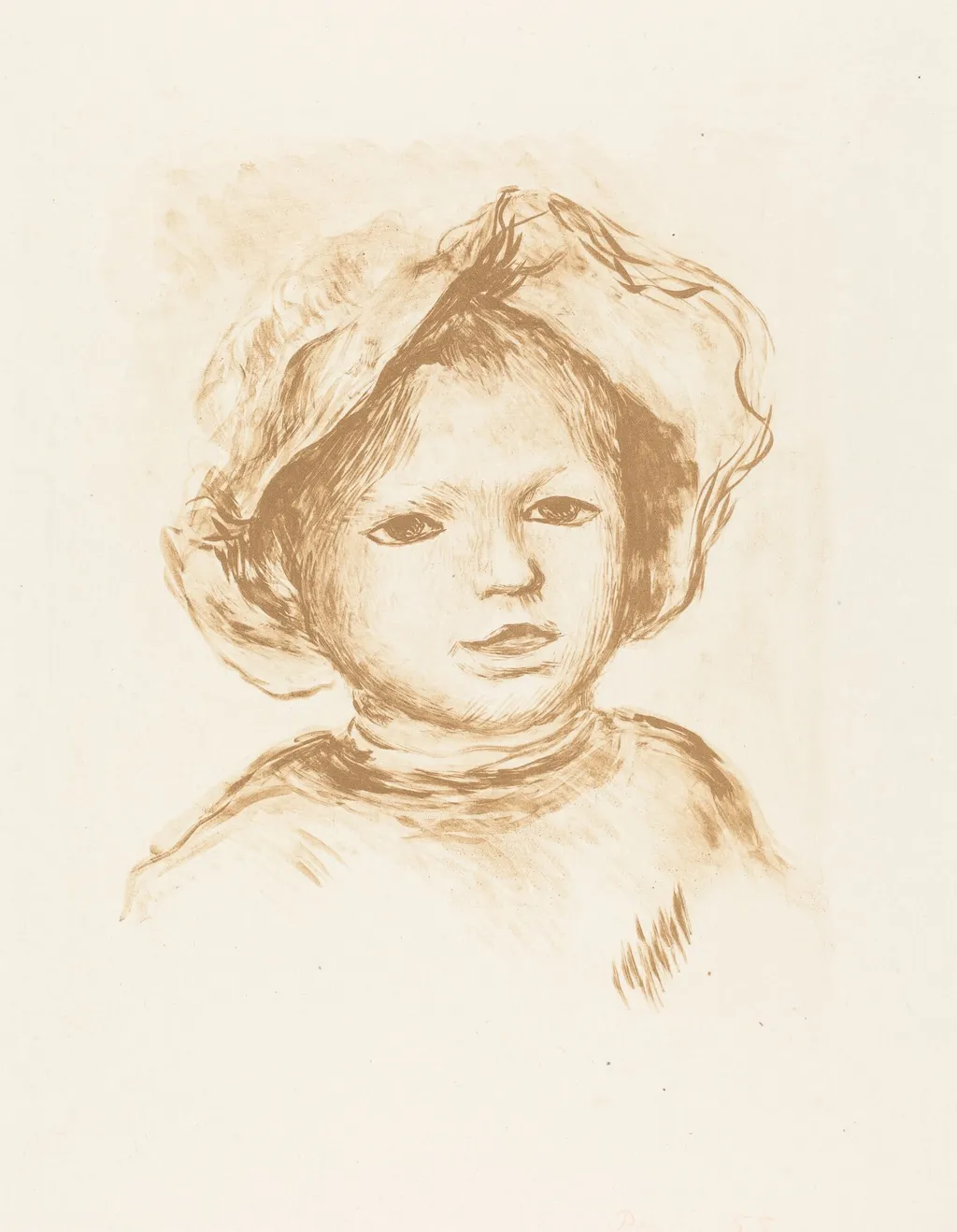
Pierre Renoir is an ink print by the Impressionist artist Auguste Renoir. It dates from 1893 and is held in the collection of the National Gallery of Art.
About this work
The lithograph is special because it's a simple portrait, but it still tells us a lot about the person.
The painting shows Pierre Renoir, a man with a calm face.
He's dressed nicely and looks straight at us.
The artist made this lithograph in 1893, which is a way of printing an image using stone or metal.
This technique was popular back then, and artists used it to make many copies of their work.
The lithograph is special because it's a simple portrait, but it still tells us a lot about the person.
We can see what he wore and how he looked, which can give us clues about his life.
To learn more about this kind of art, look up the technique: lithography.
Overview
This lithograph, created in 1893, depicts Pierre Renoir, the son of the artist Auguste Renoir. Executed in the lithographic medium, it belongs to a series of prints produced during a period when the artist explored reproductive techniques to extend the reach of his portraiture. The work is a straightforward, intimate portrayal, emphasizing presence over narrative detail.
Subject & Meaning
Pierre Renoir is shown in quiet composure, gazing directly at the viewer. His attire—neat collar, dark jacket—suggests middle-class respectability. The absence of background or symbolic elements focuses attention on his demeanor, conveying a sense of calm self-possession. The portrait reflects familial intimacy, offering a quiet record of the artist’s son during adolescence.
Technique & Style
Lithography allowed Auguste Renoir to translate his drawing style into a reproducible format, using greasy crayon on limestone to capture subtle tonal shifts. The lines are soft yet deliberate, with minimal shading that preserves the clarity of form. The technique’s capacity for fine detail suited the delicate rendering of facial features and fabric textures without overt embellishment.
History & Provenance
Produced in 1893, this print was likely made for private distribution or limited sale, consistent with Renoir’s interest in printmaking during the 1890s. It was not widely exhibited at the time, and surviving impressions are rare. The work remained within the Renoir family circle before entering public collections decades later.
Context
In the 1890s, French artists increasingly turned to lithography as a means to bypass traditional exhibition systems and reach broader audiences. Renoir, though primarily known for painting, embraced the medium for its immediacy and affordability. This portrait aligns with a broader trend of domestic portraiture among Impressionists, valuing personal connection over public spectacle.
Legacy
The lithograph endures as a modest but significant record of Renoir’s engagement with printmaking and his familial subjects. It offers insight into the private life of a major artist and demonstrates how lithography served as a bridge between fine art and accessible imagery. Though not widely reproduced, it remains a key example of late 19th-century intimate portraiture in print.
Artist & collection
Artist
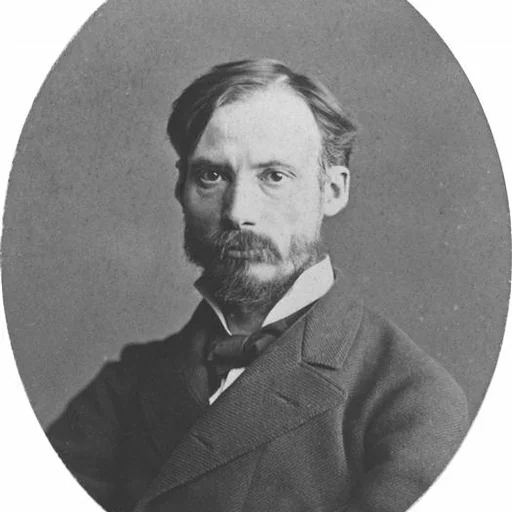
Pierre-Auguste Renoir was born on 25 February 1841 in Limoges, the son of a tailor and a seamstress.

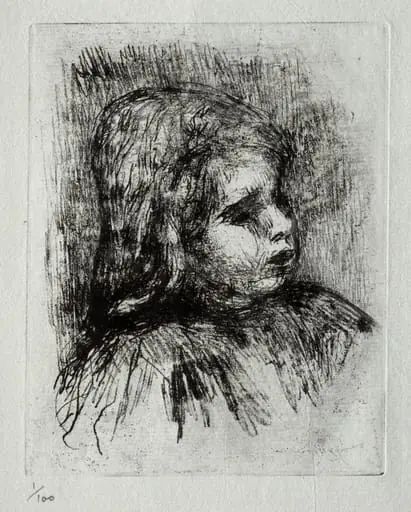 Claude Renoir, de trois-quarts à droite
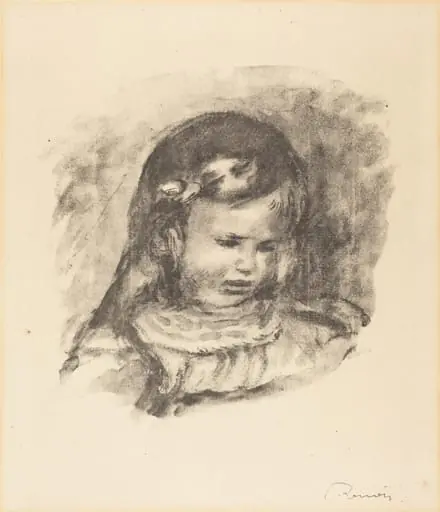 Claude Renoir, with Lowered Head
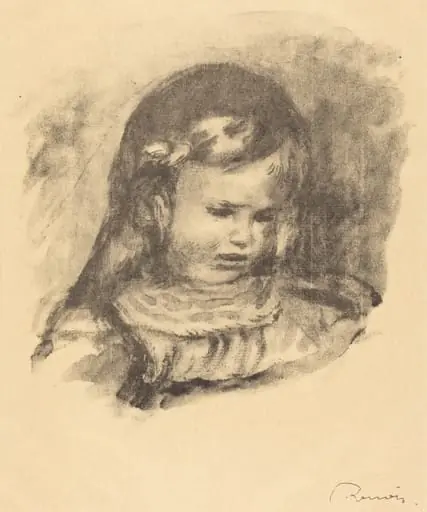 Claude Renoir, head lowered (Claude Renoir, la tete baissee)
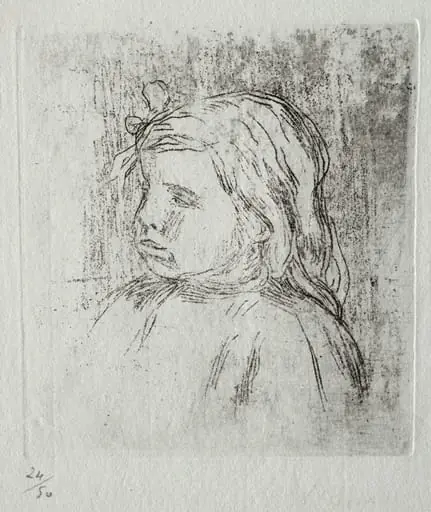 Claude Renoir, de trois-quarts à gauche
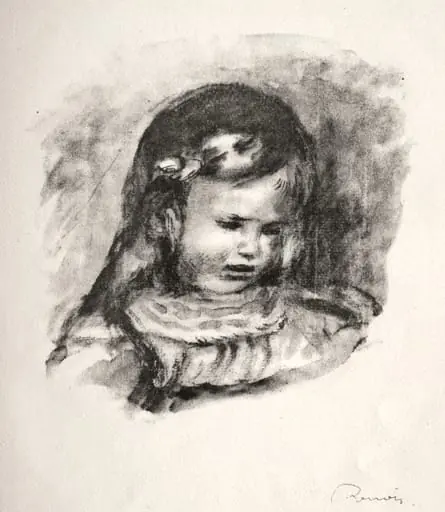 Claude Renoir, la tête baissée
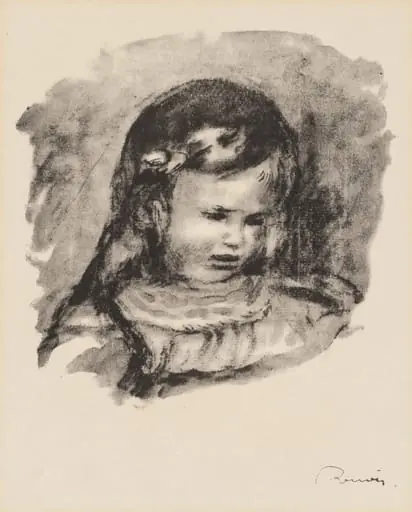 Claude Renoir, the Head Lowered (Claude Renoir, la tête baissée)
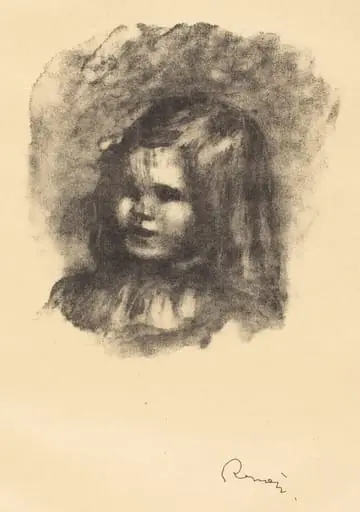 Claude Renoir, turned left (Claude Renoir, tourne a gauche)
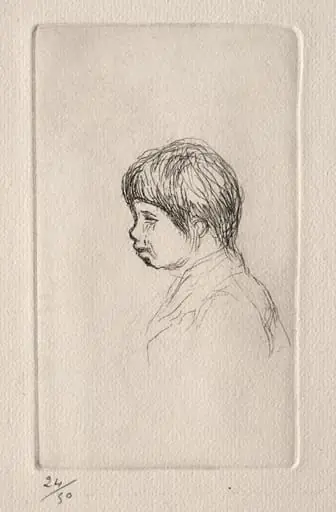 Claude Renoir, the Artist's Son, in Profile
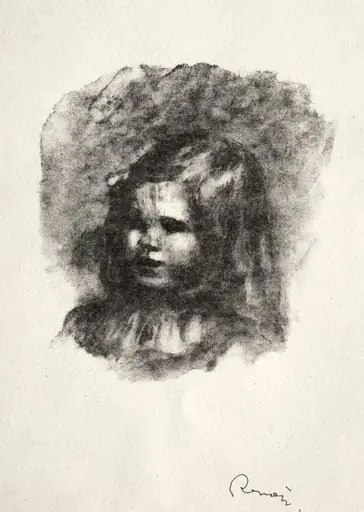 Claude Renoir, Turned to the Left