Artwork
Mount Athos Carved as a Monument to Alexander the Great
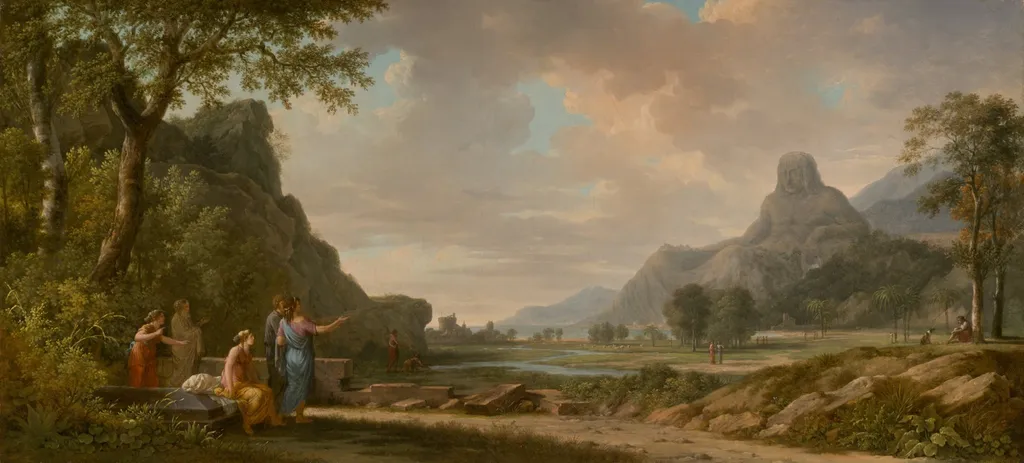
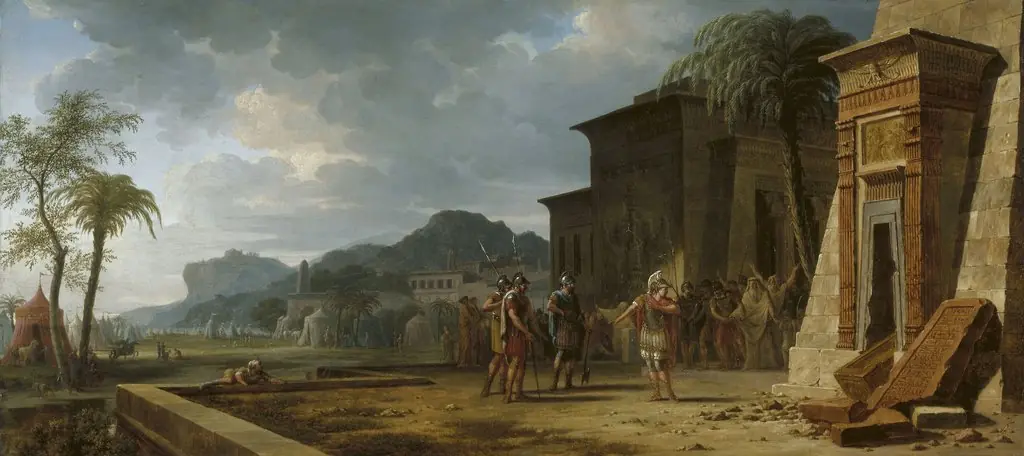
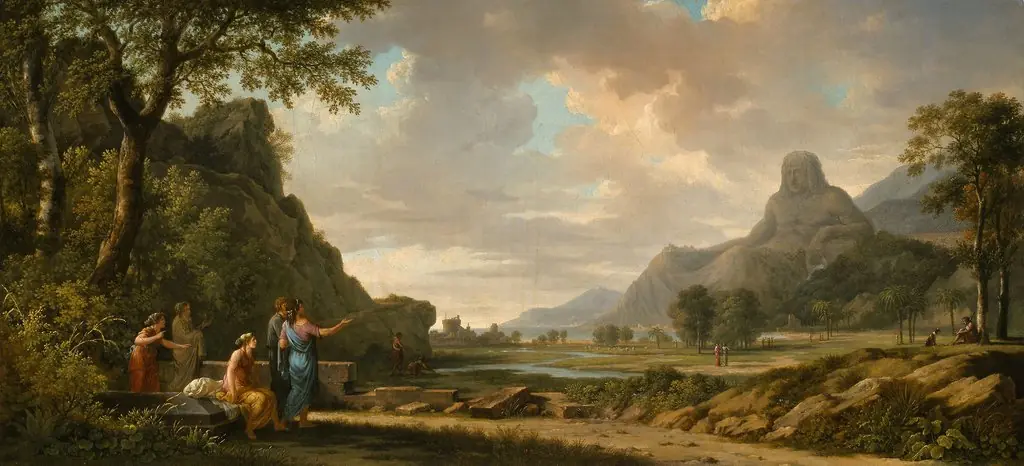
Mount Athos Carved as a Monument to Alexander the Great is an oil painting by the French Romanticist artist Pierre Henri. It dates from 1796 and is held in the collection of the Art Institute of Chicago.
About this work
The painting shows Mount Athos carved as a monument to Alexander the Great.
It's an oil on canvas work from 1796.
The artist tried to add moral content to the landscape, which was not common at that time.
He was influenced by earlier artists who did this too.
You can learn more about this style by looking at the work of Pierre Henri de Valenciennes.
Overview
Created in 1796, this oil on canvas presents a fantastical vision of Mount Athos transformed into a colossal relief honoring Alexander the Great. The composition merges a dramatic natural setting with an imagined monument, illustrating the artist’s ambition to fuse landscape painting with grand historical narrative.
Subject & Meaning
The work imagines a never‑realized scheme to immortalize Alexander by carving his likeness into the sacred mountain. By juxtaposing the timelessness of the landscape with the fleeting glory of a conqueror, the painting invites reflection on fame, legacy, and the transience of human achievement.
Technique & Style
The artist employs a meticulous, idealised landscape tradition, echoing the classical approach of Nicolas Poussin. Careful modelling of light and atmospheric perspective give depth to the terrain, while the monumental carving is rendered with crisp linear detail, underscoring the intended moral dimension within the natural scene.
History & Provenance
Painted by Pierre‑Henri de Valenciennes, a prominent French landscape painter of the late eighteenth century, the canvas was produced during his effort to raise landscape to the status of history painting. It was exhibited alongside a companion piece, "Alexander at the Tomb of Cyrus the Great," and has remained in public collections since the early nineteenth century.
Artist & collection
Artist
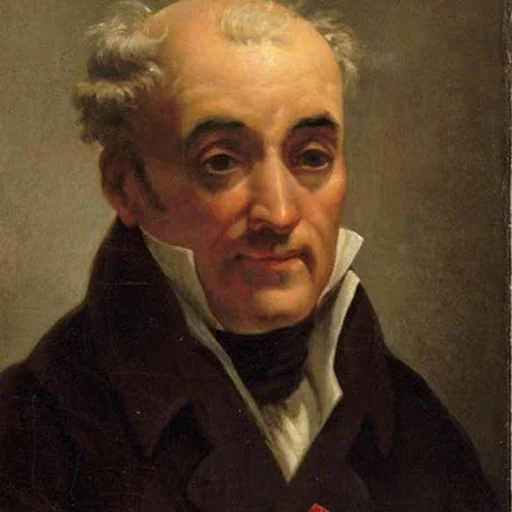
Pierre-Henri de Valenciennes (6 December 1750 – 16 February 1819) was a French painter. A neoclassicist artist, he was influential in elevating the status of En plein air (open-air painting).