Artwork
Sorrow
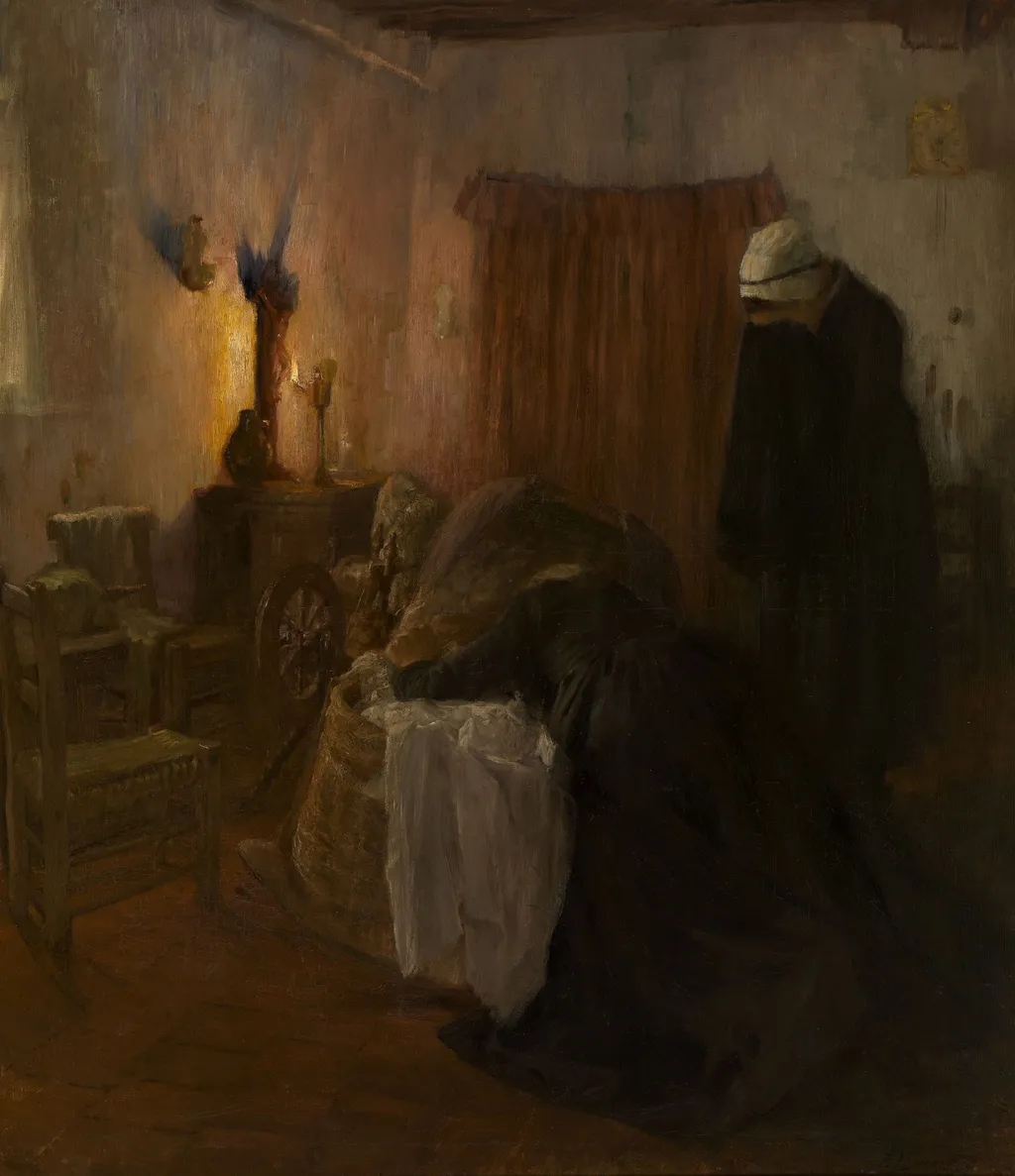
Sorrow is an oil painting by the Post-Impressionist artist Pierre Jacques Dierckx. It dates from 1901 and is held in the collection of the Royal Museum of Fine Arts Antwerp.
About this work
Overview
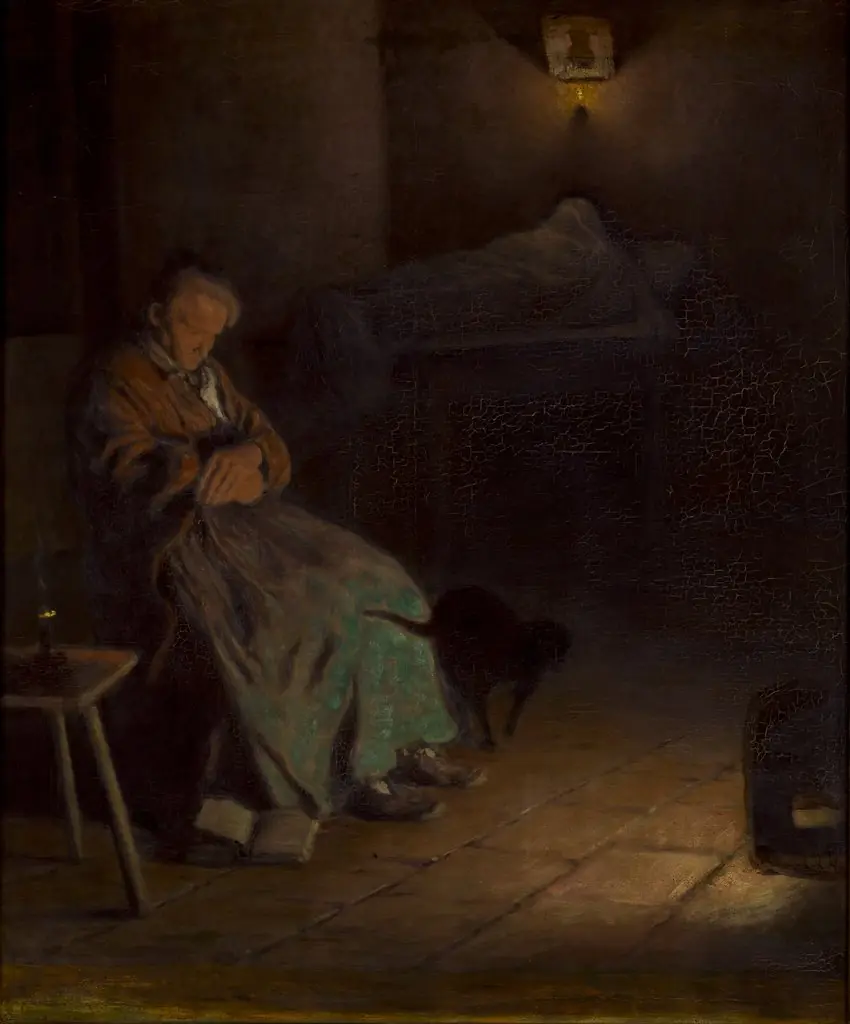
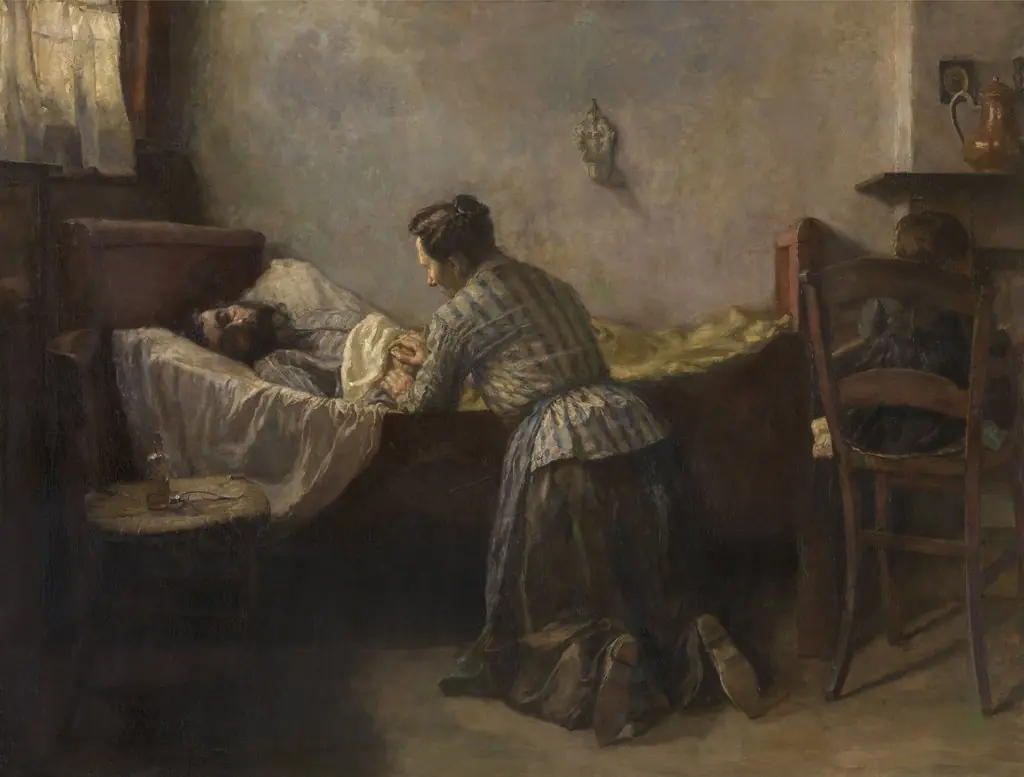
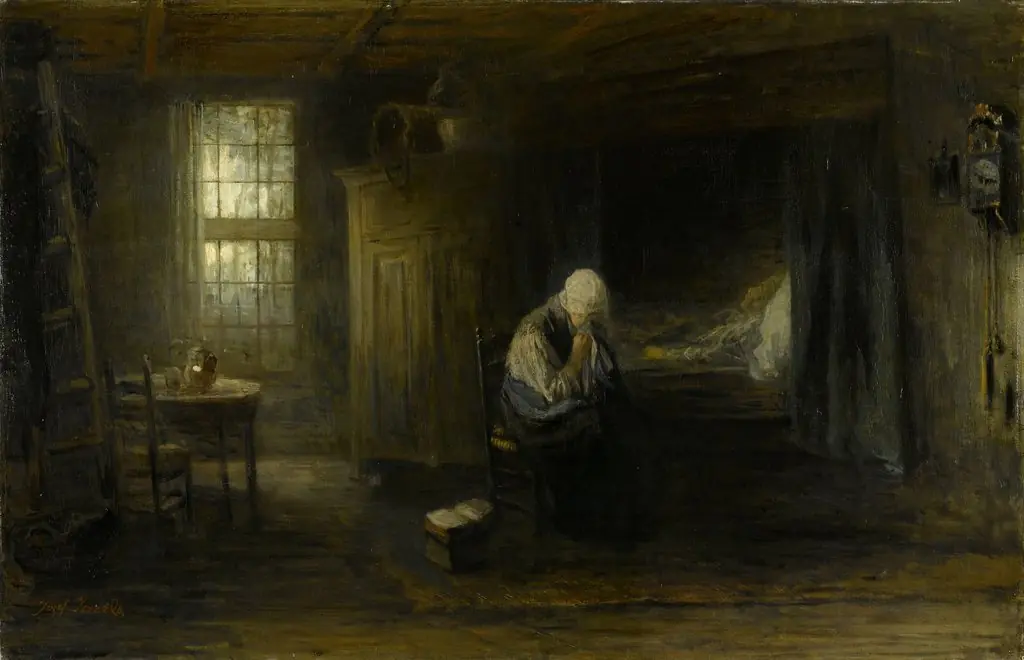
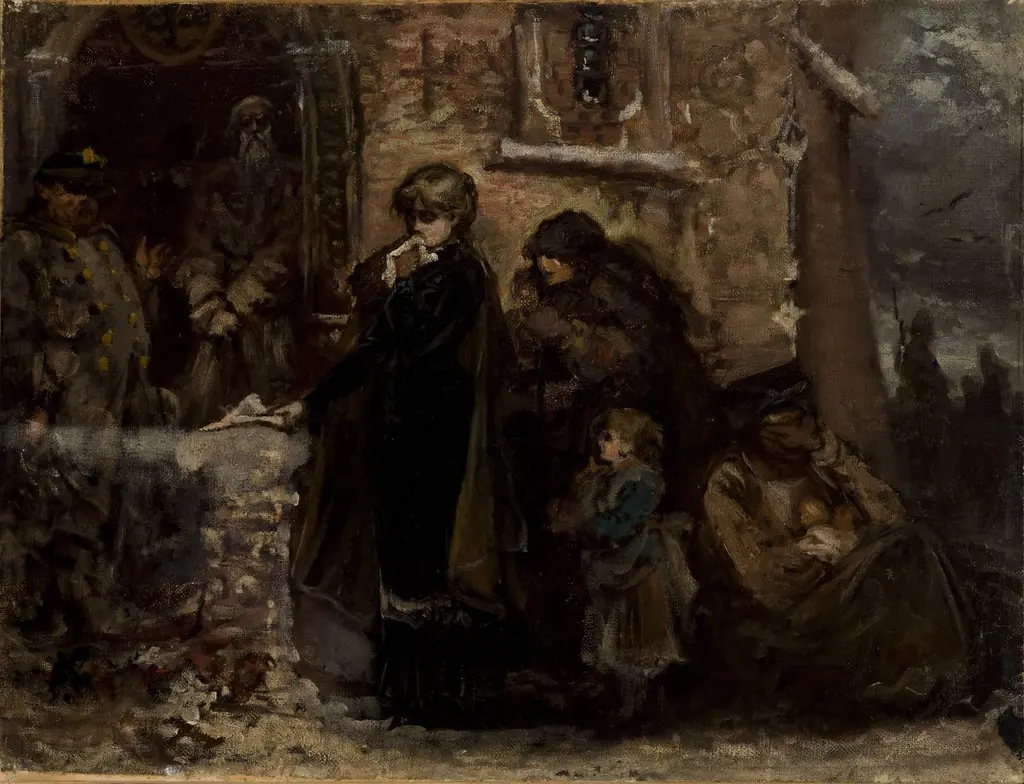
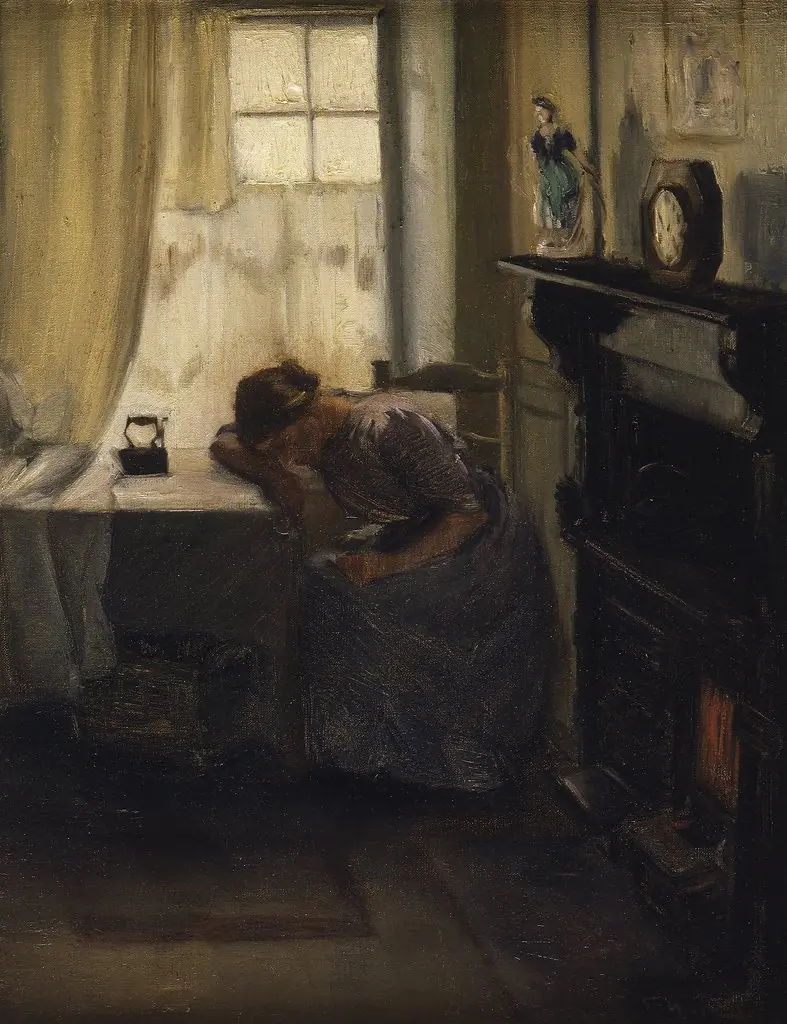
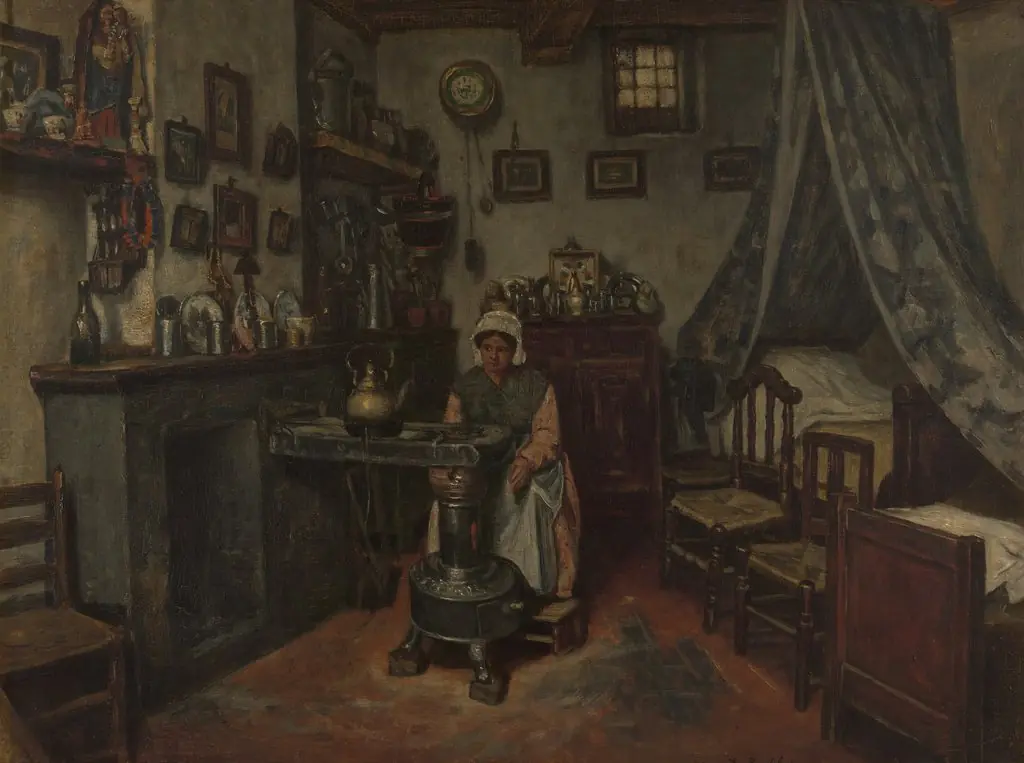
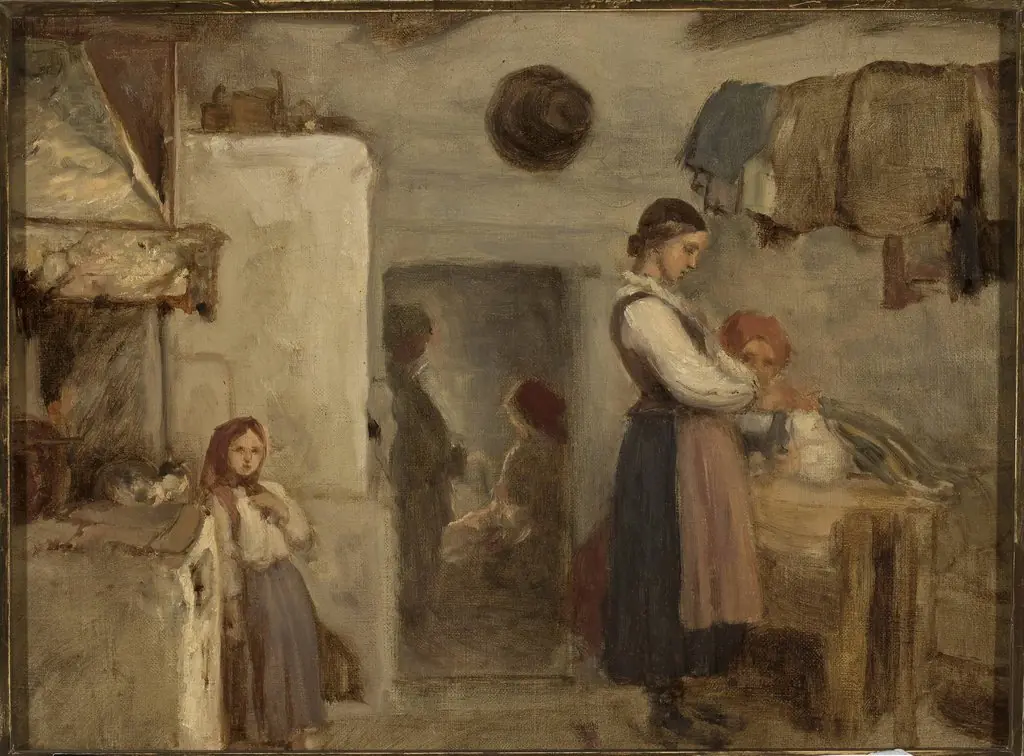
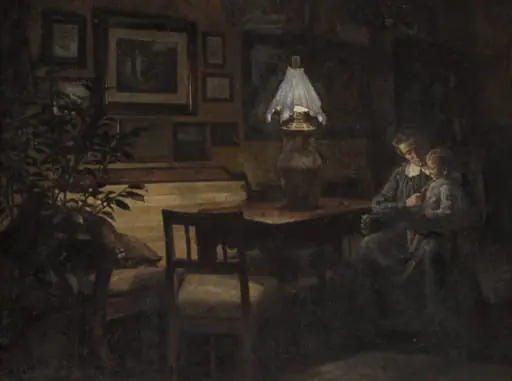
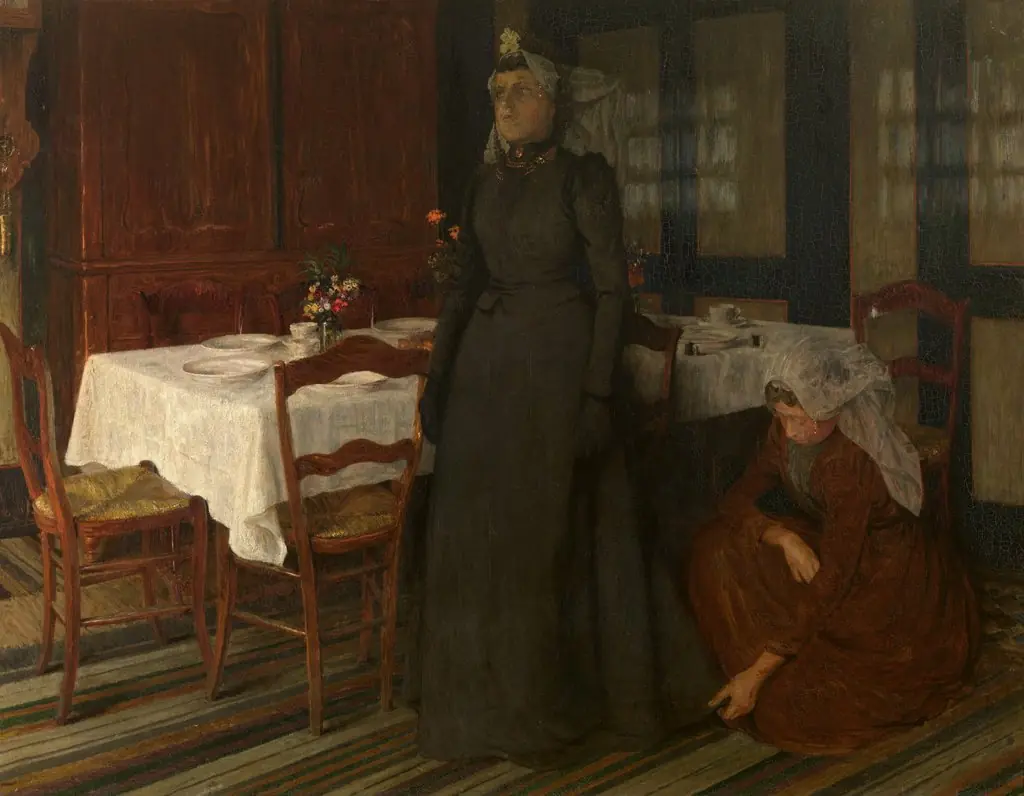
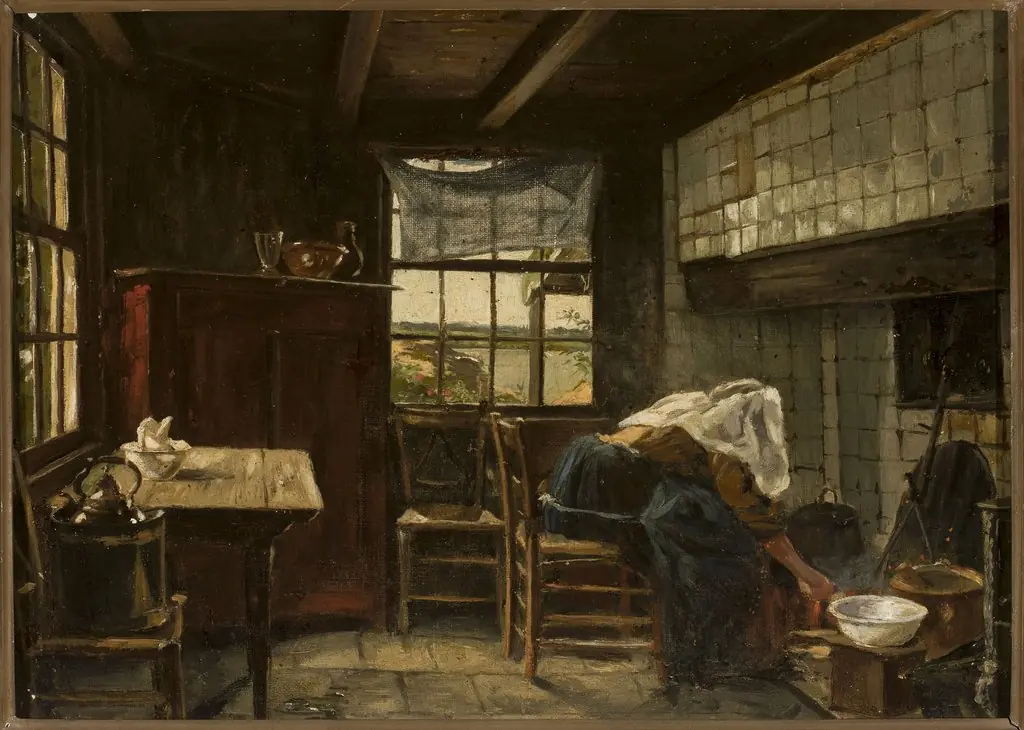
Painted in 1901 by Pierre Jacques Dierckx, Sorrow is an oil-on-canvas work currently held in the collection of the Royal Museum of Fine Arts Antwerp. The painting captures a quiet, interior moment between two women, rendered in subdued tones and minimal detail. Its atmosphere is defined by stillness and restraint, with no overt narrative clues beyond the emotional posture of its subjects.
Subject & Meaning
Two women occupy a sparse room: one sits slumped in a chair, clutching a white cloth, while the other stands nearby, gazing downward in silent observation. The white fabric suggests mourning, and the candle’s glow intensifies the sense of private grief. The scene conveys sorrow not through drama but through stillness, emphasizing emotional weight carried without words or gesture.
Technique & Style
Dierckx employs a muted palette dominated by browns, grays, and deep blacks, with the candle’s warm light creating subtle contrasts. Brushwork is restrained, favoring soft transitions over detail, particularly in the figures’ clothing and the room’s surfaces. The composition is tightly framed, focusing attention on the interaction between the two women and the intimacy of their shared silence.
History & Provenance
Sorrow entered the Royal Museum of Fine Arts Antwerp’s collection shortly after its completion in 1901. Little is documented about its early exhibition history or ownership prior to museum acquisition. The painting has remained in the institution’s care since, with no record of significant public display beyond its inclusion in regional Belgian art surveys.
Context
Created at the turn of the 20th century, Sorrow reflects a broader European interest in domestic, emotionally charged scenes, influenced by Realism and Symbolist tendencies. While Dierckx was not a major public figure, his work aligns with contemporaries who explored quiet human vulnerability, avoiding theatricality in favor of understated psychological depth.
Legacy
Sorrow remains one of the few known works by Pierre Jacques Dierckx, and it is rarely reproduced outside institutional contexts. Its significance lies in its quiet resonance within early 20th-century Belgian painting, offering a modest but persistent example of introspective genre art that prioritizes emotional nuance over spectacle.
Own this work as a print
Artist & collection