Artwork
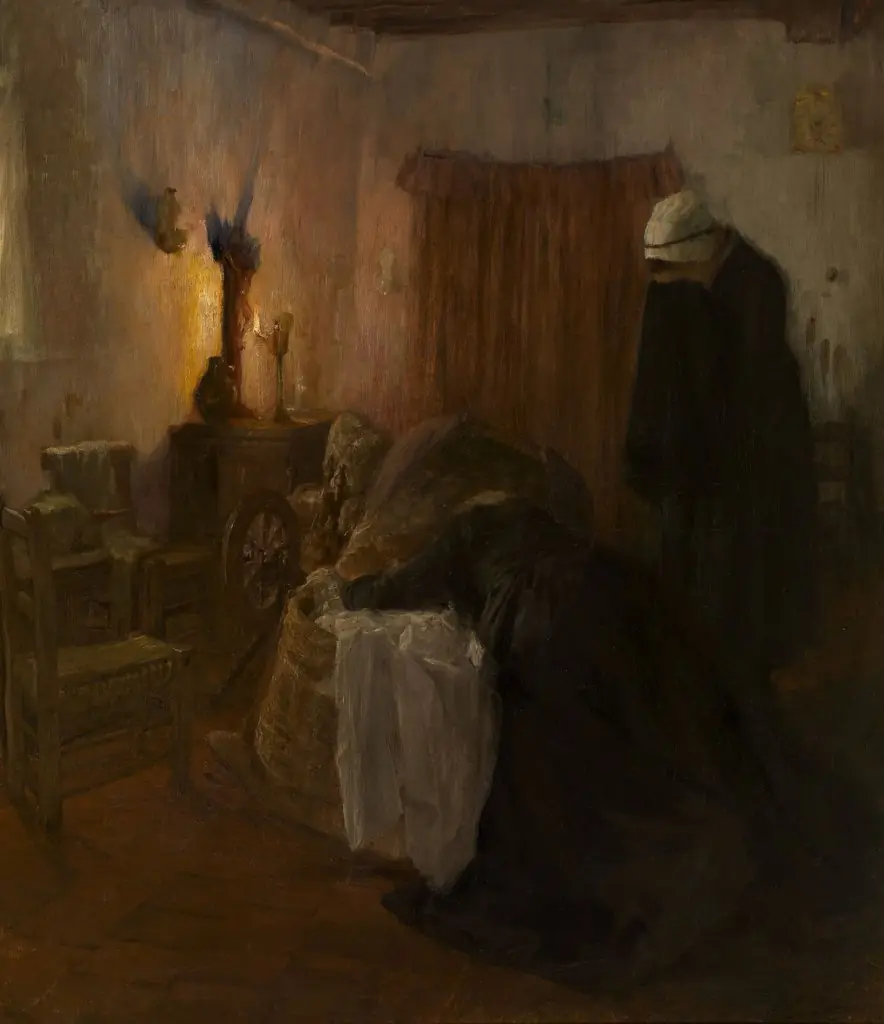
Old Woman Watching over a Dead Body II
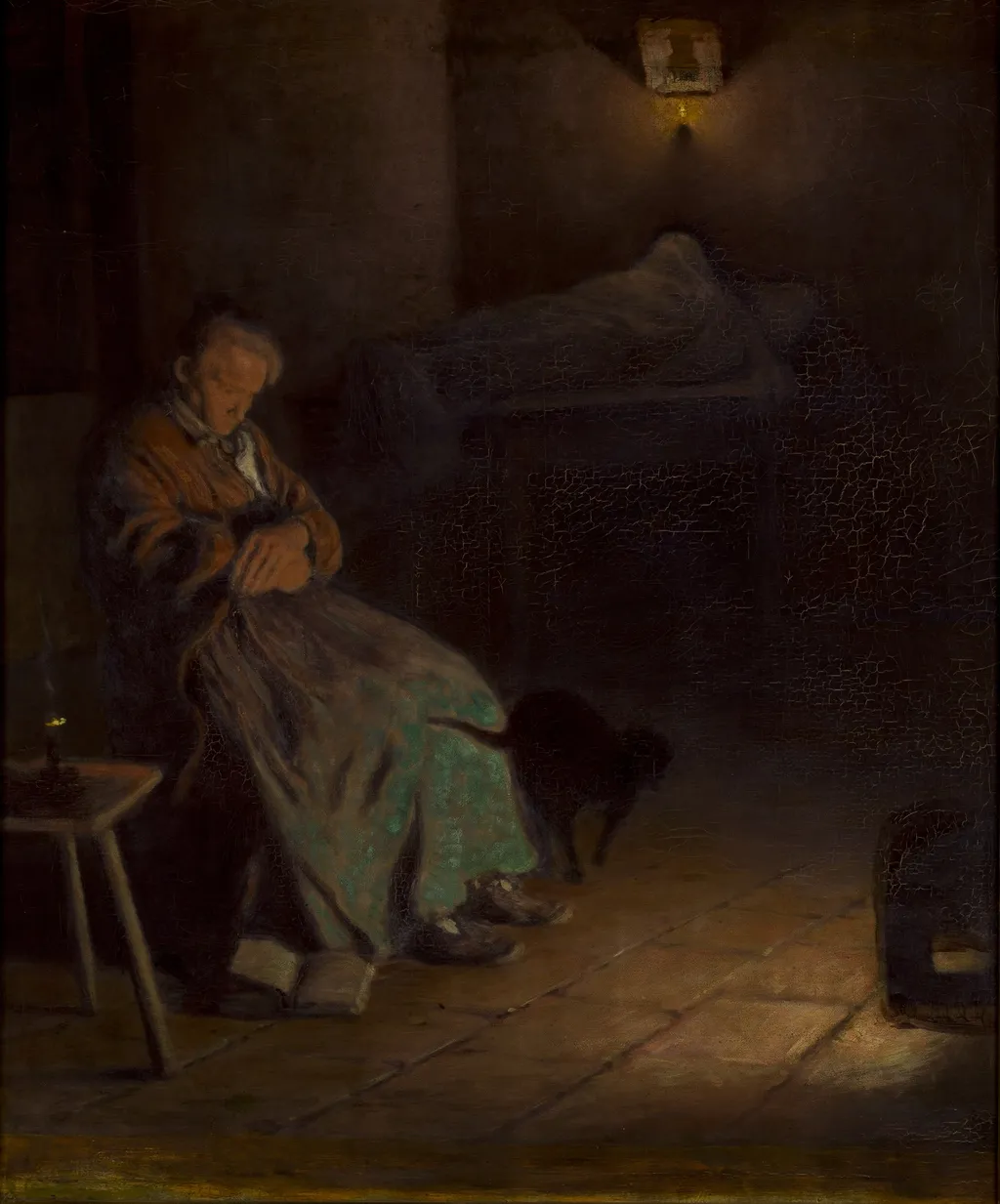
Old Woman Watching over a Dead Body II is an oil painting by the Realist artist Aleksander Gierymski. It dates from 1896 and is held in the collection of the National Museum in Kraków.
About this work
Overview
Old Woman Watching over a Dead Body II is a 1896 oil painting by Aleksander Gierymski, a key figure in introducing Impressionist influences to Polish art within the Realist movement. The work is housed at the National Museum in Kraków.
Subject & Meaning
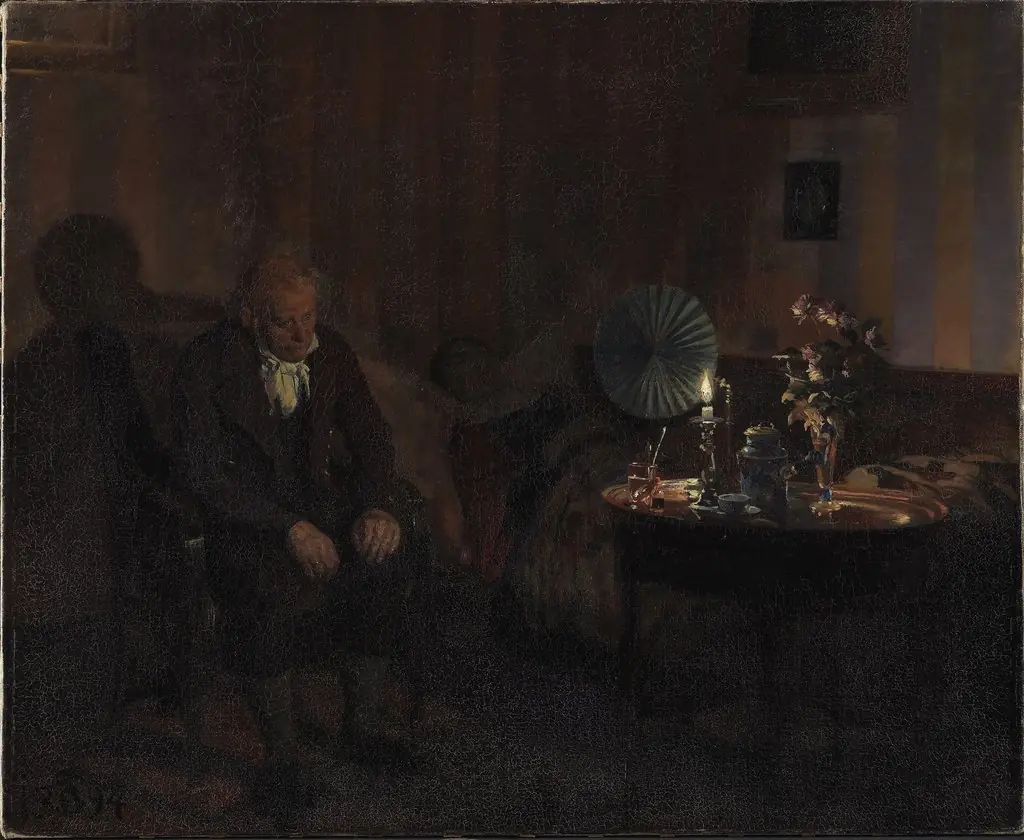
The painting somberly depicts an elderly woman in dark attire sitting beside a deceased person on a bed, her blurred face and downward gaze conveying quiet reflection and mourning. A nearby candle on a small table adds to the intimate, contemplative atmosphere.
Technique & Style
Gierymski employs chiaroscuro, leveraging a single light source to create strong contrasts between light and dark, thereby imbuing the scene with depth and volume. This technique enhances the emotional intimacy of the moment.
History & Provenance
Created in 1896, the painting is part of the National Museum in Kraków's collection, reflecting Gierymski's contribution to Polish art's transition towards Impressionism.
Context
As a Realist work with Impressionist undertones, it reflects the artistic shifts in late 19th-century Poland, where Gierymski played a pivotal role in embracing newer European art movements.
Legacy
While specific legacy details of this piece are not highlighted, it contributes to Gierymski's overall impact on Polish art, demonstrating his ability to evoke powerful emotions through light and composition.
Own this work as a print
Artist & collection
Artist
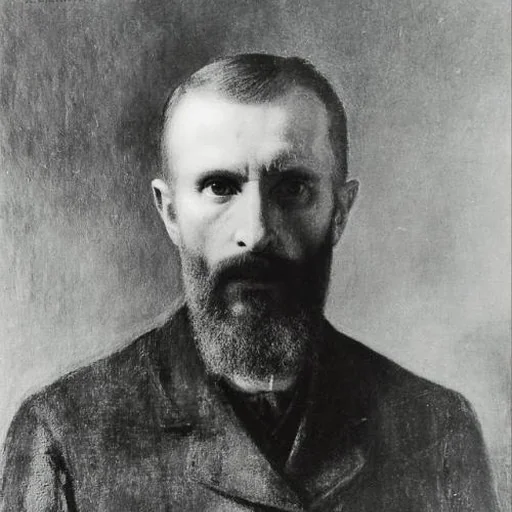
Ignacy Aleksander Gierymski (30 January 1850, Warsaw – d. 6–8 March 1901, Rome) was a Polish painter of the late 19th century, the younger brother of Maksymilian Gierymski. He was a representative of Realism as well as…