Artwork
Castaways on the sea
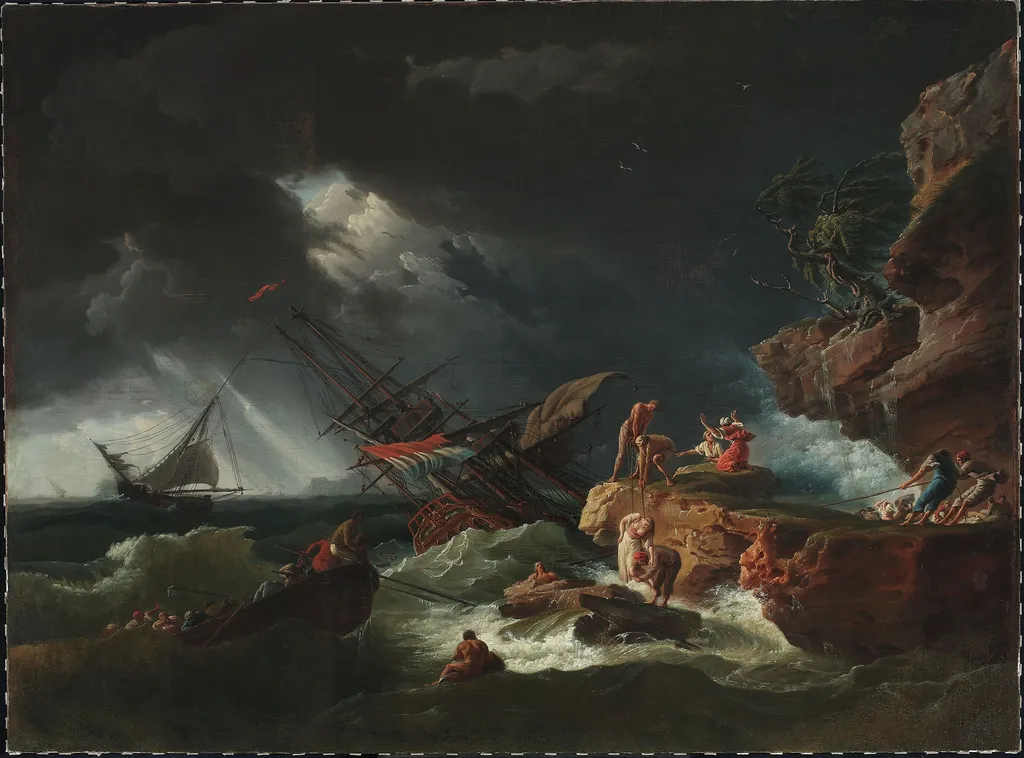
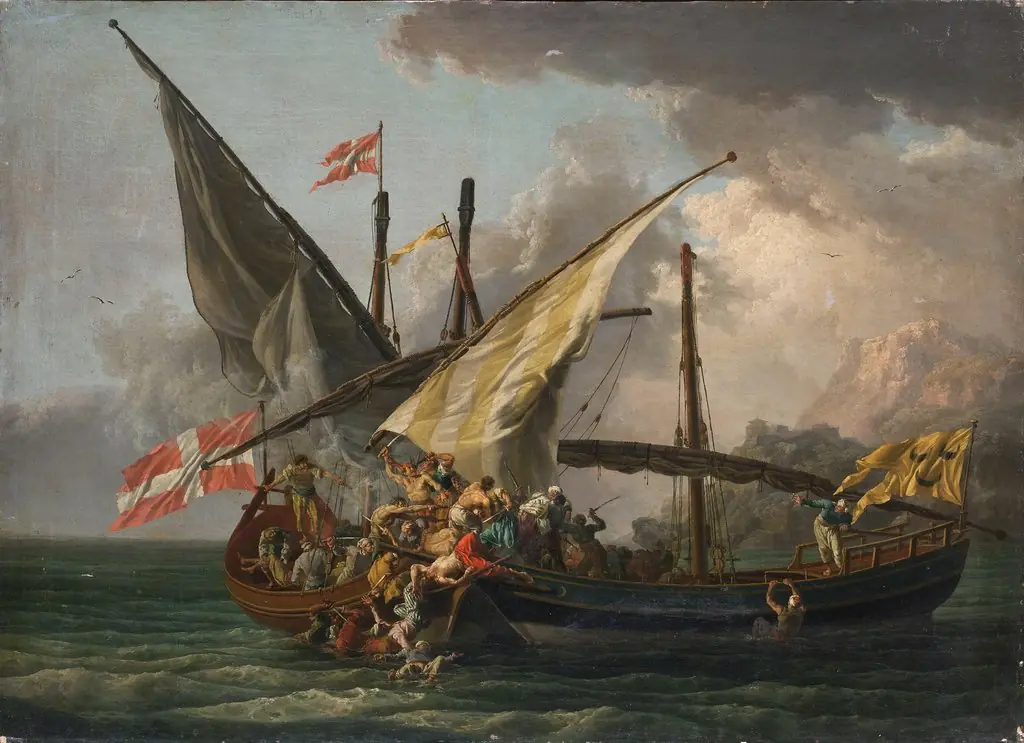
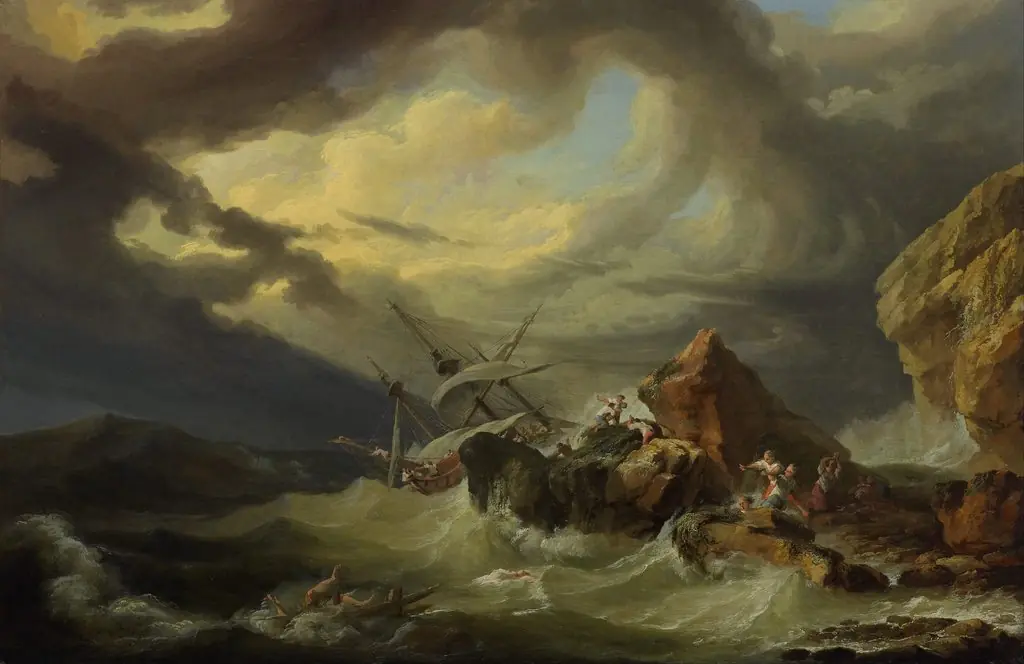
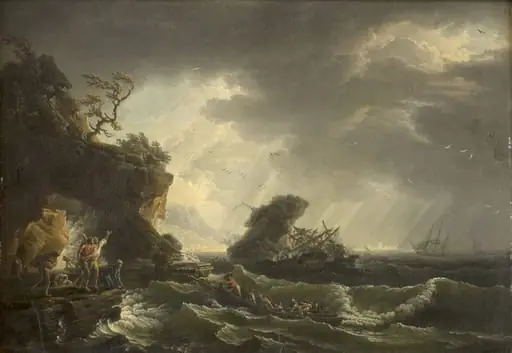
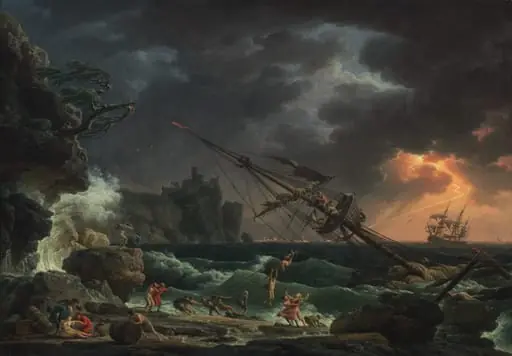
Castaways on the sea is an oil painting by the Rococo painting artist Pierre-Jacques Volaire. It dates from 1765 and is held in the collection of the National Museum in Warsaw. Pierre‑Jacques Volaire’s oil on canvas, dated 1765, depicts a violent maritime disaster.
About this work
Overview
Pierre‑Jacques Volaire’s oil on canvas, dated 1765, depicts a violent maritime disaster. The composition centers on a shattered vessel wrecked upon a jagged shoreline, its broken mast jutting skyward amid scattered timbers. Dark, tumultuous clouds dominate the heavens, pierced by a solitary shaft of light that illuminates the desperate figures clinging to the rocks.
Subject & Meaning
The scene captures a group of shipwreck survivors teetering on the edge of a crag, their bodies twisted in effort to avoid the relentless surge. Their strained postures and frantic gestures convey a palpable sense of peril and human vulnerability against the indifferent forces of nature, emphasizing themes of survival and the fragility of life at sea.
Technique & Style
Volaire employs a pronounced chiaroscuro, contrasting deep shadows with the bright beam that cuts through the stormy sky, heightening the drama. The brushwork varies from tight, detailed rendering of the wreckage and figures to looser, atmospheric strokes in the sky and sea, creating a sense of movement and turbulence characteristic of late‑Baroque maritime painting.
History & Provenance
Created in the mid‑eighteenth century, the work entered the collection of the National Museum in Warsaw, where it remains on display. Its acquisition reflects the museum’s interest in European genre scenes that illustrate historical narratives and technical skill, and it has been catalogued as a notable example of Volaire’s marine subjects.
Context
During the 1760s, European artists increasingly explored dramatic natural phenomena, often using shipwrecks as allegorical subjects for human struggle. Volaire’s painting aligns with this trend, drawing on contemporary fascination with the sublime and the moralizing potential of disaster scenes, while also reflecting the period’s commercial interest in seafaring and trade.
Artist & collection