Artwork
The Eruption of Vesuvius
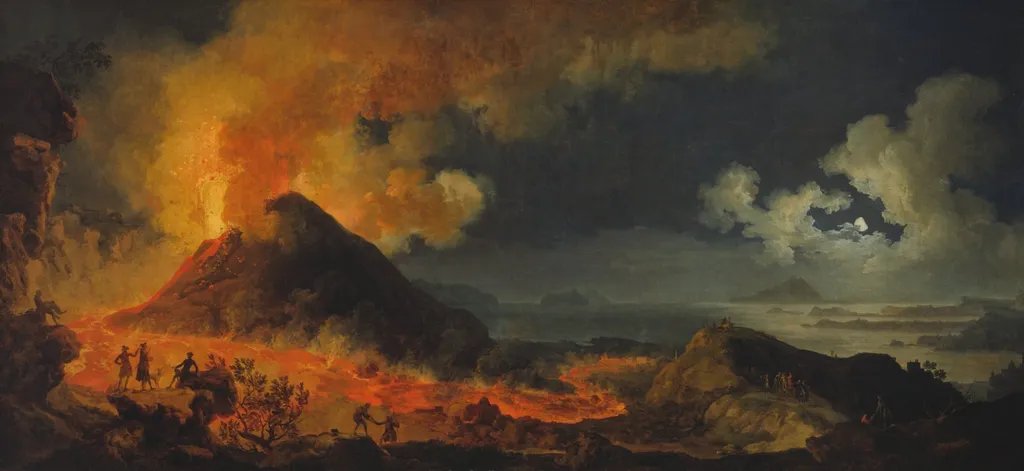
The Eruption of Vesuvius is an oil painting by the Rococo painting artist Pierre-Jacques Volaire. It dates from 1771 and is held in the collection of the Art Institute of Chicago. The canvas presents a nocturnal eruption of Mount Vesuvius, its molten stream descending toward the Bay of Naples.
About this work
The same years brought the first digs at Pompeii, the city buried by the volcano long ago.
Bright orange lava pours from Mount Vesuvius, glowing against a dark night sky. Tiny people stand on the shore, watching the river of fire creep toward the water.
Volaire painted this in 1771, when Vesuvius was erupting often. People were fascinated by the mix of beauty and danger. The same years brought the first digs at Pompeii, the city buried by the volcano long ago.
For another dramatic night scene, look up the technique called *chiaroscuro*.
Overview
The canvas presents a nocturnal eruption of Mount Vesuvius, its molten stream descending toward the Bay of Naples. Bright orange lava cuts through a dark sky, while diminutive figures on the shoreline watch the fiery flow. The contrast of the luminous lava against the night emphasizes the volcano’s power and the scene’s dramatic tension.
Subject & Meaning
Human observers are rendered as tiny silhouettes, underscoring the overwhelming scale of the natural event. Their presence suggests both curiosity and vulnerability, reflecting contemporary fascination with the dual allure of beauty and danger that Vesuvius embodied in the eighteenth century.
Technique & Style
Executed in oil, the painting employs a strong chiaroscuro effect: luminous, saturated reds and yellows illuminate the darkness, creating depth and a sense of movement in the lava. The limited palette and stark lighting enhance the dramatic atmosphere typical of late‑Baroque landscape compositions.
History & Provenance
Created in 1771 by the French artist Volaire, the work coincides with a period of frequent eruptions of Vesuvius (1707‑1794). It entered the tourist market that catered to Grand Tour travelers seeking visual records of the volcano’s spectacular activity.
Context
The painting emerged as archaeological excavations at Pompeii began in the 1740s, reviving public interest in the ancient city destroyed by Vesuvius in 79 CE. This renewed fascination made volcanic scenes a popular motif in European art and literature of the era.
Artist & collection


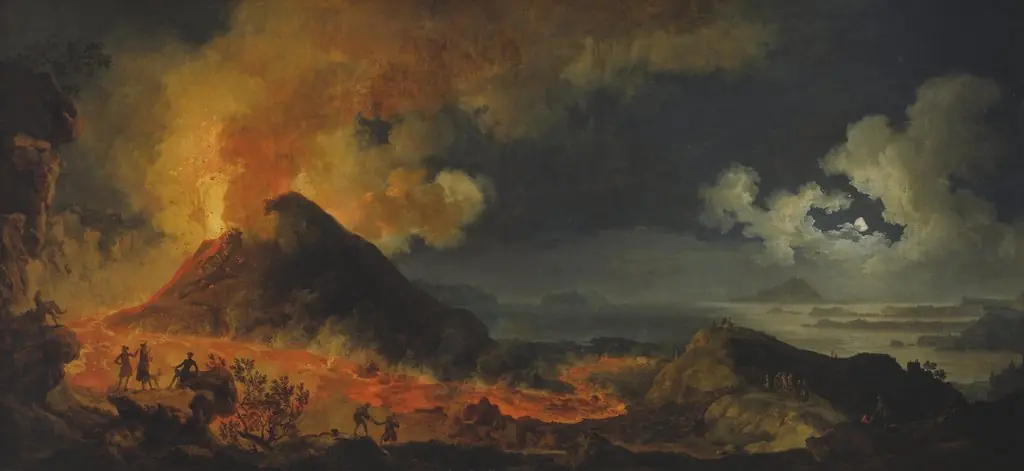
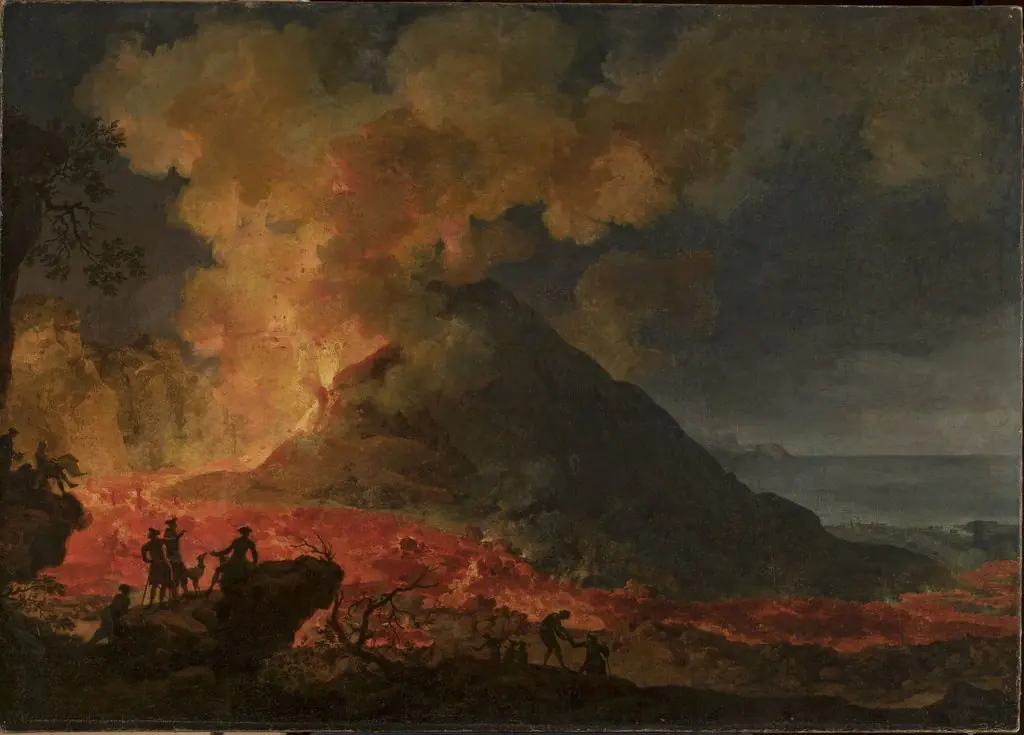
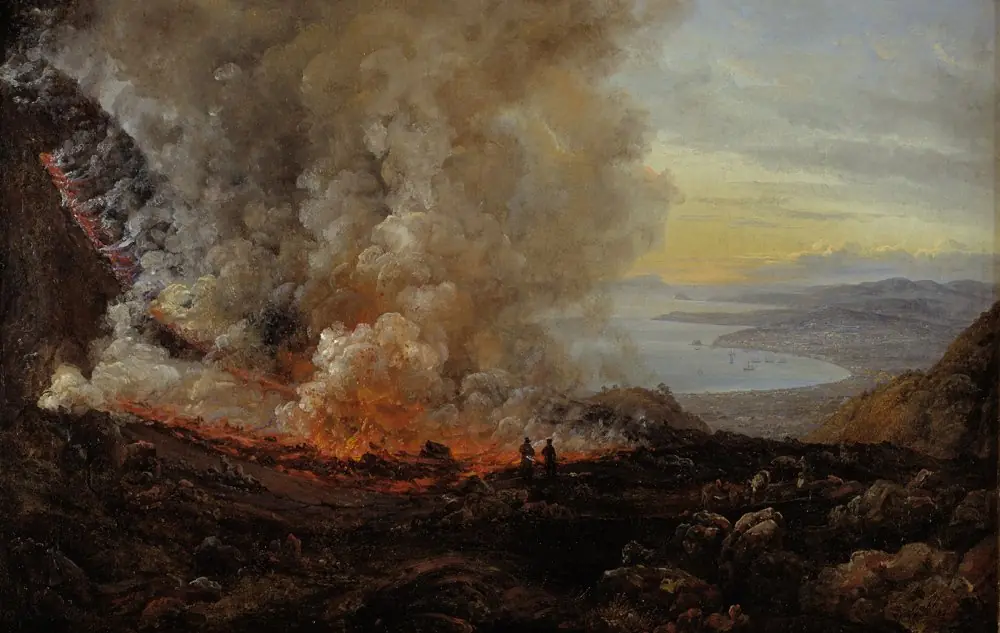 The Eruption of Vesuvius
 The Eruption of Vesuvius
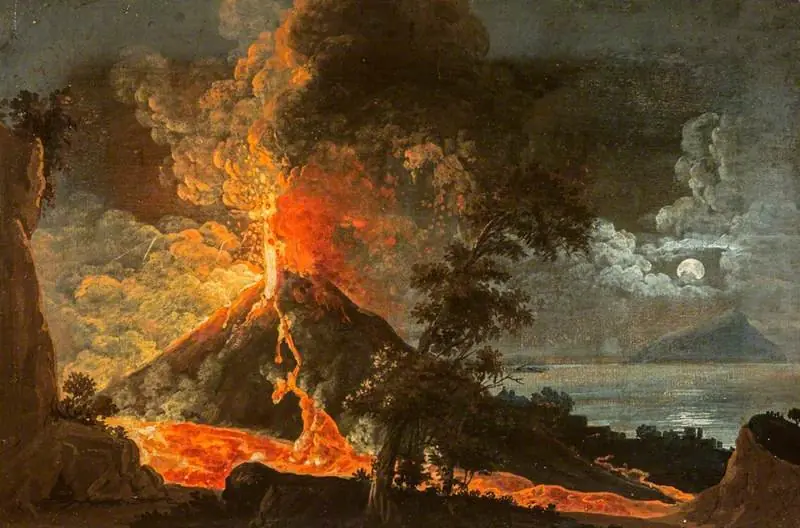 Eruption of Vesuvius
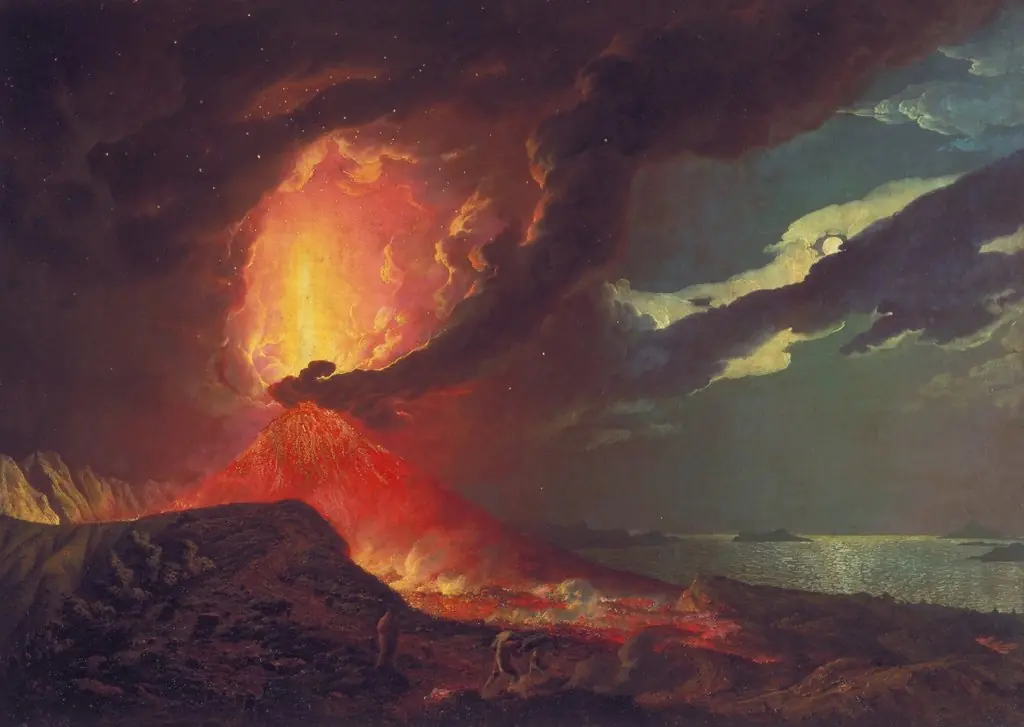 Vesuvius in Eruption, with a View over the Islands in the Bay of Naples
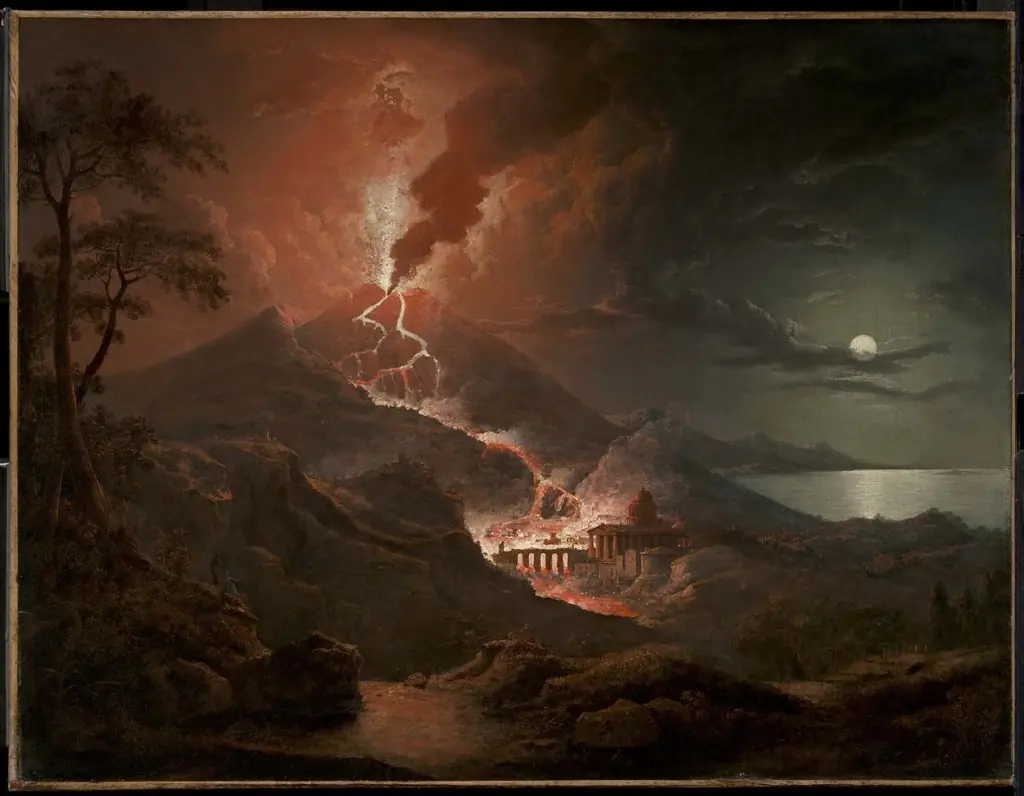 Eruption of Vesuvius with Destruction of a Roman City
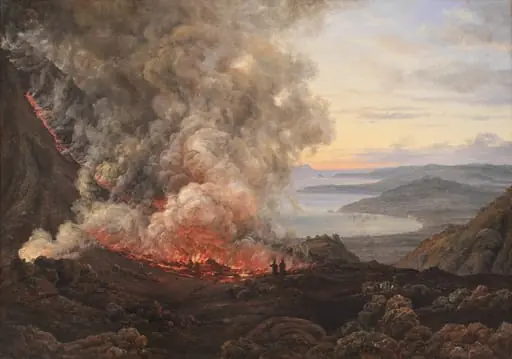 Eruption of the Volcano Vesuvius
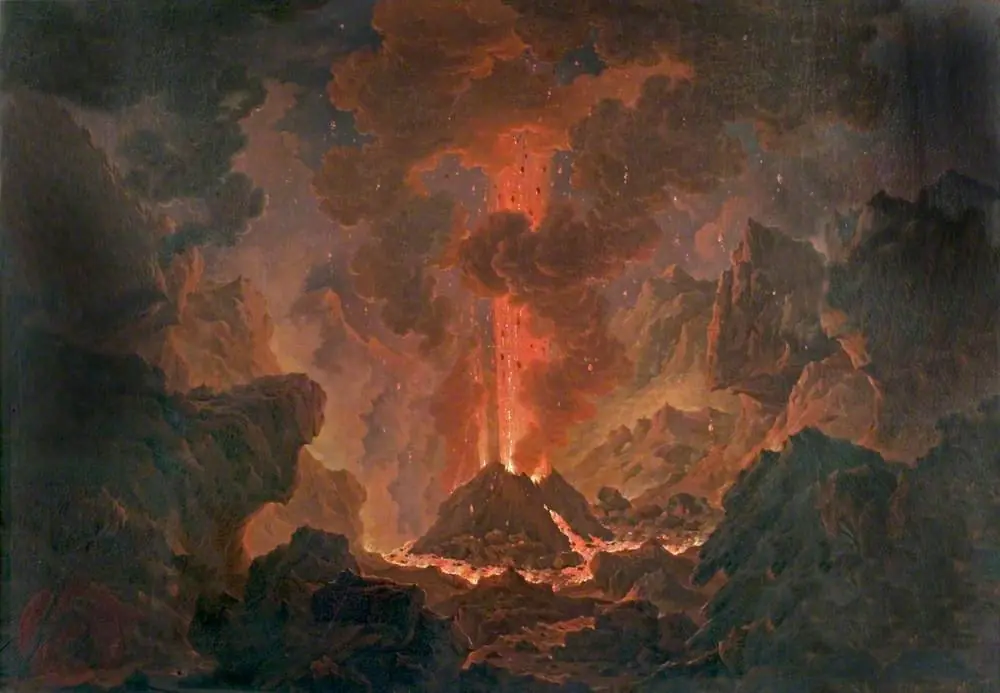 Vesuvius in Eruption, Italy
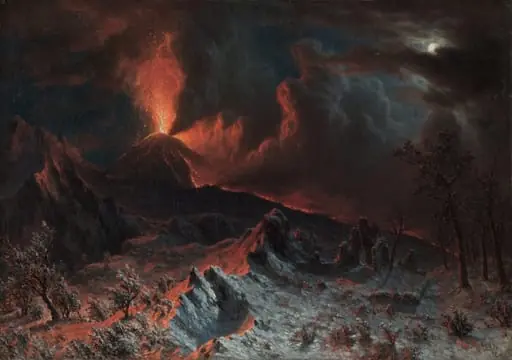 Mount Vesuvius at Midnight
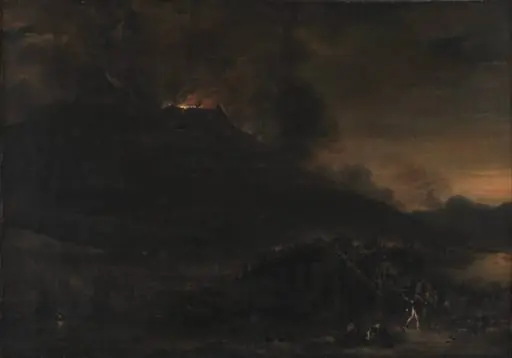 Vesuvius Erupting at Nightfall
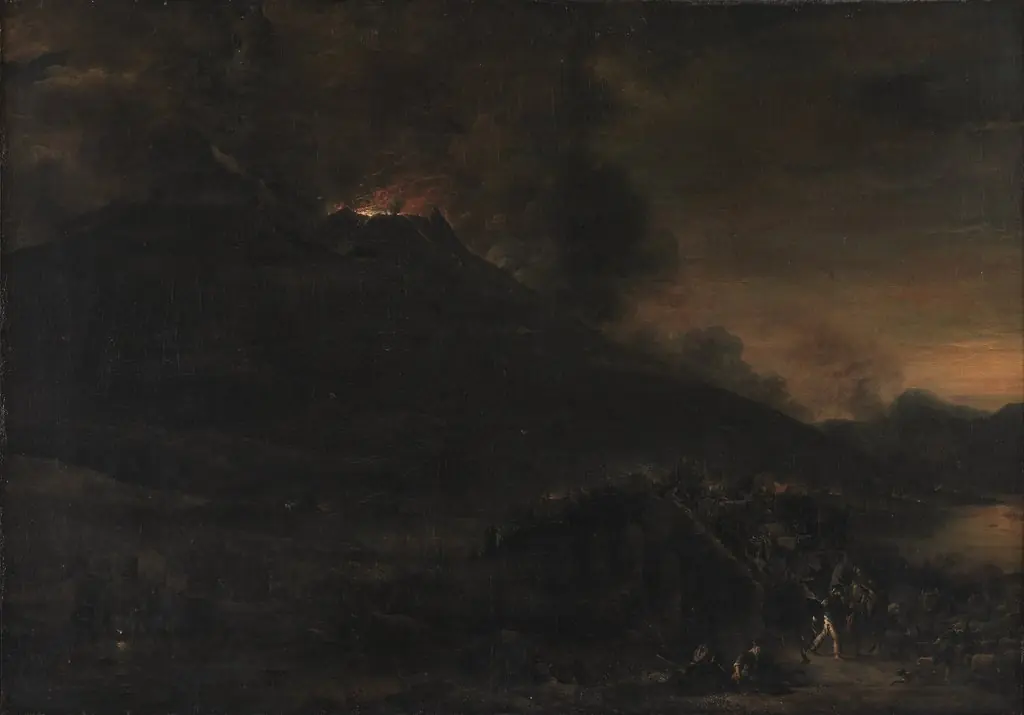 Vesuvius Erupting at Nightfall