Artwork
Madame Georges Anthony and Her Two Sons
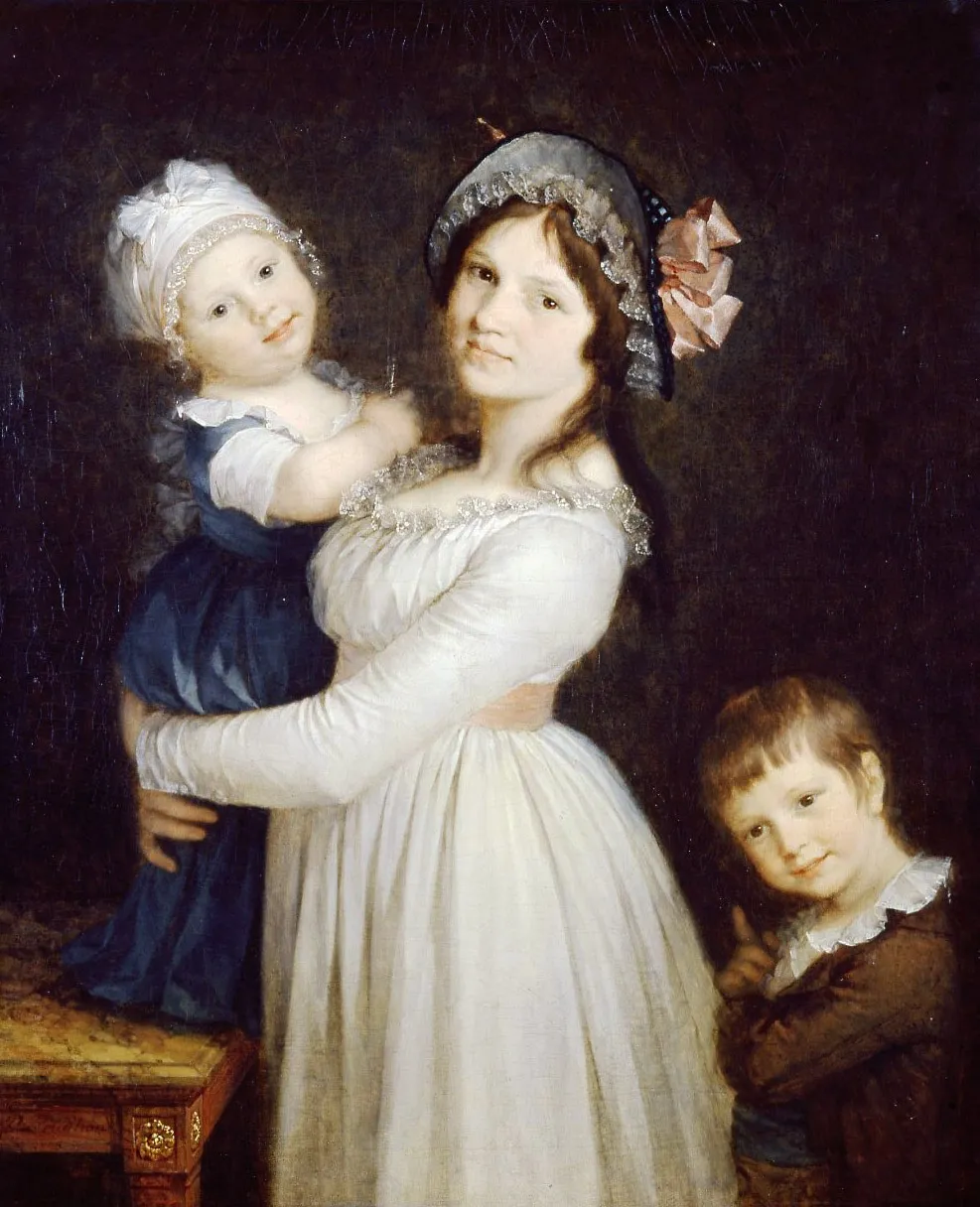
Madame Georges Anthony and Her Two Sons is an oil painting by the Neoclassicist artist Pierre Paul Prud'hon. It dates from 1798 and is held in the collection of the Museum of Fine Arts of Lyon. Painted in 1796 by Pierre-Paul Prud'hon, this oil on canvas portrait depicts Madame Georges Anthony with her two sons.
About this work
The background of the painting is dark, which makes the figures stand out.
This painting shows a woman in a white dress holding a child in her arms. The child is wearing a blue dress and a white head covering. To the right of the woman, a boy is standing and looking at the viewer. The woman and the children are all looking at the viewer.
The woman's dress has a low neckline and long sleeves. The boy on the right is wearing a brown jacket. The background of the painting is dark, which makes the figures stand out.
The painting is a portrait of Madame Georges Anthony and her two sons. It was created by Pierre Paul Prud'hon in 1796. You can learn more about Prud'hon's work by exploring his art.
Overview
Painted in 1796 by Pierre-Paul Prud'hon, this oil on canvas portrait depicts Madame Georges Anthony with her two sons. Created during the artist’s brief stay at the home of the Anthony family in Rigny, the work was a gesture of gratitude for their hospitality. It entered the collection of the Museum of Fine Arts of Lyon in 1892, where it remains today, offering a quiet moment of domestic intimacy from the turbulent years of post-Revolutionary France.
Subject & Meaning
The composition centers on Louise Demandre, wife of postmaster Georges Anthony, holding her youngest child while her older son stands beside her, gazing directly at the viewer. All three figures are oriented toward the observer, creating a sense of quiet engagement. The scene avoids theatricality, instead conveying a restrained tenderness characteristic of Prud'hon’s approach to portraiture during his period of exile from Parisian political turmoil.
Technique & Style
Prud'hon employs soft modeling and muted tonal contrasts to render the figures with a sculptural presence against a dark, undefined background. The white dress of the mother and the boy’s brown jacket are rendered with subtle gradations of light, emphasizing texture without ornamentation. The brushwork is deliberate yet unobtrusive, favoring emotional clarity over decorative flourish, aligning with the artist’s Neoclassical leanings tempered by a sensitivity to psychological nuance.
History & Provenance
Prud'hon painted this work during his retreat from Paris following the Thermidorian Reaction, staying with the Anthony family in Rigny. Alongside a companion portrait of Georges Anthony beside a horse—now in Dijon—this painting was completed in 1796 before his departure. The two works were briefly reunited in Lyon during the 2016 restoration of the Dijon museum, marking a rare convergence of pieces from the same commission.
Context
Created amid the political instability of post-Revolutionary France, the portrait reflects a retreat from public spectacle into private life. While many artists aligned with revolutionary ideals, Prud'hon focused on intimate, human subjects. This work stands apart from the grand narratives of the era, offering instead a calm, personal record of domestic stability during a time of widespread upheaval.
Legacy
Though less widely known than Prud'hon’s mythological or allegorical works, this portrait exemplifies his ability to convey emotional depth through understated composition. Its preservation in Lyon and its pairing with the portrait of Georges Anthony provide insight into the artist’s personal relationships and his capacity to transform gratitude into enduring visual testimony.
Artist & collection
Artist
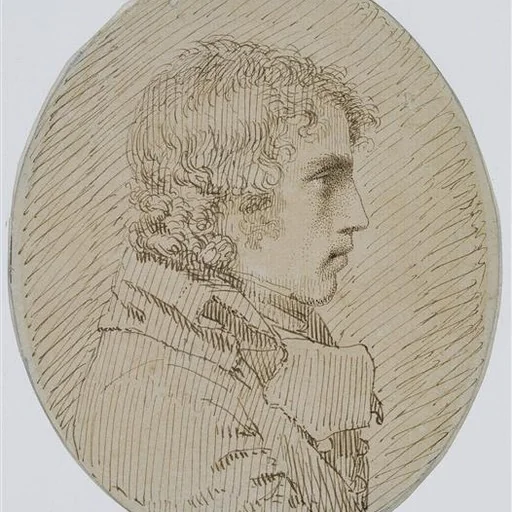
Pierre-Paul Prud'hon (French pronunciation: , 4 April 1758 – 16 February 16, 1823) was a French Neo-classical painter and draughtsman best known in his own time for his allegorical paintings and portraits, now for his drawings.

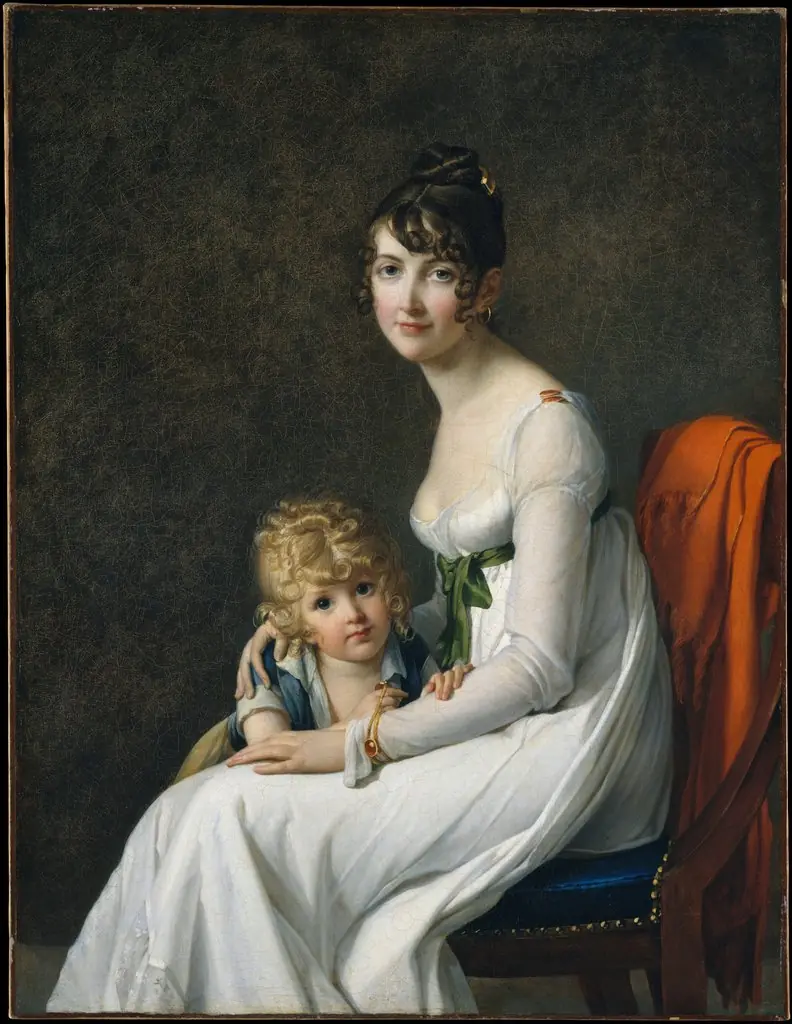 Madame Philippe Panon Desbassayns de Richemont (Jeanne Eglé Mourgue, 1778–1855) and Her Son, Eugène (1800–1859)
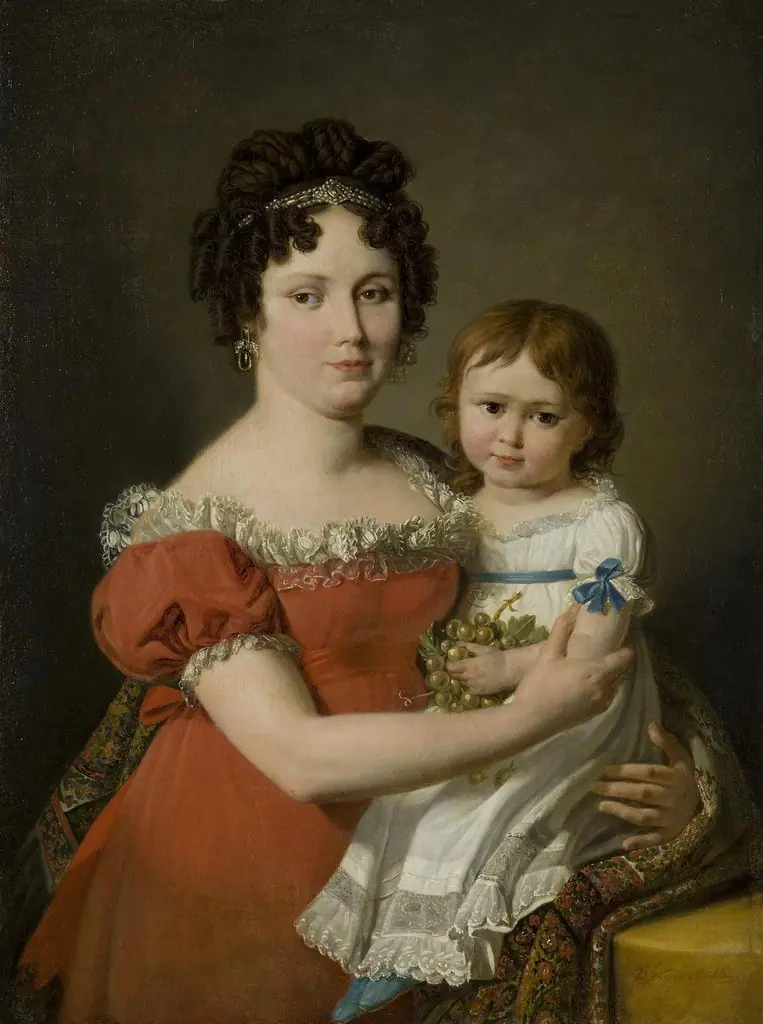 Portrait of A.P. Mailevskaya with Her Daughter
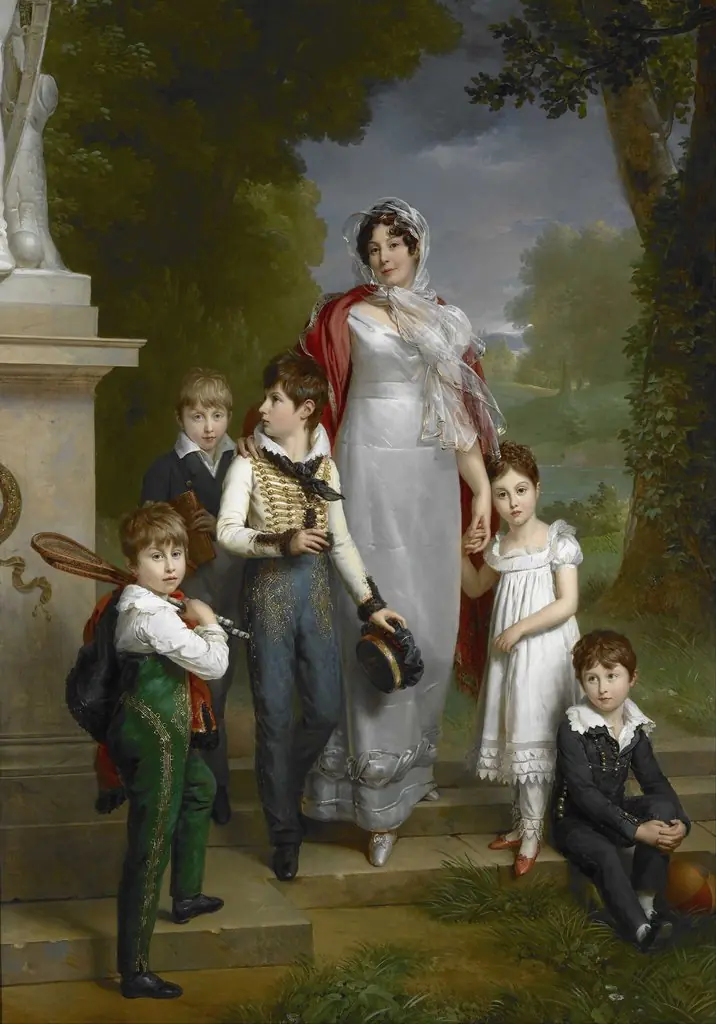 Portrait of Louise-Antoinette-Scholastique Guéhéneuc, Madame la Maréchale Lannes, Duchesse de Montebello, with her Children
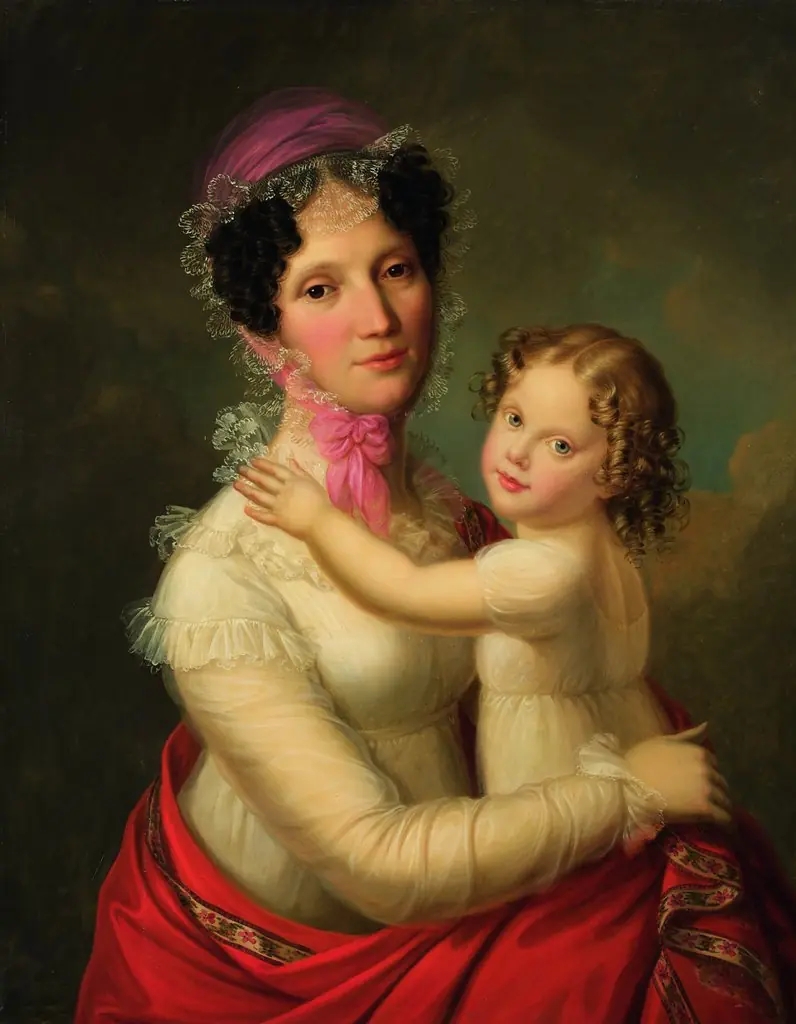 Eleonora Mayer, Baroness zu Gravenegg with her daughter Isabella
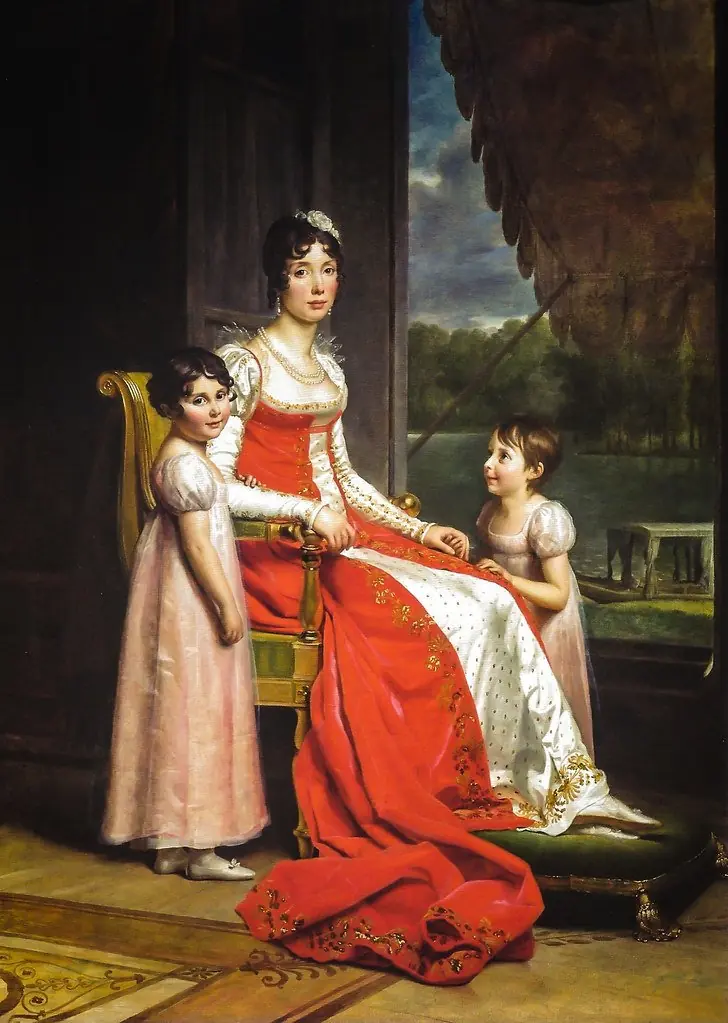 Julie Bonaparte as Queen of Spain with her Daughters, Zénaïde and Charlotte
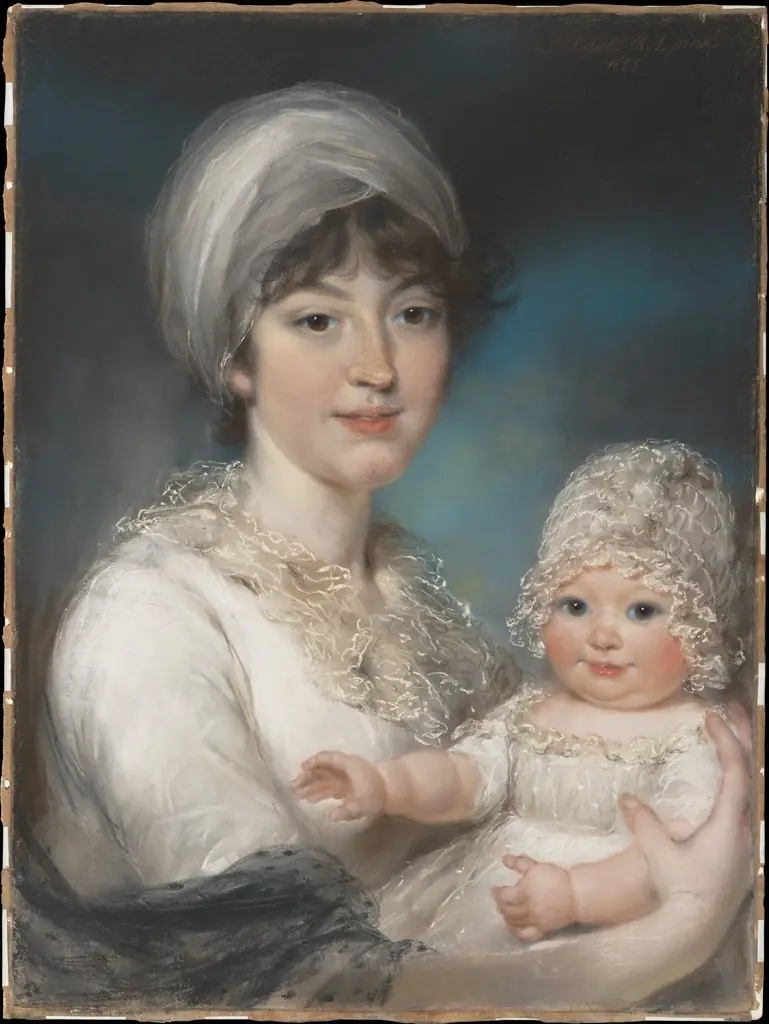 Mrs. Robert Shurlock (Henrietta Ann Jane Russell, 1775–1849) and Her Daughter Ann
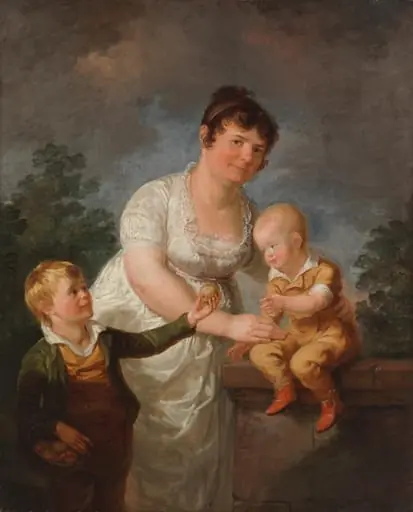 Taiteilijan äitipuoli Mariana Juliana Lauréus poikineen
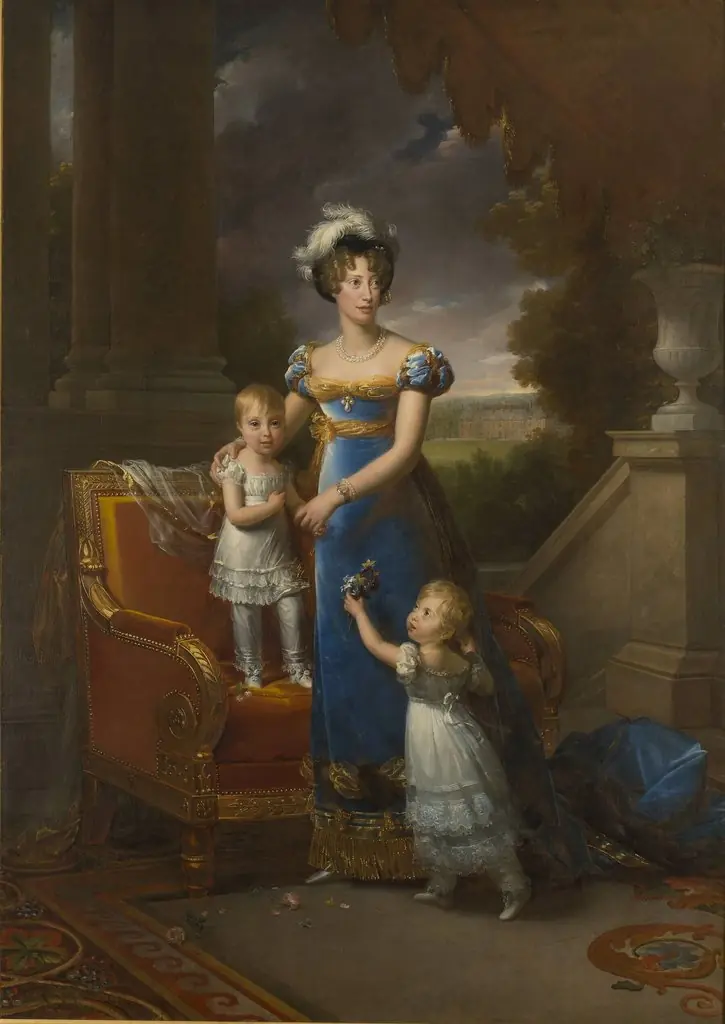 The Duchess of Berry and her Children
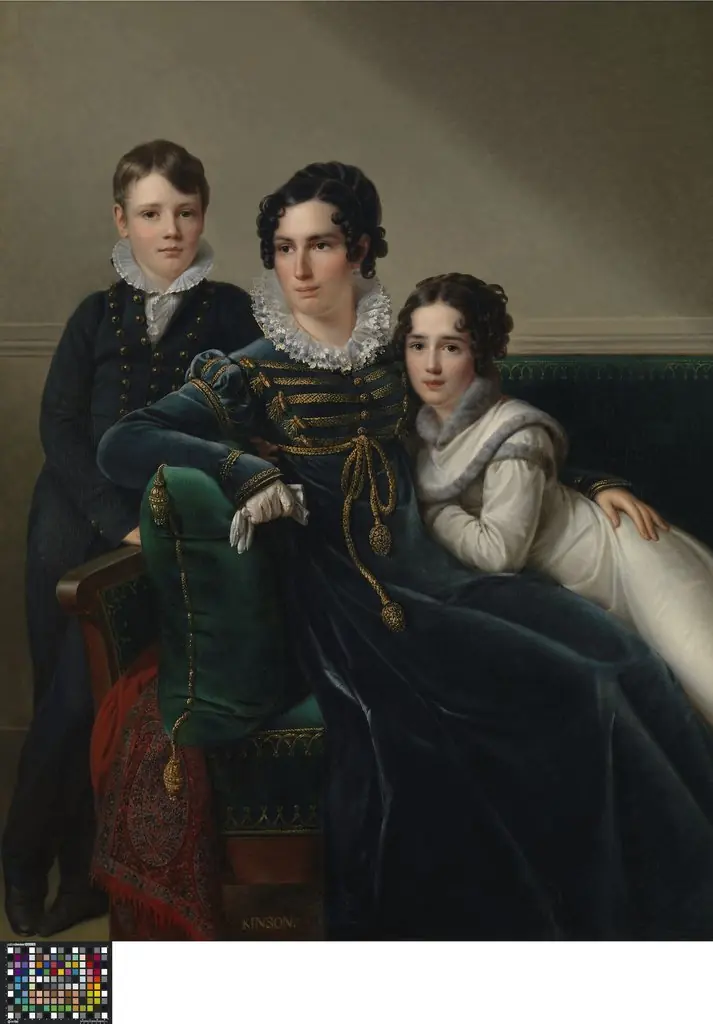 Portret van een vrouw met haar twee kinderen
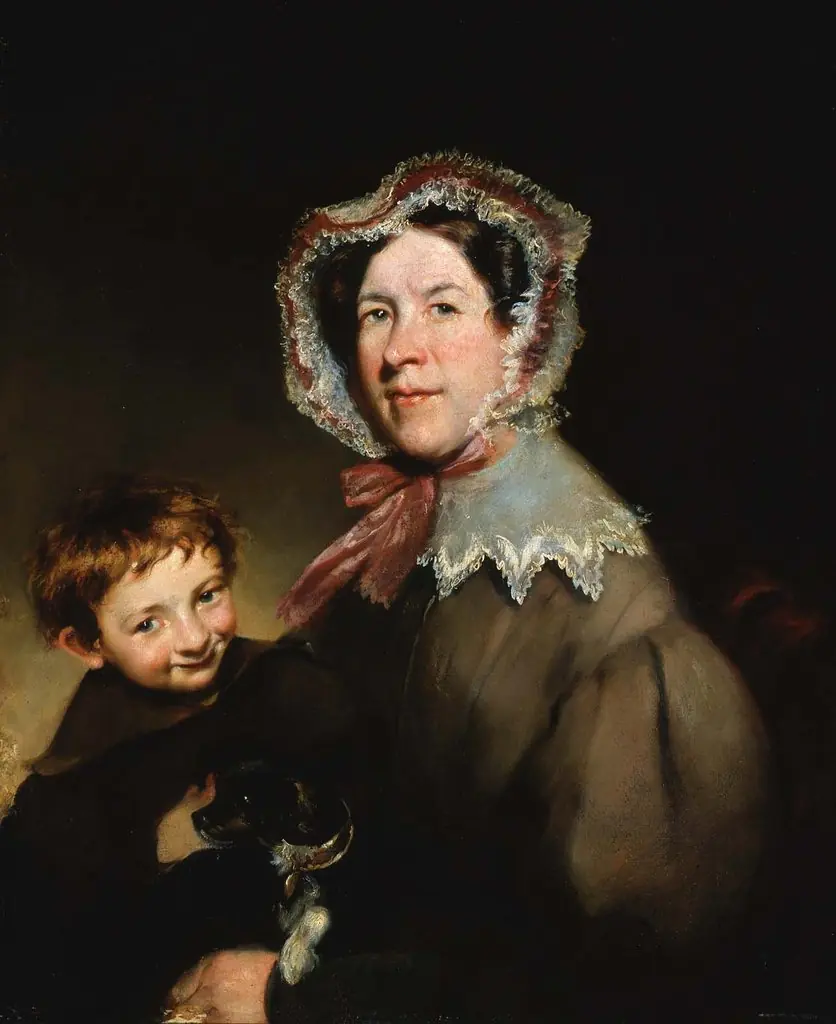 Deliverance Mapes Waldo and Her Son