Artwork
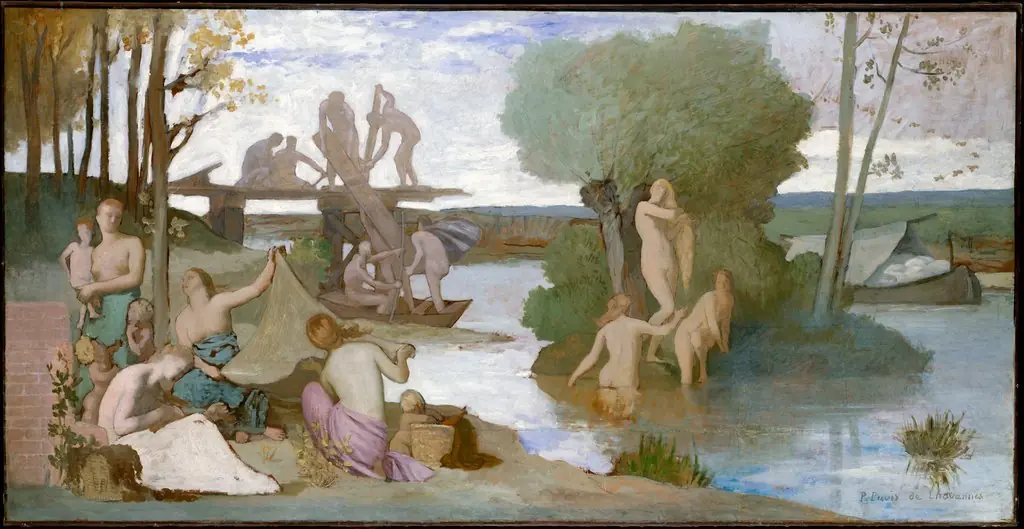
The Fisherman's Family
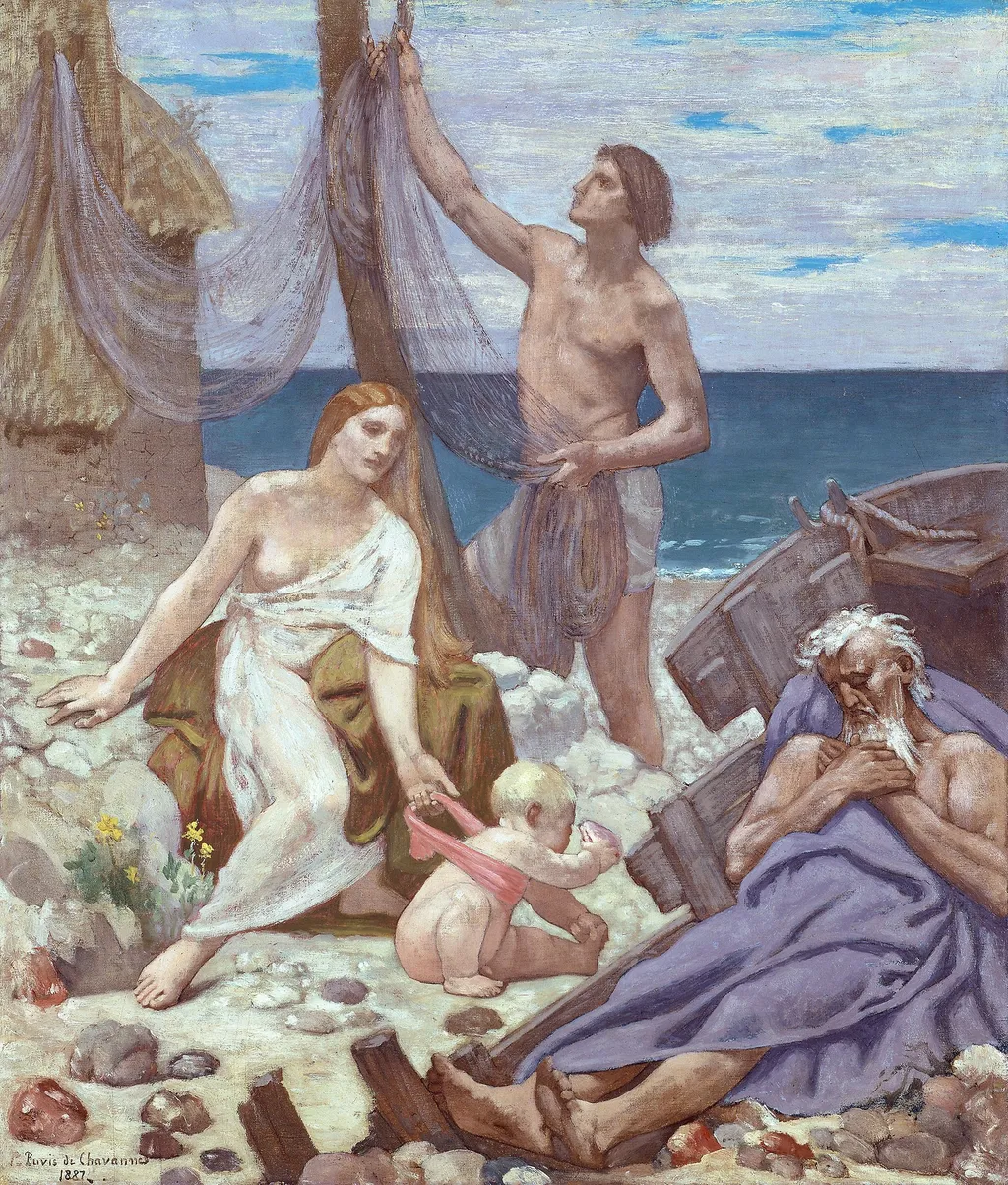
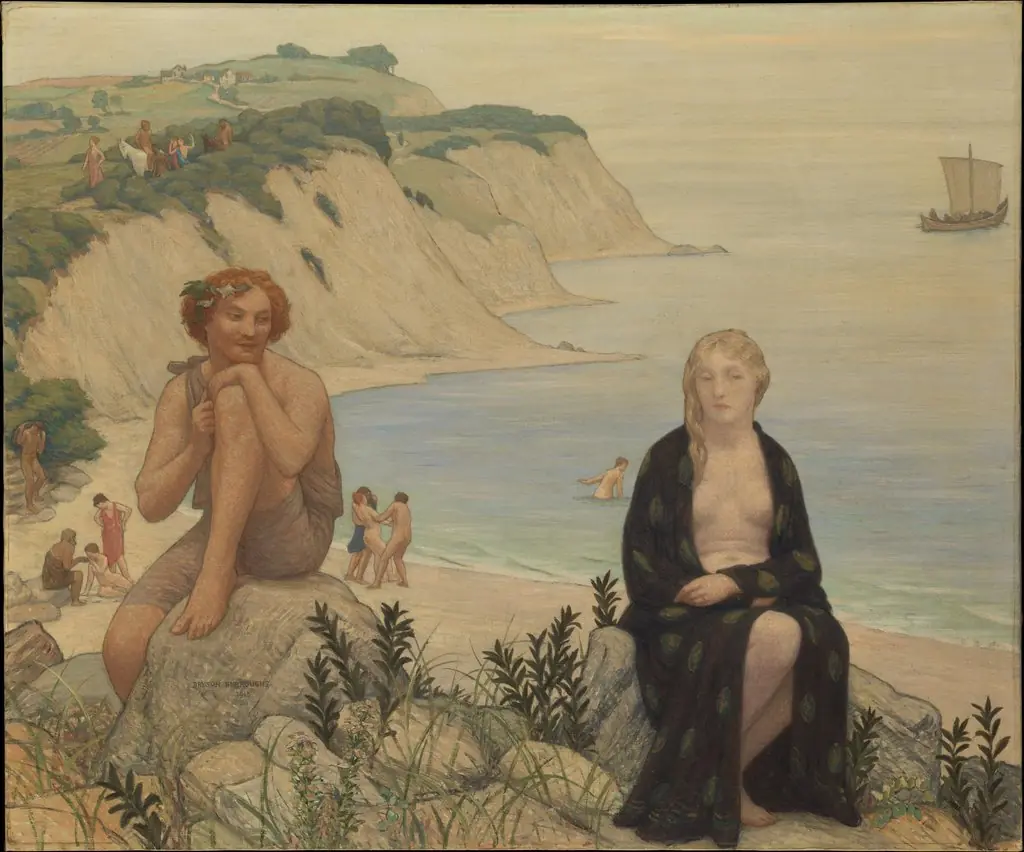
The Fisherman's Family is an oil painting by the Post-Impressionist artist Pierre Puvis de Chavannes. It dates from 1894 and is held in the collection of the Art Institute of Chicago.
About this work
Overview
A prominent French muralist of the late 19th century, he was known for his restrained compositions and quiet emotional tone.
Pierre Puvis de Chavannes painted *The Fisherman's Family* in 1894 using oil on canvas. A prominent French muralist of the late 19th century, he was known for his restrained compositions and quiet emotional tone. Though associated with post-impressionism, his approach diverged from the movement’s chromatic experimentation, favoring simplified forms and harmonious arrangements that emphasized stillness over movement.
Subject & Meaning
The painting portrays a fisherman and his family on a windswept shore, gathered in a moment of quiet repose. The central figure holds a net, symbolizing labor and sustenance, while the seated woman and child suggest domestic continuity. An elderly man, withdrawn in thought, adds a layer of contemplation. The scene avoids narrative drama, instead evoking endurance, generational ties, and the rhythm of coastal life through stillness.
Technique & Style
Puvis employed muted earth tones and soft, blended brushwork to create a hushed atmosphere. Forms are simplified and flattened, with minimal modeling, reinforcing a sense of timelessness. The composition is carefully balanced, with figures arranged in a frieze-like manner against a broad, unbroken sea and sky. This deliberate restraint reflects his muralist training and preference for symbolic clarity over naturalistic detail.
History & Provenance
Completed in 1894, the painting entered the collection of the Art Institute of Chicago in the early 20th century. It was acquired during a period when American institutions were actively expanding their holdings of European art. Puvis’s reputation as a leading figure in French academic and symbolic painting made his works desirable to collectors seeking alternatives to Impressionist vibrancy.
Context
In the 1890s, France was redefining its cultural identity after the Franco-Prussian War and the Paris Commune. Puvis, a co-founder of the Société Nationale des Beaux-Arts, responded with art that emphasized dignity, order, and moral quietude. His work stood apart from both academic historicism and avant-garde experimentation, offering a meditative alternative that resonated with a society seeking stability.
Legacy
Puvis’s emphasis on structure, subdued color, and symbolic content influenced a generation of Symbolist and modernist painters, including Gauguin and the Nabis. Though less celebrated today than his contemporaries, his approach to composition and emotional restraint helped pave the way for 20th-century tendencies toward abstraction and psychological depth in figurative art.
Own this work as a print
Artist & collection
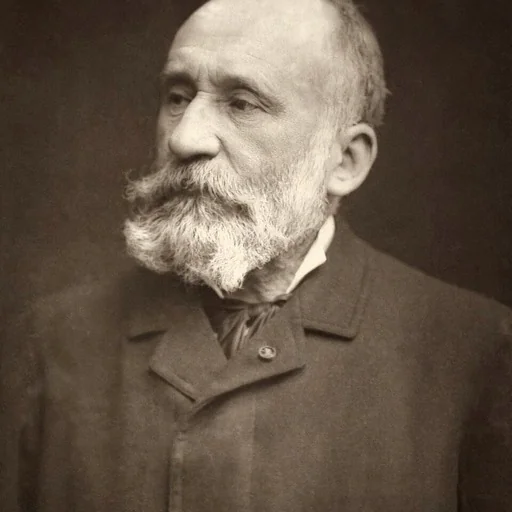
Artist
Pierre Puvis de Chavannes (French pronunciation: ; 14 December 1824 – 24 October 1898) was a French painter known for his mural painting, who came to be known as "the painter for France".