Artwork
Wandering Musicians
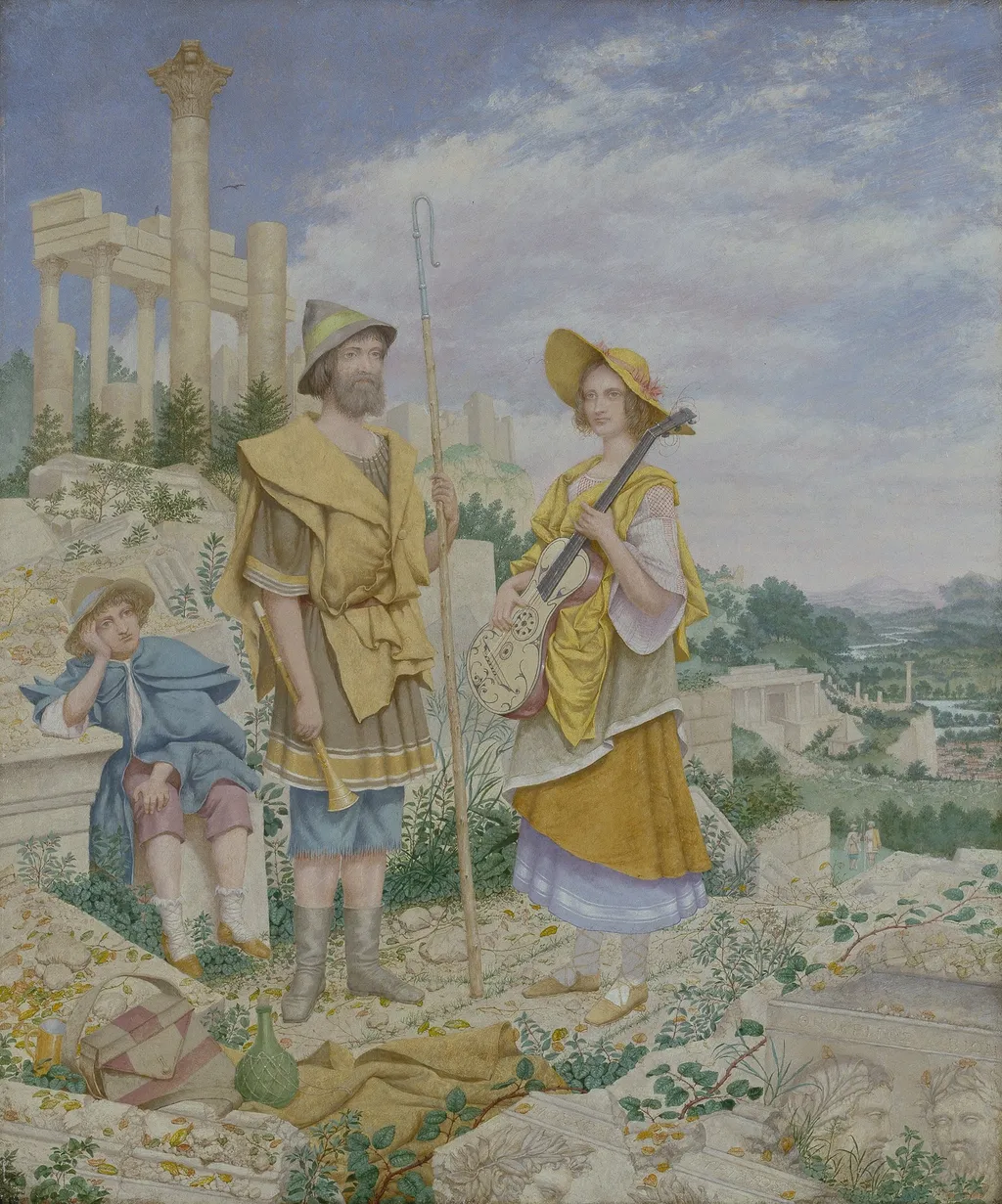
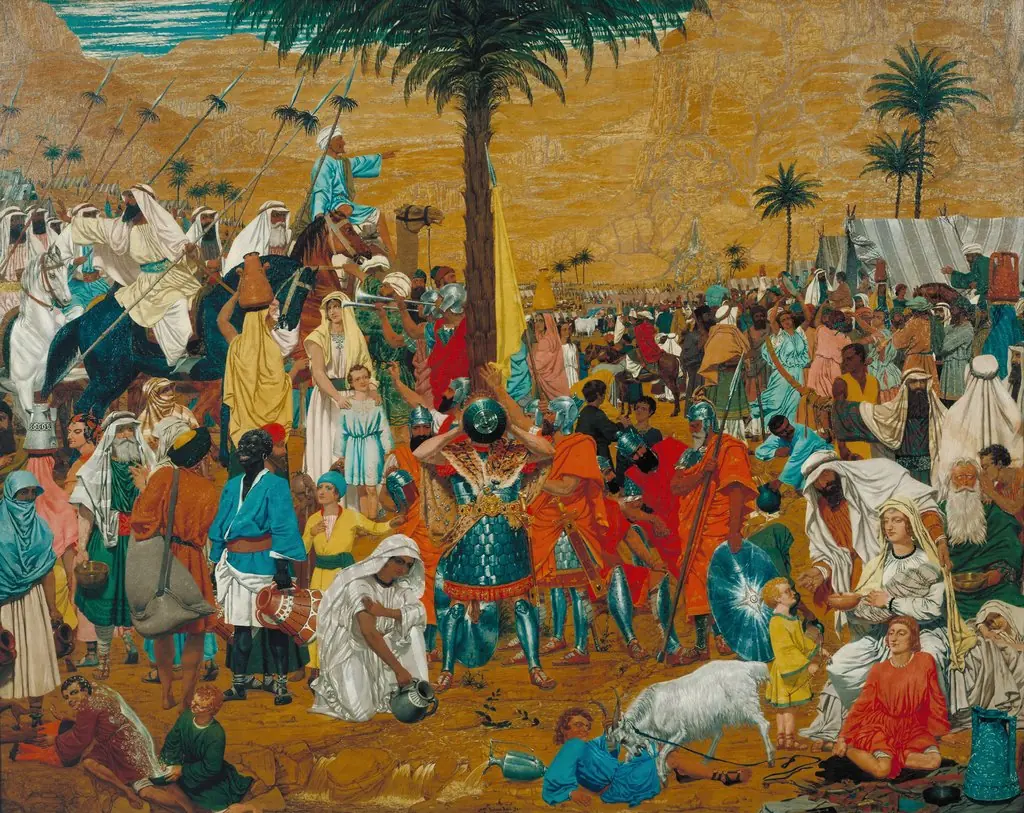
Wandering Musicians is an oil painting by the Post-Impressionist artist Richard Dadd. It is held in the collection of the Tate.
About this work
Overview
It is held in the collection of Tate Britain and belongs to a late phase of his career, produced after decades of confinement in psychiatric institutions.
Richard Dadd painted *Wandering Musicians* in 1890 using oil on canvas. Though created during the post-impressionist period, the work reflects Dadd’s lifelong fascination with fantastical and mythic imagery. It is held in the collection of Tate Britain and belongs to a late phase of his career, produced after decades of confinement in psychiatric institutions. The painting’s quiet, otherworldly tone contrasts with the intensity of his earlier works.
Subject & Meaning
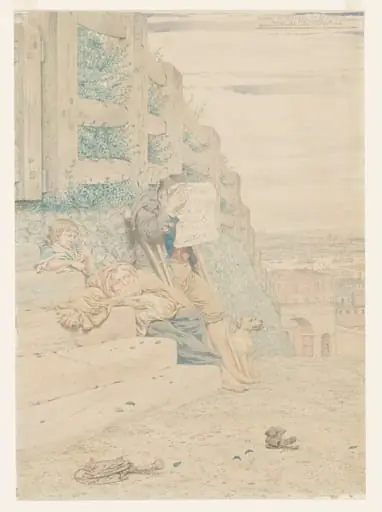
The painting depicts three figures—a man with a shepherd’s staff, a woman holding a stringed instrument, and a boy seated on a stone—moving through a desolate, classical landscape. Their attire and instruments suggest a timeless, perhaps allegorical journey. The boy’s direct gaze toward the viewer introduces an enigmatic connection between observer and scene, hinting at themes of exile, memory, or spiritual wandering without explicit narrative.
Technique & Style
Dadd rendered the scene with precise, almost miniature-like detail, characteristic of his earlier fairy paintings. The figures are carefully outlined, their fabrics and textures rendered with quiet precision. The landscape, though expansive, is composed with controlled perspective and muted tones, avoiding dramatic lighting. The sky’s soft clouds and the ruins’ weathered stone contribute to a still, dreamlike atmosphere, distancing the scene from realism.
History & Provenance
Dadd completed this work while residing at Broadmoor Hospital, where he was confined following a violent episode in 1843. Despite his institutionalization, he continued to paint prolifically, often drawing on literary, mythological, and personal symbolism. *Wandering Musicians* entered the Tate Britain collection through established channels of British art acquisition, reflecting posthumous recognition of his unique vision.
Context
Created in the late Victorian era, the painting diverges from prevailing trends in British art, which favored realism or social commentary. Dadd’s focus on solitary, symbolic figures in ancient ruins aligns with Romantic and Pre-Raphaelite interests in the past, yet his psychological depth and isolation set him apart. His work remained largely unknown during his lifetime, overshadowed by his mental illness.
Legacy
Though not widely exhibited in his time, Dadd’s later works, including *Wandering Musicians*, gained scholarly attention in the 20th century for their fusion of meticulous technique and psychological complexity. The painting is now regarded as a quiet testament to artistic endurance under confinement, offering insight into how inner worlds can manifest through controlled, meditative imagery.
Own this work as a print
Artist & collection
Artist
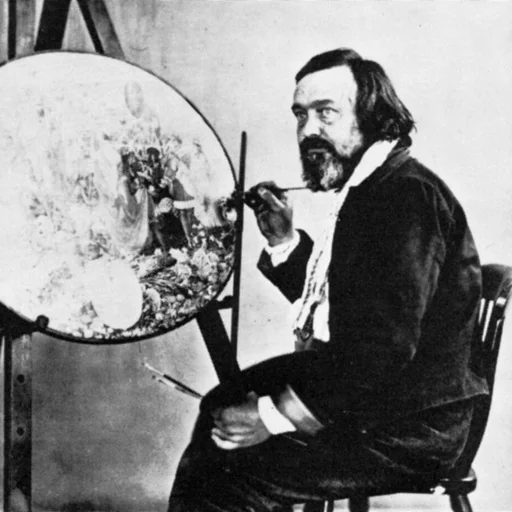
Richard Dadd (1 August 1817 – 7 January 1886) was an English painter of the Victorian era, noted for his depictions of fairies and other supernatural subjects, Orientalist scenes, and enigmatic genre scenes, rendered with obsessively…