Artwork
Pieter Aertsen. Crucifixion
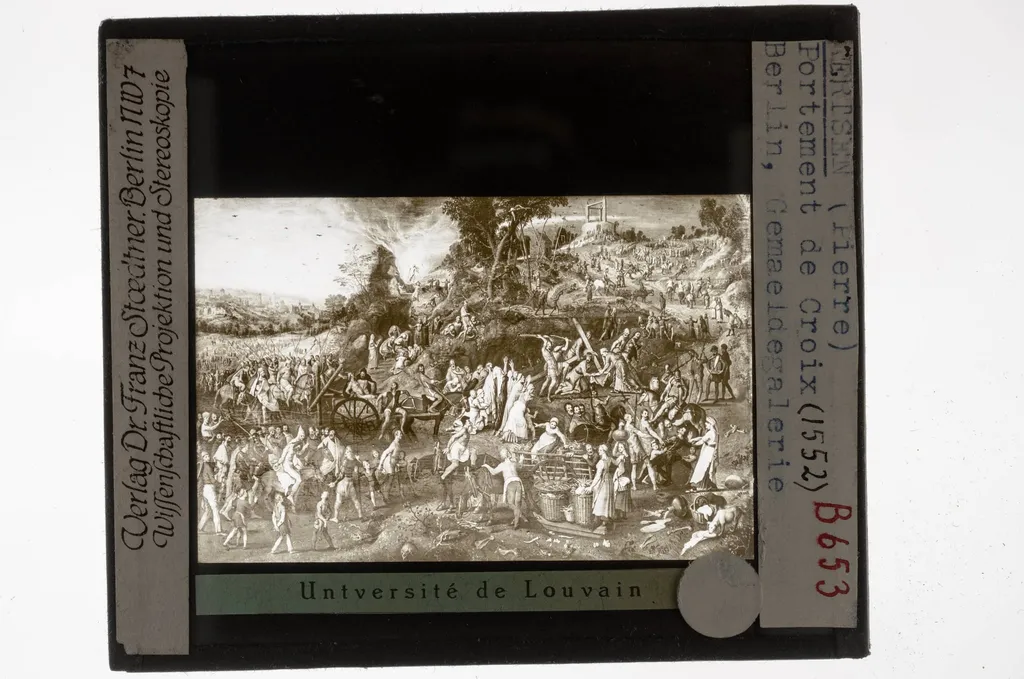
Pieter Aertsen. Crucifixion is an unspecified painting by the Early Baroque Italian artist Pieter Aertsen. It dates from 1552 and is held in the collection of the Catholic University of Leuven.
About this work
Overview
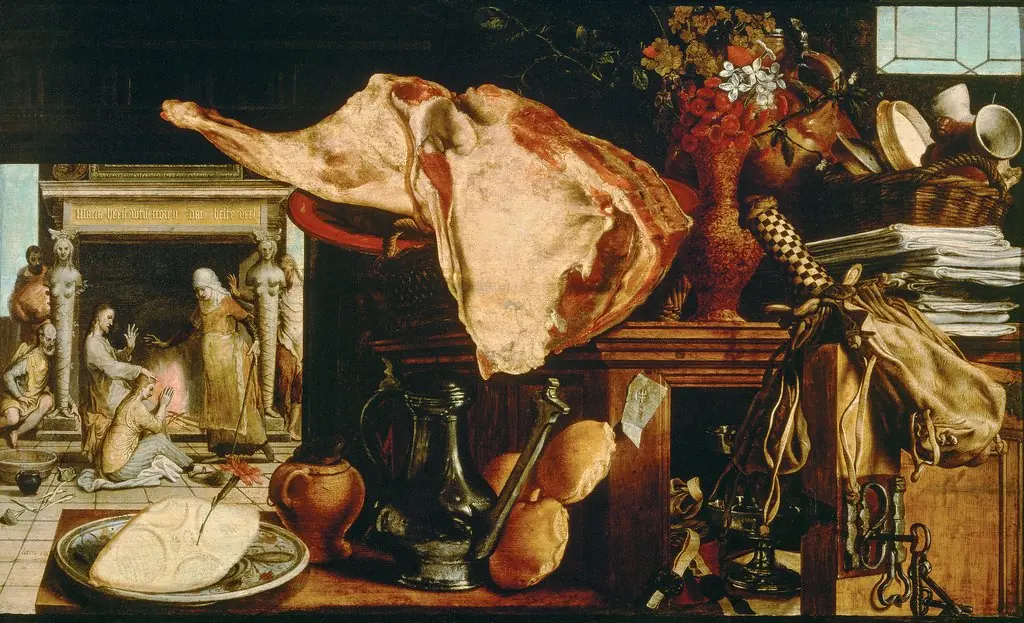
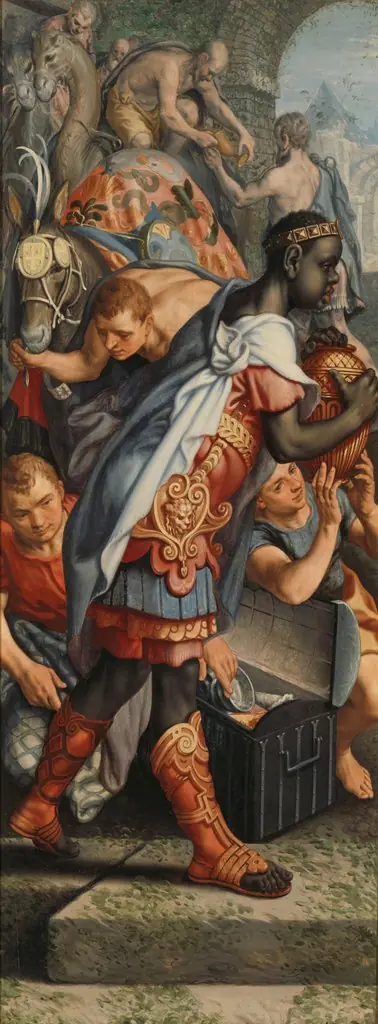
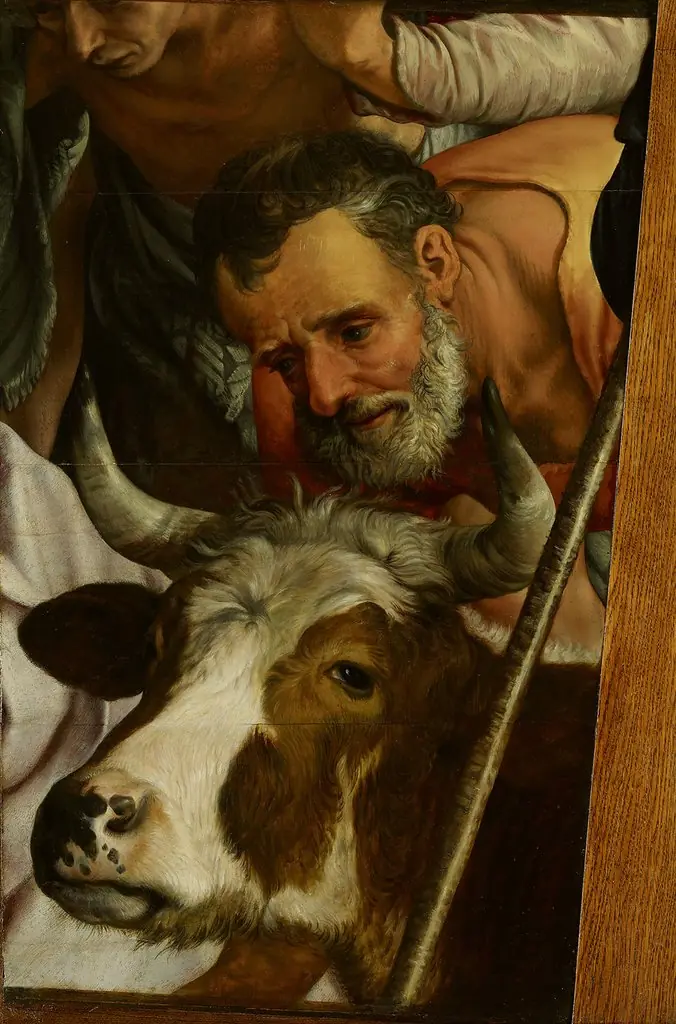
Painted in 1552 by Pieter Aertsen, this oil-on-panel work depicts the Crucifixion with unusual spatial complexity. Rather than centering the sacred event, Aertsen embeds it within a bustling, mundane landscape. The composition balances religious solemnity with vivid depictions of daily life, a hallmark of Northern Renaissance art that sought to ground divine narratives in observable reality.
Subject & Meaning
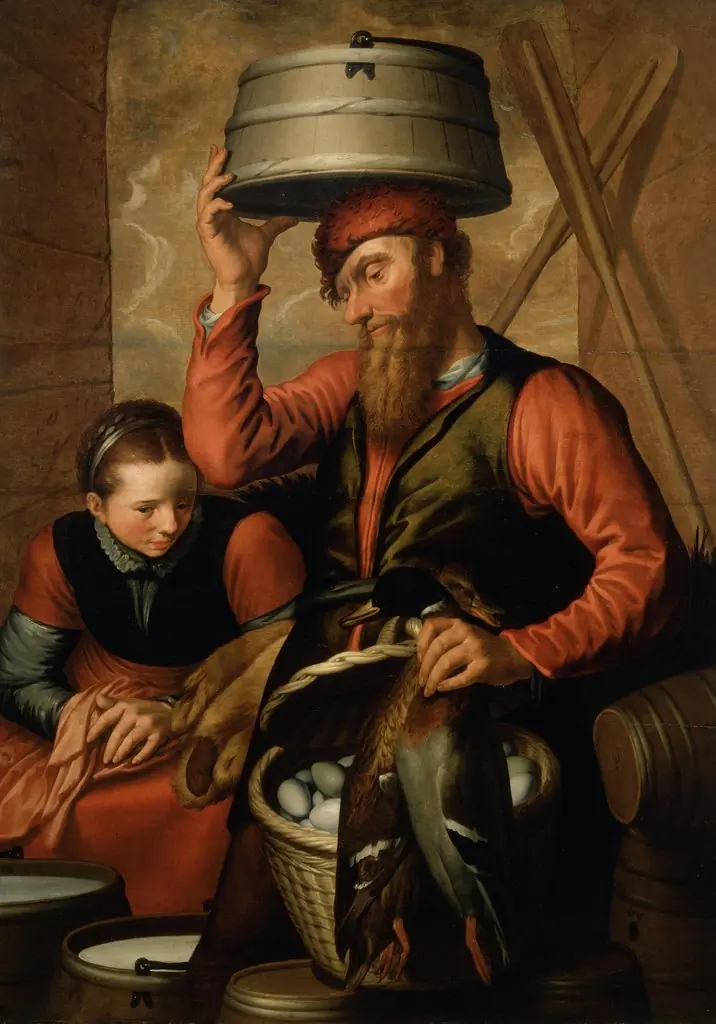
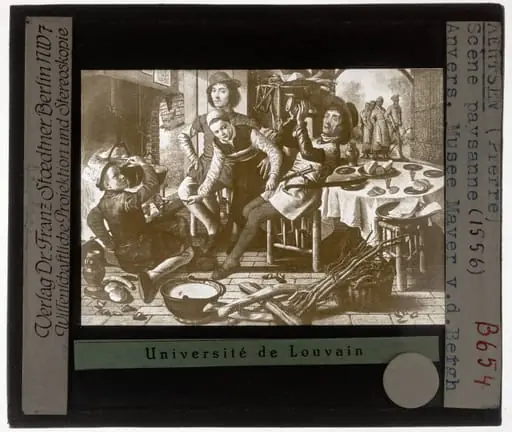
A vendor selling eggs in the foreground, along with other figures going about their routines, suggests a world indifferent to the sacred moment.
The central image of Christ on the cross is surrounded by a crowd of onlookers, some engaged in ordinary activities. A vendor selling eggs in the foreground, along with other figures going about their routines, suggests a world indifferent to the sacred moment. This juxtaposition may reflect theological ideas about human distraction or the coexistence of the divine and the profane in everyday existence.
Technique & Style
Aertsen employs chiaroscuro to model form and direct attention: light falls sharply on the cross and Christ’s body, while faces in the crowd remain in shadow, enhancing emotional distance. The brushwork is precise, with attention to texture in fabrics, skin, and wood. The panel’s small scale and detailed realism align with Northern Renaissance traditions, emphasizing observation over idealization.
History & Provenance
The painting entered the collection of the Staatliche Museen zu Berlin in the 19th century, likely through acquisitions of Northern European works. Earlier provenance is undocumented, but its survival through centuries suggests it was valued by private collectors before institutional acquisition. The glass slide referenced in archival records indicates its use in 19th-century art education at KU Leuven.
Context
In mid-16th-century Antwerp, religious imagery was evolving amid Reformation tensions. Aertsen’s inclusion of secular detail may have responded to growing interest in naturalism and moral reflection. His approach diverged from traditional altarpieces, offering viewers a visual meditation on attention, indifference, and the presence of the sacred amid ordinary life.
Legacy
Aertsen’s fusion of sacred and secular themes influenced later Dutch genre painting, particularly in the way everyday scenes carried moral weight. While not widely copied, his compositional strategy—embedding the divine within the mundane—became a subtle precedent for artists seeking to explore spiritual themes through realism rather than symbolism.
Artist & collection
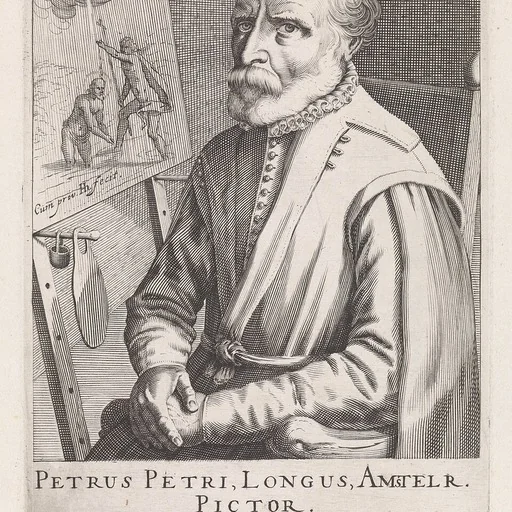
Artist
Pieter Aertsen (1508 in Amsterdam – 2 June 1575 in Amsterdam), called Lange Piet ("Tall Pete") because of his height, was a Dutch painter in the style of Northern Mannerism.