Artwork
The Lute Player
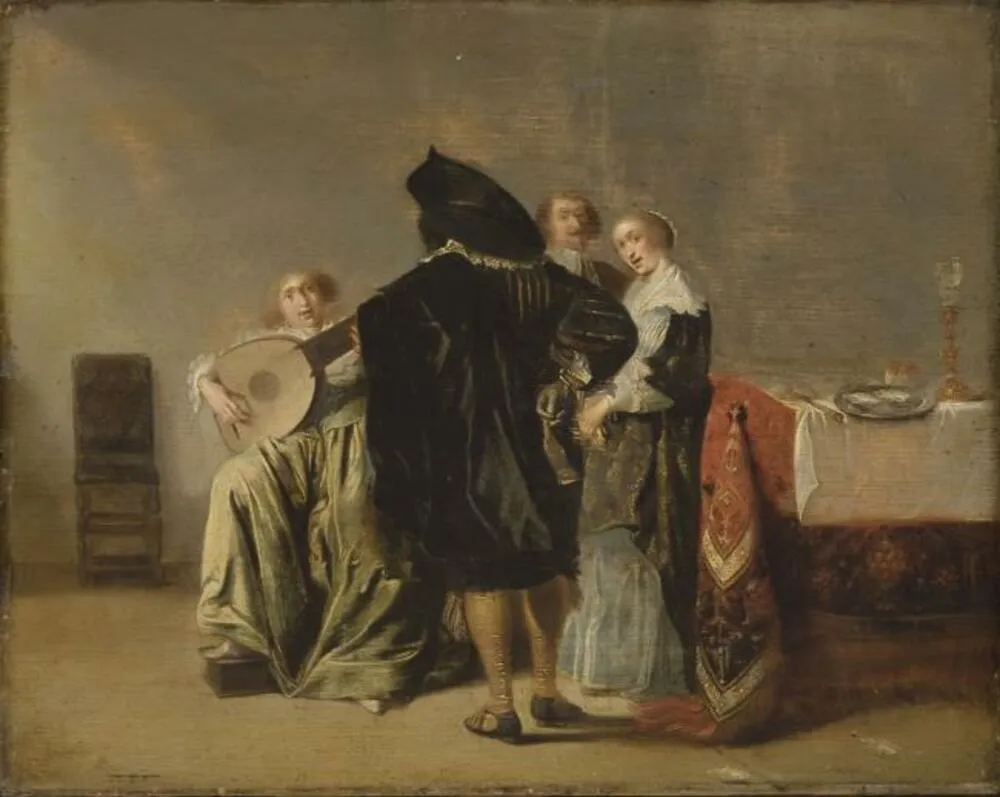
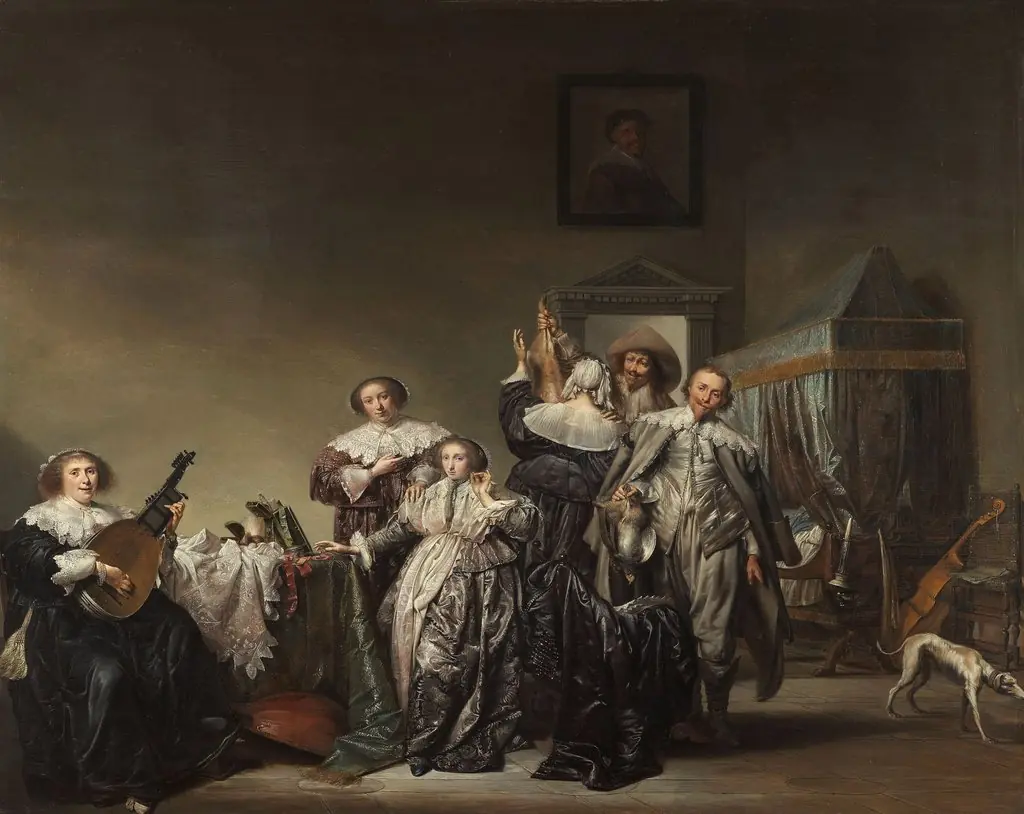
The Lute Player is an oil painting by the Dutch Golden Age artist Pieter Codde. It dates from 1630 and is held in the collection of the Philadelphia Museum of Art.
About this work
Overview
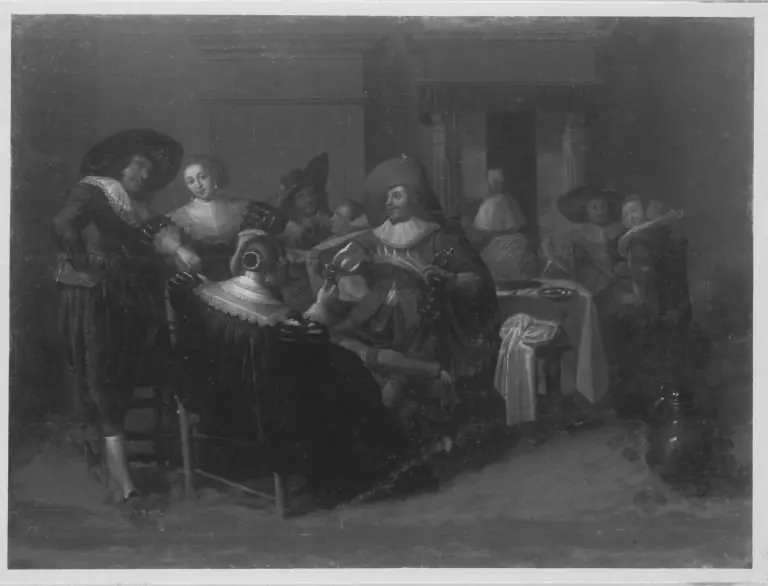
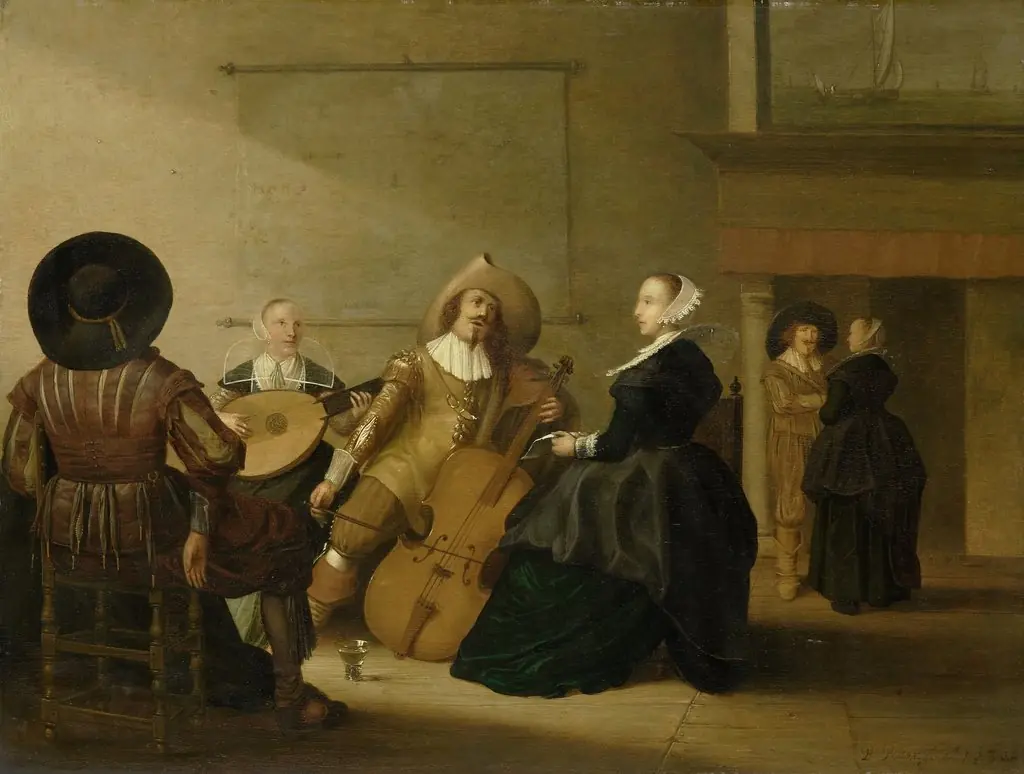
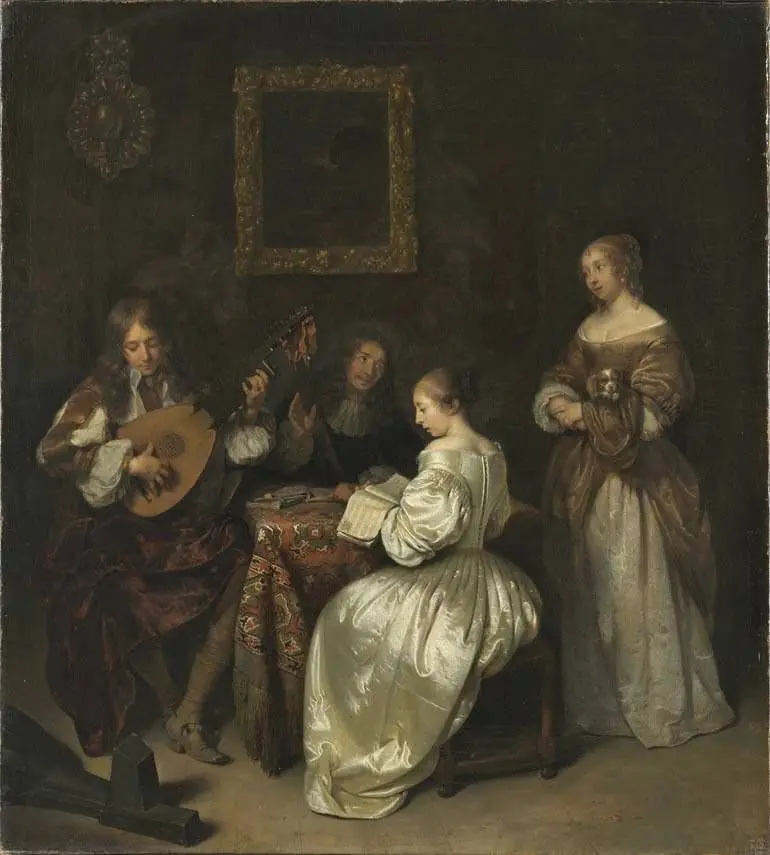
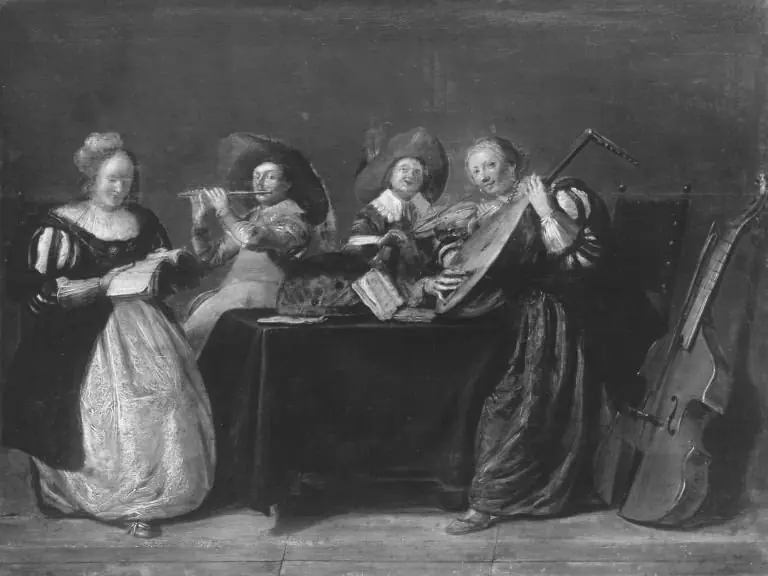
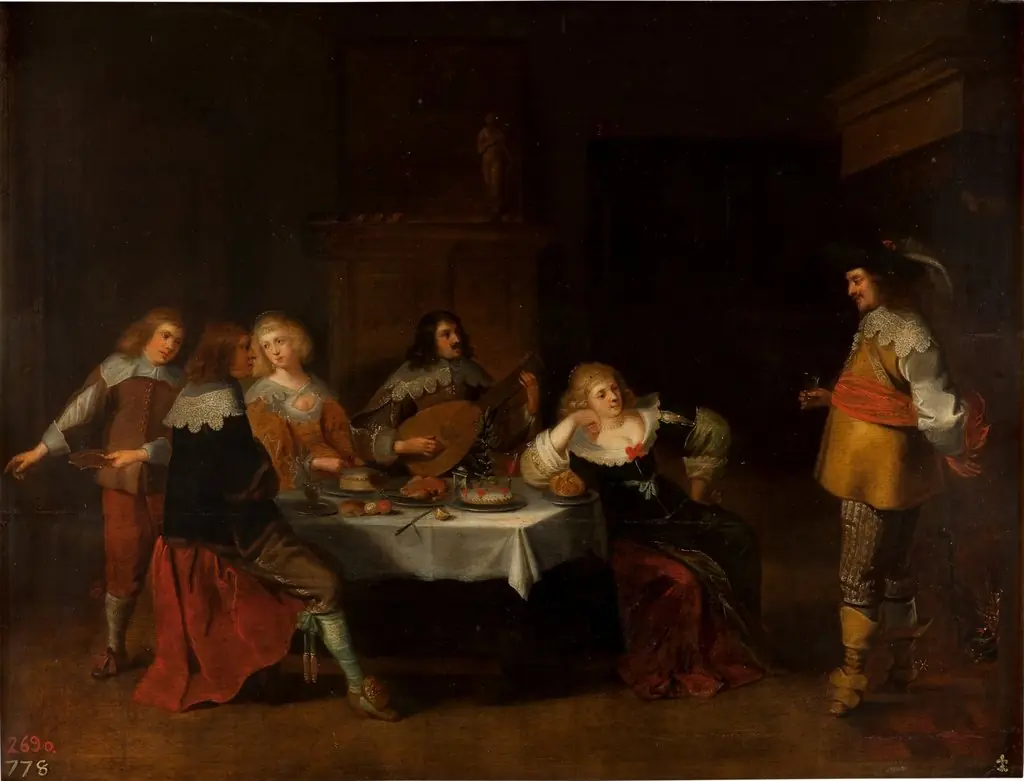
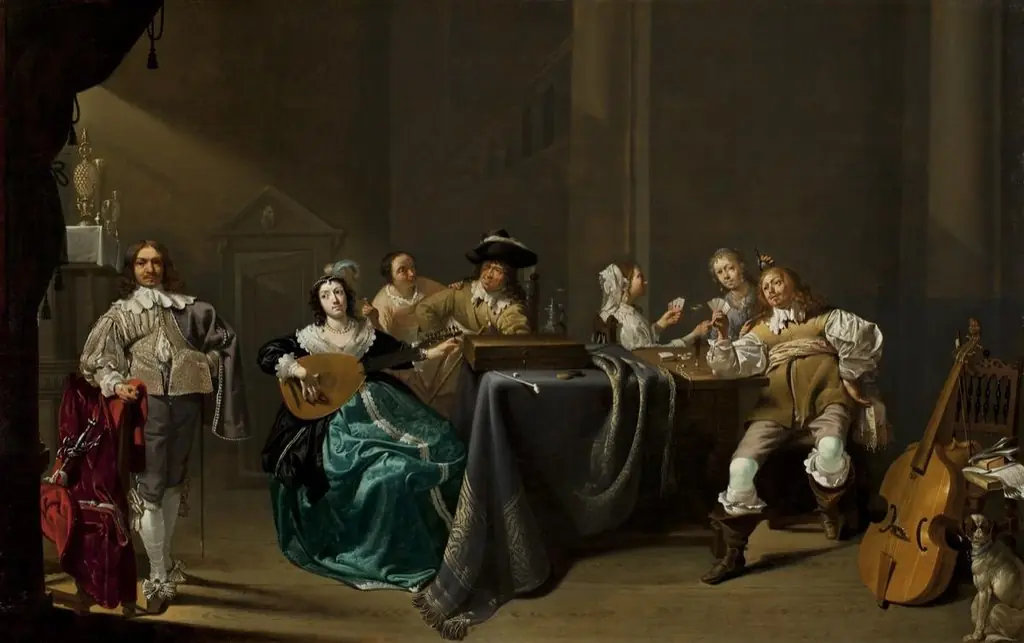
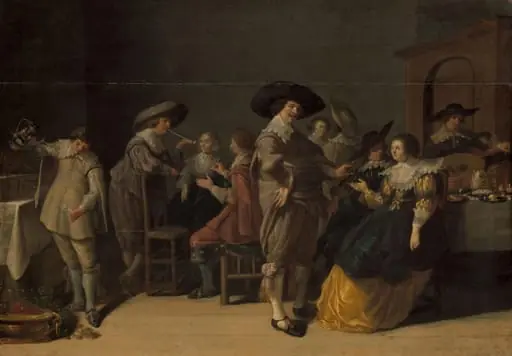
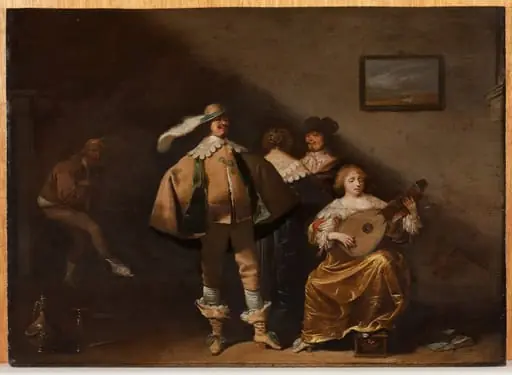
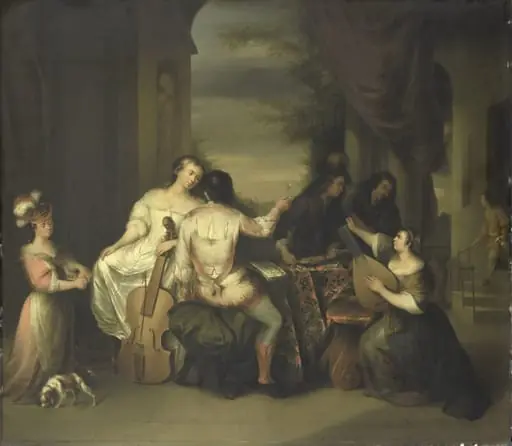
Pieter Codde’s oil painting The Lute Player, executed around 1630, depicts an intimate interior scene in which four figures are gathered. A seated musician strums a lute while three companions stand nearby, observing the performance. The setting is modest, featuring a table covered with a white cloth and assorted objects, rendered with a naturalistic attention to detail.
Subject & Meaning
The work captures a moment of private entertainment, emphasizing the social function of music in 17th‑century Dutch life. The attentive gazes of the standing figures suggest appreciation and shared enjoyment, while the lute—an emblem of cultured leisure—anchors the composition as a study of convivial interaction rather than a narrative episode.
Technique & Style
Codde employs a smooth, almost polished brushwork characteristic of Dutch genre painting, achieving a convincing sense of volume and texture in both fabric and wood. Light falls softly across the scene, highlighting the sheen of the tablecloth and the lute’s strings, while subtle chiaroscuro models the figures, lending them a lifelike presence.
History & Provenance
Created in the early 1630s, The Lute Player entered the collection of the Philadelphia Museum of Art, where it remains on view. Its acquisition reflects the museum’s broader commitment to representing Dutch Golden Age genre scenes, offering visitors insight into everyday domestic culture of the period.
Artist & collection

Artist
Pieter Jacobsz Codde was a Dutch painter of genre works, guardroom scenes and portraits.