Artwork
The descent from the cross
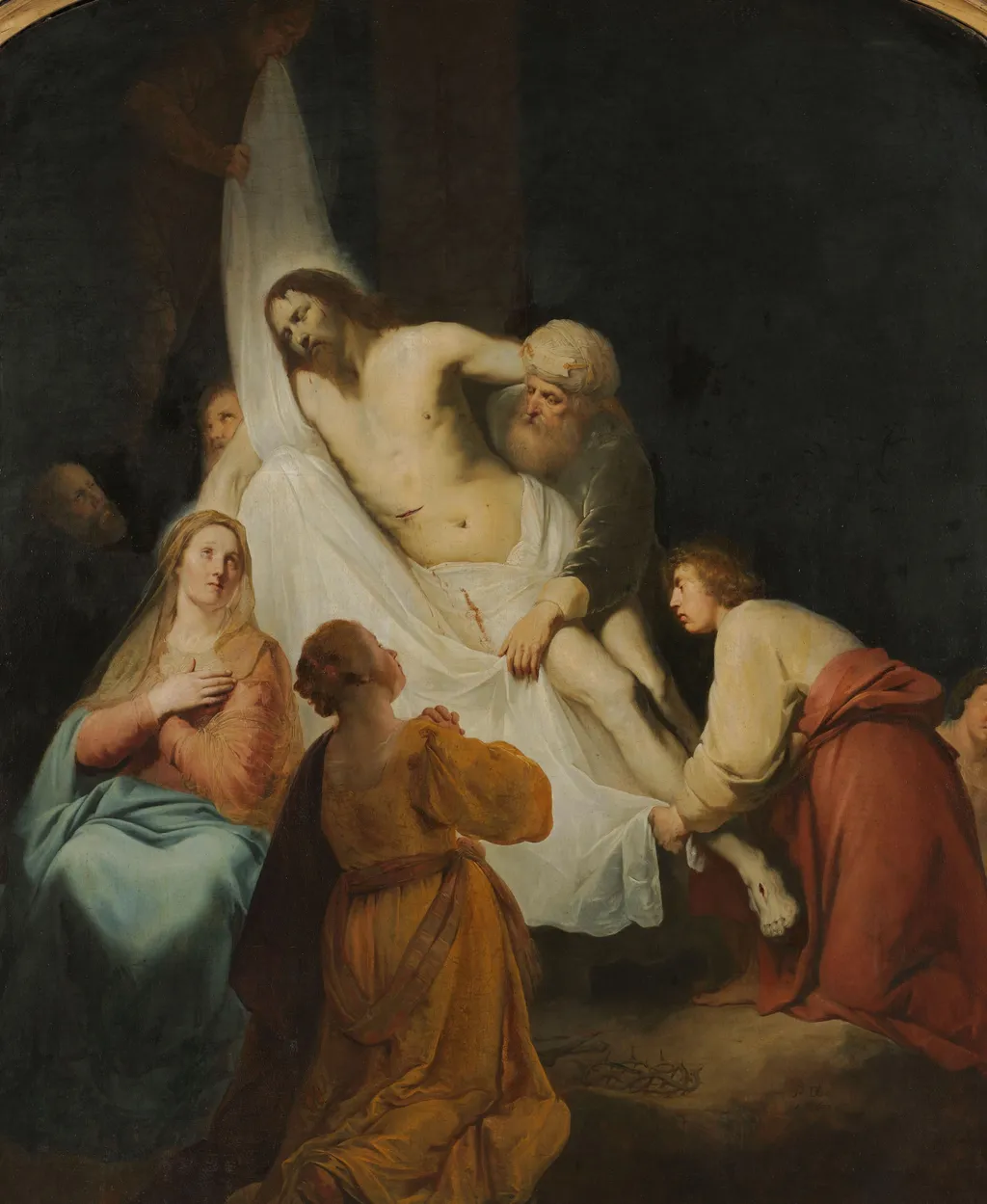
The descent from the cross is an oil painting by the Dutch Golden Age artist Pieter de Grebber. It dates from 1633 and is held in the collection of the Rijksmuseum.
About this work
Overview
The work remains a notable example of 17th-century Dutch treatment of biblical subjects, emphasizing psychological depth and physical realism.
Pieter de Grebber's The Descent from the Cross, executed in 1633, is a significant religious work from the Dutch Golden Age that depicts the moment Christ's body is lowered from the cross. The composition centers on the lifeless, nude figure of Jesus, whose wounds on the hands and side are clearly visible, while a crown of thorns rests on the ground below. A group of mourners surrounds the central figure, their arrangement creating a dynamic yet somber scene. A figure wearing a turban supports the body, illustrating the physical weight and gravity of the moment, while other participants kneel or stand with expressions of deep sorrow and concern. Painted in oil, the work reflects the artist's engagement with the emotional intensity characteristic of the period's religious art, blending realistic detail with a focus on human grief. Created during the height of de Grebber's career, this painting demonstrates his ability to convey narrative drama within a constrained, intimate setting, distinguishing it from the more expansive historical scenes of his contemporaries. The work remains a notable example of 17th-century Dutch treatment of biblical subjects, emphasizing psychological depth and physical realism.
Subject & Meaning
The composition centers on the lifeless figure of Christ, his wounds visible and crown of thorns discarded at his feet. A figure in a turban supports the body while others—kneeling and standing—watch with expressions of grief and concern, emphasizing the human response to divine sacrifice.
Technique & Style
De Grebber employs a pronounced chiaroscuro, contrasting deep shadows with a focused beam of light that illuminates the central figures. The brushwork is refined, rendering flesh and fabric with a smooth, almost tactile quality that enhances the scene’s realism and emotional intensity.
History & Provenance
Painted in 1633, the canvas entered the Rijksmuseum’s holdings, where it remains on display. Its provenance traces back to the Dutch Golden Age, reflecting the period’s interest in biblical subjects rendered with dramatic lighting and careful naturalism.
Artist & collection