Artwork
David with the Head of Goliath
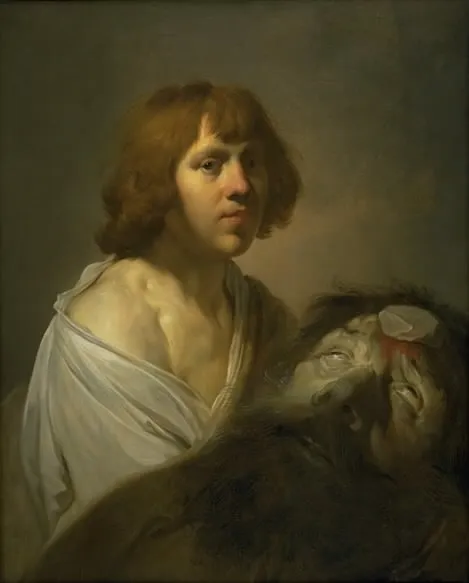
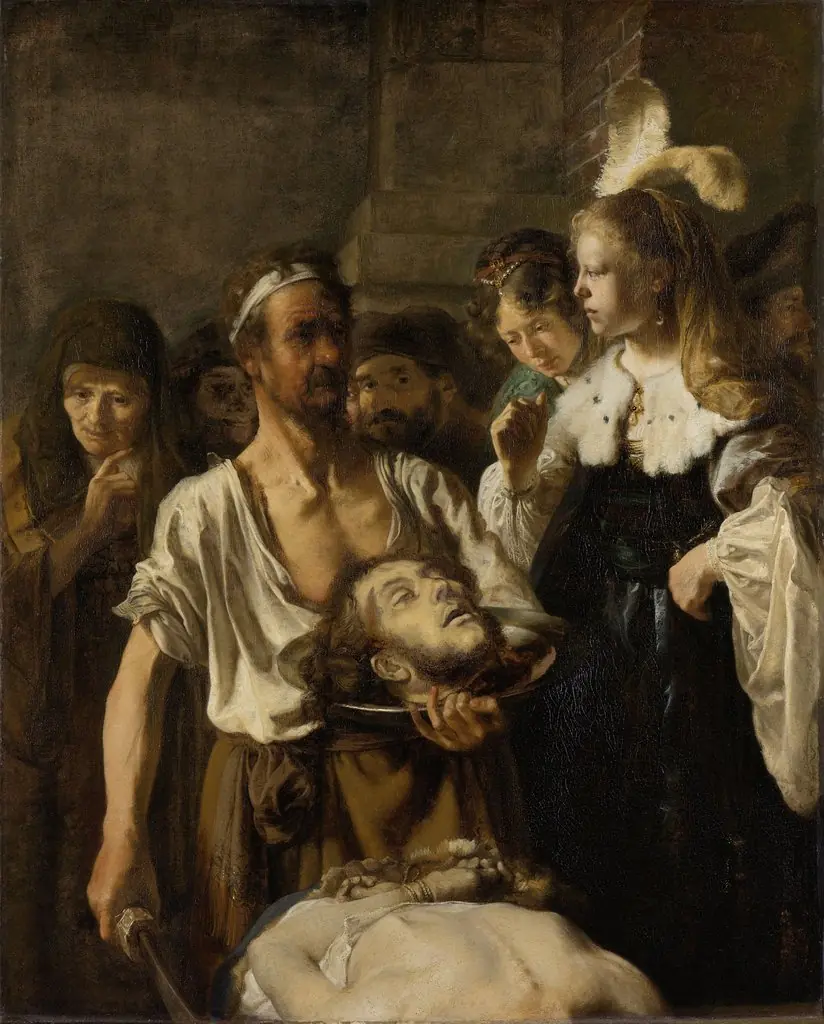
David with the Head of Goliath is an oil painting by the Dutch Golden Age artist Pieter de Grebber. It dates from 1637 and is held in the collection of the Statens Museum for Kunst.
About this work
Overview
Pieter de Grebber’s oil on canvas, dated 1637, presents a biblical tableau now in the collection of Denmark’s Statens Museum for Kunst. The work captures a moment from the Old Testament narrative, focusing on the youthful hero after his triumph.
Subject & Meaning
The central figure is a young man with curly red hair, his pale complexion highlighted against a dark backdrop. He holds the severed head of a giant, wrapped in cloth and bound with a few coins, emphasizing the victorious yet somber aftermath of the encounter.
Technique & Style
De Grebber employs a restrained palette, using chiaroscuro to isolate the protagonist’s face and the blood‑stained head. The loose white tunic and the soft modeling of flesh contrast with the stark darkness, creating a dramatic focal point typical of early‑17th‑century Dutch religious painting.
History & Provenance
Executed in 1637, the painting entered the Statens Museum for Kunst’s holdings during the 20th century, though earlier ownership details remain sparse. Its presence in a national museum underscores its value as a representative work of de Grebber’s devotional oeuvre.
Context
The scene derives from the biblical account of David’s defeat of Goliath, a motif frequently revisited in European art to symbolize divine favor and moral victory. De Grebber’s rendition aligns with contemporary Dutch interpretations that stress humility and piety over heroic grandeur.
Artist & collection