Artwork
The Lamentation
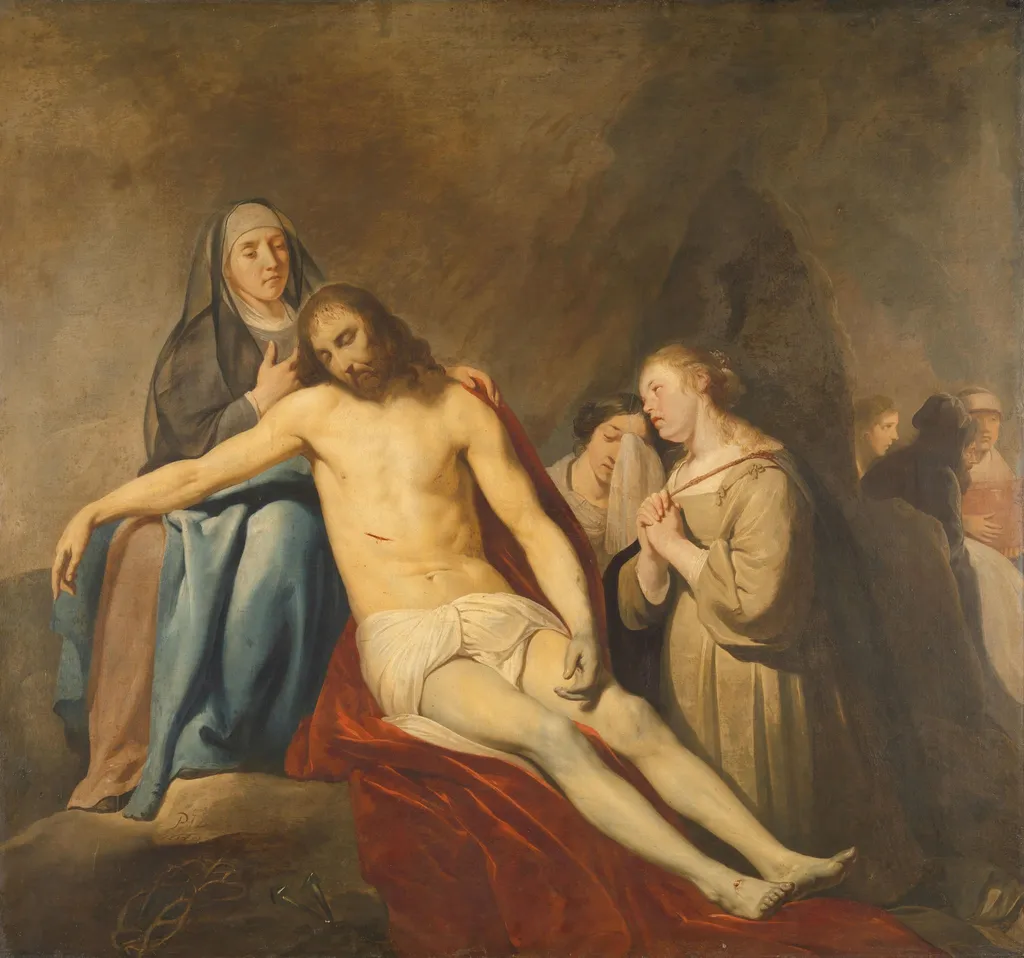
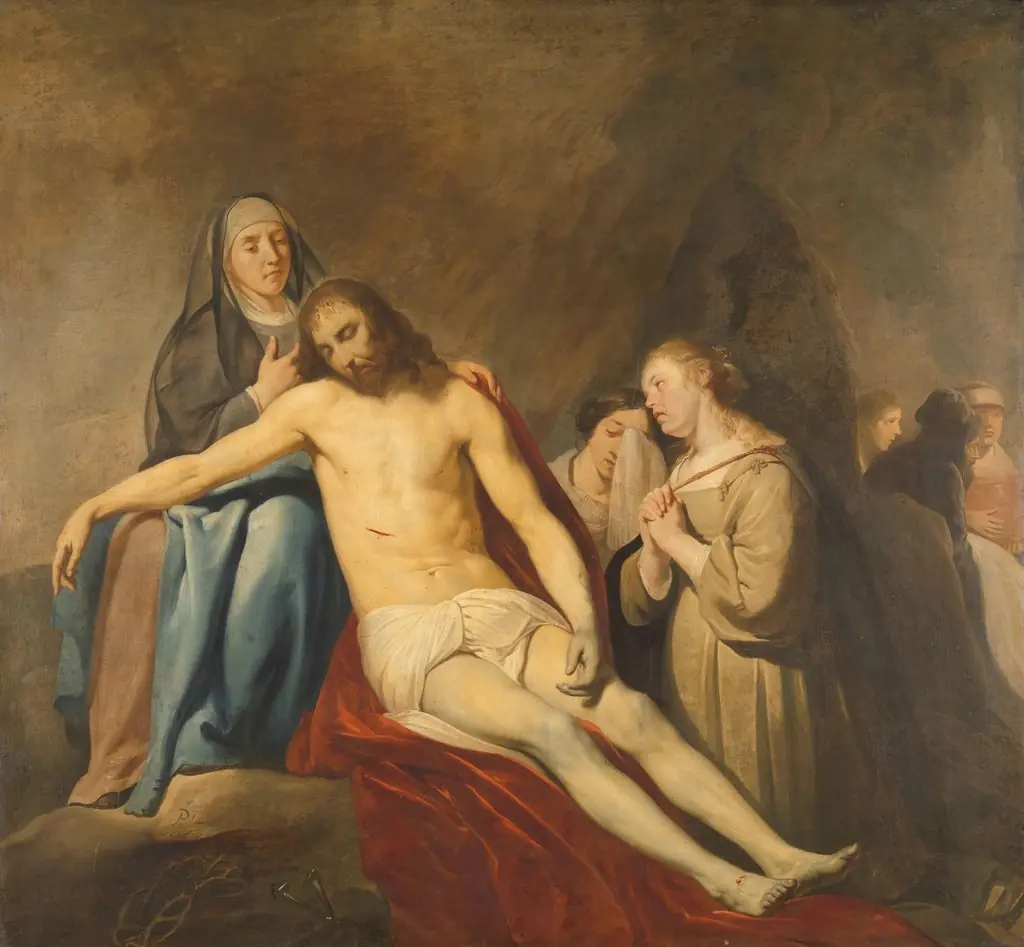
The Lamentation is an unspecified painting by the Baroque artist Pieter de Grebber. It dates from 1640 and is held in the collection of the Rijksmuseum. The work depicts a somber gathering of women surrounding the lifeless body of Jesus, whose form lies on the ground.
About this work
Overview
The work depicts a somber gathering of women surrounding the lifeless body of Jesus, whose form lies on the ground. Their expressions convey deep anguish, with clasped hands gripping his limbs. The composition is enveloped in darkness, punctuated only by a concealed source of light that highlights select figures, intensifying the emotional atmosphere.
Subject & Meaning
The scene illustrates the biblical episode of Christ’s lamentation, focusing on the holy women who mourn his death. Their grief is rendered through twisted faces and desperate gestures, emphasizing the human response to divine sacrifice. The painting invites contemplation of sorrow, compassion, and the spiritual significance of the Passion narrative.
Technique & Style
Employing a pronounced chiaroscuro, the artist contrasts deep shadows with illuminated areas to model forms and heighten drama. The stark lighting draws attention to the central figures while obscuring the surrounding space, a hallmark of the period’s visual language. Brushwork is restrained, allowing the stark tonal differences to convey emotional intensity.
Context
Created during a time when ecclesiastical patronage dominated artistic production, the painting aligns with the Baroque era’s emphasis on theatricality and devotional impact. Artists of the period were often commissioned to visualize biblical episodes in ways that engaged viewers emotionally, reinforcing religious narratives through visual power.
History & Provenance
The creator of the work remains unidentified, though stylistic analysis situates the piece among contemporaneous Baroque productions. Its attribution to an unknown hand reflects the common practice of workshop or anonymous output for church commissions, and it has been catalogued alongside similar lamentation scenes from the same epoch.
Own this work as a print
Artist & collection