Artwork
Woman and a maid with a pail of fish in a courtyard
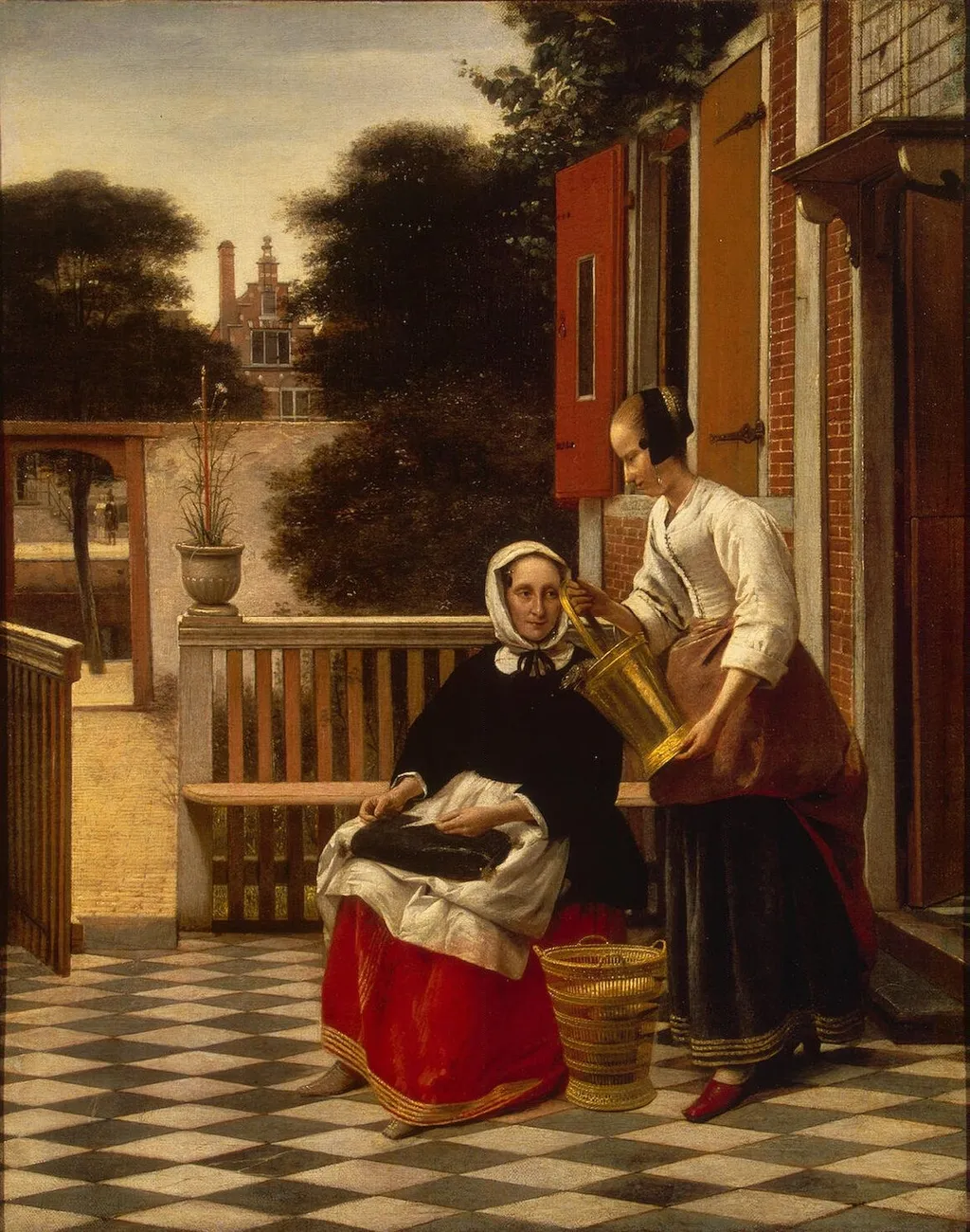
Woman and a maid with a pail of fish in a courtyard is an oil painting by the Dutch Golden Age artist Pieter de Hooch. It dates from 1660 and is held in the collection of the Hermitage Museum.
About this work
This painting is called Woman and a maid with a pail of fish in a courtyard. It's an oil paint work.
The painting was created around 1660. It's also known as Lady and Her Cook, which gives a sense of the scene.
To learn more about the style and techniques used in this work, look up the artist: Pieter de Hooch.
Overview
The painting’s title varies between 'Woman and a Maid with a Pail of Fish' and 'Lady and Her Cook,' reflecting its focus on class and daily routine.
Painted around 1660 by Pieter de Hooch, this oil-on-canvas work depicts a quiet domestic moment in a Dutch courtyard. The scene, now held in the Hermitage Museum, St. Petersburg, captures an elderly woman and her servant engaged in an unremarkable yet carefully observed interaction. The painting’s title varies between 'Woman and a Maid with a Pail of Fish' and 'Lady and Her Cook,' reflecting its focus on class and daily routine.
Subject & Meaning
An older woman, seated with a letter and needlework, receives a offering of fish from a servant girl who has just entered from the house. The gesture suggests a routine exchange—perhaps a delivery of provisions—rendered with calm dignity. The presence of the letter and embroidery implies leisure, while the servant’s labor grounds the scene in practicality. No dramatic narrative is staged; instead, the painting elevates ordinary domestic life through quiet attention.
Technique & Style
De Hooch employs a warm, muted palette and precise brushwork to define textures: the sheen of brass, the weave of fabric, the glint of tiled pavement. Light falls evenly across the courtyard, enhancing spatial depth through architectural elements like half-open doors and trellises. The composition guides the eye from foreground figures to a distant canal view, demonstrating his mastery of perspective and atmospheric cohesion.
History & Provenance
The painting was recorded in 1908 by art historian Hofstede de Groot, who noted its placement within de Hooch’s mature period. It entered the Hermitage collection in the 19th century, likely through imperial acquisitions of Dutch Golden Age works. Its provenance before that remains undocumented, though its condition and detail suggest it was preserved in private hands prior to museum acquisition.
Context
Created during the height of Dutch genre painting, the work reflects a cultural fascination with orderly, interiorized domesticity. Courtyards and open doorways were common motifs, symbolizing the boundary between private life and the wider world. De Hooch’s focus on servants alongside their employers subtly acknowledges social hierarchy without overt commentary, aligning with broader trends in 17th-century Netherlandish art.
Legacy
Though less celebrated than some of de Hooch’s interior scenes, this painting exemplifies his ability to infuse mundane moments with structural harmony and emotional restraint. It influenced later genre painters through its balanced composition and subtle use of light. Today, it remains a quiet testament to the dignity of everyday labor in Dutch society.
Artist & collection
Artist
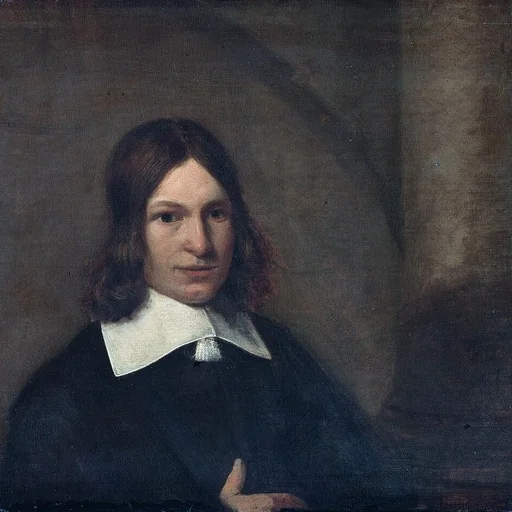
Pieter Hendricksz. de Hooch (Dutch: ; also spelled Hoogh or Hooghe; bapt. 20 December 1629 – after 1683), was a Dutch Golden Age painter famous for his genre works of quiet domestic scenes with an open doorway. He was a…

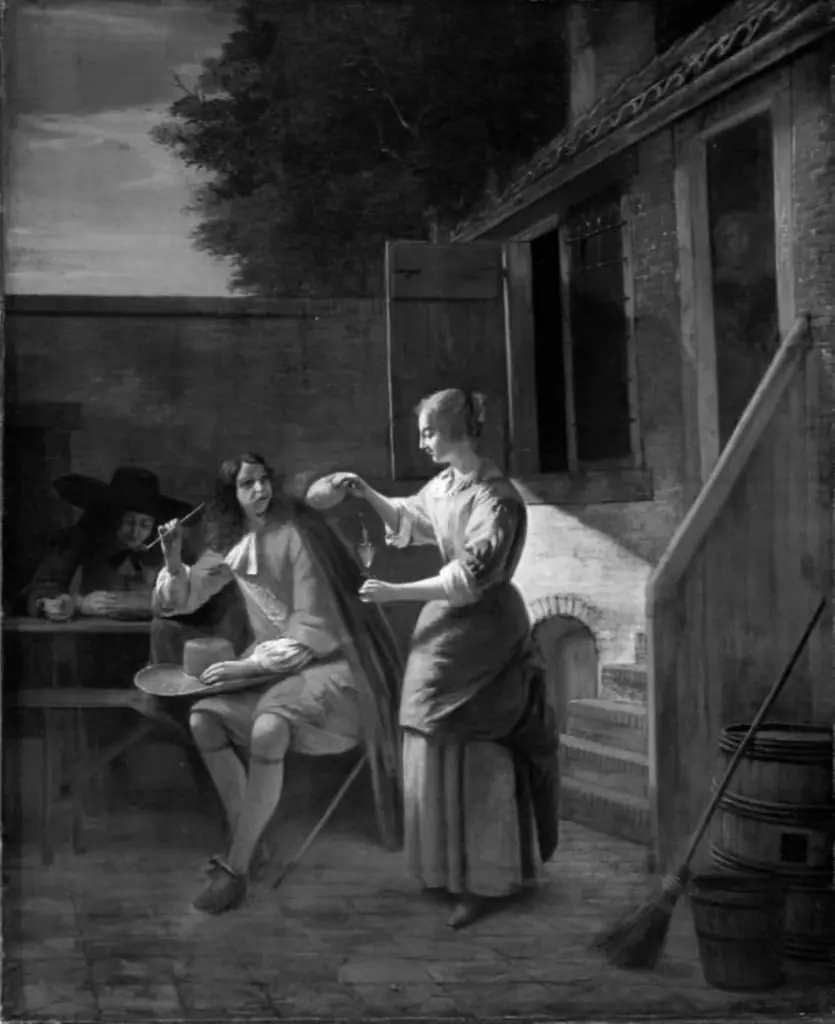
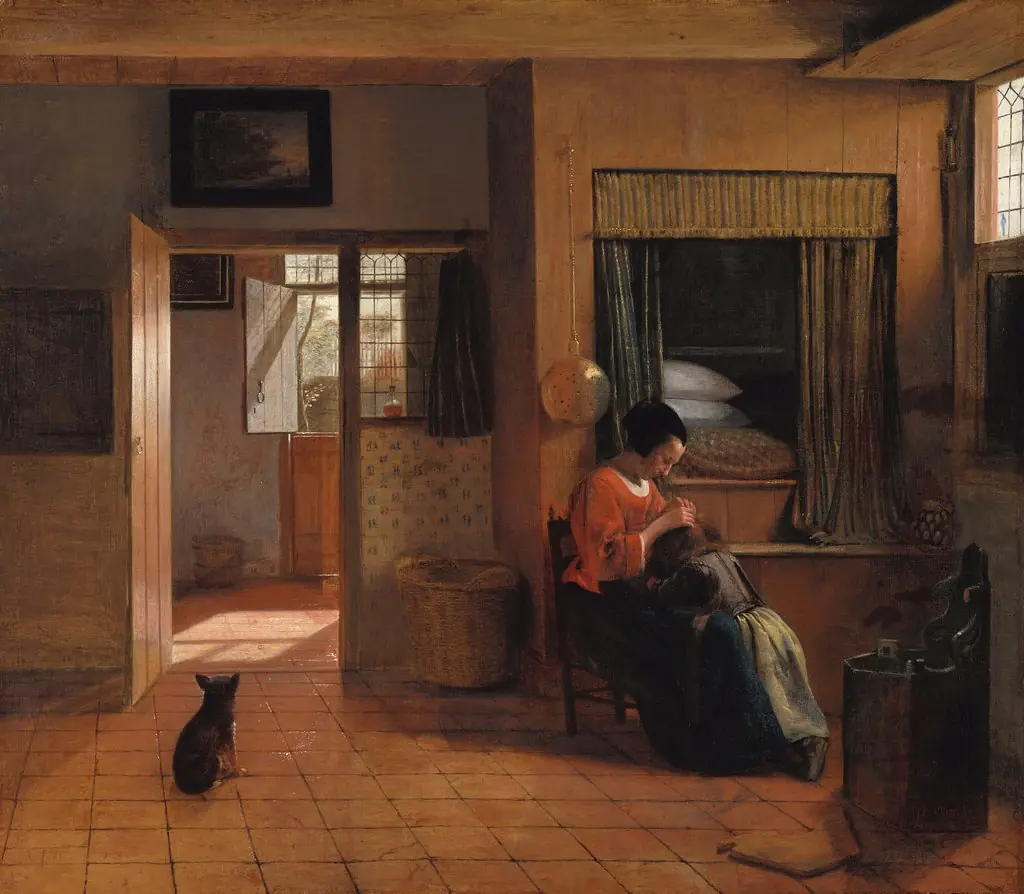
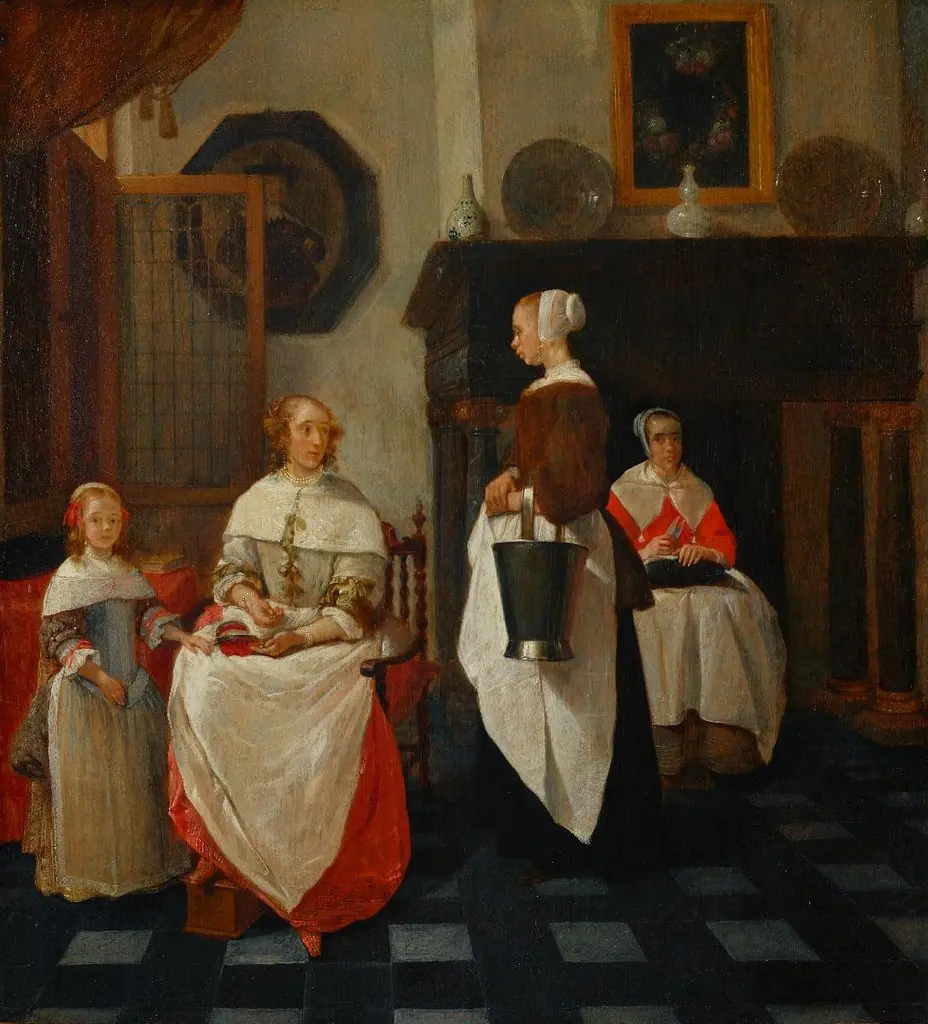 Interieur mit drei Frauen und einem Mädchen
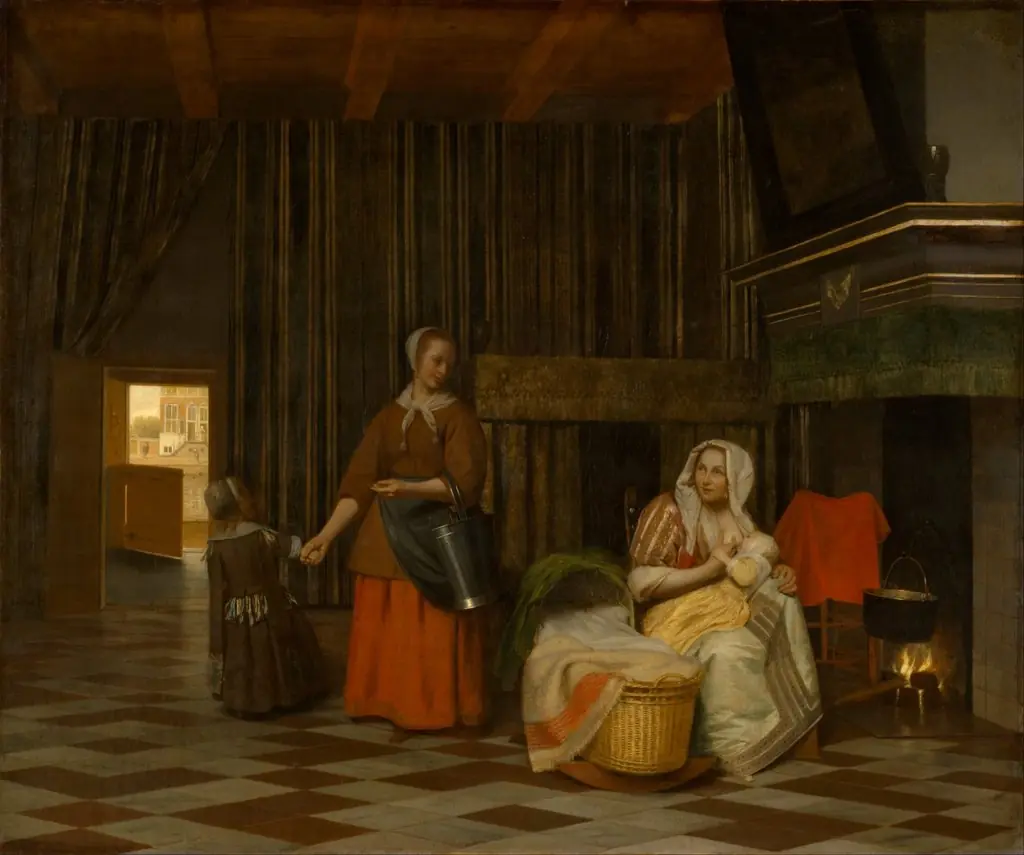 Nursing Mother, and Child with Serving Maid
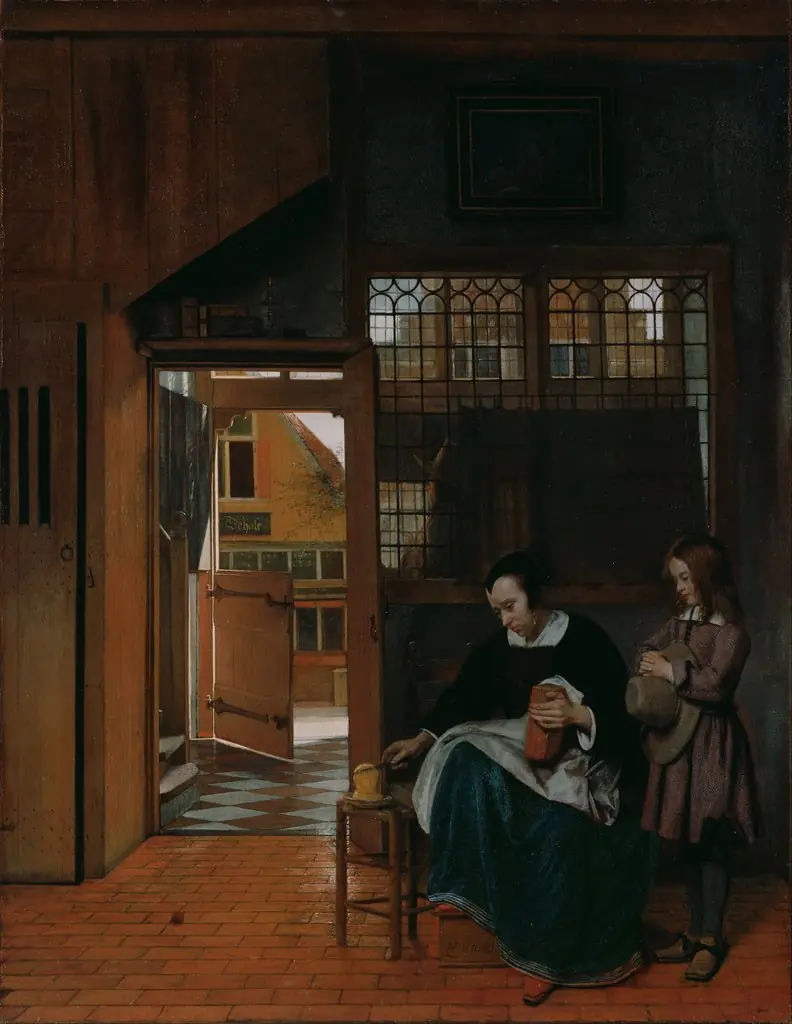 A Woman Preparing Bread and Butter for a Boy
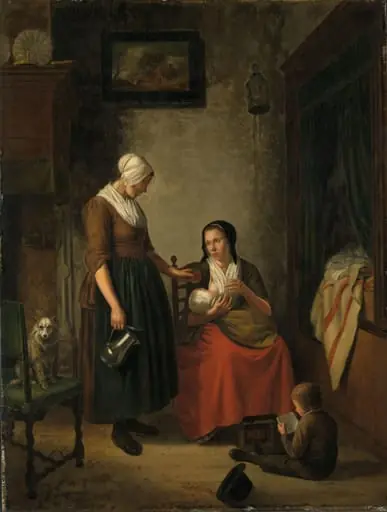 'Good Neighbors'
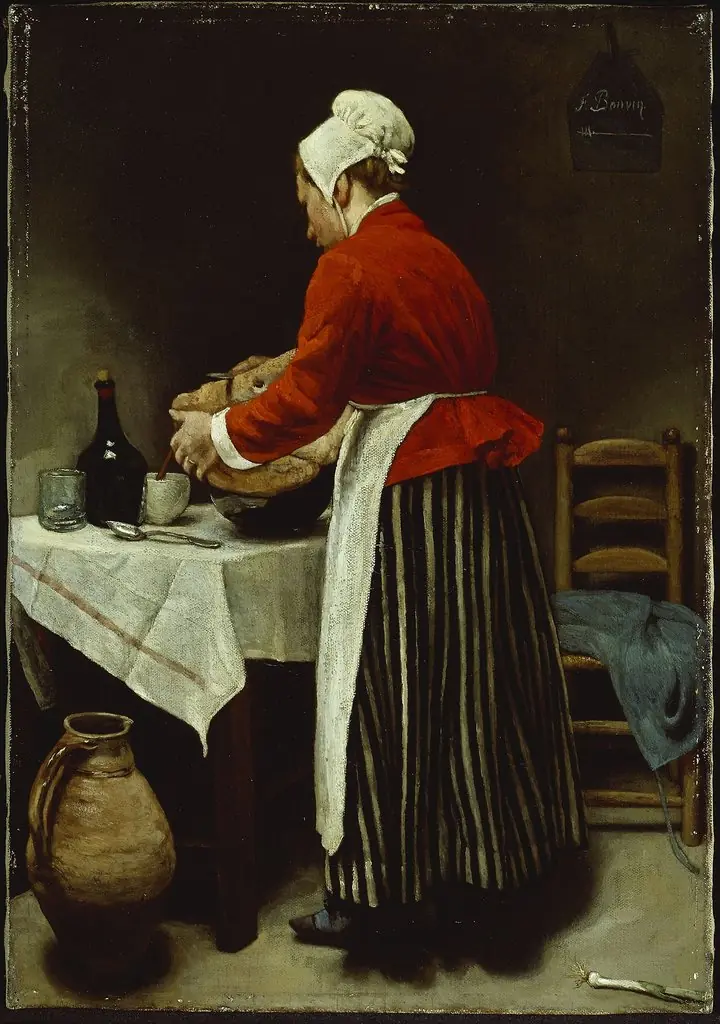 The Maid
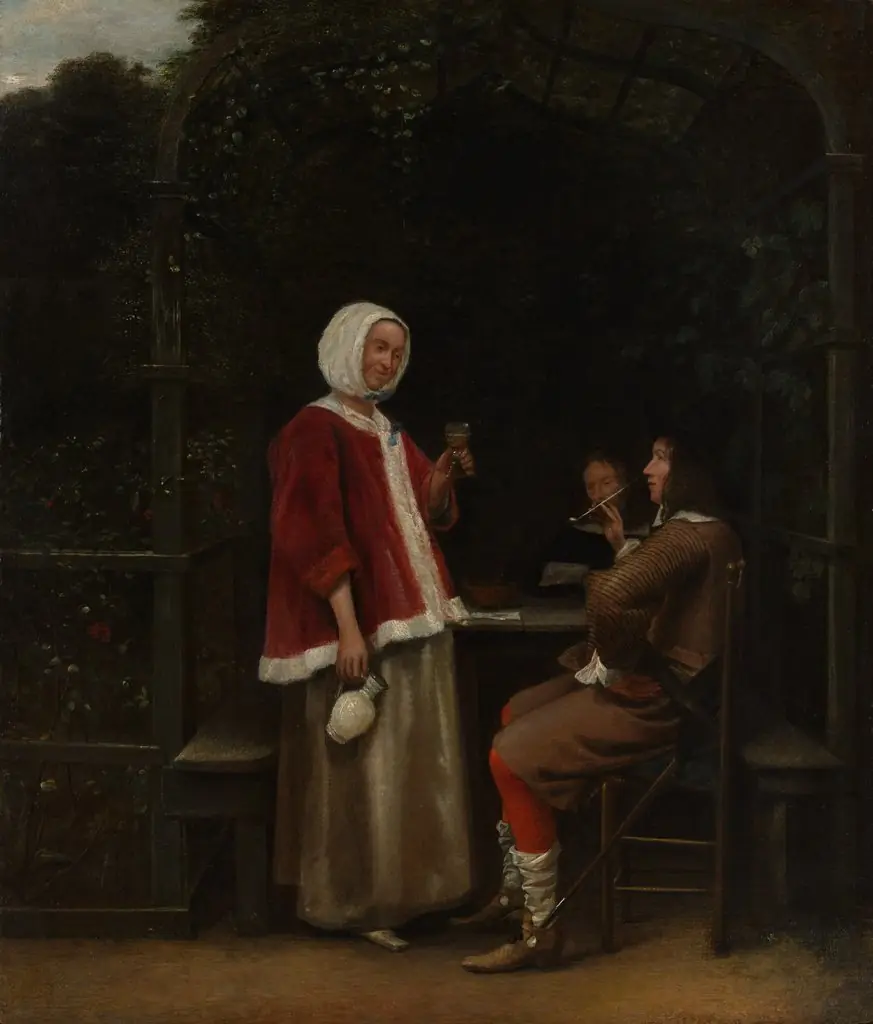
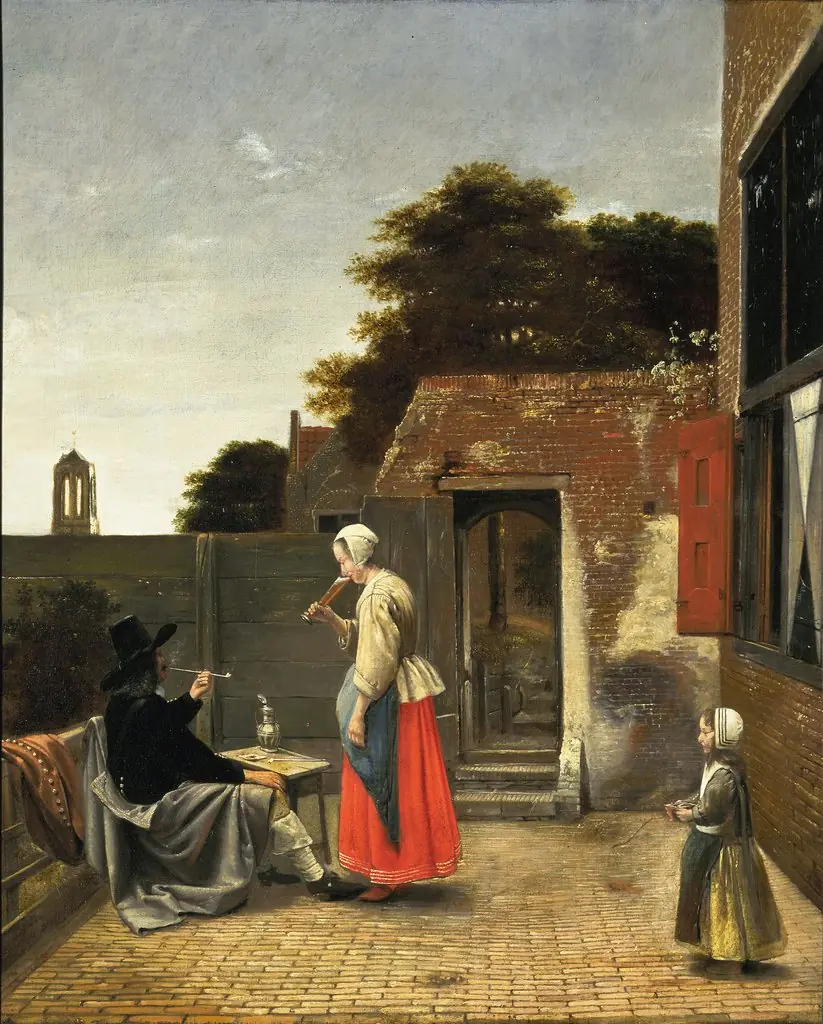 Courtyard with a man smoking and a woman drinking
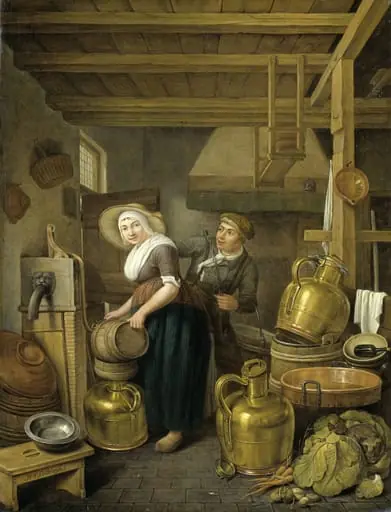 After Milking Time
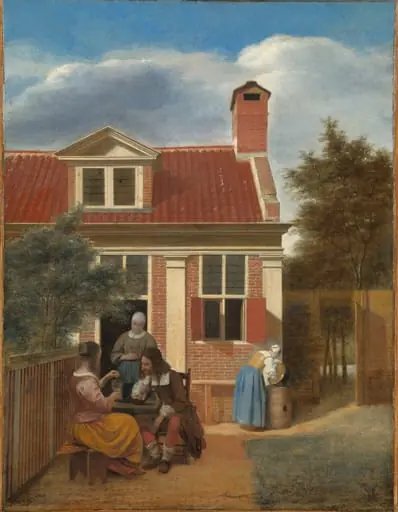 Een gezelschap op de plaats achter een huis
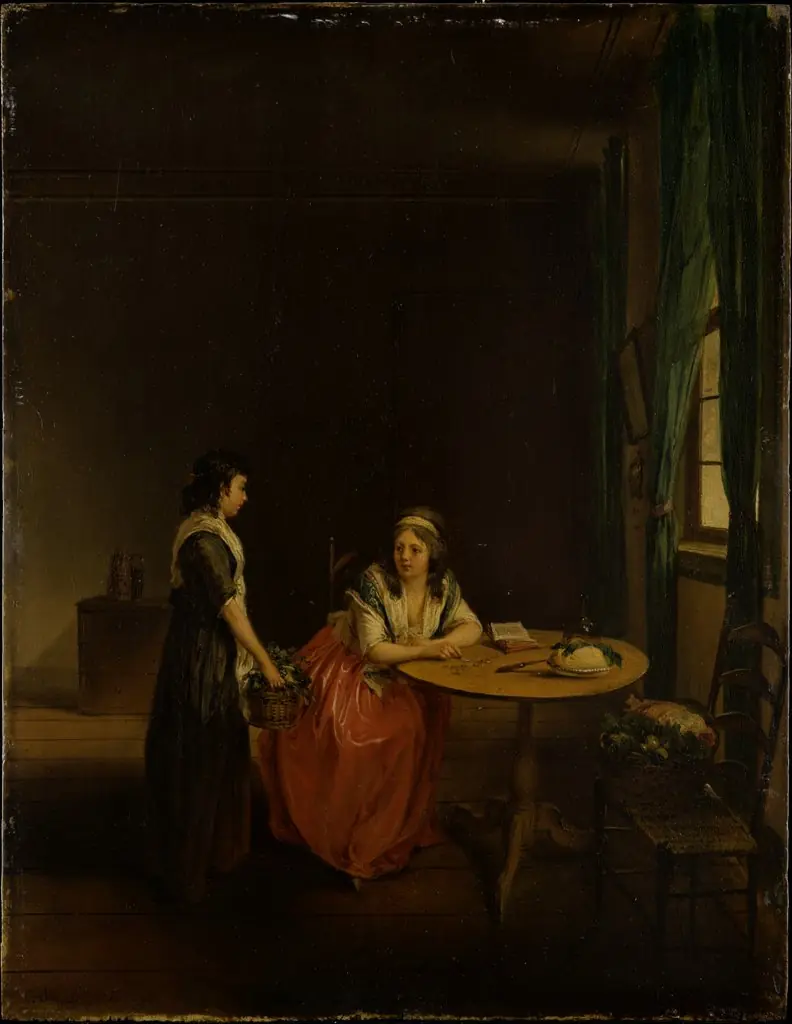 A Housewife Settling Up with her Maid