Artwork
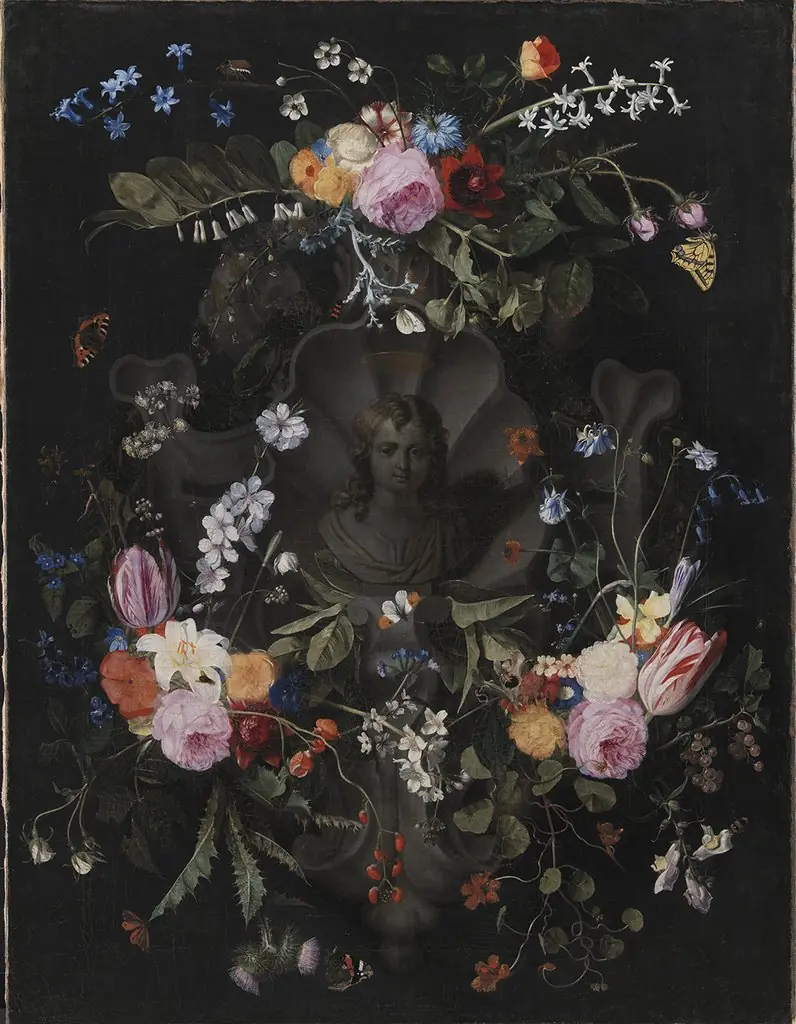
A Bust of Diana with a Garland
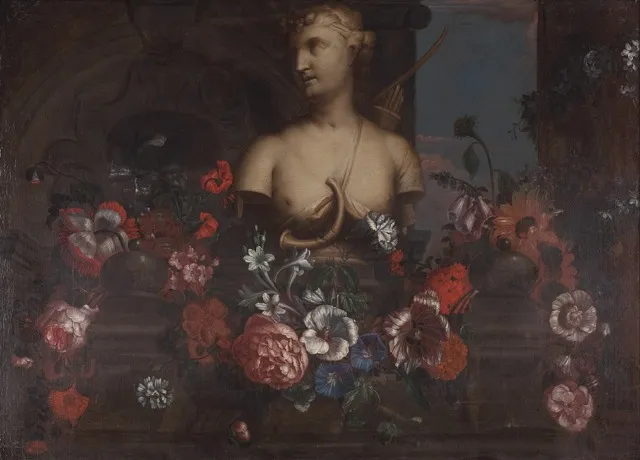
A Bust of Diana with a Garland is an oil painting by the Rococo painting artist Pieter Hardimé. It dates from 1729 and is held in the collection of the Rijksmuseum.
About this work
Overview
A Bust of Diana with a Garland is an oil painting created in 1729 by Pieter Hardimé, a Flemish artist active in Antwerp and later The Hague.
Subject & Meaning
The painting depicts a mythological figure, Diana, in a bust portrait, adorned with a vibrant floral garland. The subject matter aligns with the rococo movement's penchant for mythological themes.
Technique & Style
Hardimé employed chiaroscuro, a strong contrast between light and dark, to create a sense of depth. The glowing skin of the subject is set against a dark background, while meticulous detail is applied to the realistic portrayal of the flowers.
History & Provenance
The work is part of the Rijksmuseum's collection, though specific details of its acquisition history are not provided here.
Context
As a rococo piece, it reflects the era's aesthetic preferences for delicate, ornate, and emotionally engaging artworks, often featuring mythological subjects in intimate settings.
Legacy
While specific influences or notable exhibitions of *A Bust of Diana with a Garland* are not detailed, its presence in the Rijksmuseum suggests recognition of its artistic and historical value within Hardimé's oeuvre and the broader rococo movement.
Artist & collection
Artist
Pieter Hardimé (25 November 1677, in Antwerp – September 1748, in The Hague) was a Flemish painter known for his paintings of flowers.

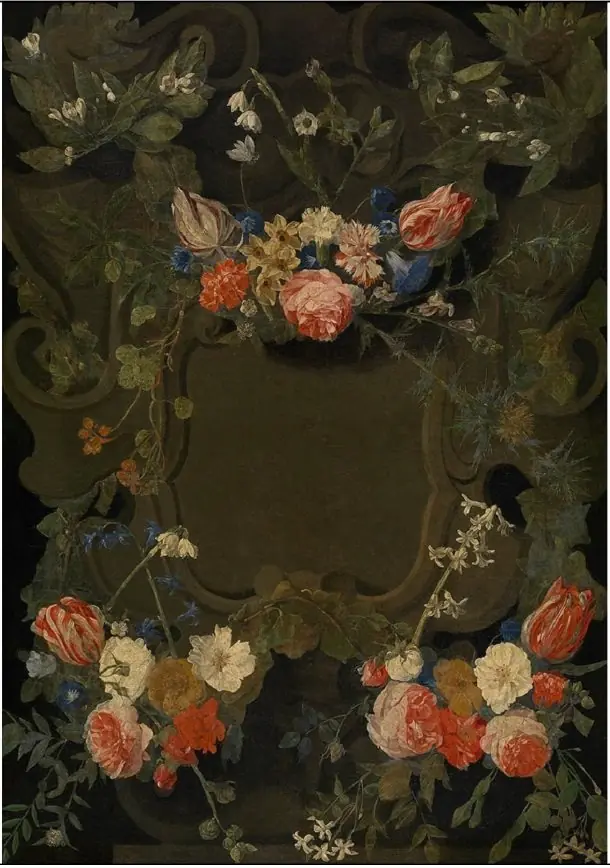 Flower garland
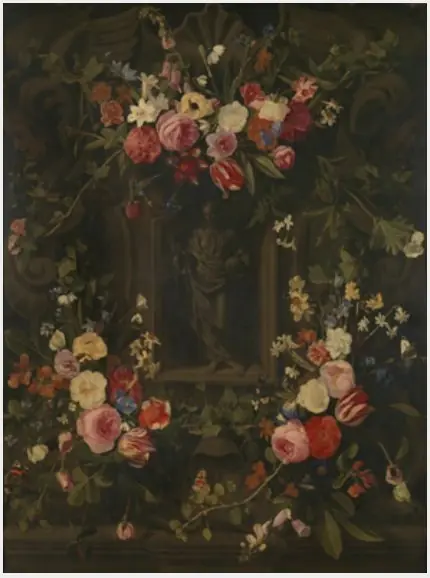 Salvator Mundi in a niche surrounded by flower garlands
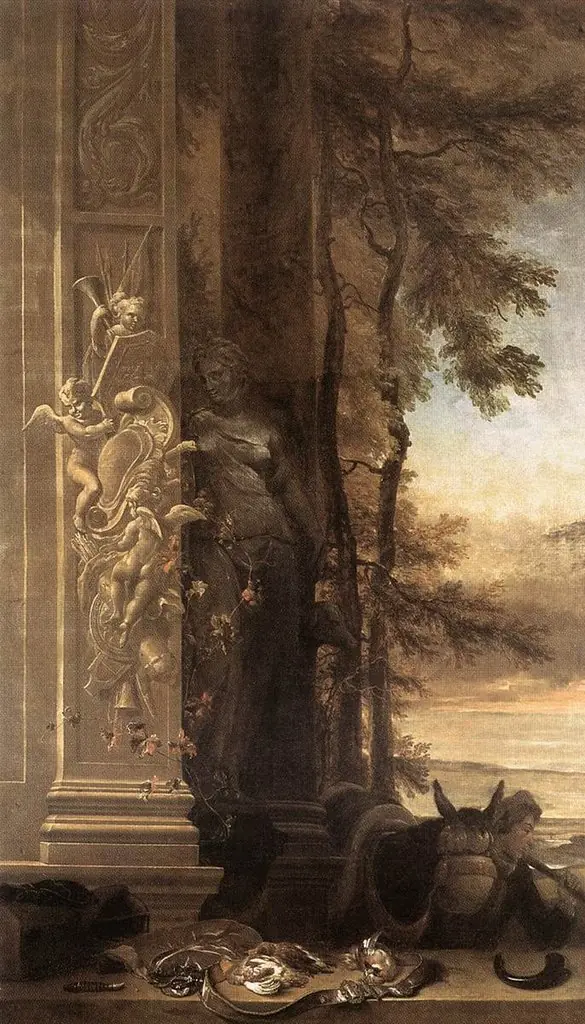 Game Still-Life with Statue of Diana
 Cartouche with the bust of Jesus surrounded by festoons
 A still-life with a spray of flowers
 Decorative Panel ''Trophies and Cupids"
 Obst- und Gemüsestillleben
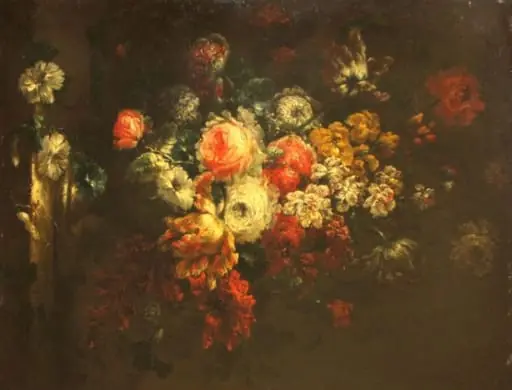 Buchet de flori cu trandafir alb; pandant: Buchet de flori cu trandafiri roșii
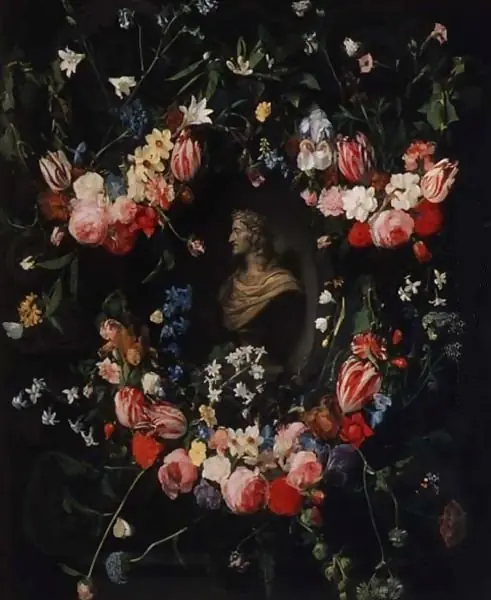 Portrait of Archduke Leopold Willem of Austria in a flower garland
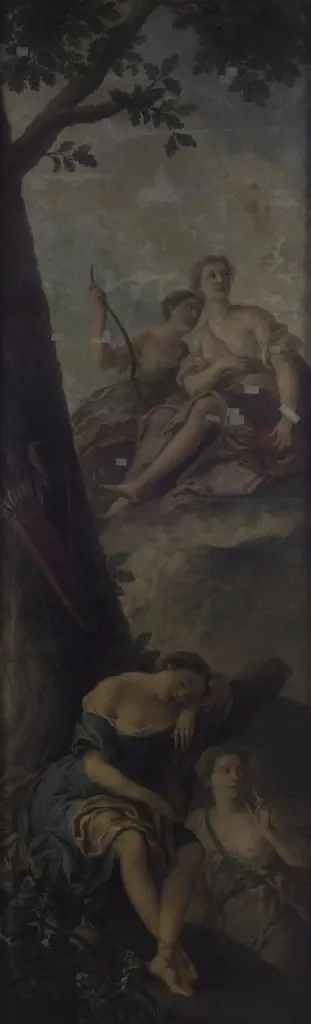 Sleeping Diana with Nymphs
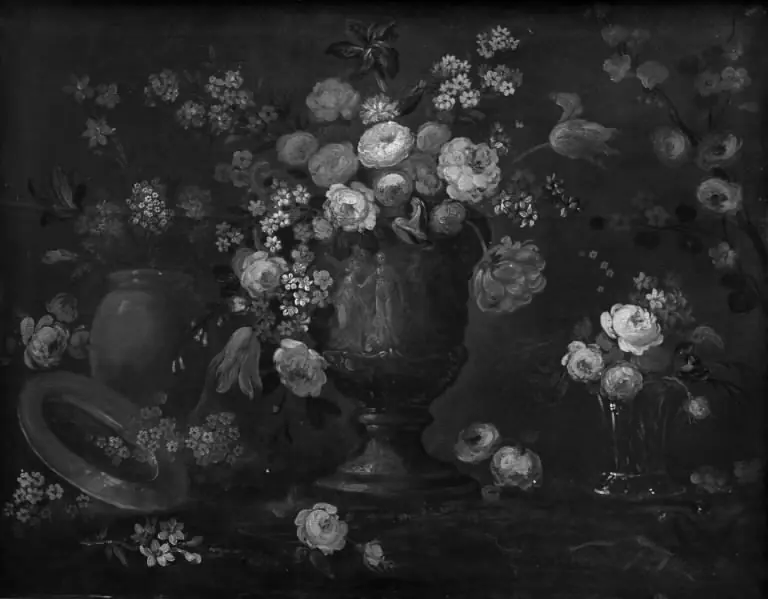 Flowers in a Stone Vase
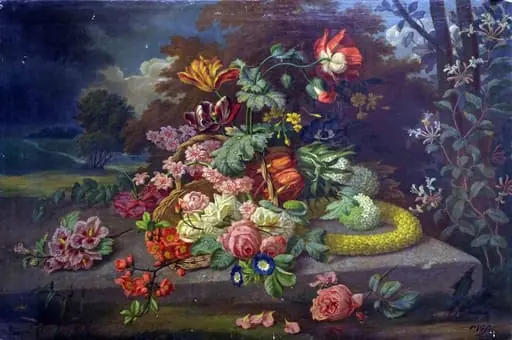 Buchet de flori