Artwork
Game Still-Life with Statue of Diana
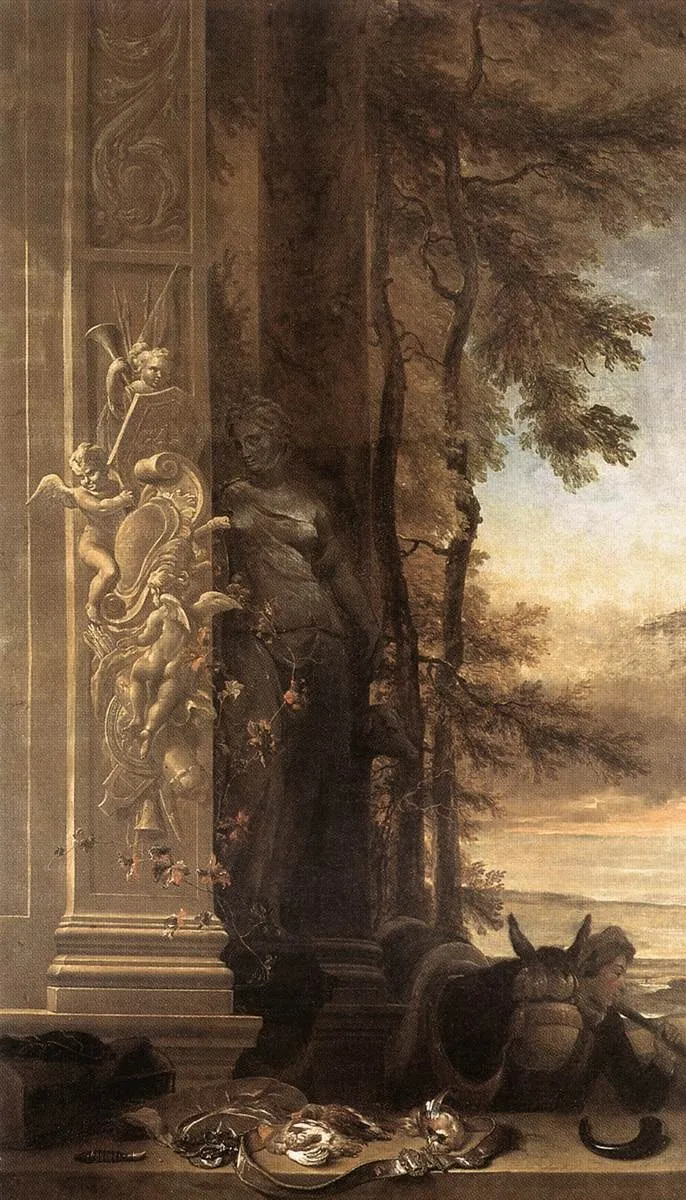
Game Still-Life with Statue of Diana is an oil painting by the Dutch Golden Age artist Jan Weenix. It dates from 1709 and is held in the collection of the Bavarian State Painting Collections.
About this work
Overview
Painted in 1709 by Jan Weenix, this oil-on-canvas work merges still-life conventions with mythological symbolism. It presents a curated arrangement of hunted game around a statue of Diana, reflecting the Dutch Golden Age’s fascination with nature, abundance, and classical themes. The composition balances naturalism with deliberate staging, characteristic of Weenix’s mature style.
Subject & Meaning
The central statue of Diana, goddess of the hunt, anchors the scene as a symbolic witness to the slain animals—deer, rabbit, and birds—laid out like trophies.
The central statue of Diana, goddess of the hunt, anchors the scene as a symbolic witness to the slain animals—deer, rabbit, and birds—laid out like trophies. The arrangement suggests both the bounty of the hunt and its ritualized nature, subtly invoking themes of power, mortality, and the human relationship with the wild. The mythological reference elevates the still-life beyond mere display into allegorical territory.
Technique & Style
Weenix employed precise brushwork to render textures—fur, feathers, stone—with meticulous realism. Chiaroscuro modeling enhances the three-dimensionality of the forms, directing focus toward Diana’s statue while deepening the spatial recession of the landscape background. The lighting is theatrical yet controlled, emphasizing contrasts between the cold marble of the statue and the organic warmth of the game.
History & Provenance
Long misattributed to his father, Jan Baptist Weenix, this painting is now firmly recognized as Jan Weenix’s work, reflecting scholarly reassessments of his oeuvre. It entered the Alte Pinakothek’s collection in Munich, where it remains part of a broader European tradition of hunting still lifes. Its provenance underscores the evolving understanding of artistic authorship in 18th-century Dutch painting.
Context
Created during the waning years of the Dutch Golden Age, the painting responds to a cultural appetite for hybrid genres that combined natural observation with classical allusion. Wealthy patrons favored such works as displays of refinement and control over nature. Weenix’s output contributed to a niche where realism served both aesthetic and symbolic ends, bridging Flemish traditions with Dutch sensibilities.
Legacy
Jan Weenix helped define a subgenre of Dutch still life that integrated mythological figures with hunted game, influencing later artists who sought to elevate domestic subjects through classical reference. His attention to material detail and compositional balance set a standard for naturalistic rendering in 18th-century European painting, though his name remains less widely known than his contemporaries.
Artist & collection
Artist
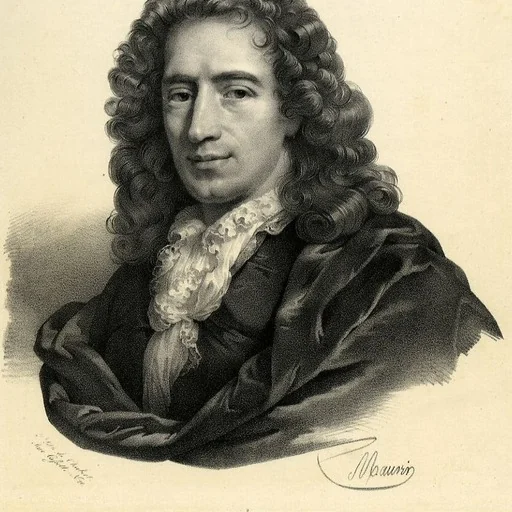
Jan Weenix or Joannis Wenix (between 1641/1649 – 19 September 1719 (buried)) was a Dutch painter.

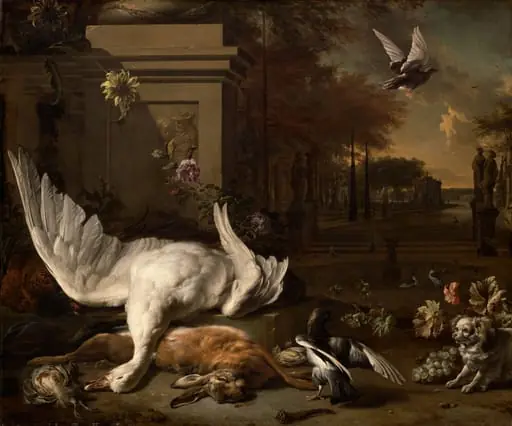 Still Life with Goose and Game before a Country Estate
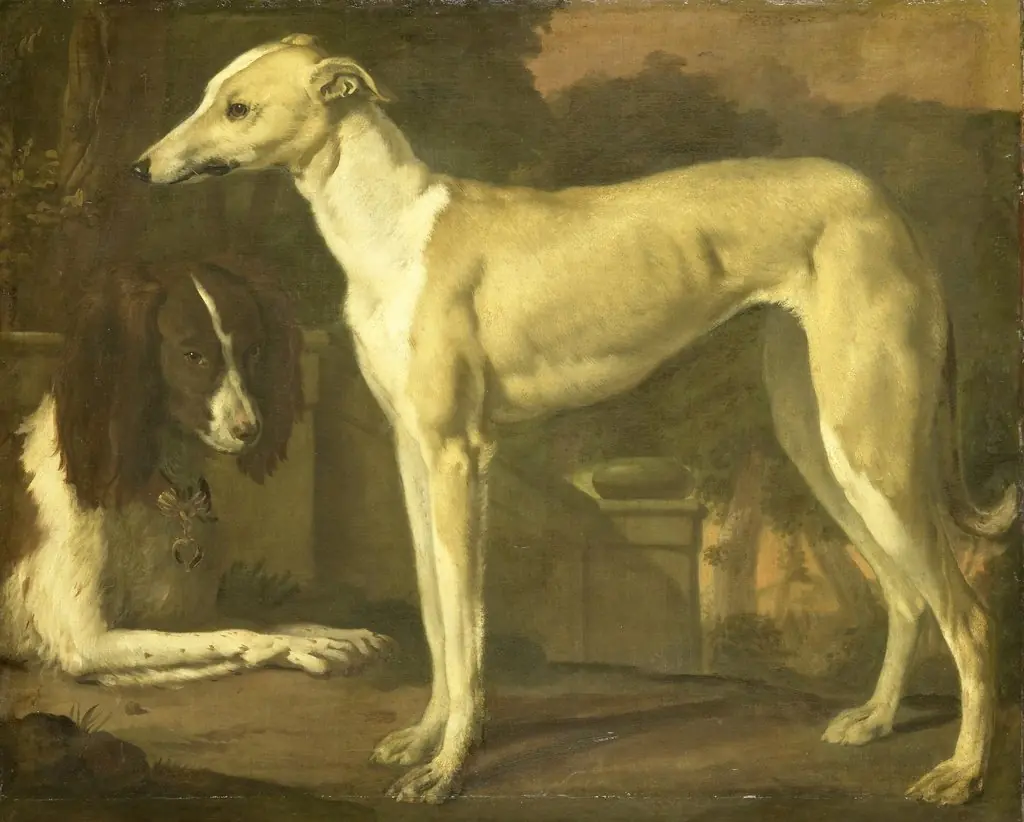 Portrait of a greyhound and a spaniel
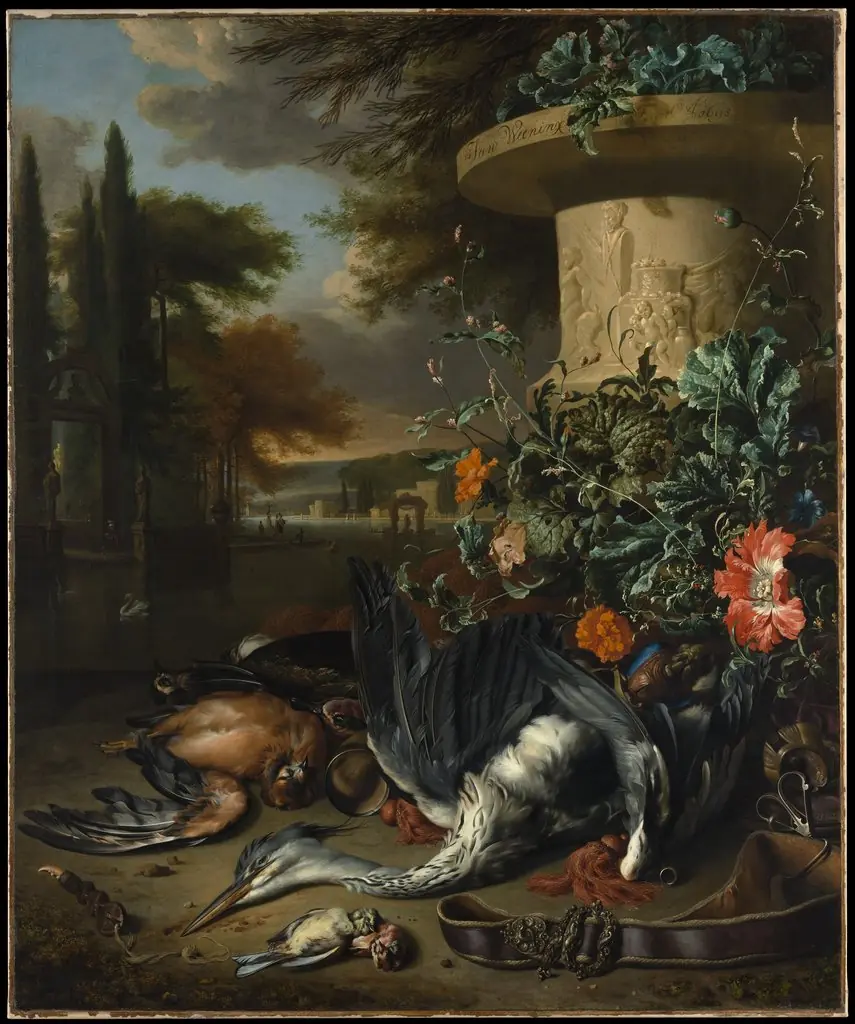 Gamepiece with a Dead Heron ("Falconer's Bag")
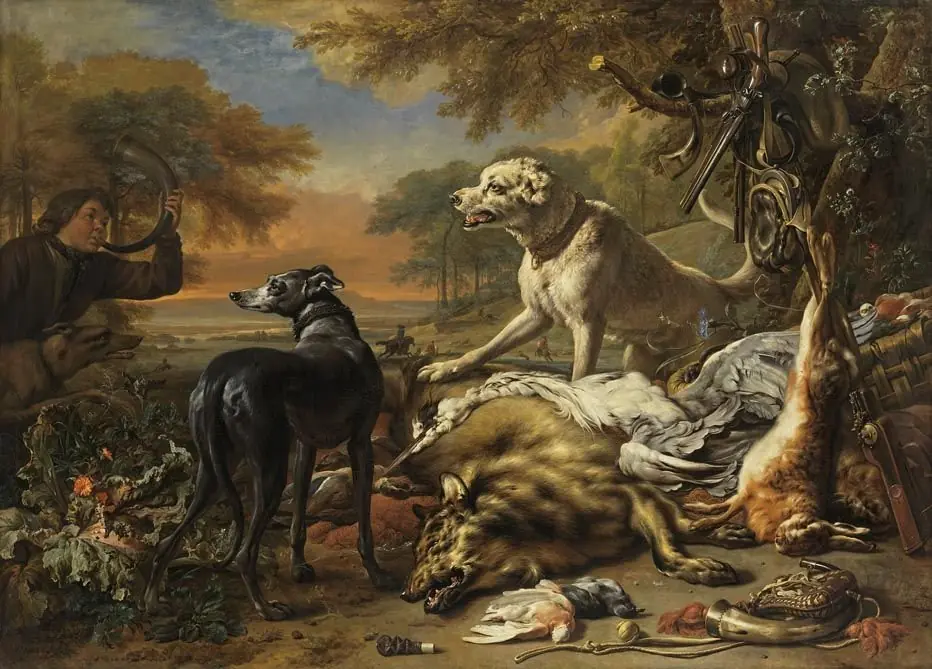 Hunting still life with wolf
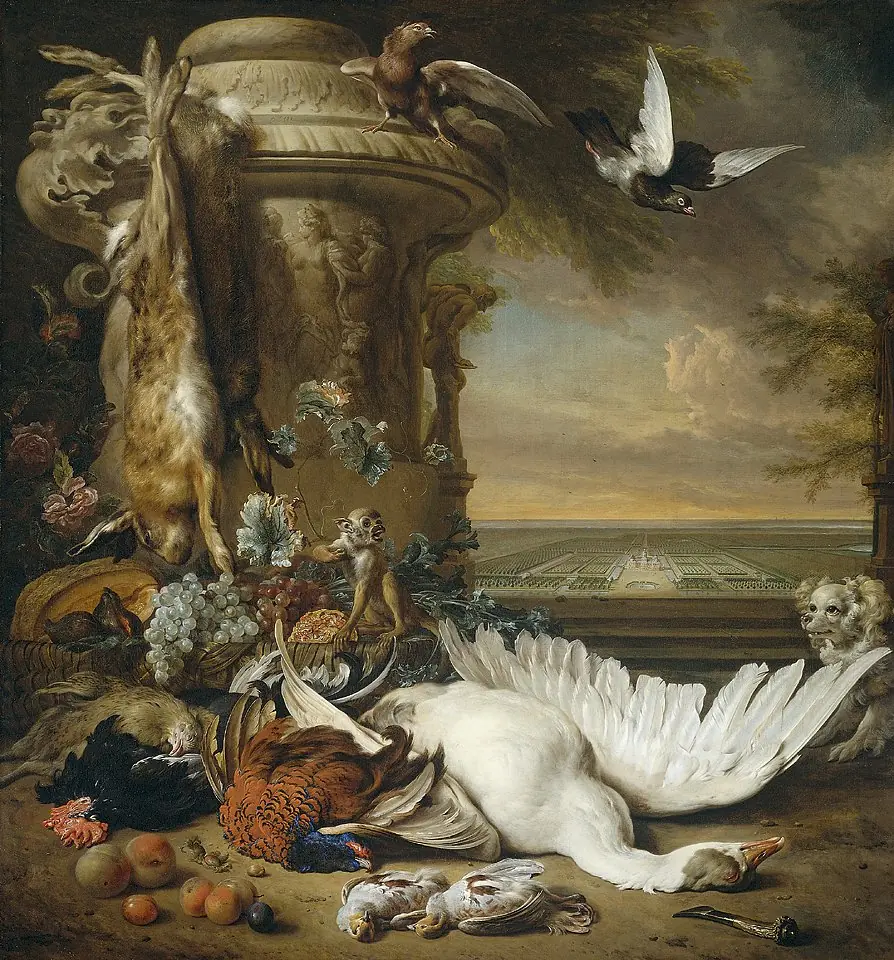 Still Life with Dead Game and Fruit beside a Garden Vase, with a Monkey, a Dog and Two Pigeons; in the Background Rijksdorp near Wassenaar, the Estate of Jonkheer Jacob Emmery, Baron of Wassenaar
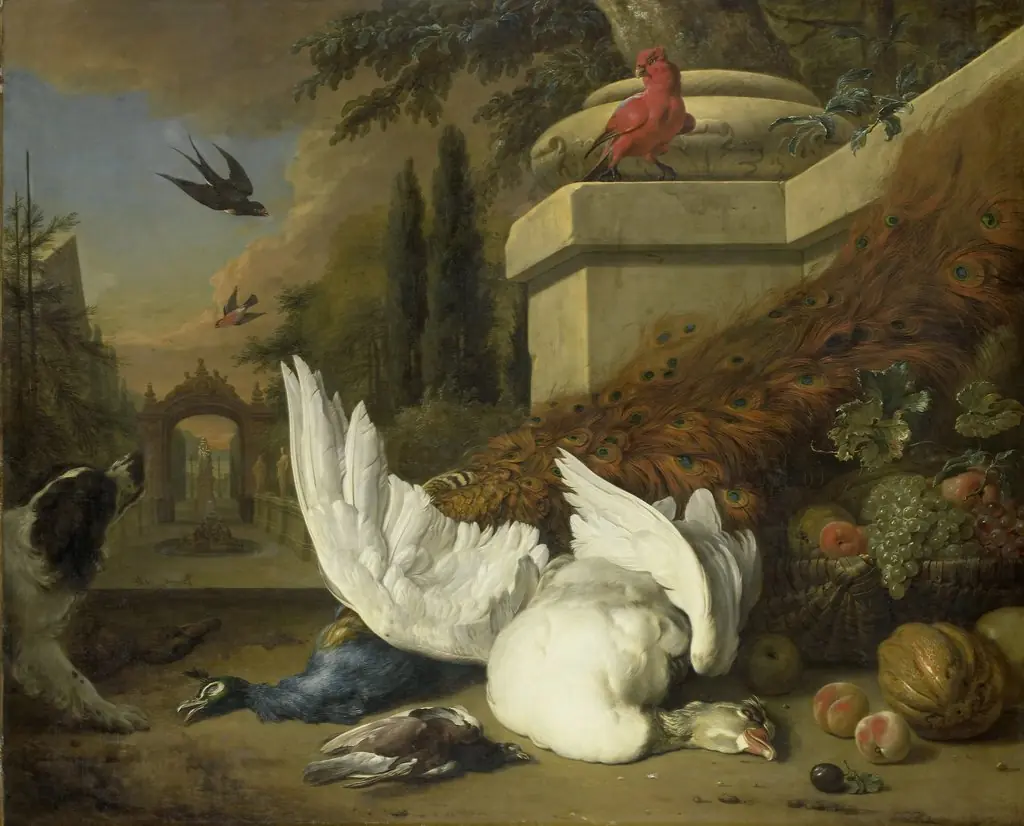 A monkey and a dog beside dead game and fruits, with the estate of Rijxdorp near Wassenaar in the background
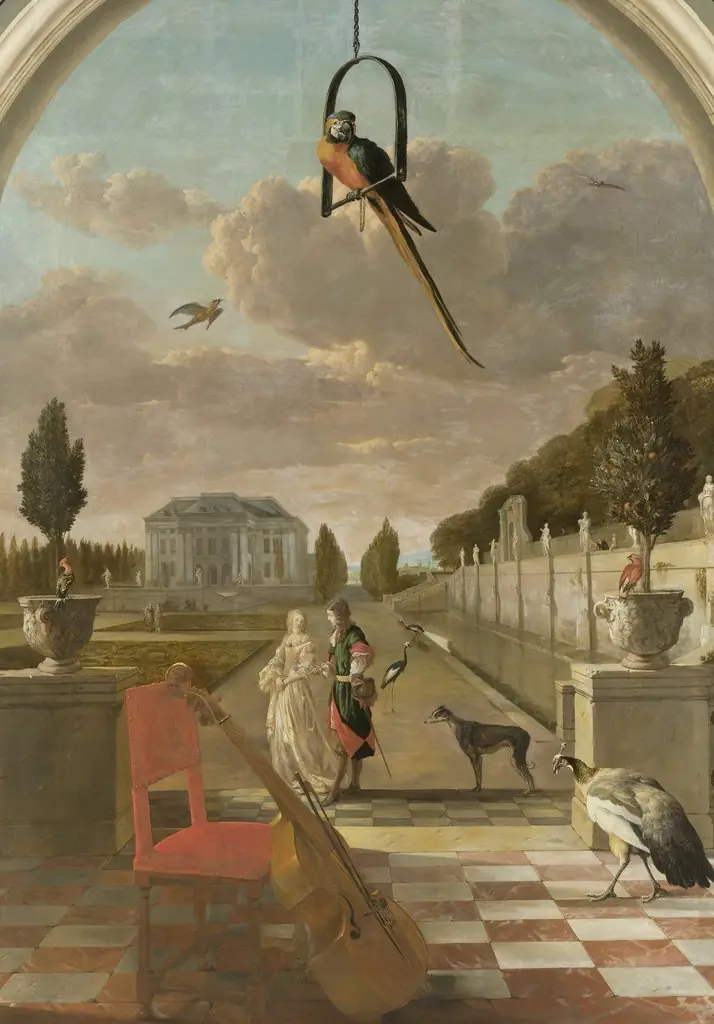 Park with country home
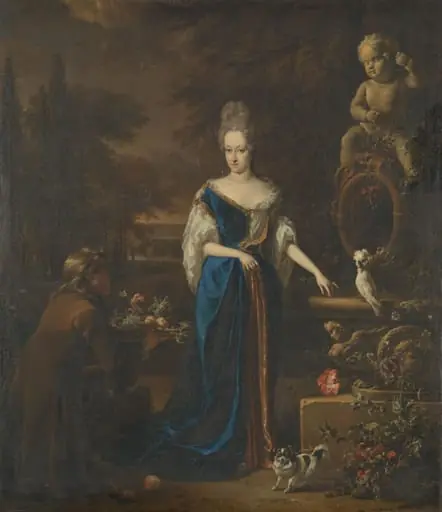 Portrait of Maria Cornelisz, Wife of Silvester van Tongeren