Artwork
Storm in the Sea
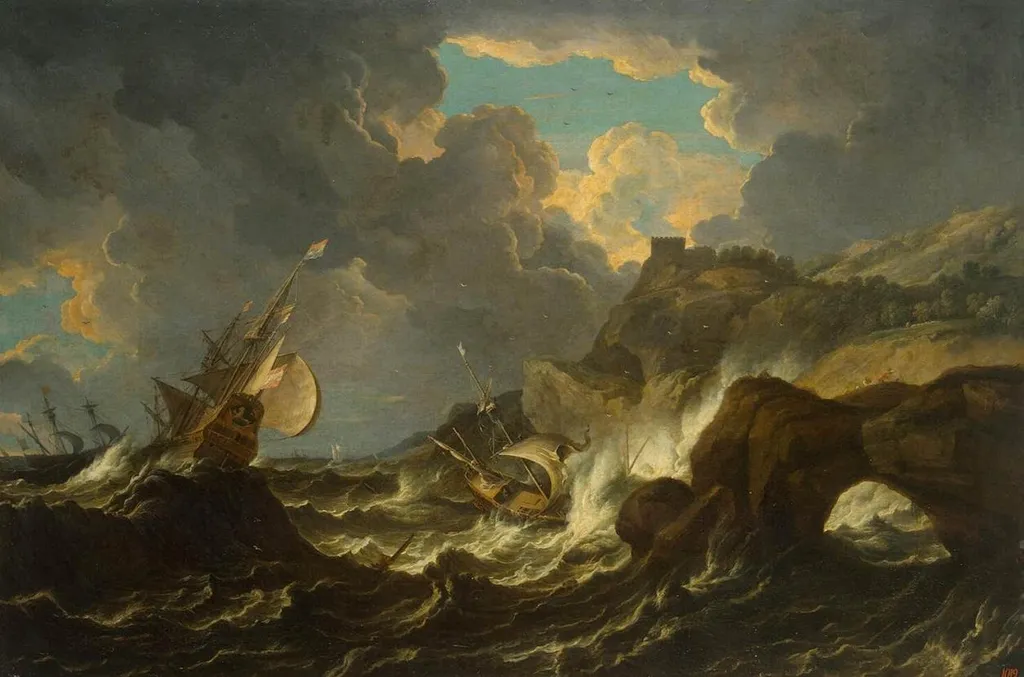
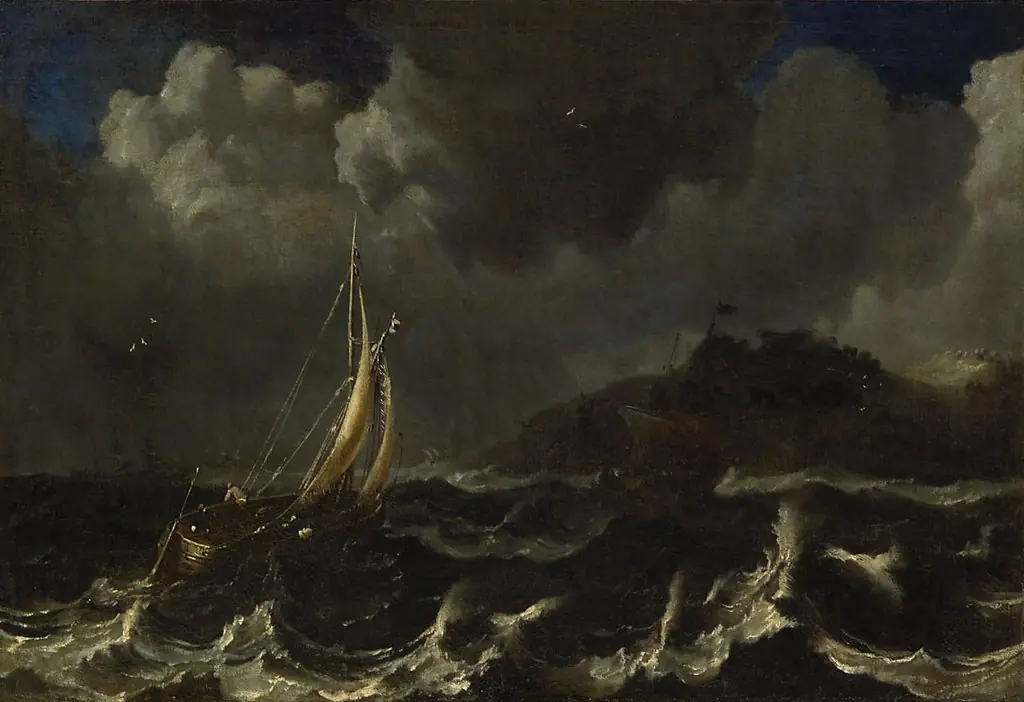
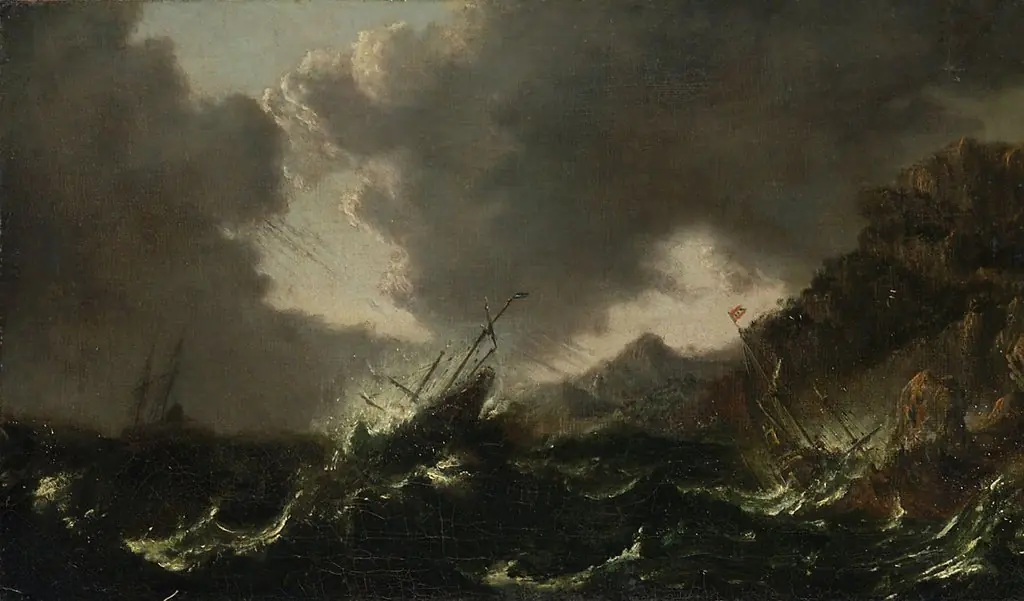
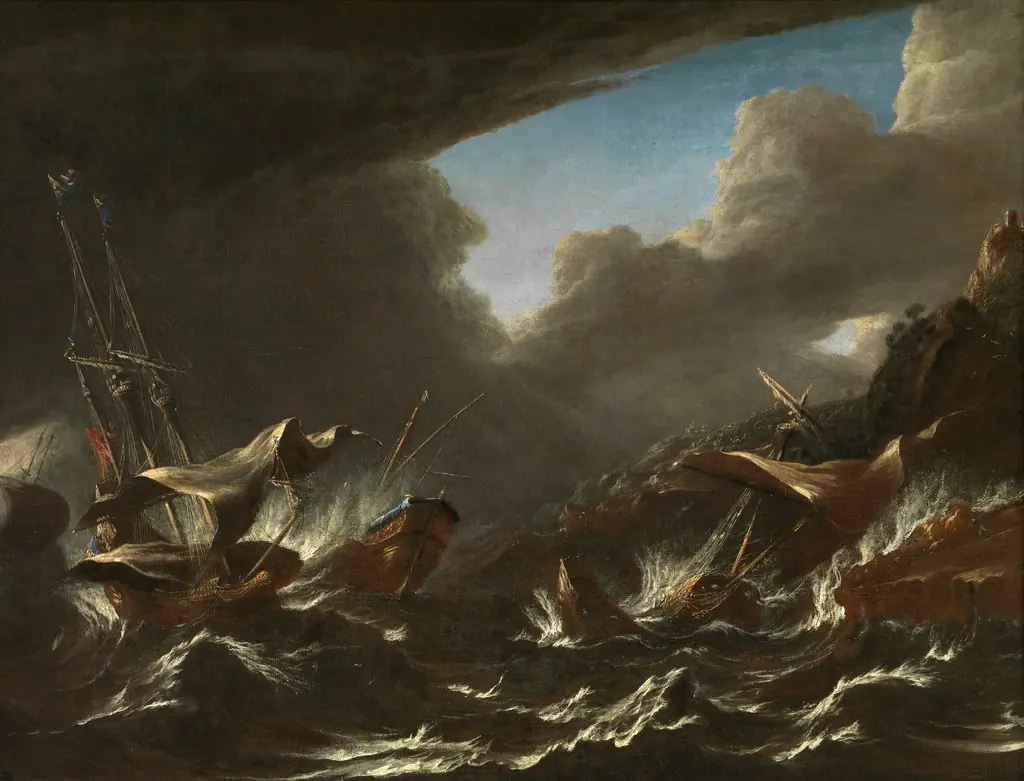
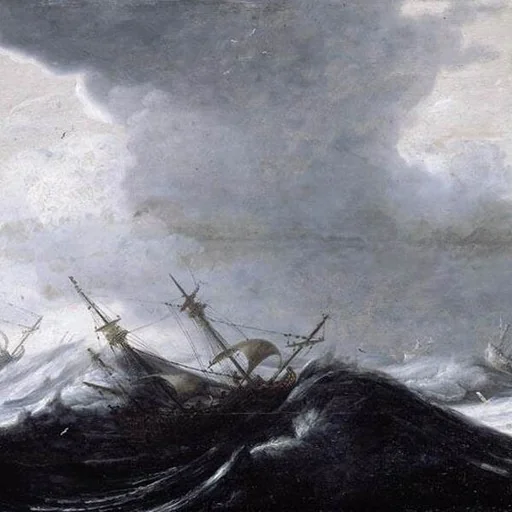
Storm in the Sea is an oil painting by the Dutch Golden Age artist Pieter Mulier. It dates from 1696 and is held in the collection of the Hermitage Museum.
About this work
Overview
Though Dutch by birth, Mulier spent much of his career in Italy, where he adapted northern European maritime traditions to the tastes of southern patrons.
Painted in 1696 by Pieter Mulier II, known as Cavalier Pietro Tempesta, this oil-on-canvas work captures a violent marine scene. Though Dutch by birth, Mulier spent much of his career in Italy, where he adapted northern European maritime traditions to the tastes of southern patrons. The painting belongs to a tradition of storm-at-sea imagery popular in the late 17th century, emphasizing nature’s power over human endeavor.
Subject & Meaning
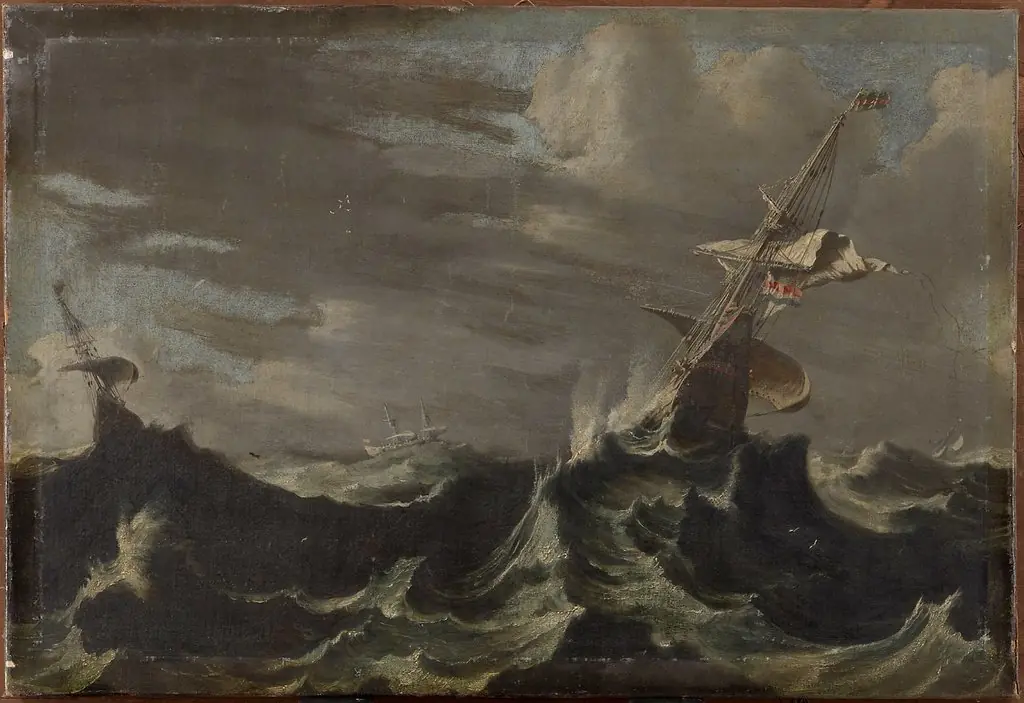
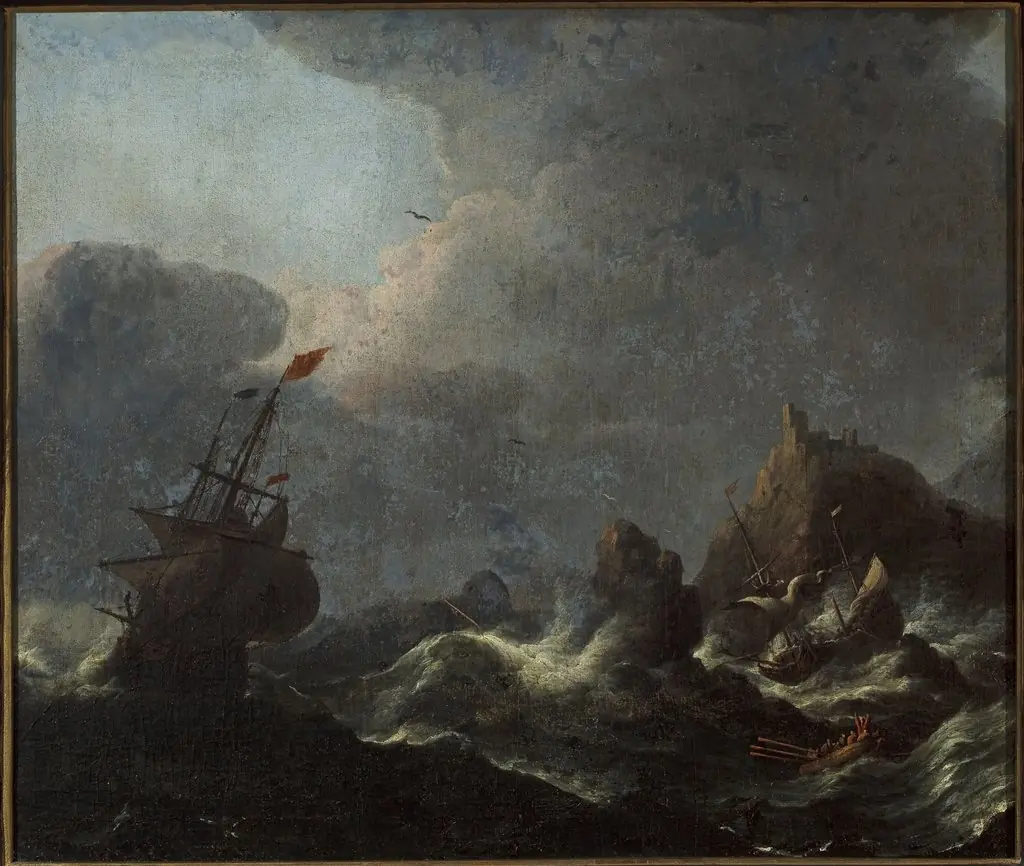
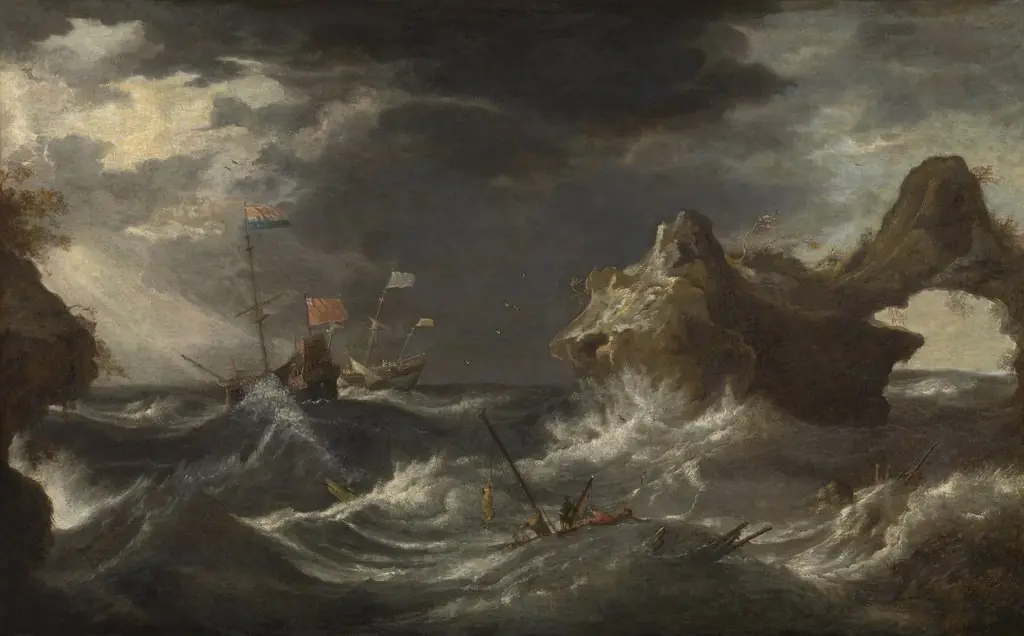
The scene portrays a vessel overwhelmed by a towering wave near a rugged coast. Torn sails and a splintered hull suggest the ship’s struggle against elemental forces. The dark, churning sky and jagged cliffs amplify a sense of impending doom. Rather than celebrating navigation or trade, the image conveys vulnerability — a reminder of the sea’s indifference to human ambition, a theme resonant in maritime cultures of the era.
Technique & Style
Mulier employs strong chiaroscuro to model the crashing waves and cloud masses, creating dramatic contrasts between light and shadow. Brushwork is energetic, with thick impasto on the foam and swift strokes suggesting wind and spray. The composition directs the eye diagonally from the foreground wreck toward the distant cliffs, enhancing the feeling of motion and spatial depth. His style blends Dutch realism with Italianate theatricality.
History & Provenance
The painting entered the collection of the State Hermitage Museum in Saint Petersburg, likely during the 18th or early 19th century, as part of broader European acquisitions of Dutch and Flemish art. Its presence in Russia reflects imperial interest in Northern European painting. No earlier ownership records are widely documented, but its survival suggests it was valued by collectors who appreciated dramatic marine subjects.
Context
Mulier worked in Italy during a period when Dutch artists were sought after for their technical skill in depicting natural phenomena. While his homeland celebrated seafaring commerce, Italian patrons favored the sublime and perilous aspects of the sea. This painting aligns with broader European tastes for emotionally charged landscapes, bridging northern precision with southern dynamism in a time of expanding maritime exploration and risk.
Legacy
Though less known than his Dutch contemporaries, Mulier’s storm scenes contributed to the evolution of marine painting in southern Europe. His fusion of Dutch observational rigor with Italian compositional drama influenced later artists working in the Mediterranean. The Hermitage’s retention of the work ensures its continued study as an example of cross-cultural artistic exchange during the late Baroque period.
Artist & collection
Artist
Cavalier Pietro Tempesta, or Pieter Mulier II (1637 – 29 June 1701) was a Dutch Golden Age painter active in the Papal States.