Artwork
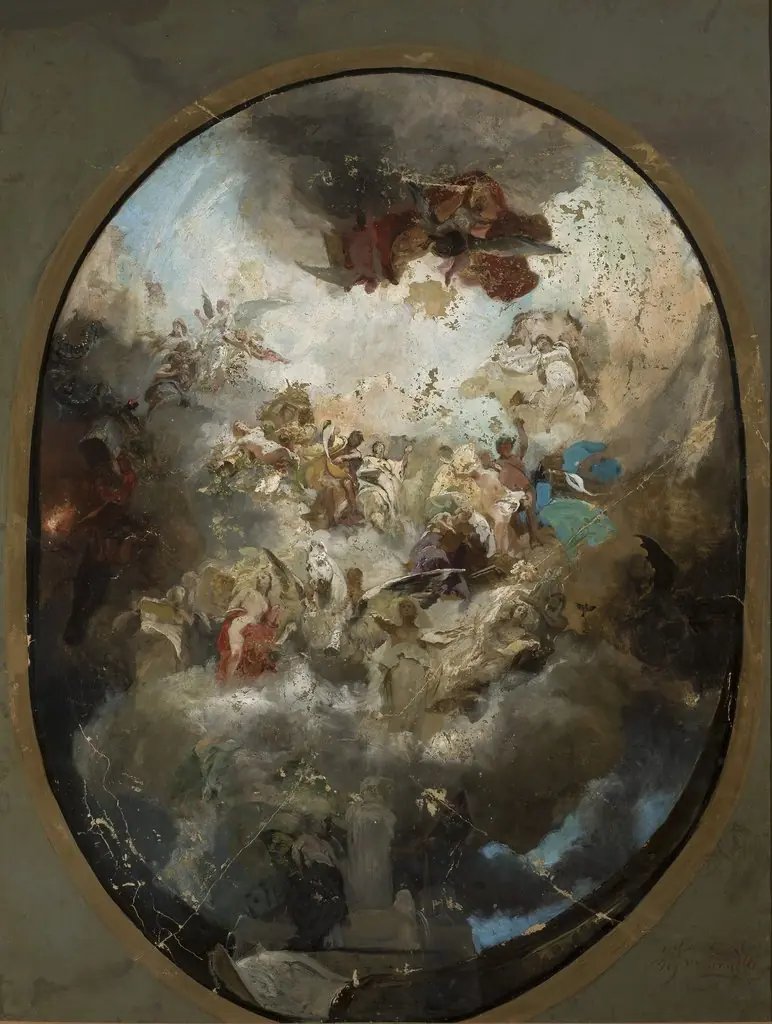
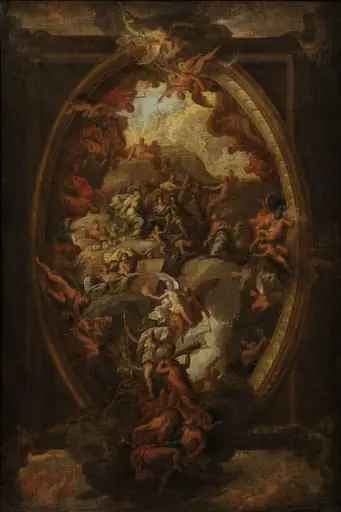
Study for "The Apotheosis of Ferdinand IV and Maria Carolina, King and Queen of Naples" (for the Palazzo dei Regi Studi, Naples)
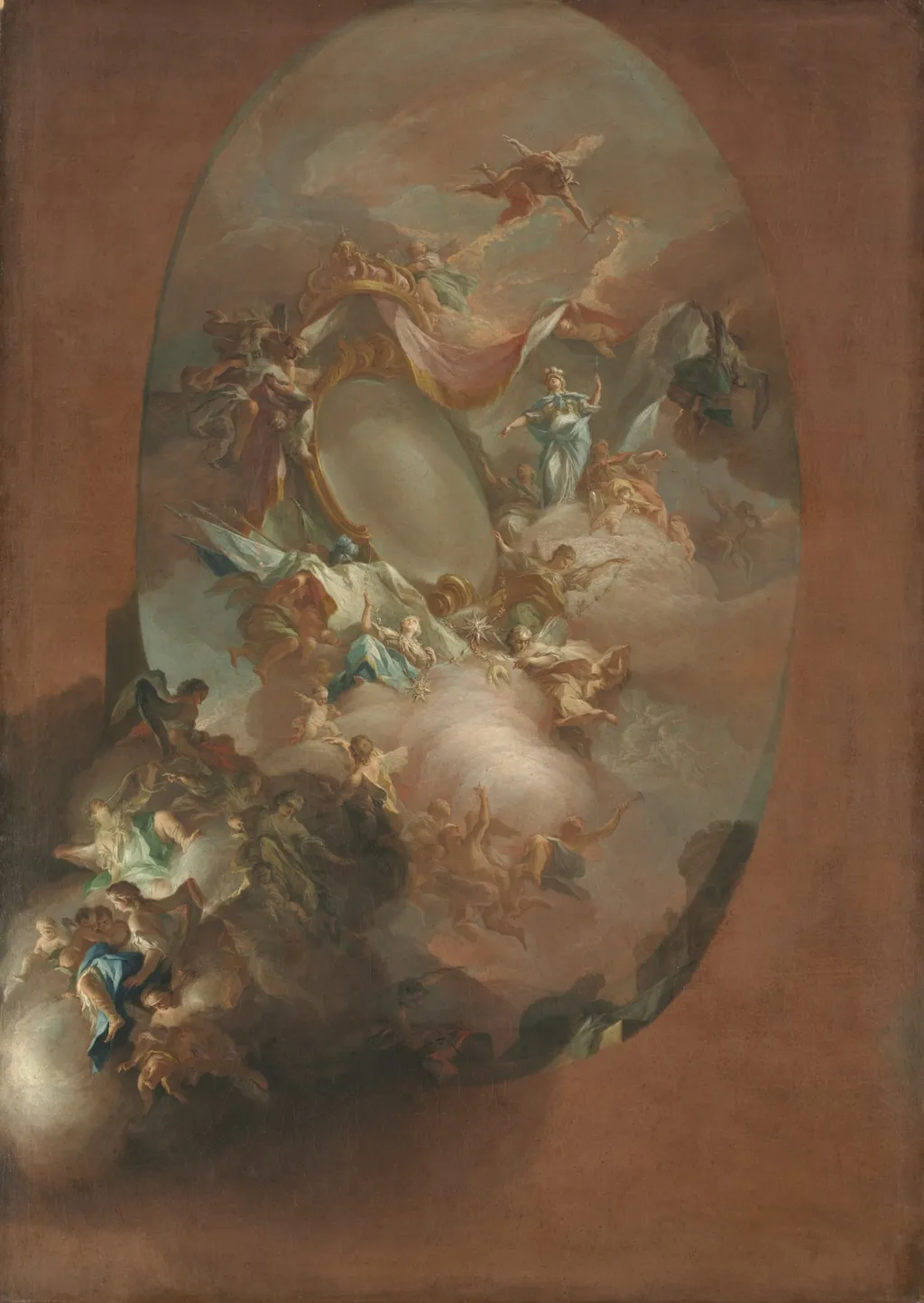
Study for "The Apotheosis of Ferdinand IV and Maria Carolina, King and Queen of Naples" (for the Palazzo dei Regi Studi, Naples) is an unspecified painting by the Rococo painting artist Pietro Bardellino. It dates from 1781 and is held in the collection of the Cleveland Museum of Art.
About this work
Overview
This oil sketch by Giuseppe Bardellino was created as a preparatory study for the ceiling decoration in the Palazzo dei Regi Studi in Naples.
This oil sketch by Giuseppe Bardellino was created as a preparatory study for the ceiling decoration in the Palazzo dei Regi Studi in Naples. It dates to the late 1770s and was intended to explore compositional elements before executing the final mural. Though unfinished, it reveals the artist’s initial vision for the apotheosis of Ferdinand IV and Maria Carolina, with symbolic figures and regal emblems arranged in a grand oval format.
Subject & Meaning
The sketch centers on a celestial assembly honoring the Neapolitan monarchs, featuring angels and allegorical virtues surrounding a central cartouche of royal insignia. The inclusion of the Order of San Januarius, the Golden Fleece, the Holy Spirit, and St. George of Constantine underscores the dynasty’s political and dynastic alliances. Unlike the final ceiling, the royal figures themselves are absent here, replaced by their heraldic symbols, suggesting a focus on institutional legitimacy rather than personal glorification.
Technique & Style
Bardellino employed soft, atmospheric modeling and a restrained palette to evoke a celestial realm. His brushwork is delicate, with translucent layers suggesting luminosity and depth. The figures are rendered with subtle gradations of tone, avoiding sharp contours, a technique aligned with late Baroque sensibilities. The composition is loosely structured, indicating its function as a working study rather than a polished presentation piece.
History & Provenance
The sketch was long attributed to Bardellino based on stylistic parallels with another known preparatory work sold in New York in 1972. Both pieces are linked to the 1781 ceiling mural in Naples, though the Cleveland version was significantly revised in the final execution. The cartouche, central to this study, was removed from the completed ceiling, where the royal portraits replaced it. The sketch’s survival offers rare insight into the artist’s evolving design process.
Context
Created during the height of Bourbon patronage in Naples, the ceiling project reflected the monarchy’s desire to align itself with divine authority through visual allegory. Bardellino’s work was part of a broader trend in 18th-century European courts to use ceiling painting as political propaganda. The emphasis on dynastic orders and celestial ascent mirrored similar projects in Vienna and Madrid, reinforcing the legitimacy of Bourbon rule through sacred imagery.
Legacy
The sketch remains a valuable document of artistic practice in late 18th-century Naples, illustrating how large-scale decorative programs were developed through iterative studies. Its differences from the final ceiling highlight the flexibility of compositional planning and the role of symbolic substitution in courtly art. While overshadowed by the completed mural, the study preserves the conceptual origins of a significant Neapolitan decorative commission.
Artist & collection


 Study for "The Apotheosis of Ferdinand IV and Maria Carolina, King and Queen of Naples" (for the Palazzo dei Regi Studi, Naples)
 The Coronation of the Virgin
 The Goddess Cybele offering her Produce to the Earth
 Plafond project
 The Glorification of Saint Dominic
 Allegory of the donation of the Casino to Queen María Isabel de Braganza by the Municipality of Madrid
 Allegory of the Planets and Continents
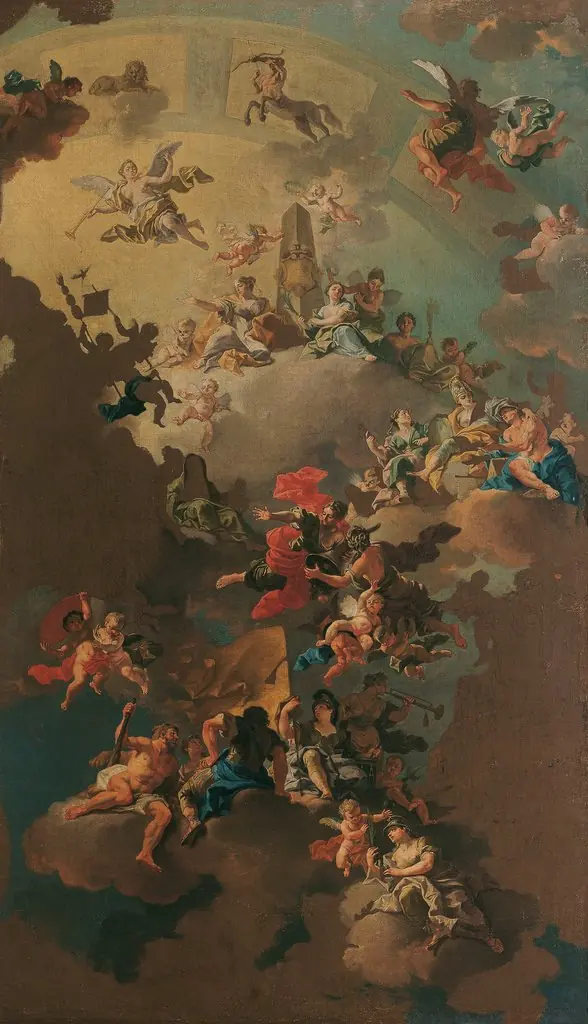 Allegorie auf die glückliche Regierung Mährens
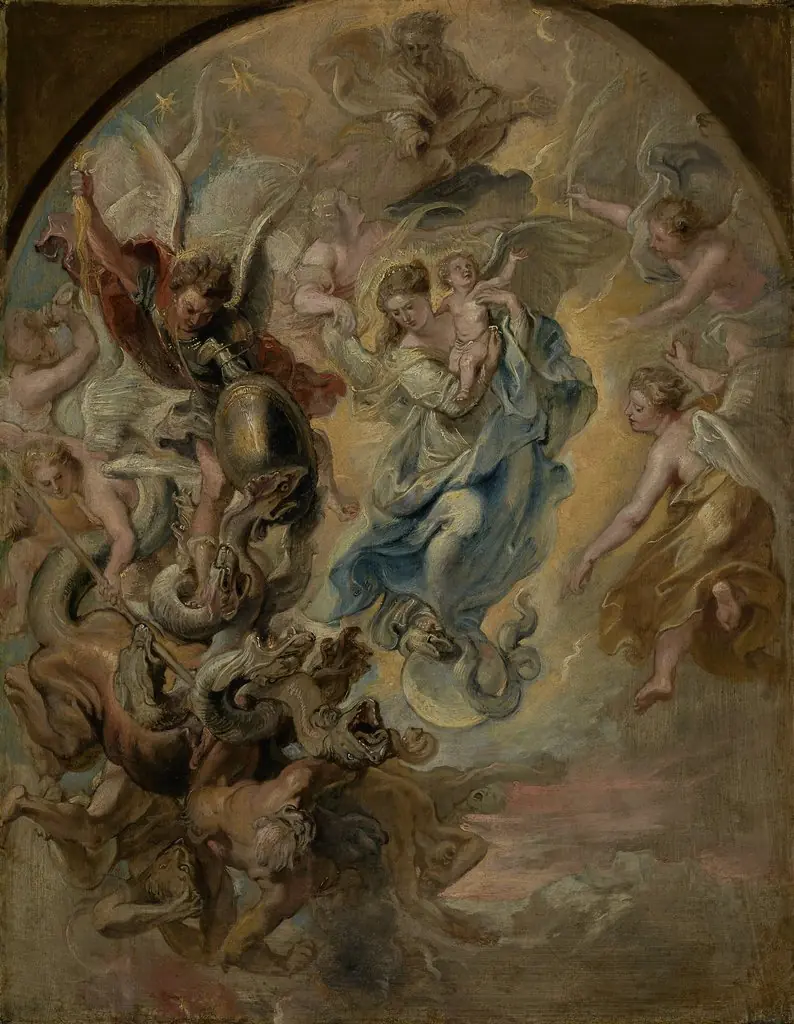 The Virgin as the Woman of the Apocalypse
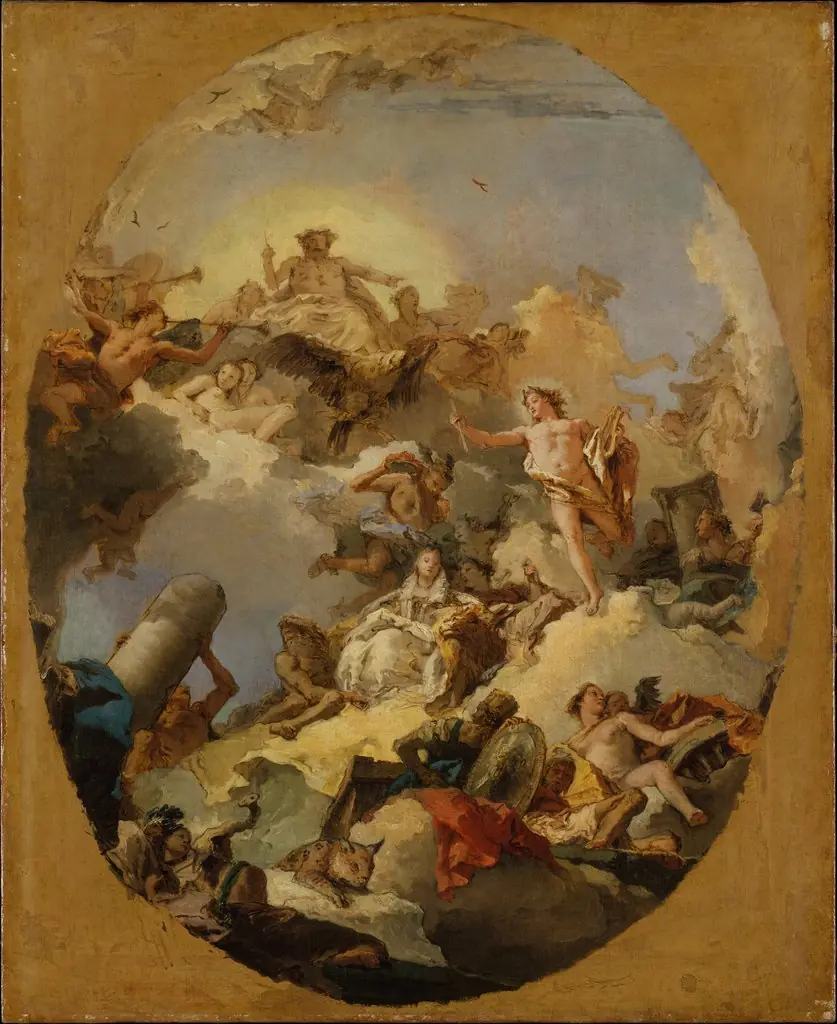 The Apotheosis of the Spanish Monarchy
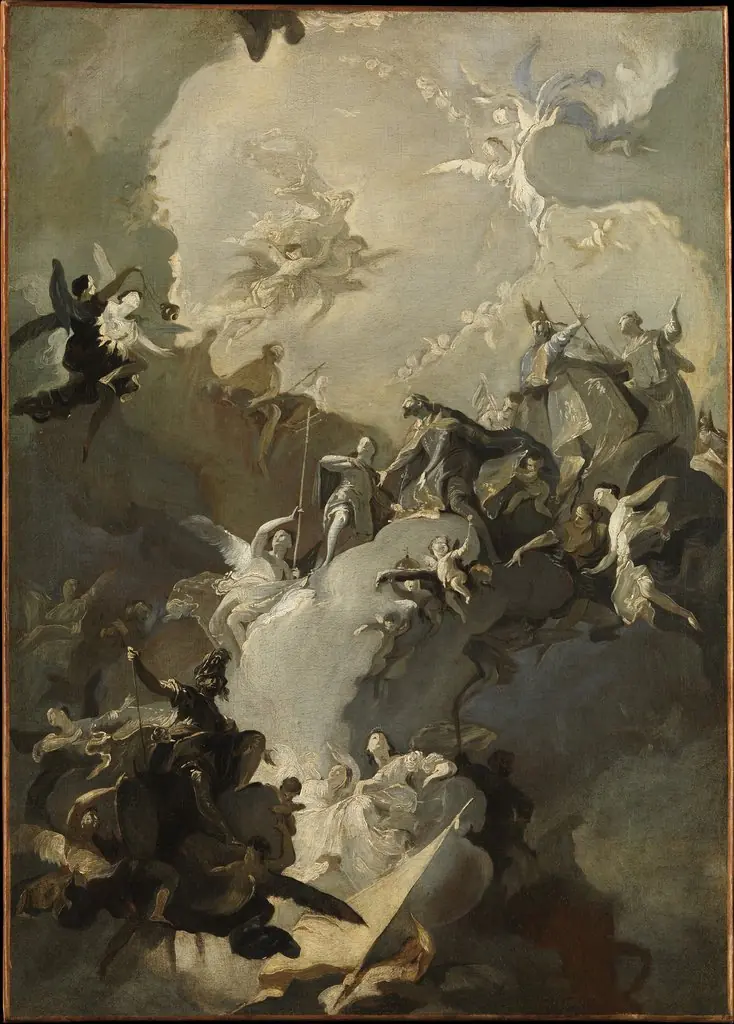 The Glorification of the Royal Hungarian Saints
 William and Mary Presenting the Cap of Liberty to Europe (sketch for the painted ceiling of the Great Hall, Greenwich Hospital)