Artwork
Portrait of an old woman with a bowl
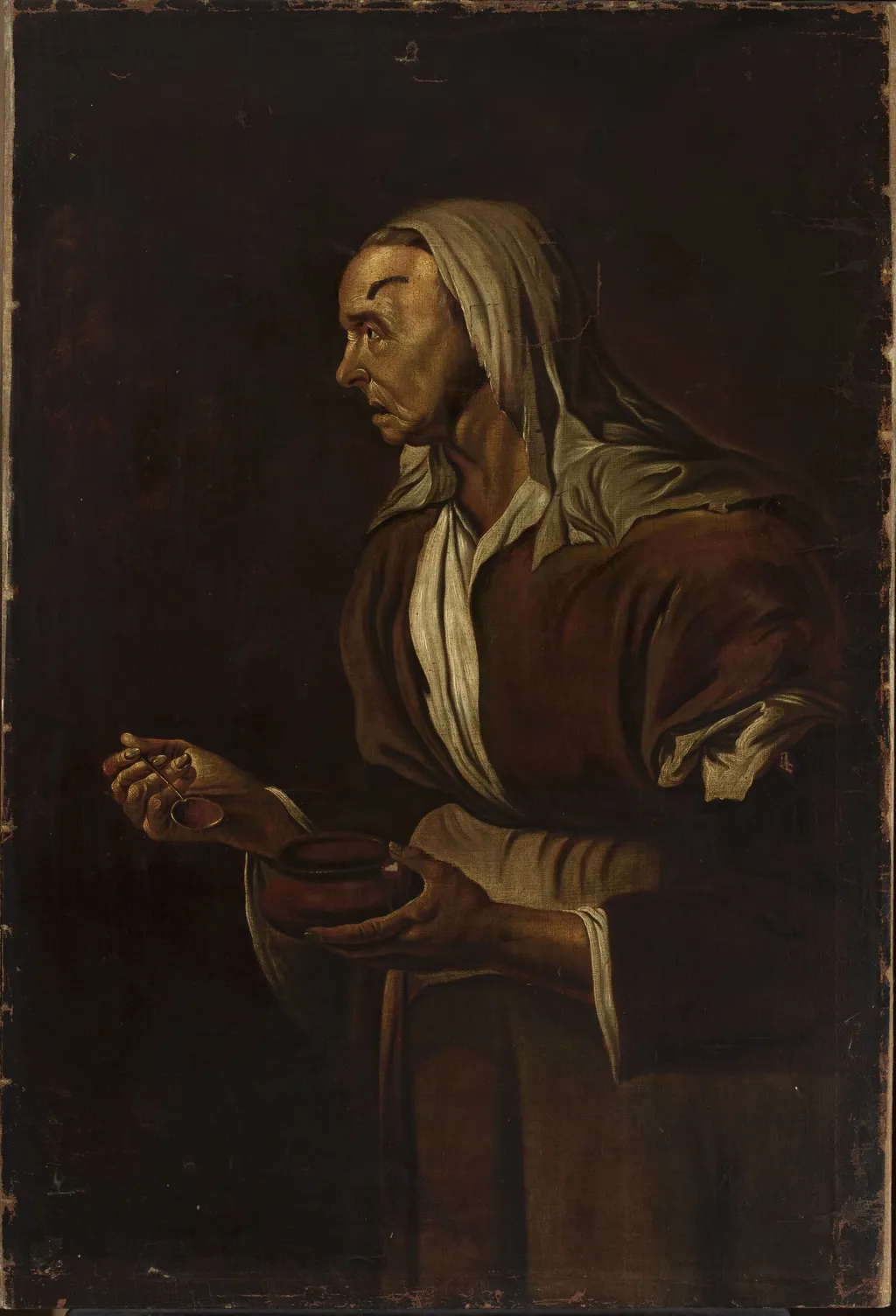
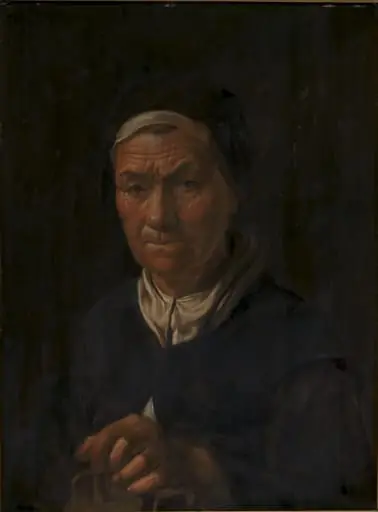
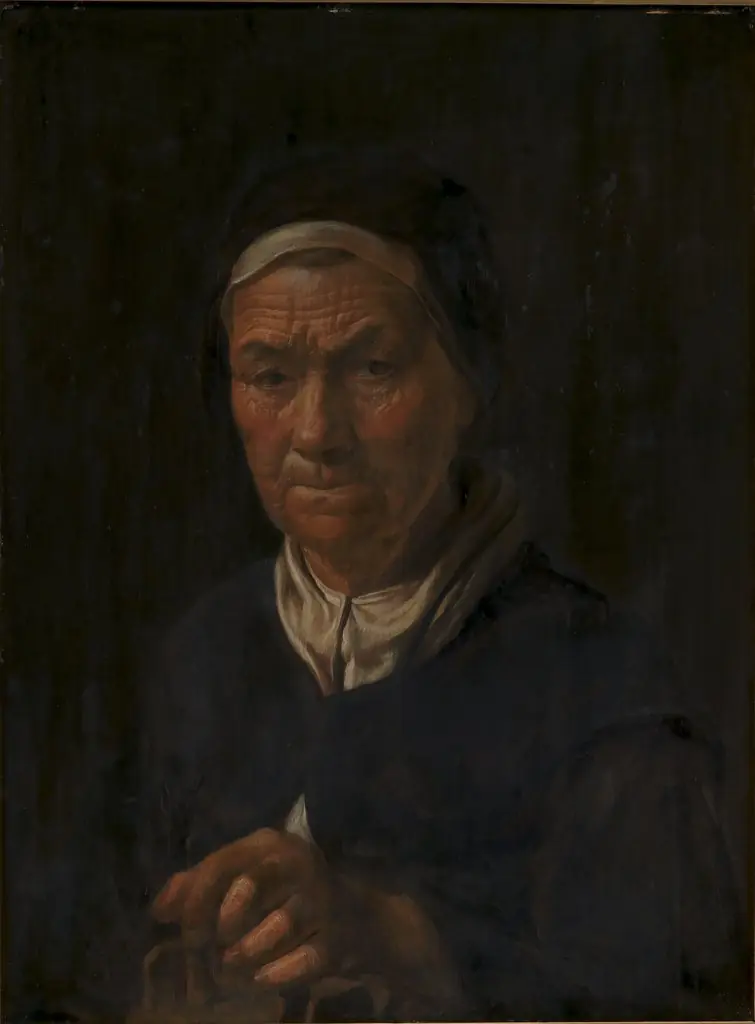
Portrait of an old woman with a bowl is an oil painting by Pietro Bellotti. It dates from 1672 and is held in the collection of the National Museum in Warsaw.
About this work
Overview
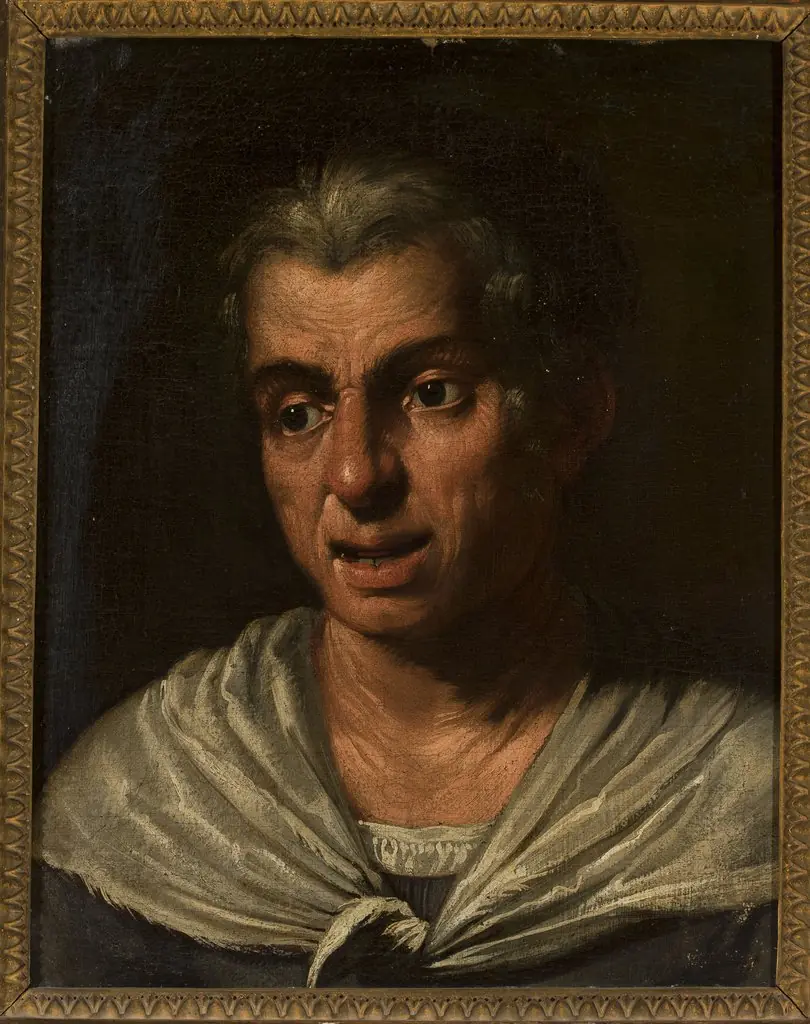
Painted around 1672 by Pietro Bellotti, this oil portrait depicts an elderly woman holding a bowl. The work is part of the collection at the National Museum in Warsaw. Rendered with restrained detail, the composition focuses on the sitter’s quiet presence, framed against a deep, unmodeled background that isolates her from any contextual clues.
Subject & Meaning
The subject is an aging woman, her face marked by time and her gaze lowered in introspection. Clad in a dark robe and headscarf, she holds a simple bowl—possibly a vessel for daily use—suggesting a life of modest means. The absence of ornament or setting emphasizes solitude and inner reflection, evoking themes of endurance and quiet dignity rather than narrative or symbolism.
Technique & Style
Bellotti employs chiaroscuro to model the woman’s form, using sharp contrasts between light and shadow to define her wrinkled skin and folded fabric. The brushwork is precise yet unadorned, avoiding idealization. The dark background recedes completely, heightening the three-dimensionality of her figure and reinforcing the painting’s contemplative tone through atmospheric economy.
History & Provenance
The painting entered the National Museum in Warsaw’s collection in the 19th century, though its earlier ownership remains undocumented. It is attributed to Bellotti based on stylistic parallels with his other known works, particularly his depictions of elderly figures. No records of commission or original context survive, leaving its purpose—private devotion, study, or portrait—uncertain.
Context
This painting aligns with a broader interest in depicting age and humility, common in devotional and civic art of the era.
Created during the late Baroque period in northern Italy, the work reflects a regional tradition of genre-inflected portraiture that favored realism over grandeur. Bellotti, active in Venice and surrounding areas, often portrayed ordinary individuals with psychological nuance. This painting aligns with a broader interest in depicting age and humility, common in devotional and civic art of the era.
Legacy
Though not widely exhibited outside Poland, the portrait contributes to scholarly understanding of Bellotti’s lesser-known output and the persistence of humble portraiture in 17th-century Italy. Its quiet intensity has influenced later studies of aging in art, serving as an example of how emotional depth can be conveyed without theatricality or narrative.
Artist & collection