Artwork
The Resurrection
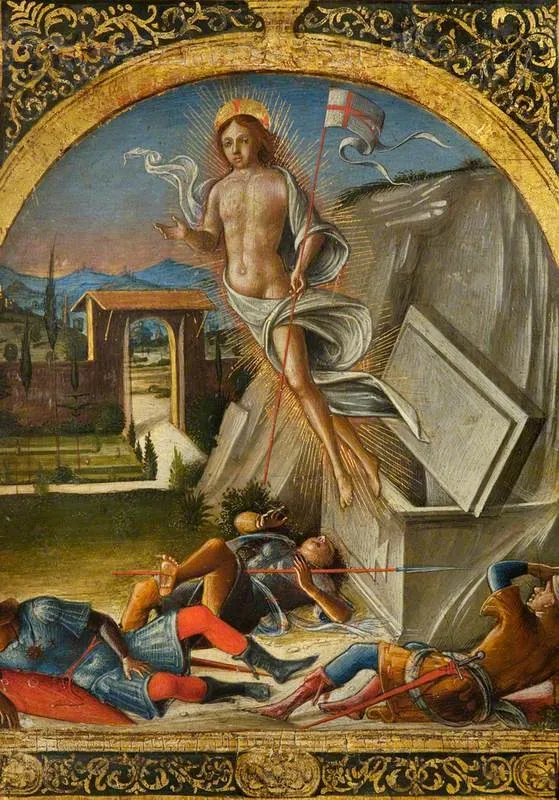
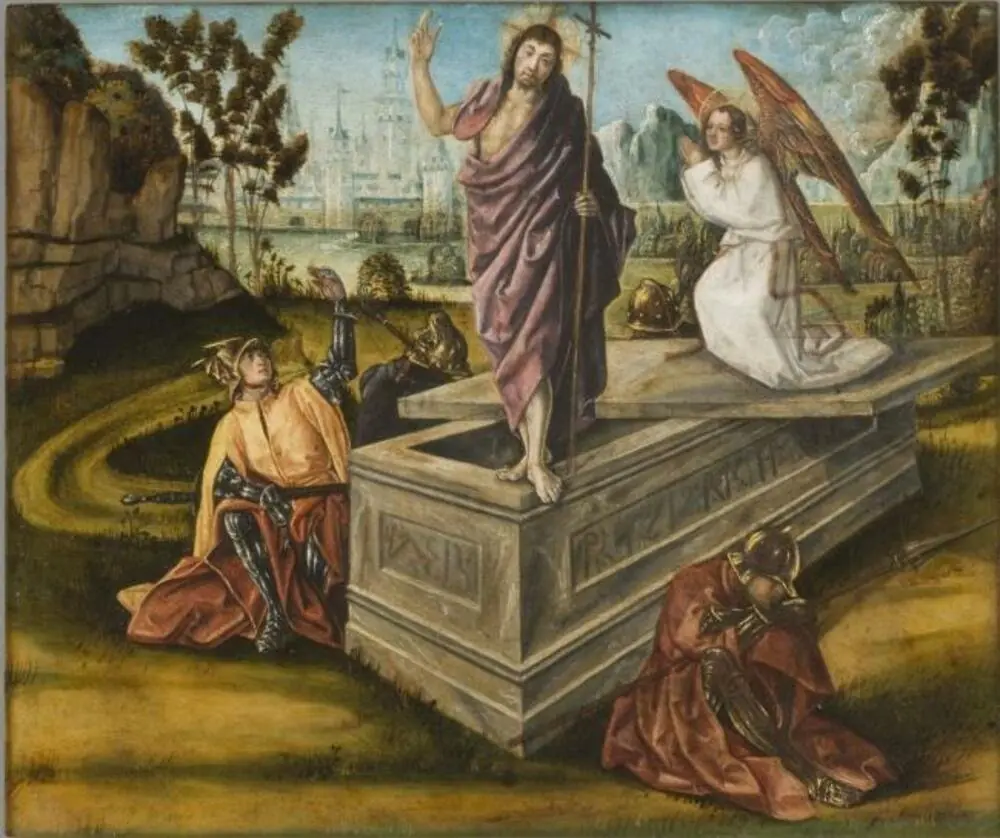
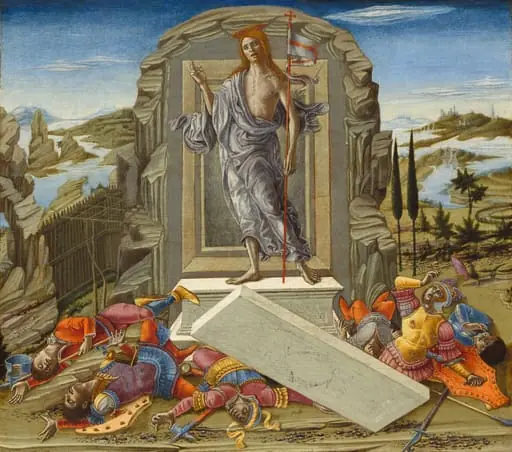
The Resurrection is an unspecified painting by Pietro di Francesco degli Orioli. It dates from 1487 and is held in the collection of the Fitzwilliam Museum.
About this work
Overview
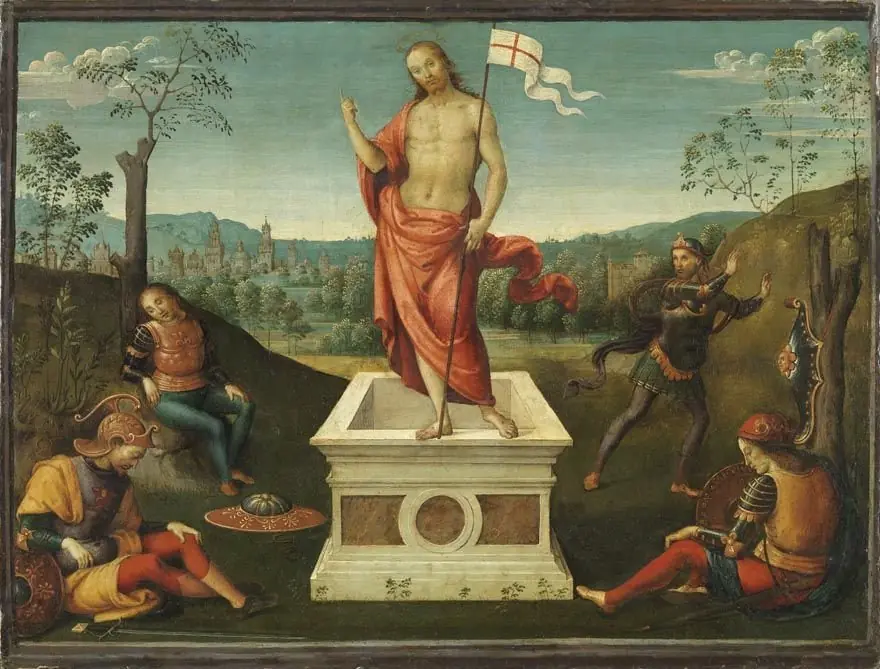
Painted around 1487 by Pietro di Francesco degli Orioli, this work illustrates the resurrection of Christ as a quiet, solemn moment. Executed in tempera and gold on panel, it reflects the devotional priorities of late 15th-century Tuscany. The painting is part of the Fitzwilliam Museum’s collection, where it has been held since the 19th century.
Subject & Meaning
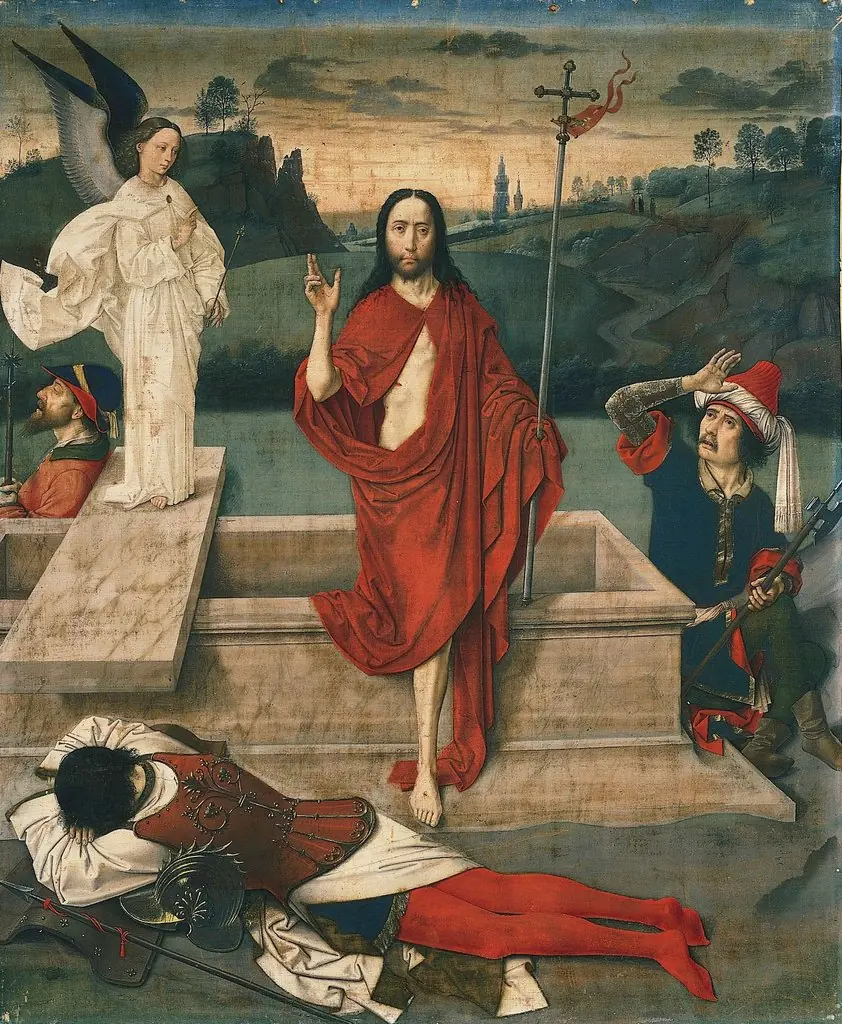
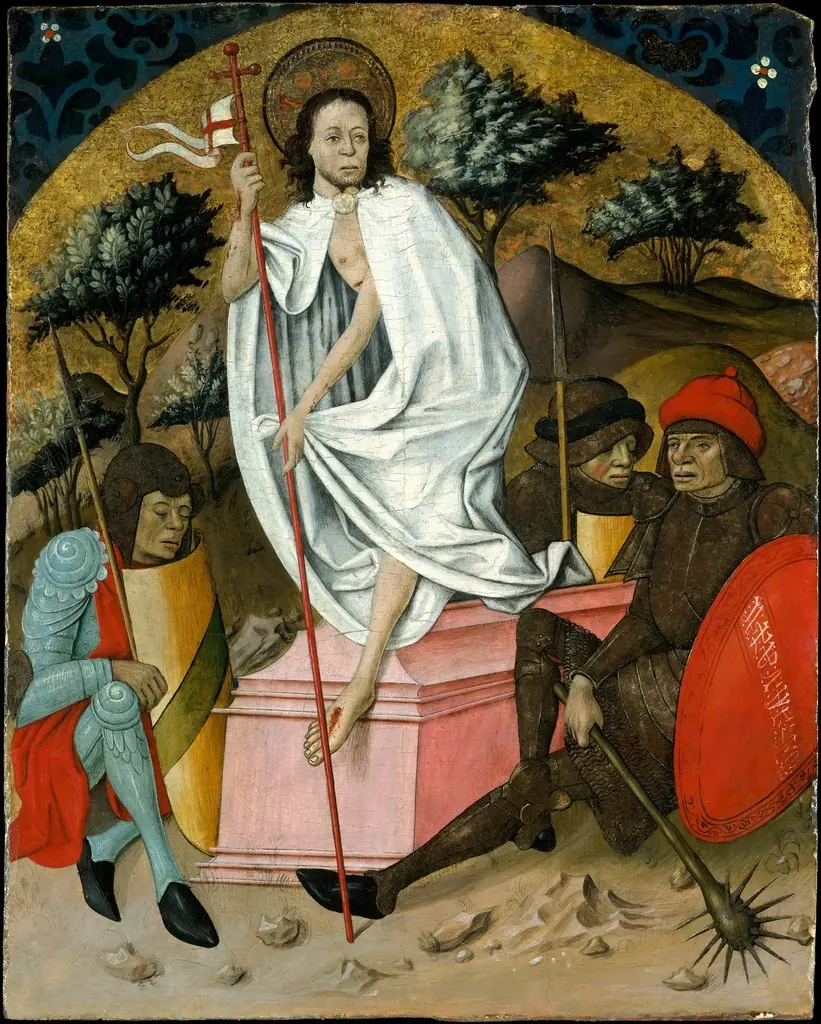
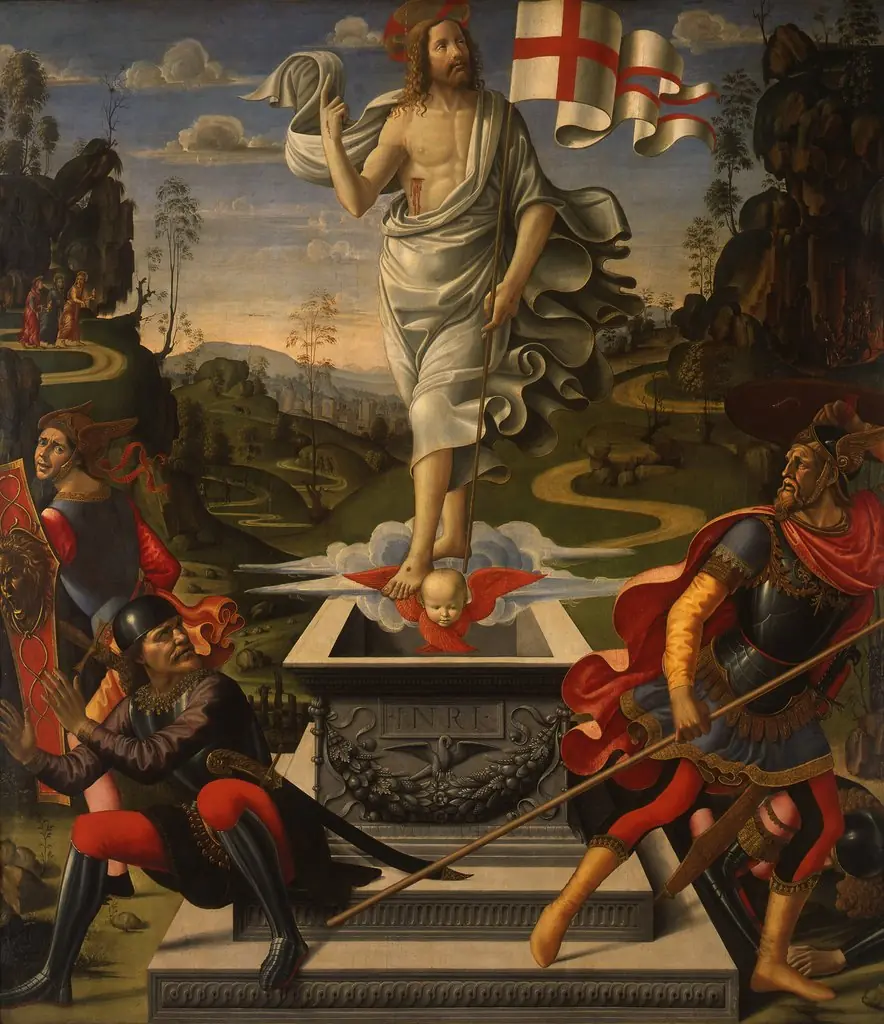
Christ rises from a stone tomb, his body illuminated and wrapped in a white shroud, symbolizing purity and renewal. He holds a banner, traditionally representing victory over death. Below him, Roman soldiers lie scattered—some asleep, others collapsed—emphasizing their powerlessness before divine intervention. The scene conveys theological triumph without dramatic spectacle.
Technique & Style
Orioli employed tempera on wood panel, a common medium in early Renaissance Florence. The figures are rendered with delicate lines and muted colors, while gold leaf highlights Christ’s halo and the banner. The landscape background, though simplified, includes distant hills and a structure possibly meant to suggest a sacred site, grounding the miracle in a tangible world.
History & Provenance
The painting likely originated in a private chapel or religious institution in Siena or its surrounding region. It entered the Fitzwilliam Museum’s collection in the 1800s, acquired as part of a broader effort to preserve Italian panel paintings. Its attribution to Orioli was confirmed through stylistic comparison with documented works from his workshop.
Context
Created during a period of renewed interest in biblical narratives among Tuscan patrons, the painting aligns with devotional practices that emphasized Christ’s physical resurrection. Unlike grander altarpieces, this intimate panel was suited for personal meditation, reflecting a trend toward smaller-scale religious imagery in domestic or monastic settings.
Legacy
Though not widely known outside scholarly circles, the painting remains a representative example of Sienese Renaissance piety. It contributes to understanding how religious themes were rendered with restraint and symbolic clarity, bridging the gap between late Gothic solemnity and early Renaissance naturalism.
Artist & collection
Artist
Pietro di Francesco degli Orioli
Pietro di Francesco degli Orioli (1458–1496) was an artist, born in Siena.