Artwork
San Giovanni Battista
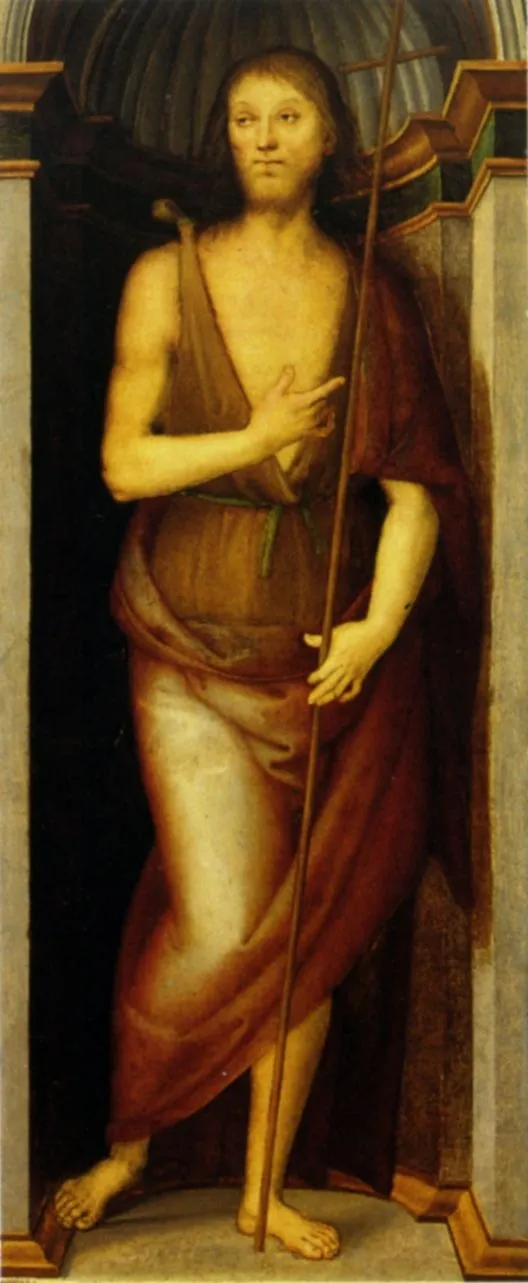
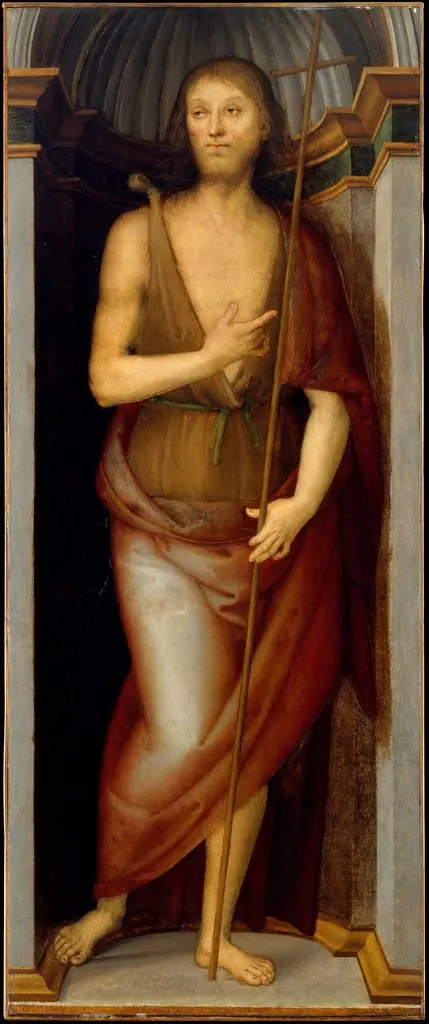
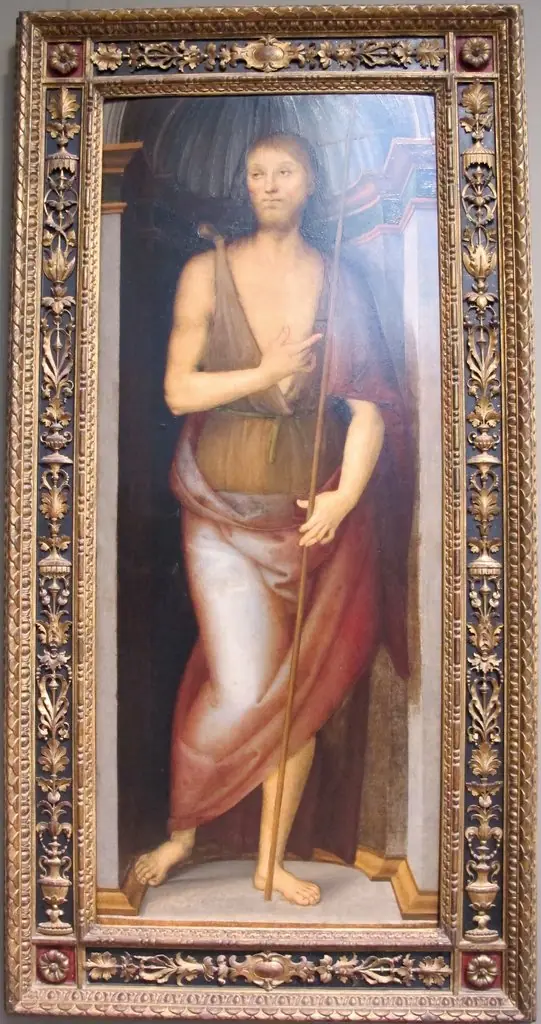
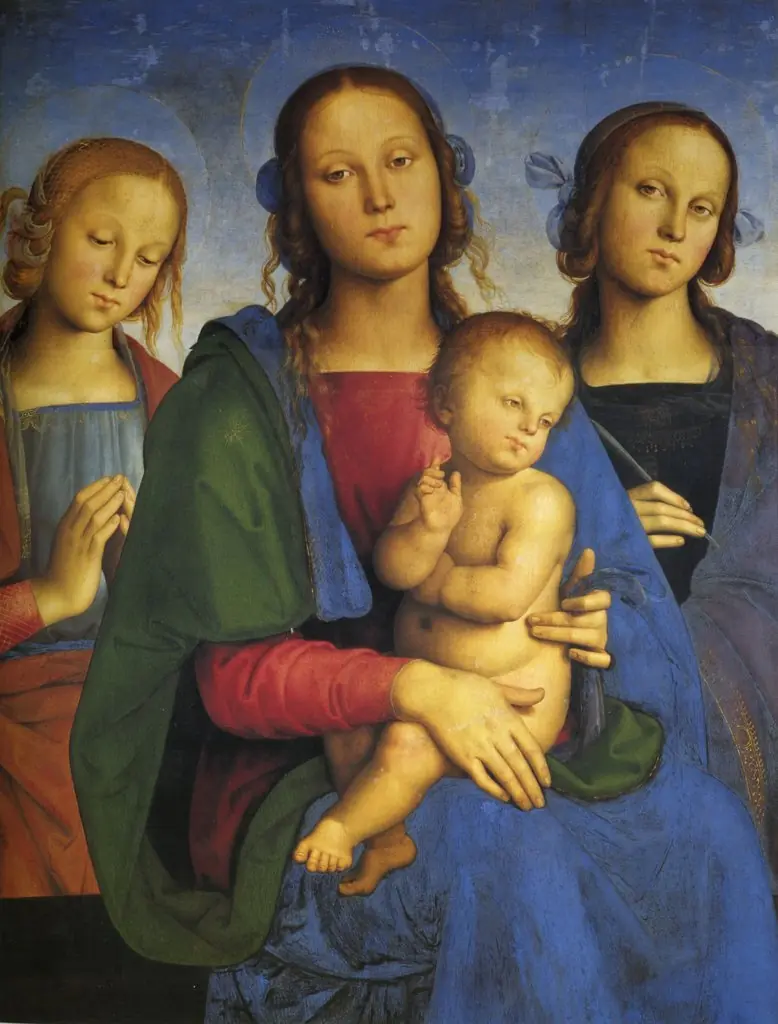
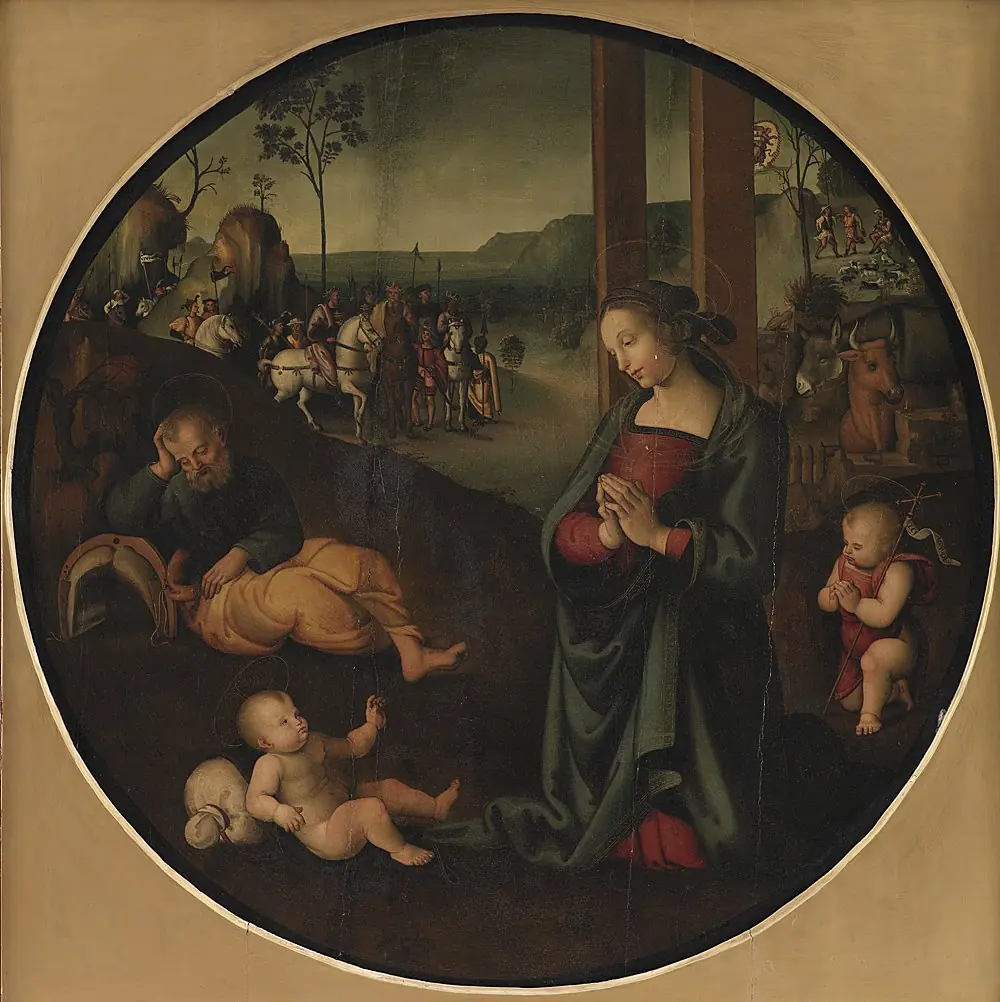
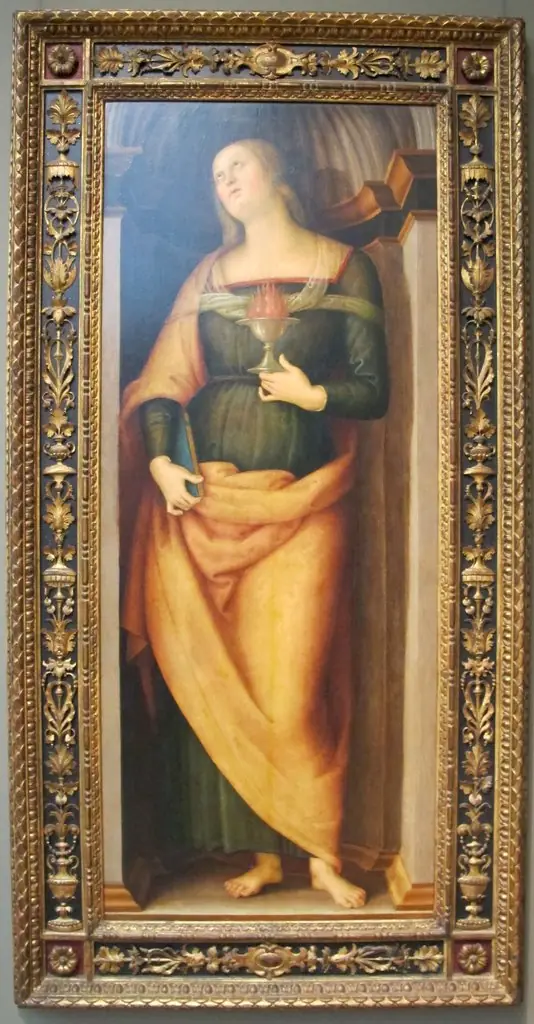
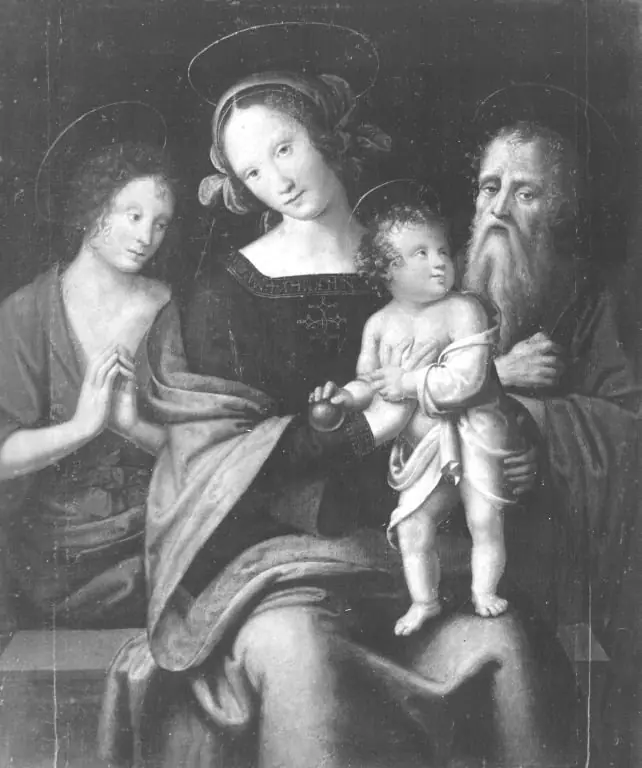
San Giovanni Battista is an unspecified painting by the Early Renaissance artist Pietro Perugino. It dates from 1495 and is held in the collection of the Metropolitan Museum of Art.
About this work
Overview
It exemplifies the devotional art prevalent during the late 15th century, showcasing the artist's refined approach to figural representation and composition.
Pietro Perugino's *San Giovanni Battista*, created around 1495, presents John the Baptist in a characteristic early Renaissance manner. This religious painting, executed by a prominent figure of the Umbrian school, is part of The Metropolitan Museum of Art's collection. It exemplifies the devotional art prevalent during the late 15th century, showcasing the artist's refined approach to figural representation and composition.
Subject & Meaning
The artwork portrays John the Baptist standing within a doorway, his figure dominating the frame. He wears a red robe draped over a brown tunic, secured by a green cord, and holds a staff. His long hair and serene expression contribute to a contemplative mood. With his left hand resting on his chest, and his weight subtly shifted, the pose conveys a sense of quiet introspection, inviting the viewer into a moment of spiritual reflection.
Technique & Style
Perugino's painting embodies the refined aesthetic of the early Renaissance, particularly the Umbrian school's emphasis on clarity and harmonious composition. The artist skillfully employs color and arrangement to create a sense of three-dimensionality, drawing the eye into the scene. While not explicitly stated for this work, Perugino was known for techniques like chiaroscuro and sfumato, which contribute to the subtle modeling and atmospheric quality often seen in his figures, enhancing their lifelike presence.
Legacy
As a leading Italian painter of his era, Pietro Perugino played a significant role in shaping the trajectory of Renaissance art. His artistic innovations and stylistic developments laid foundational elements for what would become defining characteristics of the High Renaissance. Notably, his studio trained influential artists such as Raphael, whose subsequent work further propagated and evolved the principles Perugino helped establish, cementing his impact on the broader artistic movement.
Artist & collection
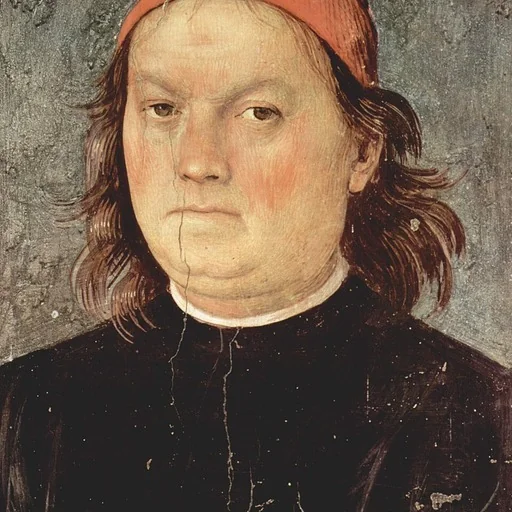
Artist
Pietro Perugino (US: PERR-ə-JEE-noh, -oo-; Italian: ; born Pietro Vannucci or Pietro Vanucci; c.