Artwork
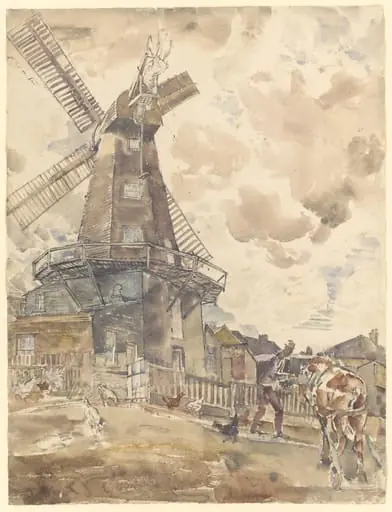
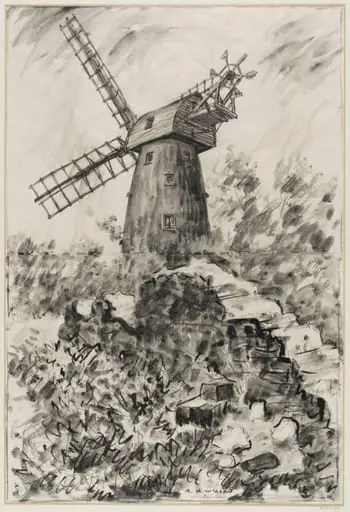
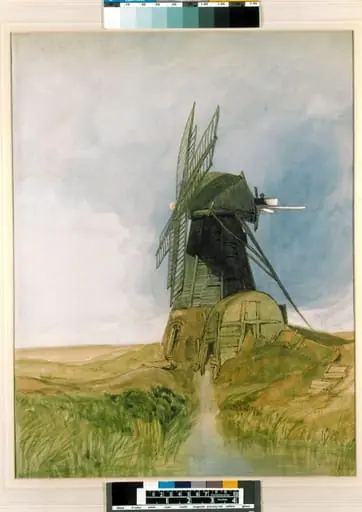
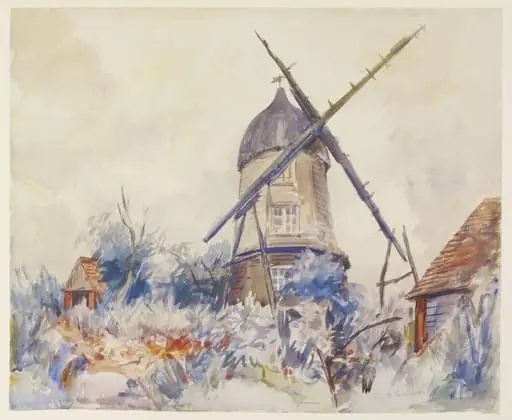
Windmill ("Marsh Mill") at Thornton, near Fleetwood
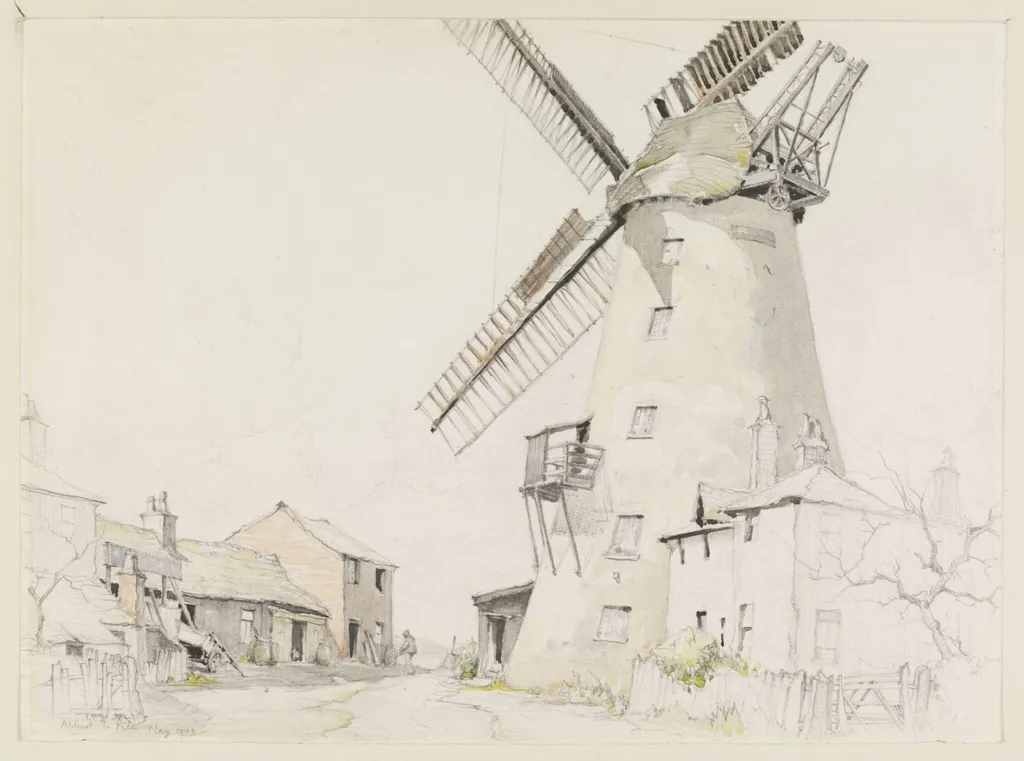
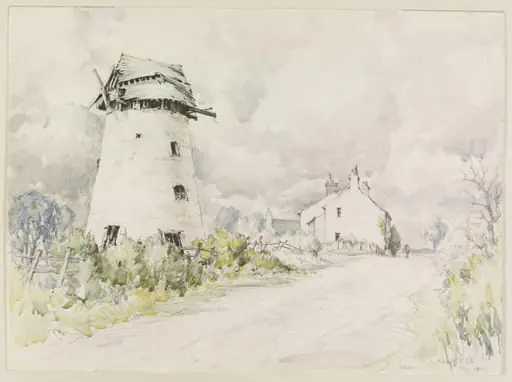
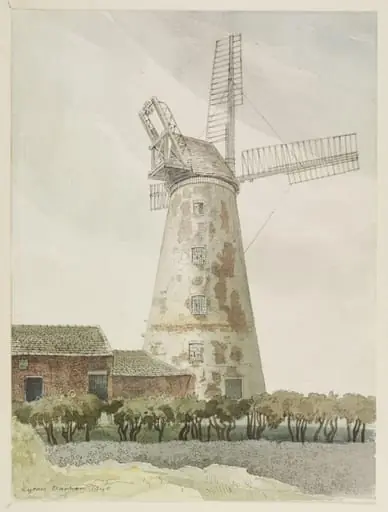
Windmill ("Marsh Mill") at Thornton, near Fleetwood is a watercolor work on paper by Pile. It dates from 1943 and is held in the collection of the Victoria and Albert Museum.
About this work
Overview
Painted in 1943 by Pile, this watercolour captures Marsh Mill, a five-storey tower windmill near Thornton, Lancashire.
Painted in 1943 by Pile, this watercolour captures Marsh Mill, a five-storey tower windmill near Thornton, Lancashire. Created as part of the Recording Britain initiative, the work reflects a wartime effort to preserve visual records of rural and architectural heritage at risk from conflict or change. The piece belongs to a larger collection of over 1,500 works produced by nearly 100 artists under the auspices of the Pilgrim Trust and the Ministry of Labour and National Service.
Subject & Meaning
Marsh Mill stands as the solitary focal point, its pale stone structure contrasting with dark sails and a muted sky. Surrounding low cottages and a lone figure in the distance suggest quiet, ongoing life, yet the absence of activity and the subdued tones evoke a sense of stillness and isolation. The mill, no longer operational, symbolizes a fading rural past, its presence preserved not for utility but as a marker of place and memory.
Technique & Style
Pile employed transparent watercolour washes to suggest atmospheric depth and subtle shifts in light. The windmill’s form is defined with delicate linework, while the sky and ground are rendered in soft, greyed tones that unify the composition. Sparse detail in the foreground buildings and the minimal depiction of the distant figure reinforce a restrained, observational approach, characteristic of the Recording Britain style.
History & Provenance
The painting was produced during the final year of the Recording Britain scheme, which concluded in 1943. It was commissioned under the direction of Sir Kenneth Clark and funded by the Pilgrim Trust to document landscapes and structures deemed vulnerable. The work entered the Victoria and Albert Museum’s collection as part of the scheme’s archive, where it remains accessible as a historical record of Britain’s rural fabric during wartime.
Context
The Recording Britain project emerged as a cultural response to the uncertainties of war, aiming to capture scenes of everyday life and vernacular architecture before they disappeared. Artists were sent across the country to record sites threatened by bombing, urban expansion, or neglect. Marsh Mill, though not a grand monument, was valued for its embodiment of regional identity and agricultural history in a rapidly changing landscape.
Legacy
Pile’s watercolour contributes to a broader visual archive that continues to inform historical and architectural studies. Alongside works by peers like Piper and Hilder, it offers a quiet testament to the endurance of ordinary places. The Recording Britain collection, now held by the V&A, serves as a primary resource for understanding how Britain’s cultural memory was consciously preserved during a period of national upheaval.
Artist & collection