Artwork
Windmill at Staining, near Blackpool
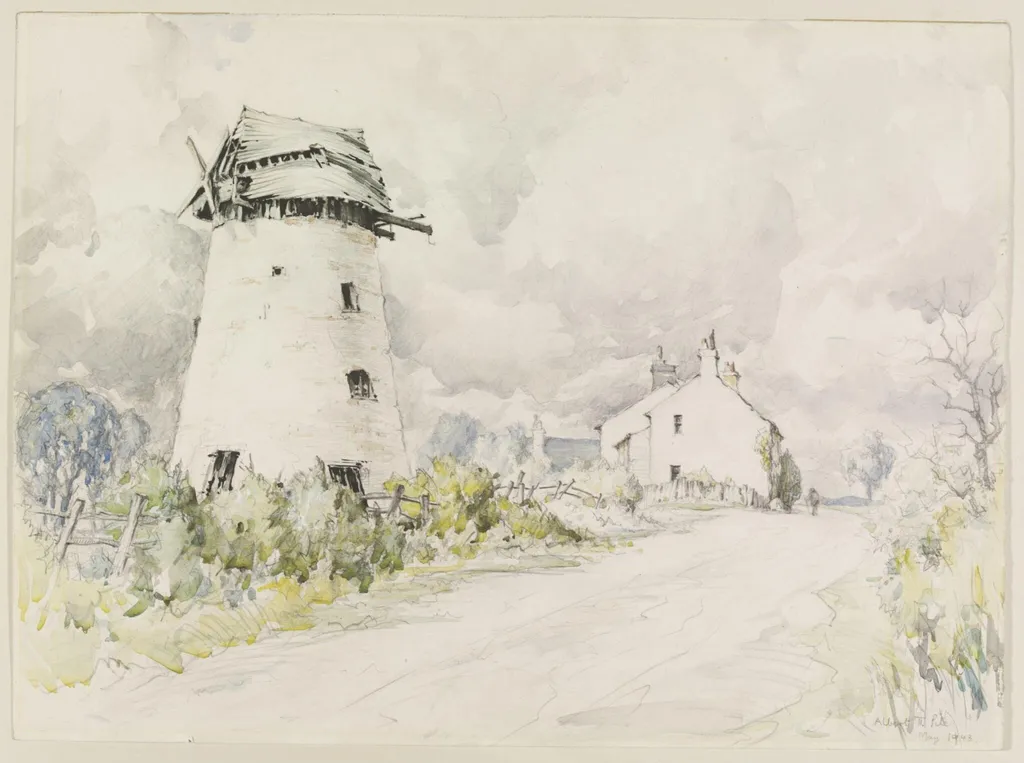
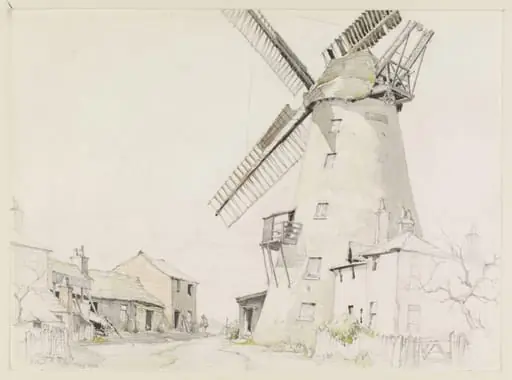
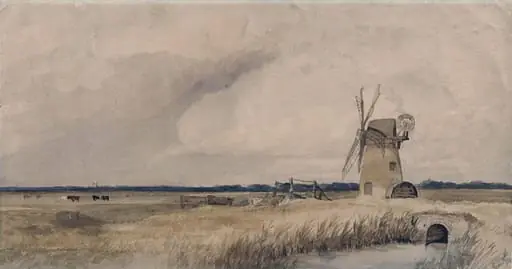
Windmill at Staining, near Blackpool is a watercolor work on paper by the British Romanticist artist Pile. It dates from 1943 and is held in the collection of the Victoria and Albert Museum. Created in 1943, this watercolour portrays a weather‑worn windmill near Staining, close to Blackpool.
About this work
Overview
Created in 1943, this watercolour portrays a weather‑worn windmill near Staining, close to Blackpool. The structure is shown without its sails, its thatched roof and surrounding fence rendered in muted greens, yellows and greys. The composition captures a quiet, rural setting through loose, transparent washes that leave portions of the paper exposed.
Subject & Meaning
The image records a solitary, deteriorating windmill, emblematic of the modest, vernacular architecture that dotted the English countryside. By emphasizing the mill’s age and lack of functional parts, the work conveys a sense of loss and the passage of time, reflecting concerns about disappearing rural landmarks during the war years.
Technique & Style
Executed in watercolour, the artist employs light, fluid washes and rapid brushstrokes to suggest texture and atmosphere rather than precise detail. The palette is restrained, with soft tonal variations that highlight the structure’s weathered surfaces while preserving a sketch‑like quality through visible paper areas.
History & Provenance
The painting was produced under the Recording Britain project, a wartime initiative launched in 1940 by the Committee for the Employment of Artists in Wartime. Funded by the Pilgrim Trust and overseen by Sir Kenneth Clark, the scheme commissioned artists to document British landscapes and built heritage threatened by wartime change.
Context
During the Second World War, the Recording Britain effort sought to capture a visual record of a Britain perceived as vanishing amid conflict and modernization. The focus on English subjects, such as this windmill, aimed to preserve images of national identity, rural life, and traditional structures for posterity.
Artist & collection

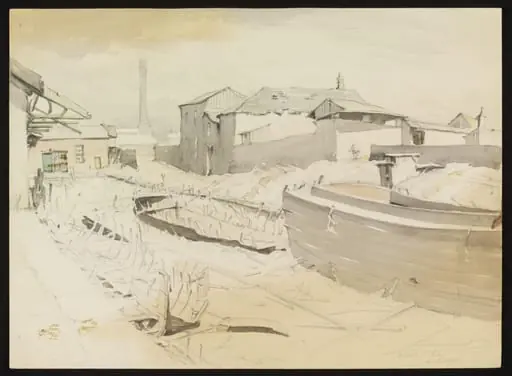 An old part of the Ship Canal, Quay Street, Manchester
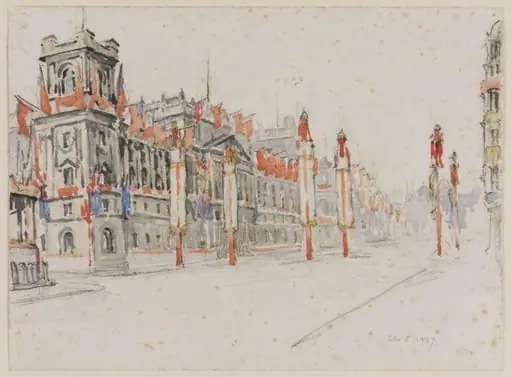 The Foriegn Office looking up Whitehall
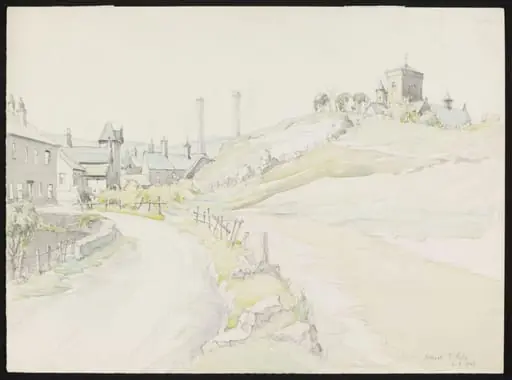 The church and village of Lumb
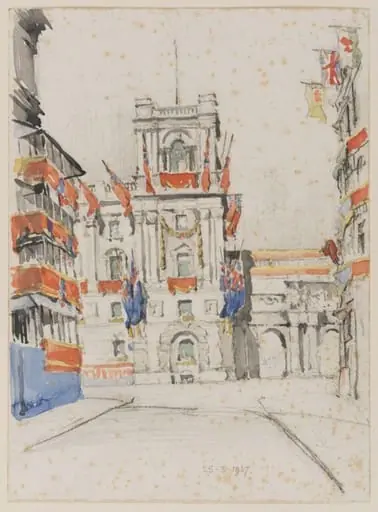 Foreign Office with stands
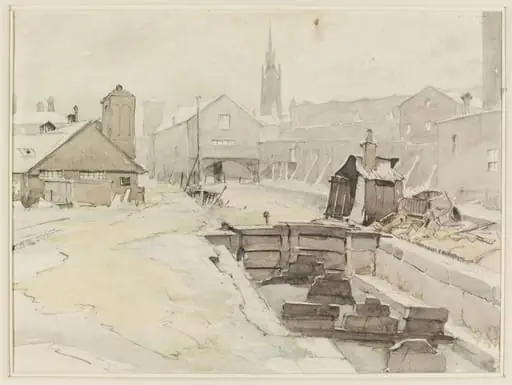 Manchester Ship Canal, Quay Street, Manchester
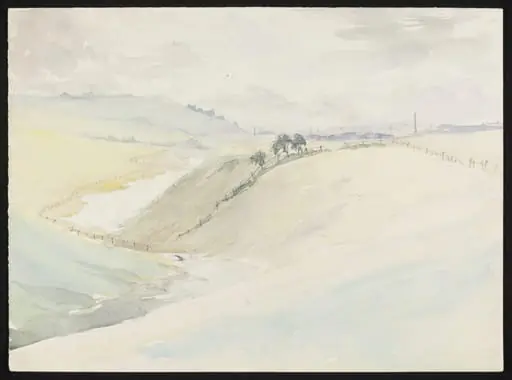 Looking towards Bury from the North of the city
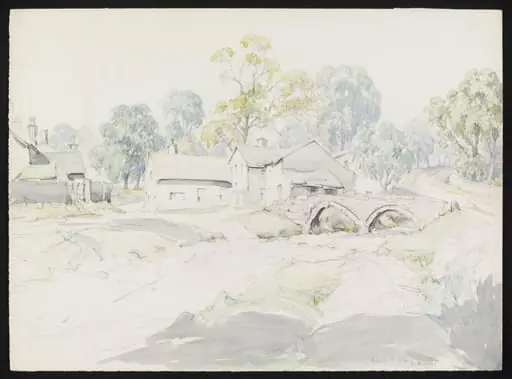 Wycoller Village
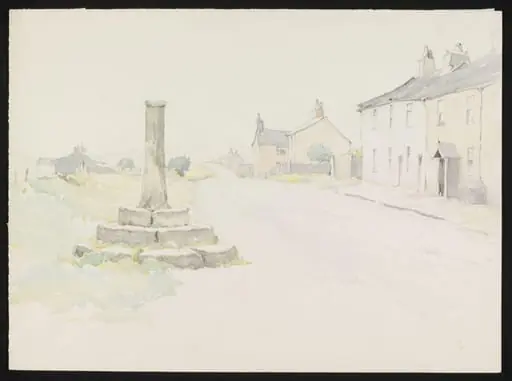 The Village Street and Roman Cross, Affetside