Artwork
Mother and Child
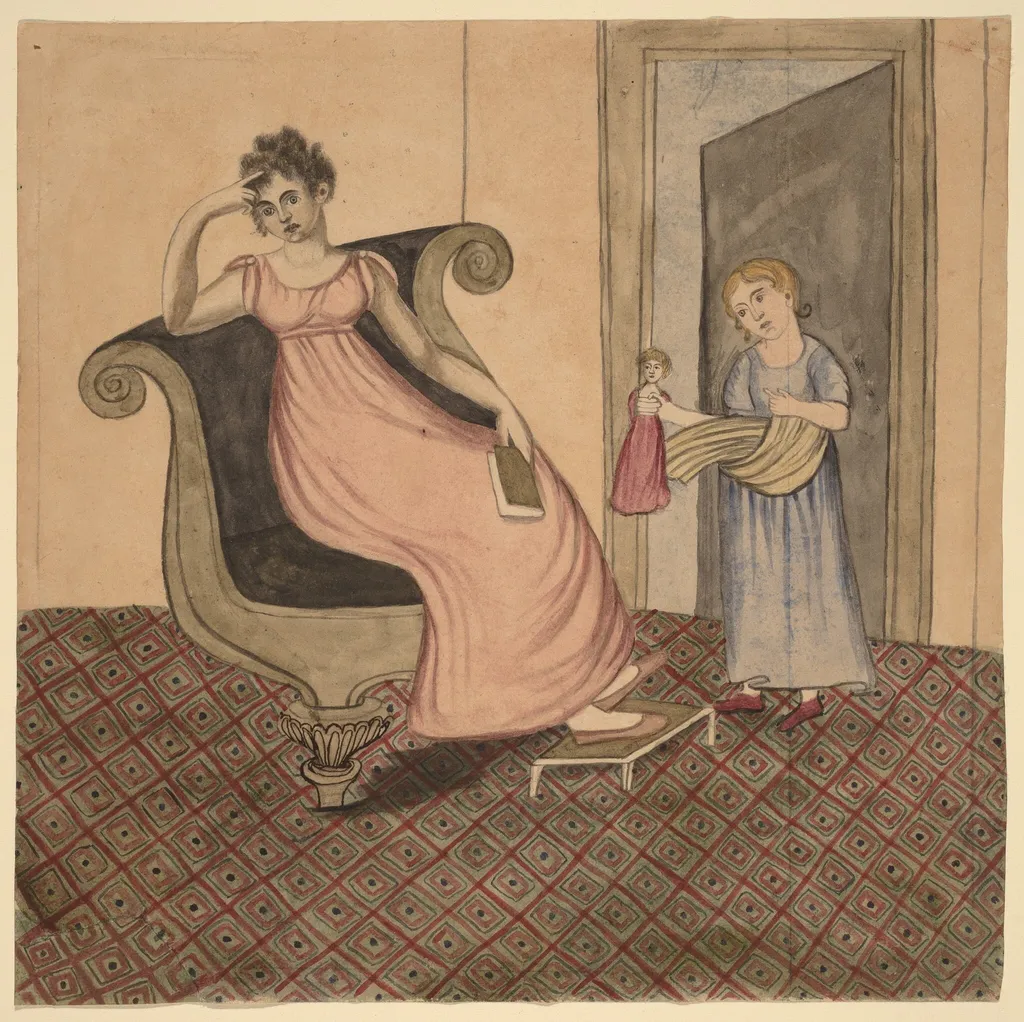
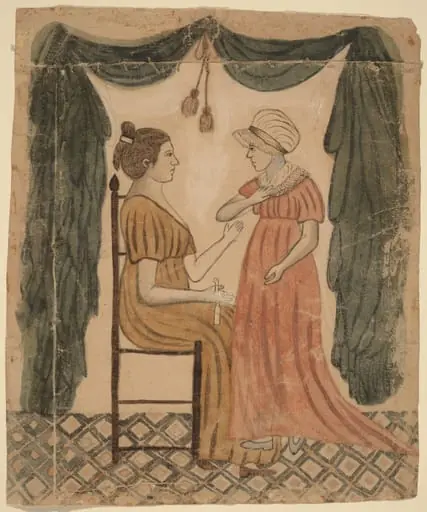
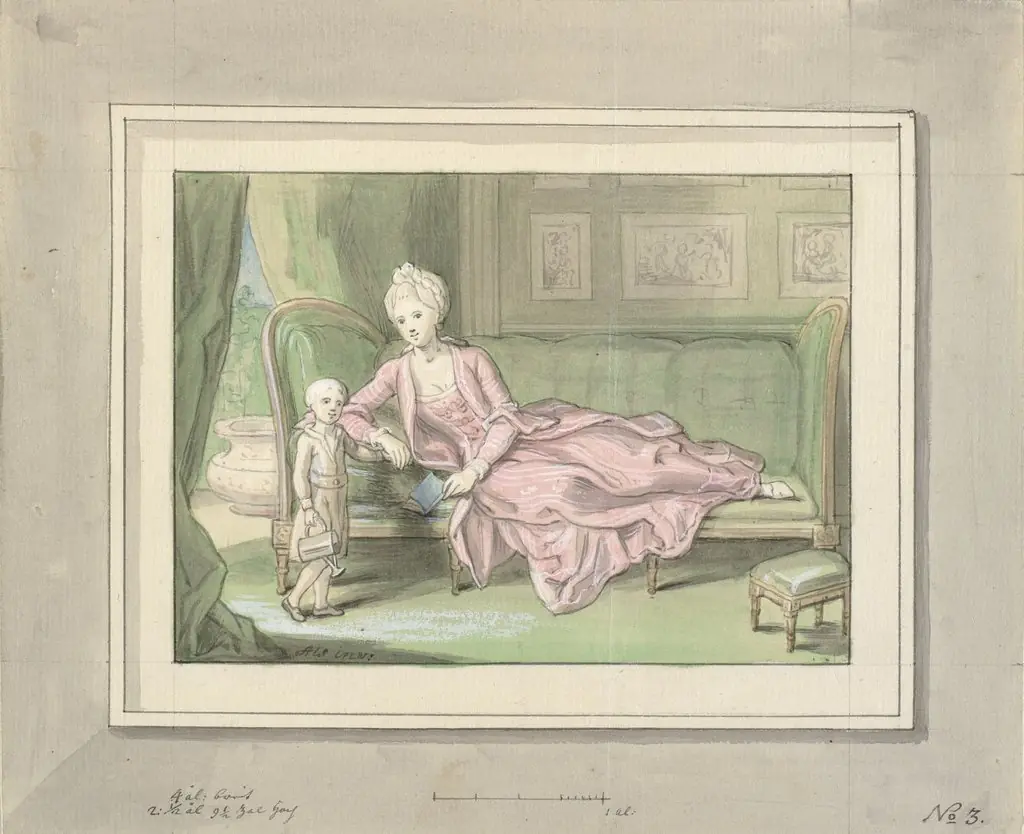
Mother and Child is an ink drawing by the Romanticist artist Eunice Pinney. It dates from 1815 and is held in the collection of the National Gallery of Art.
About this work
Overview
Created around 1815, this drawing by Eunice Pinney depicts a domestic interior scene in watercolor and ink on wove paper. The composition centers on a seated woman, accompanied by a maid holding a child, set against a modestly furnished room. The work exemplifies early 19th-century American folk art, characterized by its restrained palette and deliberate, flat rendering of forms.
Subject & Meaning
The scene portrays a private moment of maternal care within a household, emphasizing social hierarchy through the positioning and attire of the figures.
The scene portrays a private moment of maternal care within a household, emphasizing social hierarchy through the positioning and attire of the figures. The woman, dressed in pink and fanning herself, appears detached, while the maid, in blue, actively holds the child in red. The formal chair and decorative rug suggest domestic comfort, yet the solemn expressions hint at unspoken roles and emotional distance.
Technique & Style
Pinney employed watercolor with thin glazes to build subtle color layers, avoiding heavy modeling. Forms are simplified into clean outlines and flat planes, with minimal shading. The ink lines define contours crisply, while the lack of perspective and spatial depth reinforces a decorative, two-dimensional quality typical of folk traditions of the period.
History & Provenance
Eunice Pinney, active in Connecticut, produced a small body of work primarily in watercolor during the early 1800s. This piece is among the few surviving drawings attributed to her, reflecting her role as one of the earliest known American women to work professionally in watercolor. Its survival suggests it was likely kept within a family context rather than publicly exhibited.
Context
In early 19th-century New England, domestic scenes like this were uncommon in fine art, often reserved for portraiture or religious themes. Pinney’s focus on everyday interiors, with attention to class distinctions among servants and family, offers a quiet commentary on household dynamics, distinct from the grand narratives favored by academic artists of the time.
Legacy
Pinney’s work remains significant as a rare example of early American female artistic practice outside formal academies. Her use of watercolor and intimate subject matter influenced later folk artists, though her oeuvre was largely overlooked until the 20th century. Today, her drawings are valued for their unembellished portrayal of domestic life in post-Revolutionary America.
Artist & collection