Artwork
Mother and Daughter
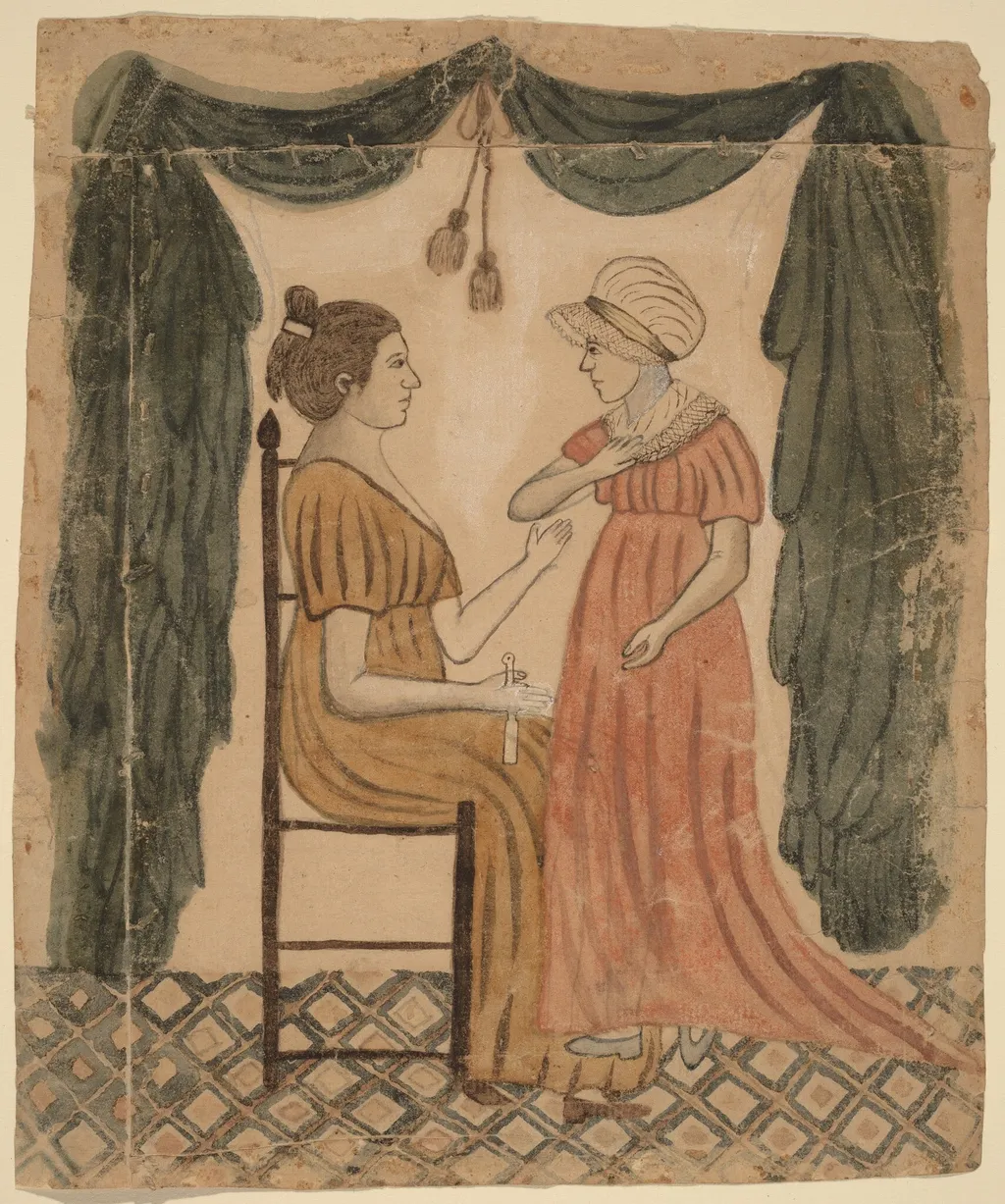
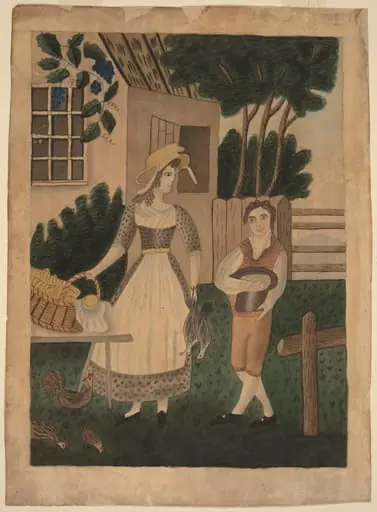
Mother and Daughter is an ink drawing by the Romanticist artist Eunice Pinney. It dates from 1810 and is held in the collection of the National Gallery of Art.
About this work
Overview
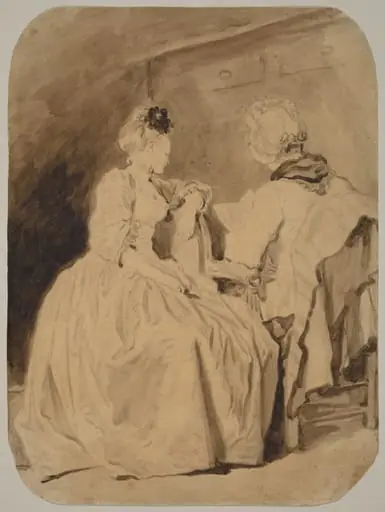
Created around 1810, this drawing by Eunice Pinney depicts a mother and child in intimate repose. Executed in pen and brown ink with watercolor over graphite on laid paper, it belongs to a small body of early American works by a female artist working outside formal academies. Its modest scale and domestic subject reflect the private, personal nature of much early 19th-century amateur art.
Subject & Meaning
No narrative or symbolic elements are present; the focus lies in the tender, unadorned interaction between them.
The figures—mother and young daughter—are shown seated together, their posture suggesting quiet companionship. No narrative or symbolic elements are present; the focus lies in the tender, unadorned interaction between them. This quiet intimacy may reflect contemporary ideals of maternal affection and domestic virtue, common in early American culture but rarely rendered with such understated sincerity.
Technique & Style
Pinney employed fine pen lines to define forms, softened by translucent watercolor washes that model volume without heavy shading. The graphite underdrawing remains visible in places, lending a sense of spontaneity. The composition is simple, with minimal background, directing attention to the figures’ close physical proximity and gentle gestures.
History & Provenance
The work is among the few surviving drawings by Eunice Pinney, an artist active in Connecticut during the early 1800s. It entered a major public collection in the 20th century, where it is now recognized as one of the earliest known American watercolor drawings by a woman. Its survival is rare, given the fragility of paper and the limited preservation of amateur works from this period.
Context
In early 19th-century America, women often practiced drawing as a genteel pursuit, rarely seeking public exhibition. Pinney’s work stands apart for its emotional directness and technical control, contrasting with the more decorative or instructional art typically produced by female amateurs. Her subject matter aligns with domestic themes favored in the period, yet her approach is unusually personal.
Legacy
Pinney’s drawing contributes to a growing understanding of women’s artistic contributions in early America, particularly outside institutional frameworks. Though she left no known students or school, her work is now studied as an example of quiet, independent expression in a time when female artists operated largely in private spheres.
Artist & collection


![In the Omnibus [verso], by Mary Cassatt](https://artifactworldgallery.com/img/mary-cassatt--in-the-omnibus-verso--53b562d54b9e5729-w320.webp)