Artwork
The Driveway
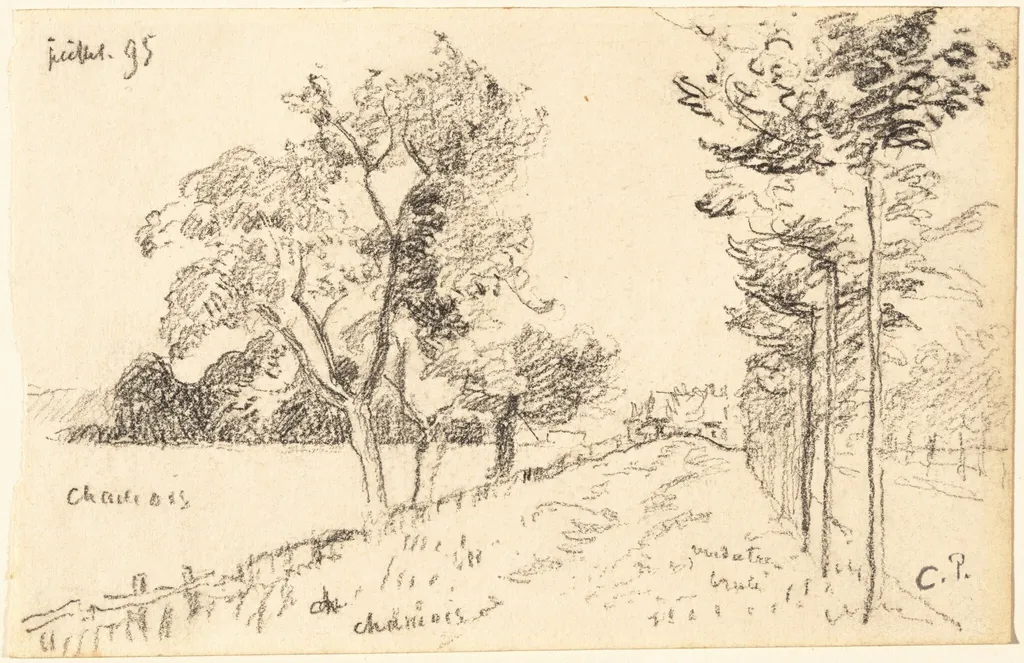
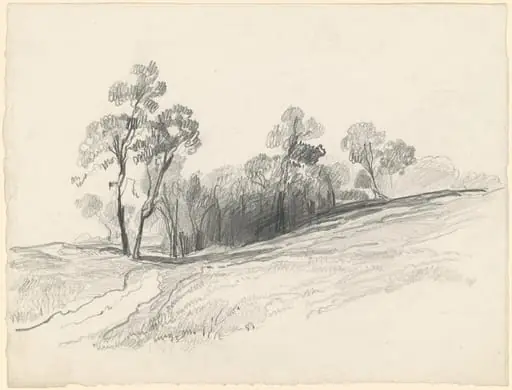
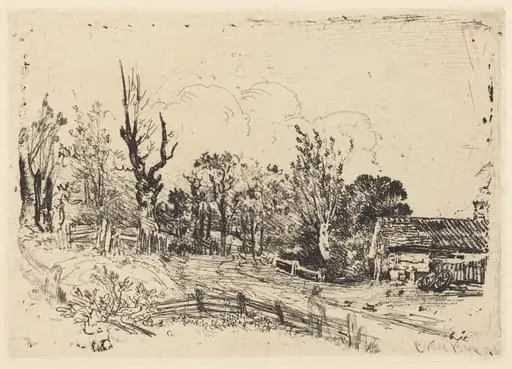
The Driveway is a graphite drawing by the Impressionist artist Camille Pissarro. It dates from 1895 and is held in the collection of the National Gallery of Art.
About this work
Overview
The work belongs to Pissarro’s later period, when he increasingly focused on intimate landscapes drawn directly from observation.
Created in 1895, The Driveway is a drawing by Camille Pissarro executed in black pencil on wove paper. It captures a quiet rural path meandering through an open field, framed by trees and distant structures. The work belongs to Pissarro’s later period, when he increasingly focused on intimate landscapes drawn directly from observation. Its modest scale and restrained medium reflect a deliberate turn toward quietude over spectacle.
Subject & Meaning
The scene presents an unassuming country driveway, lined with trees and leading toward faintly rendered buildings. There is no human presence, no narrative drama—only the rhythm of a path through nature. The absence of activity invites contemplation, emphasizing the stillness of the rural environment. Pissarro’s choice of a mundane subject underscores his commitment to depicting ordinary life with dignity and attention.
Technique & Style
Pissarro used fine, layered strokes of black pencil to build texture and depth, avoiding heavy outlines in favor of subtle gradations. The wove paper’s slight tooth holds delicate hatching and cross-hatching, allowing light to suggest form rather than define it. The technique echoes his Impressionist roots but is more restrained, favoring precision over brushwork, and conveying atmosphere through tonal variation rather than color.
History & Provenance
The drawing was made during Pissarro’s final years, when he lived in Éragny and frequently sketched the surrounding countryside. It likely originated as a study, though its finish suggests it was intended as a finished work. The piece entered a private collection shortly after its creation and has remained in European holdings, with no public exhibition record until the mid-20th century.
Context
In the 1890s, Pissarro shifted from oil painting to works on paper, partly due to health limitations and a desire for immediacy. This period saw him engage with rural scenes across northern France, often revisiting familiar paths and fields. His drawings from this time reflect a quiet engagement with place, distinct from the bustling urban themes of contemporaries like Degas or Cézanne.
Legacy
The Driveway exemplifies Pissarro’s enduring interest in the rhythms of rural life and his mastery of linear expression. Though less celebrated than his paintings, such drawings influenced later generations of draftsmen who valued subtlety over grandeur. They remain key to understanding his evolution as an artist who found profundity in the unremarkable.
Own this work as a print
Artist & collection


 Landscape
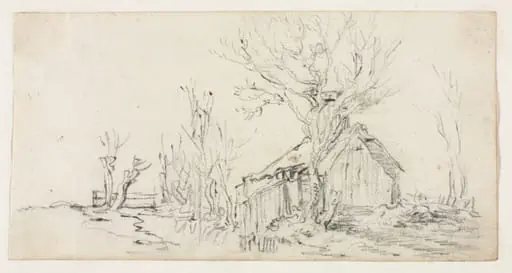 Sketch of Landscape with Cottage
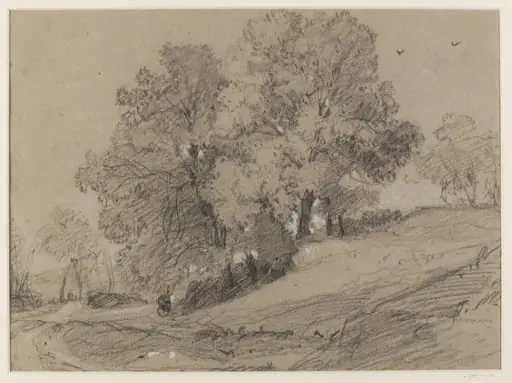 Untitled
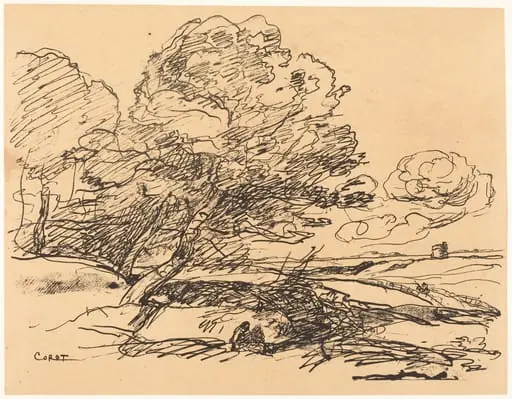 The Lonely Tower (La Tour isolee)
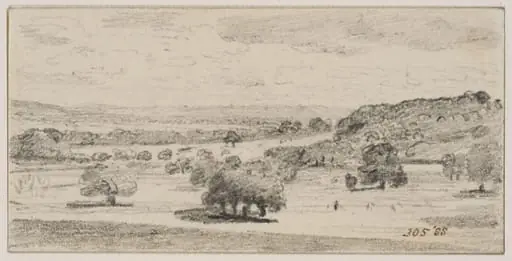 Wimbledon Park
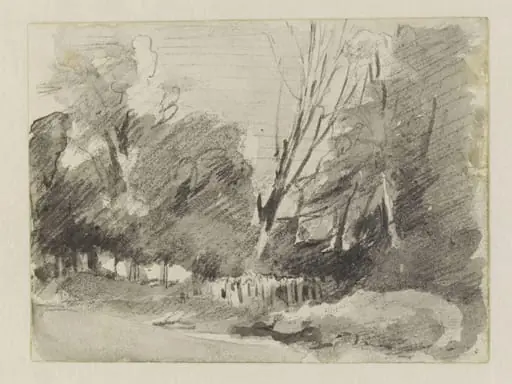 Two sketches on one sheet: a countryman walking, and a group of people beside two donkeys.
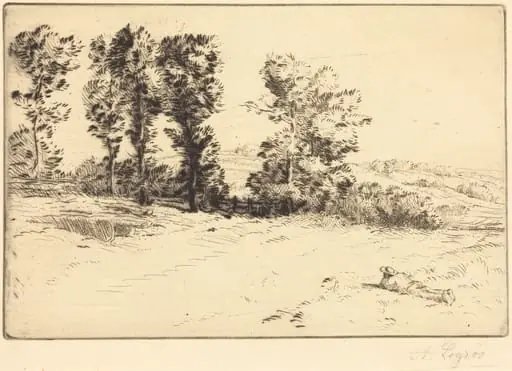 Meadow in Sunshine (Le pre ensoleille)
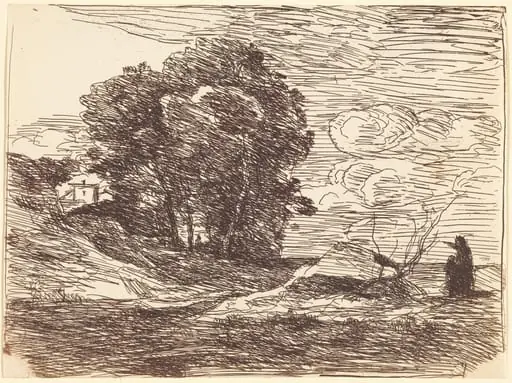 Poet's Dwelling (La Demeure du poete)
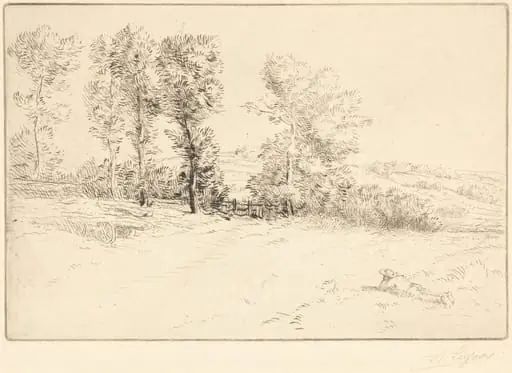 Meadow in Sunshine (Le pre ensoleille)
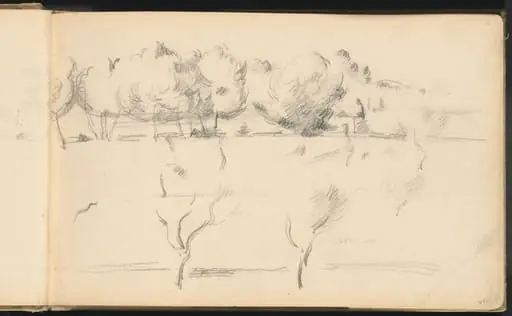 Landscape with Trees
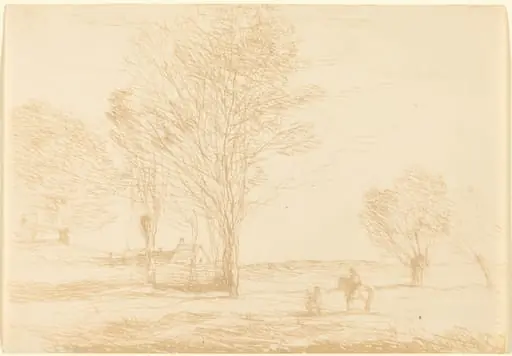 Horseman Halted in the Countryside (Cavalier arrete dans la campagna)
 Road with a Farmhouse on the Right