Artwork
Plattner, Otto - Malerei, Zeichnung, Ohne Titel (Künstler-Selbstportrait)
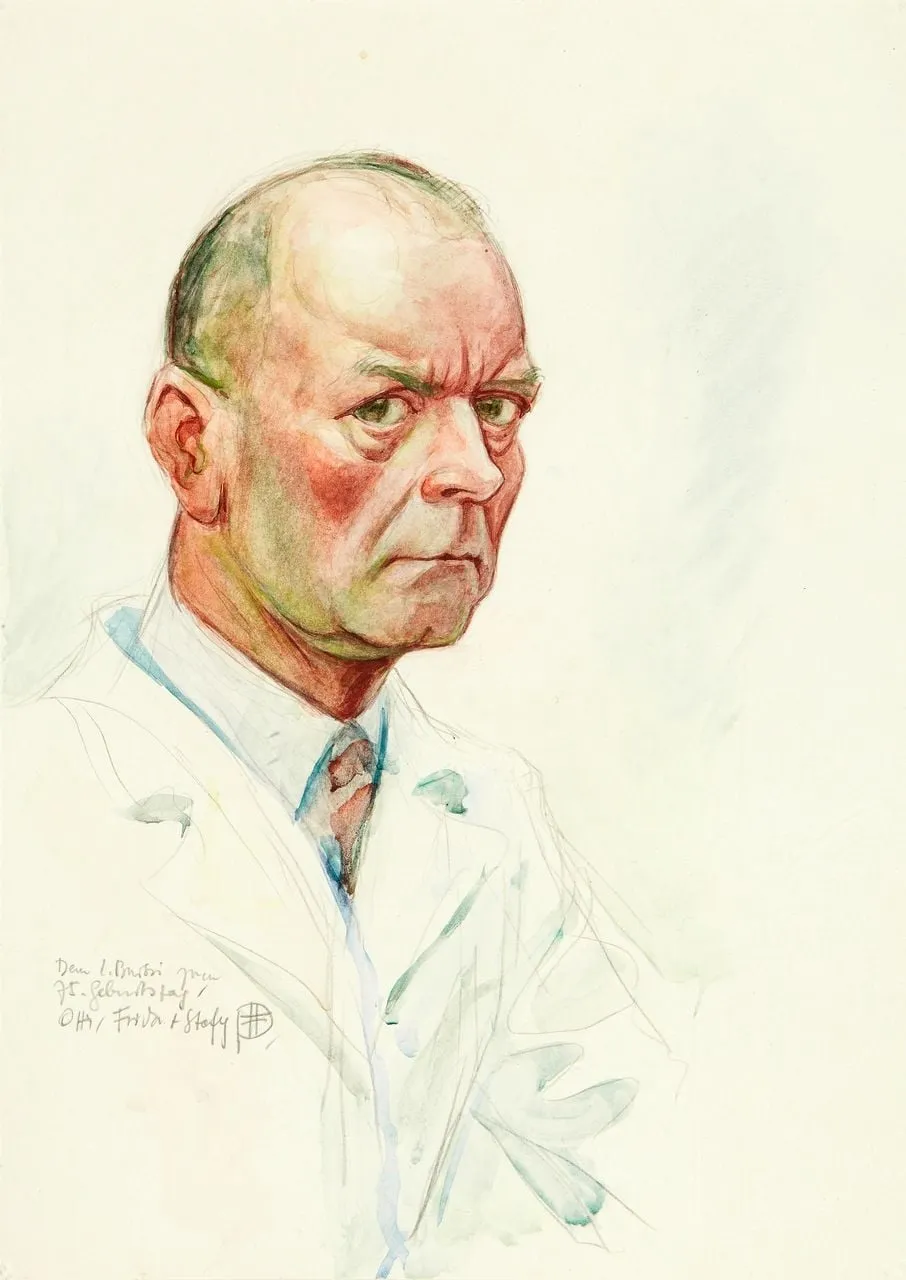
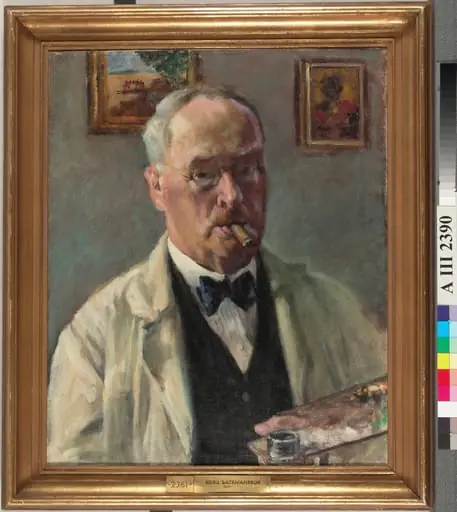
Plattner, Otto - Malerei, Zeichnung, Ohne Titel (Künstler-Selbstportrait) is an unspecified painting by Otto Plattner. It dates from 1950 and is held in the collection of the Archaeology and Museum Baselland.
About this work
Overview
The focus remains firmly on the figure’s expression and posture, suggesting an introspective intent rather than a formal representation.
Otto Plattner created this untitled self-portrait in 1950, using ink and watercolor on paper. It is part of the collection at the Museum of Ethnography. The work presents a direct, unadorned view of the artist, rendered with minimal detail and no decorative elements. The focus remains firmly on the figure’s expression and posture, suggesting an introspective intent rather than a formal representation.
Subject & Meaning
The subject is Plattner himself, depicted as a bald man in a white coat, gazing away from the viewer with a restrained, contemplative expression. The coat may imply a professional identity, possibly medical, though no contextual clues confirm this. The absence of background or accessories shifts attention to the psychological presence of the sitter, emphasizing inner state over external narrative.
Technique & Style
Plattner employed rapid, fluid brushwork to define facial features and the collar of the coat, avoiding fine detail. Skin tones are built with soft washes of pink and gray, while the background remains untouched, enhancing the figure’s isolation. The loose handling and lack of refinement reflect a spontaneous, almost diary-like approach, prioritizing immediacy over polish.
History & Provenance
The work entered the Museum of Ethnography’s collection after Plattner’s lifetime, though its exact acquisition path is not publicly documented. It was likely donated or acquired as part of a broader effort to preserve the artist’s personal output. Its placement in an ethnographic institution, rather than a fine arts museum, suggests an interest in the artist as a cultural figure rather than a stylistic innovator.
Context
Created in postwar Europe, the portrait reflects a period when many artists turned inward, seeking personal expression amid societal reconstruction. Plattner’s unembellished style aligns with a broader trend of candid self-representation, rejecting idealization in favor of authenticity. The work stands apart from contemporary academic portraiture, favoring emotional honesty over technical display.
Legacy
Though Plattner is not widely known outside regional circles, this self-portrait endures as a quiet testament to his artistic temperament. Its simplicity and directness have made it a point of reference in studies of lesser-known 20th-century European artists who valued introspection over public acclaim. The piece continues to invite quiet reflection rather than public admiration.
Artist & collection
Artist
German painter Otto Plattner left small, quiet scenes that feel like postcards from the past.
![Untitled. [Portrait of a man], by Elizabeth Berry](https://artifactworldgallery.com/img/elizabeth-berry--untitled-portrait-of-a-man--b0a03ed2c8d53259-w320.webp)