Artwork
Fairground at Night
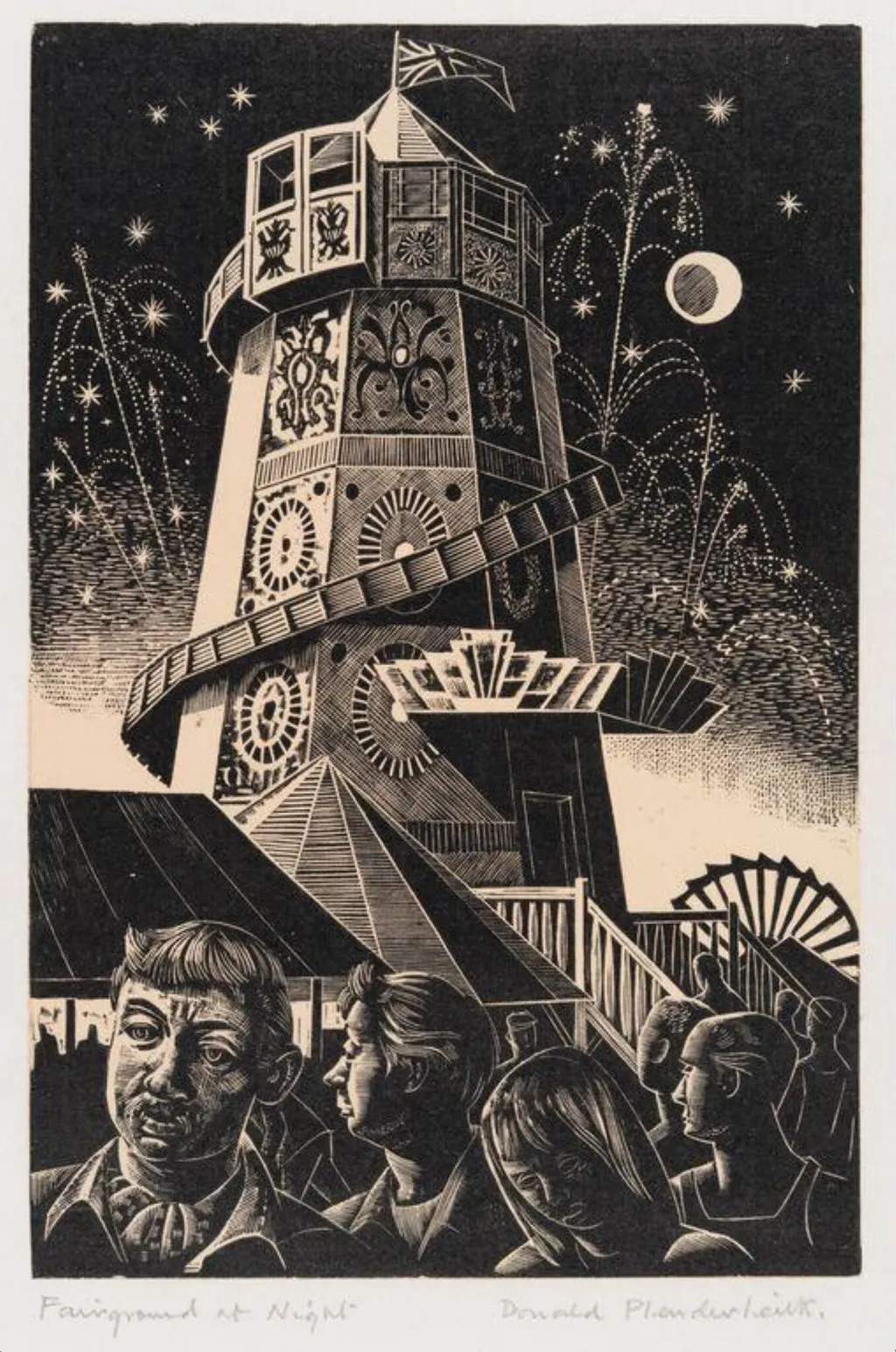
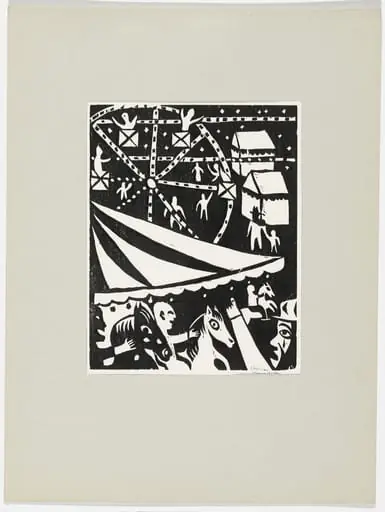
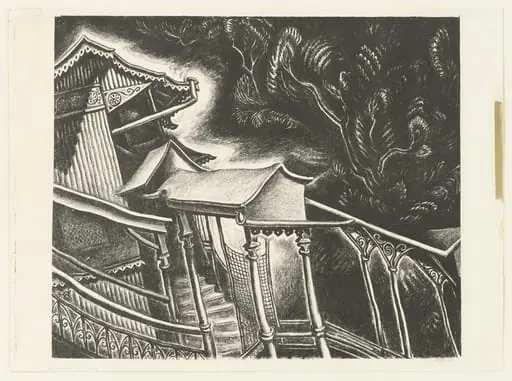
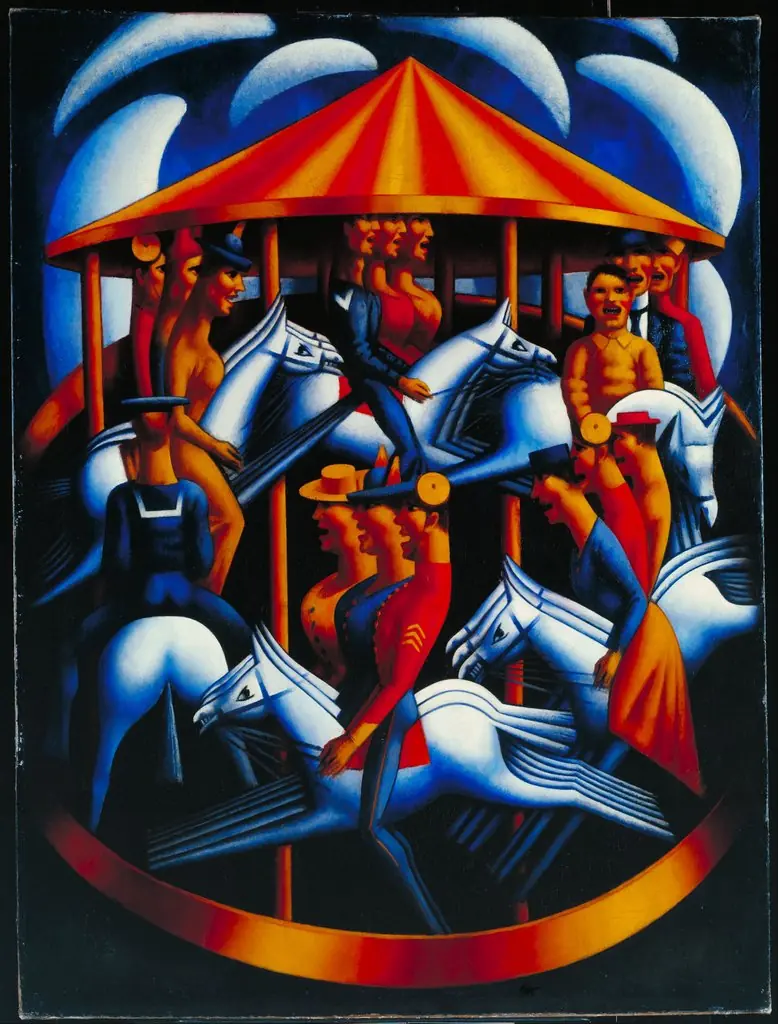
Fairground at Night is a print by Thomas Donald Plenderleith. It dates from 1957 and is held in the collection of the Victoria and Albert Museum.
About this work
Overview
The contrast between illuminated details and deep shadows defines the image’s mood, drawing attention to the isolated figures below who gaze upward in silence.
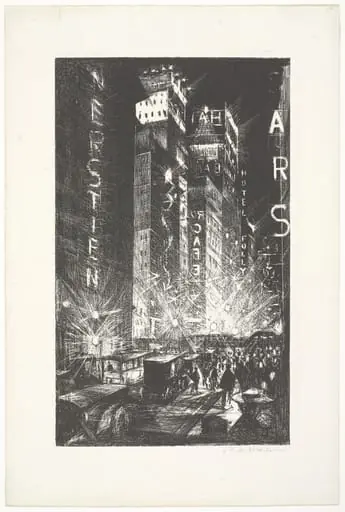
Created in 1957 by Thomas Donald Plenderleith, this print captures a nocturnal fairground scene with a sense of unease and motion. Rendered in bold black lines on a dark ground, the composition centers on a skewed clock tower, its mechanical elements rendered with angular precision. The contrast between illuminated details and deep shadows defines the image’s mood, drawing attention to the isolated figures below who gaze upward in silence.
Subject & Meaning
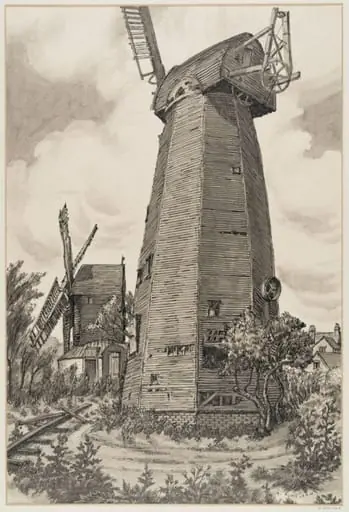
The scene depicts a solitary fairground at night, its once-joyful structures now silent and slightly askew. Three figures peer toward the towering clock, their expressions ambiguous—wonder, apprehension, or resignation. The tilted, almost collapsing tower suggests time out of balance, while the windmill and star-strewn sky evoke isolation. The work implies a quiet melancholy, as if the carnival’s energy has faded, leaving only echoes in the dark.
Technique & Style
Plenderleith employed stark chiaroscuro, using high-contrast ink lines to define form and depth. The clock tower’s gears and windows glow faintly against an otherwise black field, creating an eerie luminosity. Sharp, angular strokes give the structure a precarious, kinetic quality, while the figures are rendered with minimal detail, emphasizing their anonymity. The composition’s asymmetry and exaggerated perspective enhance the sense of instability.
History & Provenance
The print was produced in 1957 and entered the collection of the Victoria and Albert Museum shortly thereafter. It is one of several works by Plenderleith that explore urban and recreational spaces through expressive, graphic means. While not widely exhibited, it remains part of the museum’s holdings of mid-20th-century British prints, reflecting postwar interest in psychological landscapes.
Context
Created during a period of social change in Britain, the print resonates with postwar anxieties about time, progress, and alienation. Fairgrounds, once symbols of communal celebration, were increasingly viewed as transient or decaying. Plenderleith’s stylized approach aligns with contemporary graphic art movements that favored emotional tone over realism, using distortion to convey inner states rather than external appearances.
Legacy
Though not widely reproduced, the work contributes to a quieter strand of British printmaking that prioritizes mood over narrative. Its use of mechanical imagery and psychological tension anticipates later explorations of urban isolation in 20th-century art. The print remains a quiet example of how everyday scenes can be transformed into metaphors for dislocation and quiet contemplation.
Artist & collection
Artist
Thomas Donald Plenderleith made atmospheric scenes of everyday places at night. In 1957 he printed *Fairground at Night*, a quiet, glowing view of rides and stalls under bright electric lights. The scene feels still,…