Artwork
Untitled
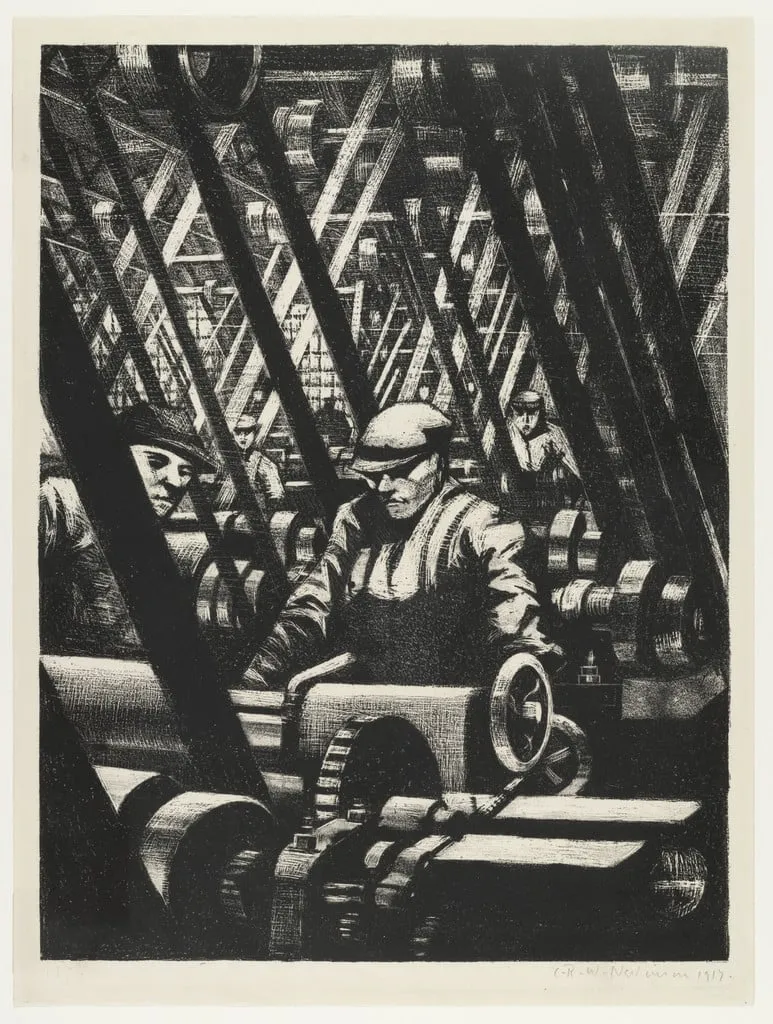
Untitled is an ink print by C. R. W. Nevinson. It dates from 1917 and is held in the collection of the Museum of Modern Art. Created in 1917, this lithograph by C.
About this work
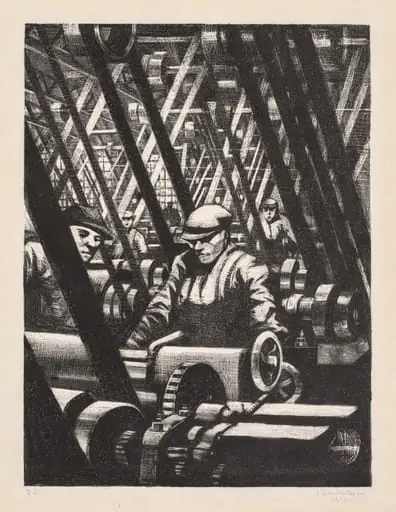
You see a busy factory floor: workers in caps and overalls bend over long metal ribs, bolting them into place.
Nevinson made this in 1917, when Britain was rushing to build warplanes. The lines are sharp, almost like gears themselves, so the whole image feels like part of the machine. It’s not pretty—just honest.
If you like how the drawing feels like a blueprint, look up lithography.
Overview
Unlike traditional war imagery, it focuses on the factory floor rather than the battlefield, reflecting Nevinson’s interest in modernity’s industrial rhythms.
Created in 1917, this lithograph by C. R. W. Nevinson emerged from his official role as a British war artist during the First World War. Produced while Britain intensified aircraft production, the print captures the mechanized labor of wartime industry. Unlike traditional war imagery, it focuses on the factory floor rather than the battlefield, reflecting Nevinson’s interest in modernity’s industrial rhythms.
Subject & Meaning
The scene depicts factory workers in caps and overalls assembling long metal frames, likely parts of aircraft. Their postures suggest repetitive, physically demanding labor, integrated into the machinery around them. The absence of individual identity emphasizes the worker as a component of the war machine. The image conveys neither heroism nor tragedy, but the quiet, relentless efficiency of industrial mobilization.
Technique & Style
Nevinson employed sharp, angular lines characteristic of his post-Futurist style, rendering the factory environment with mechanical precision. The lithographic process allowed for bold contrasts and crisp edges, enhancing the sense of structure and rigidity. Forms are simplified, almost schematic, echoing the geometry of industrial design and reinforcing the theme of human labor fused with machine.
History & Provenance
The print was made during Nevinson’s tenure as a government-appointed war artist, a role he assumed after his earlier association with the Rebel Art Centre and Italian Futurism. It belongs to a series documenting Britain’s home-front industrial efforts. The work was likely produced for official records, though it was never widely exhibited during the war, remaining a quiet testament to wartime production.
Context
In 1917, Britain’s war effort relied heavily on rapid aircraft manufacturing, with factories operating around the clock. Nevinson’s focus on the factory floor aligned with broader cultural shifts toward recognizing industrial labor as central to national survival. His earlier Futurist influences had faded, replaced by a more restrained, documentary approach shaped by direct observation of wartime conditions.
Legacy
This lithograph stands as a restrained yet potent record of home-front labor during the First World War. It avoids sentimentality, instead presenting industrial work as an impersonal, structural force. Alongside other wartime prints, it contributed to a visual language that redefined the representation of modern conflict, shifting attention from the front lines to the machinery sustaining them.
Artist & collection
Artist
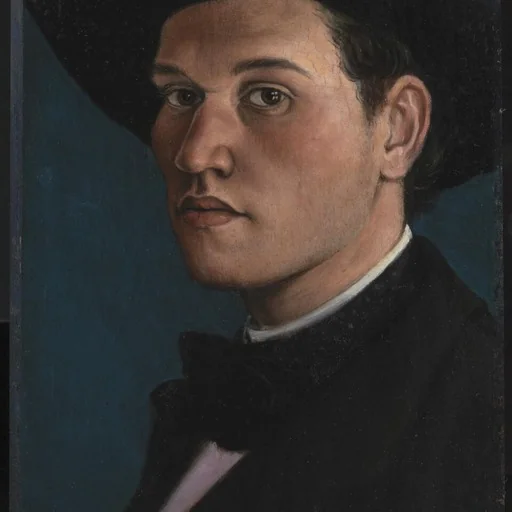
Christopher Richard Wynne Nevinson (13 August 1889 – 7 October 1946) was an English figure and landscape painter, etcher and lithographer, who was one of the most famous war artists of the First World War.

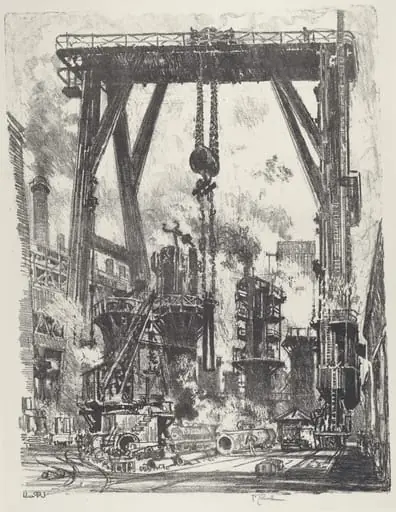 The Old Gun-Pit
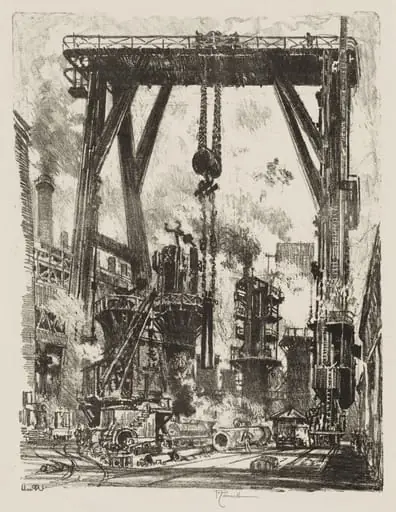 English War Work: The Old Gun Pit
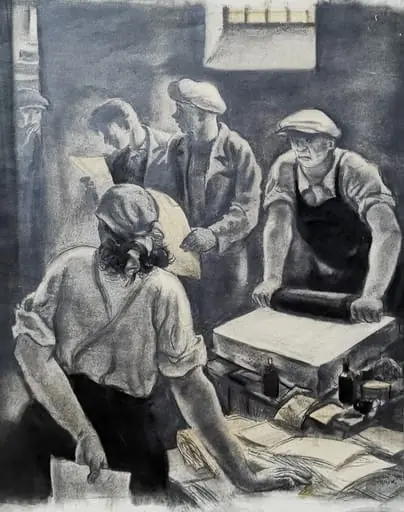 Zile negre
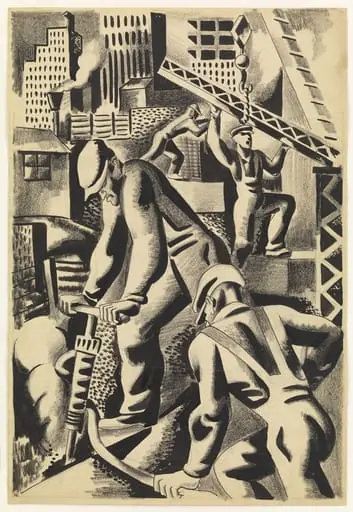 Untitled
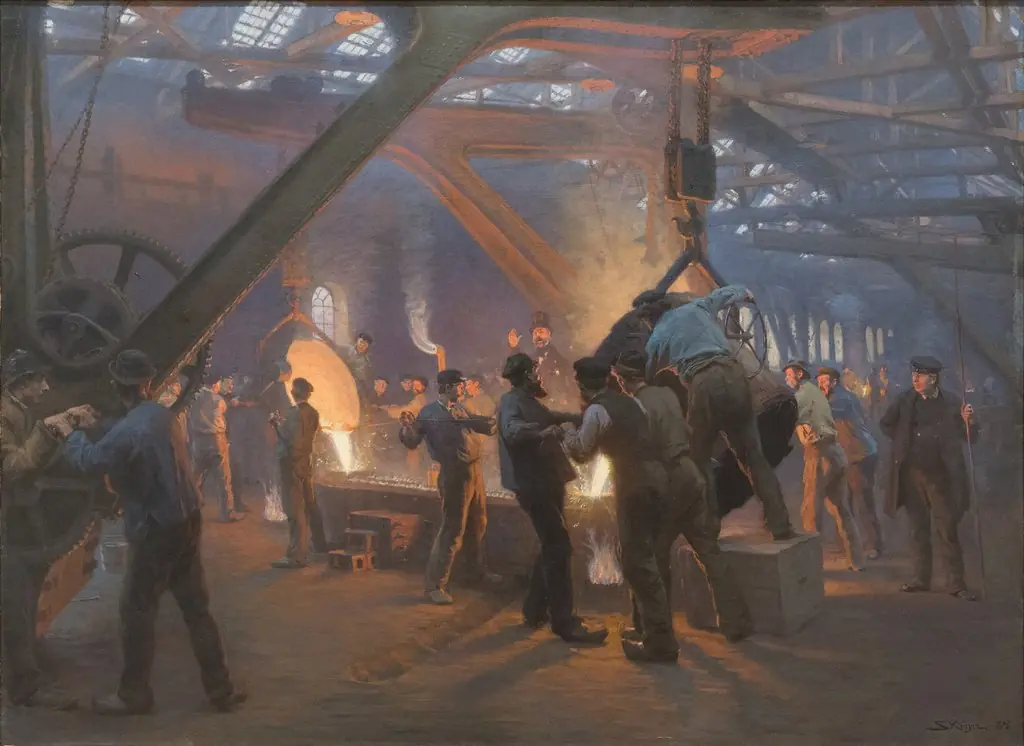 The Iron Foundry, Burmeister and Wain
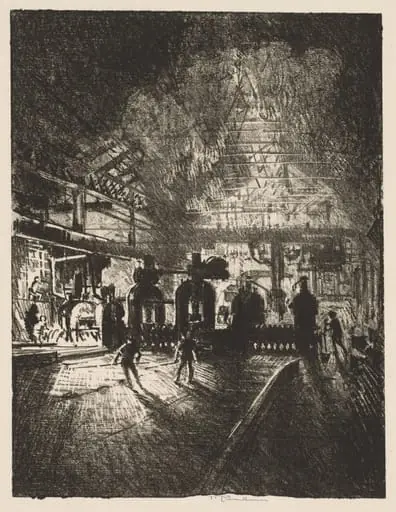 English War Work: In the Jaws of Death, Rolling Bars for Shells
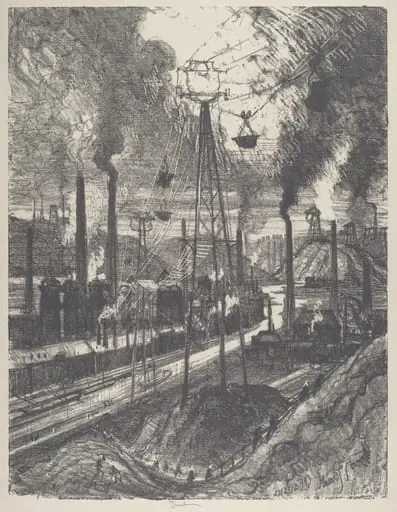 The Travellers, Charleroi
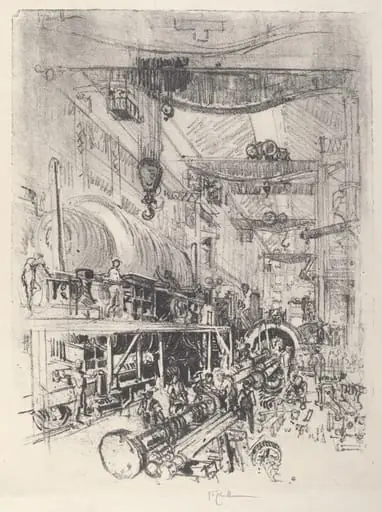 Making a Turbine Engine
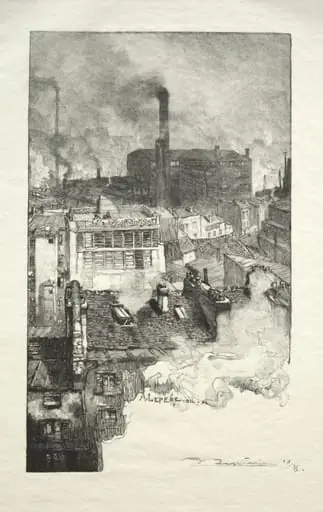 Quartier des Gobelins
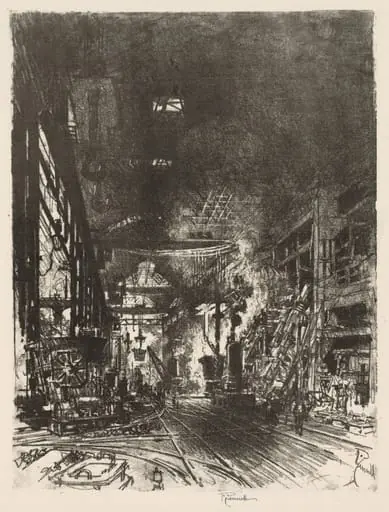 English War Work: Within the Furnaces
 English War Work: Finishing Shells
 Building Aircraft: Making the Engine