Artwork
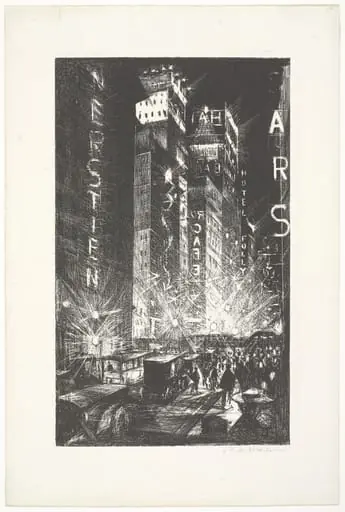
Three AM: A Corner by Madison Avenue (also known as 2 AM New York and Metropolis)
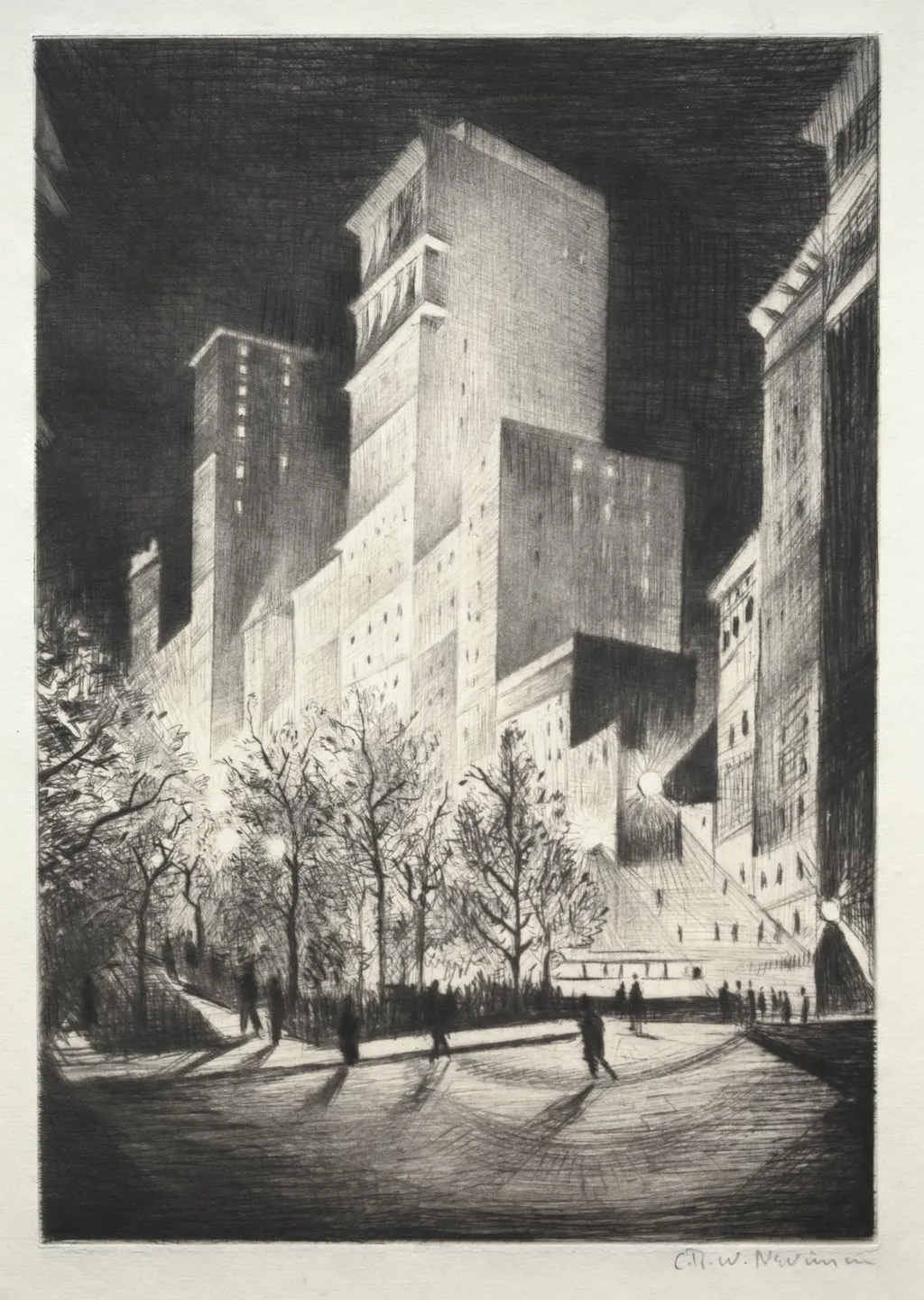
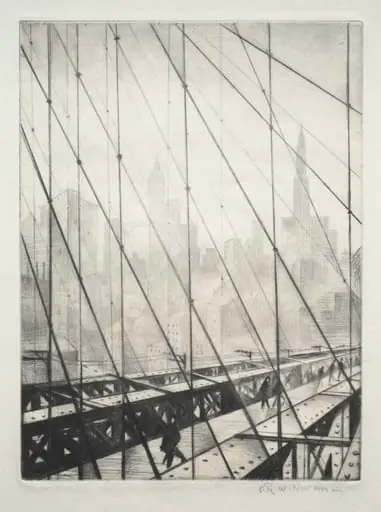
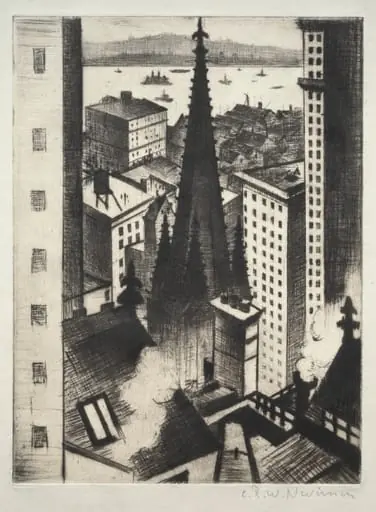
Three AM: A Corner by Madison Avenue (also known as 2 AM New York and Metropolis) is a print by C. R. W. Nevinson. It dates from 1927 and is held in the collection of the Cleveland Museum of Art. Created around 1927, this print by British artist Christopher Nevinson captures a solitary urban moment in New York City.
About this work
Overview
Though titled with varying times, the scene conveys the stillness of early morning, when the city’s energy has receded but not vanished.
Created around 1927, this print by British artist Christopher Nevinson captures a solitary urban moment in New York City. Executed in etching and lithography, the work reflects his transition from wartime imagery to quieter, introspective cityscapes. Though titled with varying times, the scene conveys the stillness of early morning, when the city’s energy has receded but not vanished. Nevinson’s focus on architecture and light distinguishes this piece from his more dynamic Futurist works.
Subject & Meaning
The scene portrays an empty street corner under the shadow of tall buildings, with faint human figures moving along the sidewalk. The absence of vehicles and the dim glow of windows suggest a pause in urban life, evoking solitude rather than decay. The title’s ambiguity—between 2 AM and 3 AM—reinforces a sense of temporal limbo. Nevinson presents the city not as a symbol of progress, but as a silent, almost theatrical space where human presence is minimal yet palpable.
Technique & Style
Nevinson employed stark contrasts of light and shadow, drawing on chiaroscuro to define the facades of buildings and the depth of the street. The etched lines are precise, emphasizing verticality and geometric form, while the lithographic tonal gradations soften the night’s atmosphere. Trees are rendered as sparse silhouettes, heightening the sense of isolation. The composition’s stage-like quality arises from the controlled distribution of light, directing the viewer’s gaze through the urban canyon.
History & Provenance
Nevinson produced this print during a period of travel and reflection following his role as an official war artist. After his early association with Italian Futurism and the trauma of World War I, he turned toward more subdued subjects. The work likely emerged from his time in New York, where he observed the city’s evolving skyline. It was not widely exhibited at the time, and its provenance remains largely within private collections until later scholarly interest in his post-war output.
Context
In the late 1920s, American cities were rapidly modernizing, yet European artists often viewed them through a lens of alienation. Nevinson’s depiction diverges from the celebratory tone of American urban art, instead echoing European modernist anxieties about industrialization. His work aligns with contemporaneous depictions of urban solitude by artists like Edward Hopper, though Nevinson’s approach remains more abstract and less narrative, rooted in his printmaking discipline.
Legacy
This print is now recognized as a key example of Nevinson’s post-war aesthetic, marking his departure from Futurist dynamism toward a more contemplative realism. It influenced later British printmakers interested in urban psychology. Though less known than his war imagery, this work contributes to a broader understanding of how early 20th-century artists interpreted the emotional weight of modern cities beyond their physical forms.
Own this work as a print
Artist & collection
Artist
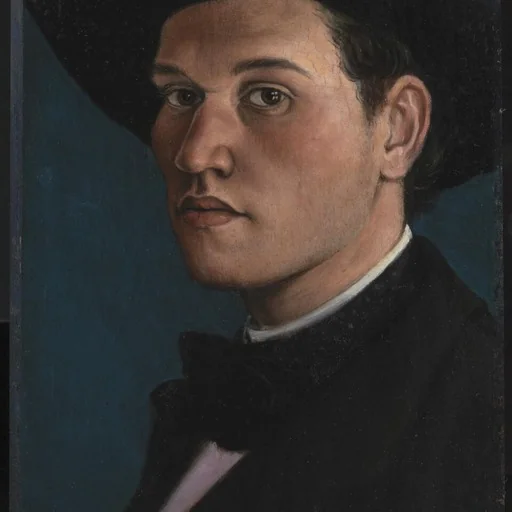
Christopher Richard Wynne Nevinson (13 August 1889 – 7 October 1946) was an English figure and landscape painter, etcher and lithographer, who was one of the most famous war artists of the First World War.