Artwork
Young Girl at the Keyboard
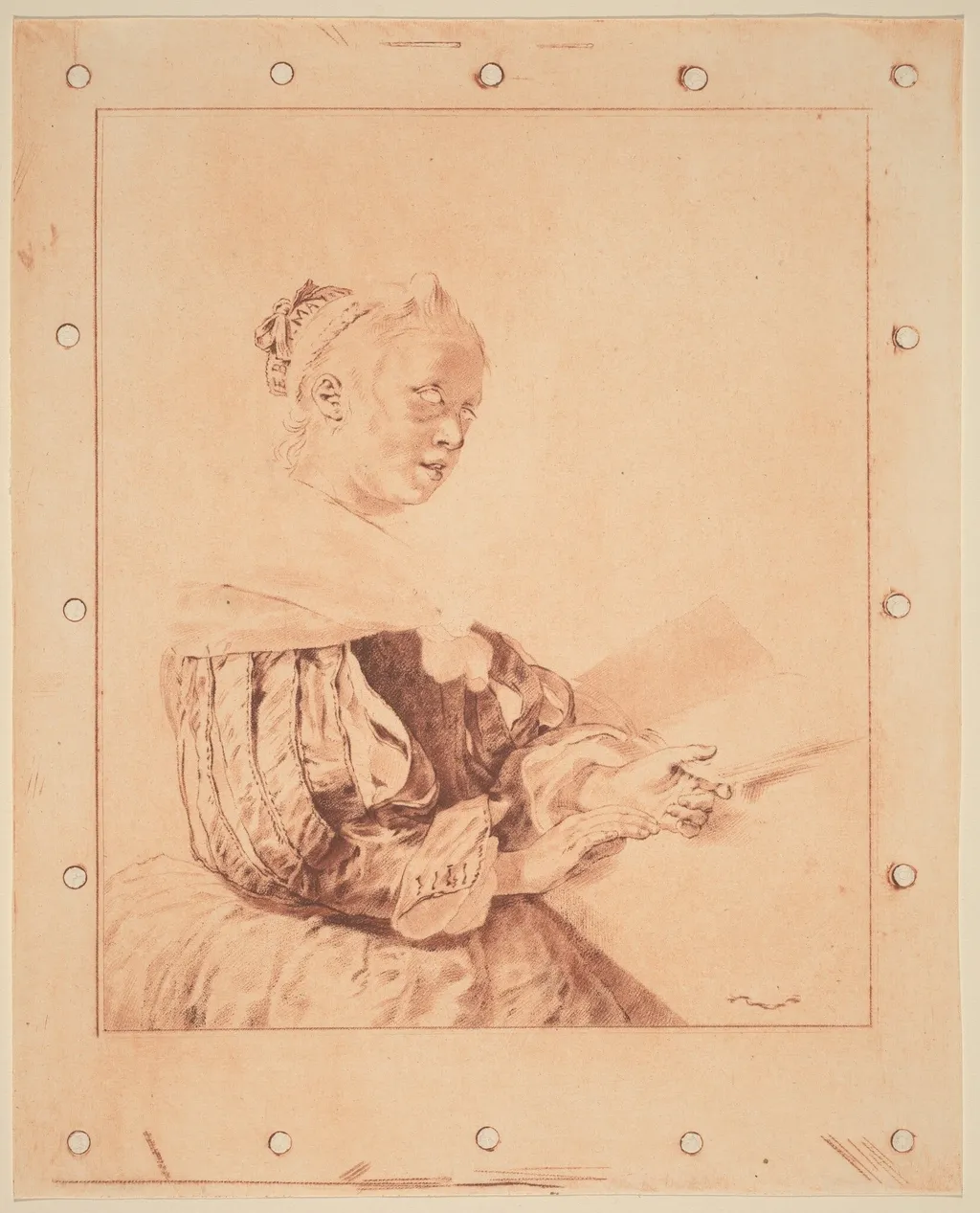
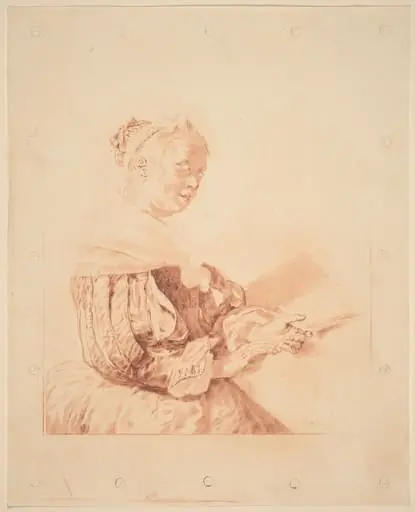
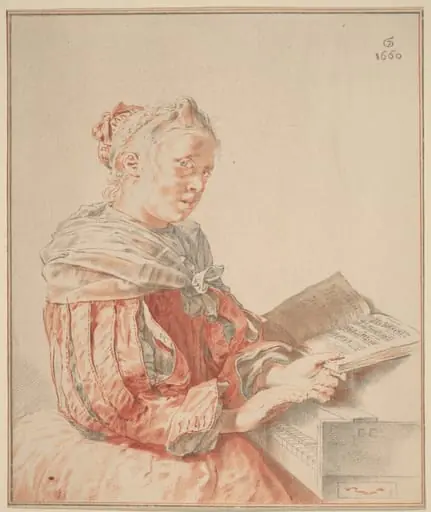
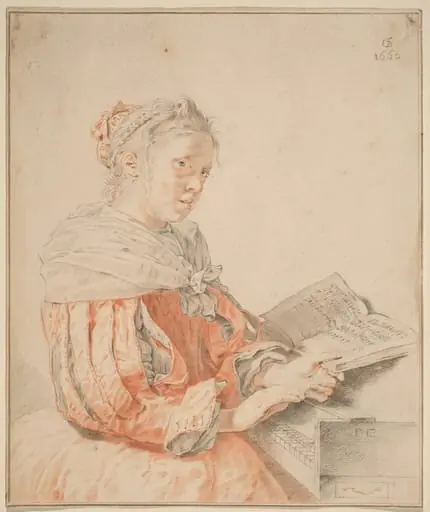
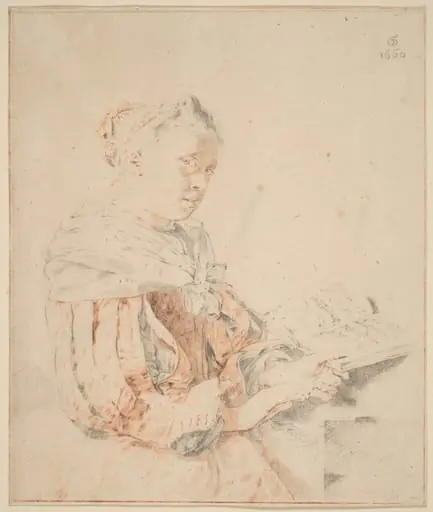
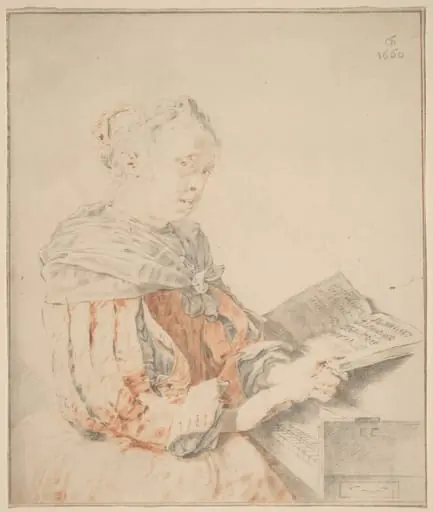
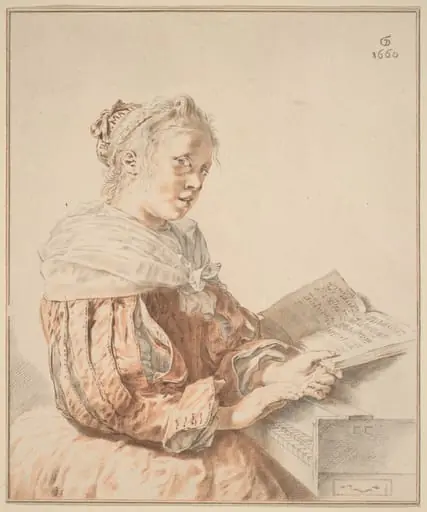
Young Girl at the Keyboard is a chalk print by the Romanticist artist Jacobus Buys. It dates from 1767 and is held in the collection of the National Gallery of Art. Created in 1767 by Cornelis Ploos van Amstel, this print captures a young woman at a keyboard in a spontaneous, unfinished state.
About this work
Overview
Created in 1767 by Cornelis Ploos van Amstel, this print captures a young woman at a keyboard in a spontaneous, unfinished state.
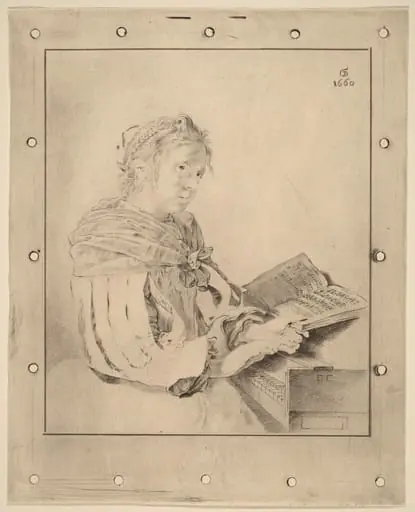
Created in 1767 by Cornelis Ploos van Amstel, this print captures a young woman at a keyboard in a spontaneous, unfinished state. Executed in chalk and red ink on wove paper, it functions as a proof—likely a working stage before final printing. The composition is divided between a faint upper torso and a more defined lower section, emphasizing movement over finish. The paper shows signs of age, with edge damage suggesting its physical history.
Subject & Meaning
The figure is engaged in the quiet act of playing music, her gaze lowered and hands focused on the keys. The dual depiction—face in profile and hands in detail—suggests an interest in the intimacy of musical practice rather than formal portraiture. There is no narrative or symbolism beyond the moment; the work conveys presence and concentration, framing domestic life as worthy of artistic attention.
Technique & Style
Ploos van Amstel employed loose chalk strokes and selective red ink to define form with minimal means. The upper portion is lightly drawn, almost erased, while the lower half—fingers, keyboard, and fabric folds—is rendered with denser, more deliberate lines. Cross-hatching builds subtle shadows, and the rough texture of the chalk contrasts with the precision of the ink, creating a sense of immediacy and revision.
History & Provenance
As a printed proof, this work was likely used by the artist to test composition and ink application before producing a final edition. Its survival as a single impression, with visible paper damage along the edges, indicates it was preserved not as a commercial product but as a personal study. No documented early ownership records exist, but its condition suggests it remained in the artist’s circle.
Context
In mid-18th-century Dutch art, intimate domestic scenes gained traction among printmakers seeking alternatives to grand historical themes. Ploos van Amstel, active in Amsterdam, participated in this trend, favoring sketches of everyday life rendered with immediacy. The use of chalk and ink reflects a broader interest in drawing as an independent art form, not merely preparatory work.
Legacy
This print exemplifies the shift toward informal, observational art in the late Enlightenment. Though not widely exhibited or reproduced, it remains a quiet testament to the value placed on transient moments in 18th-century Dutch printmaking. Its raw quality influenced later artists who prioritized process over polish, preserving the energy of the initial sketch as a finished statement.
Artist & collection
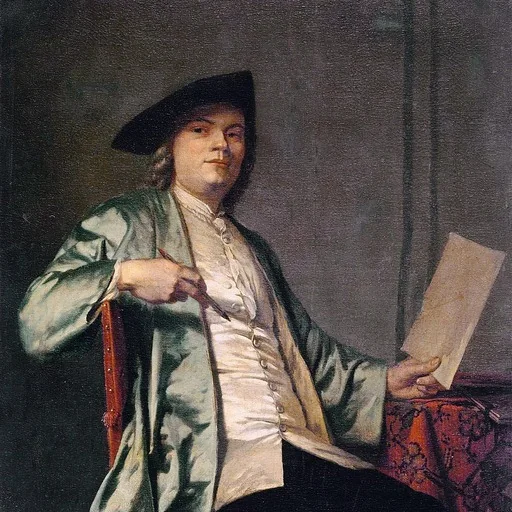

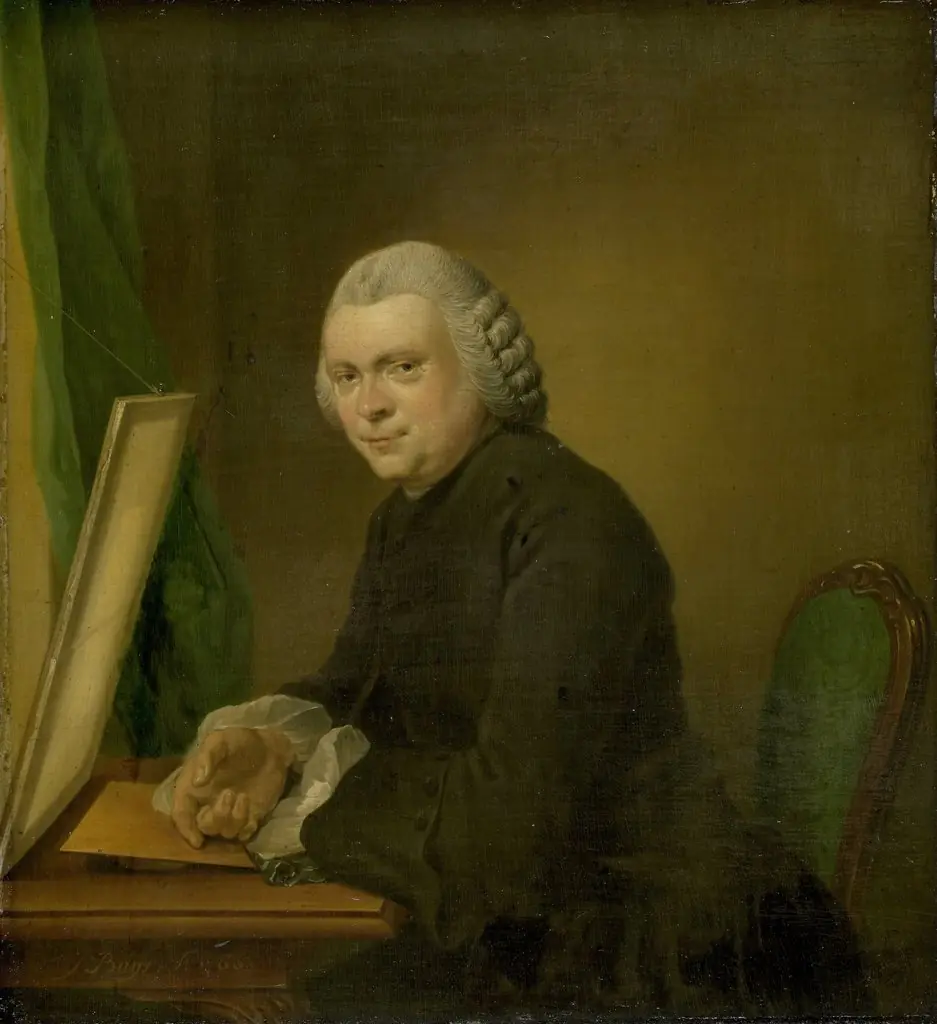 Portrait of Cornelis Ploos van Amstel
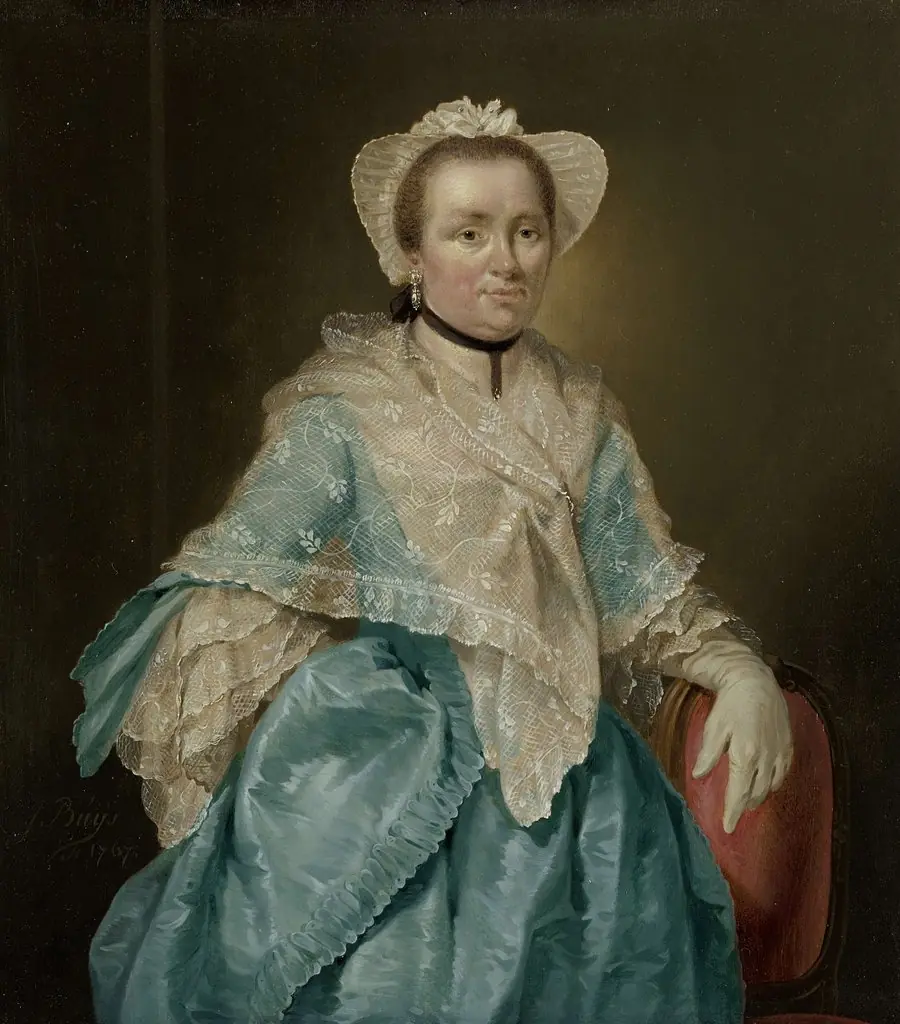 Portrait of Elisabeth Troost (1730-1790)
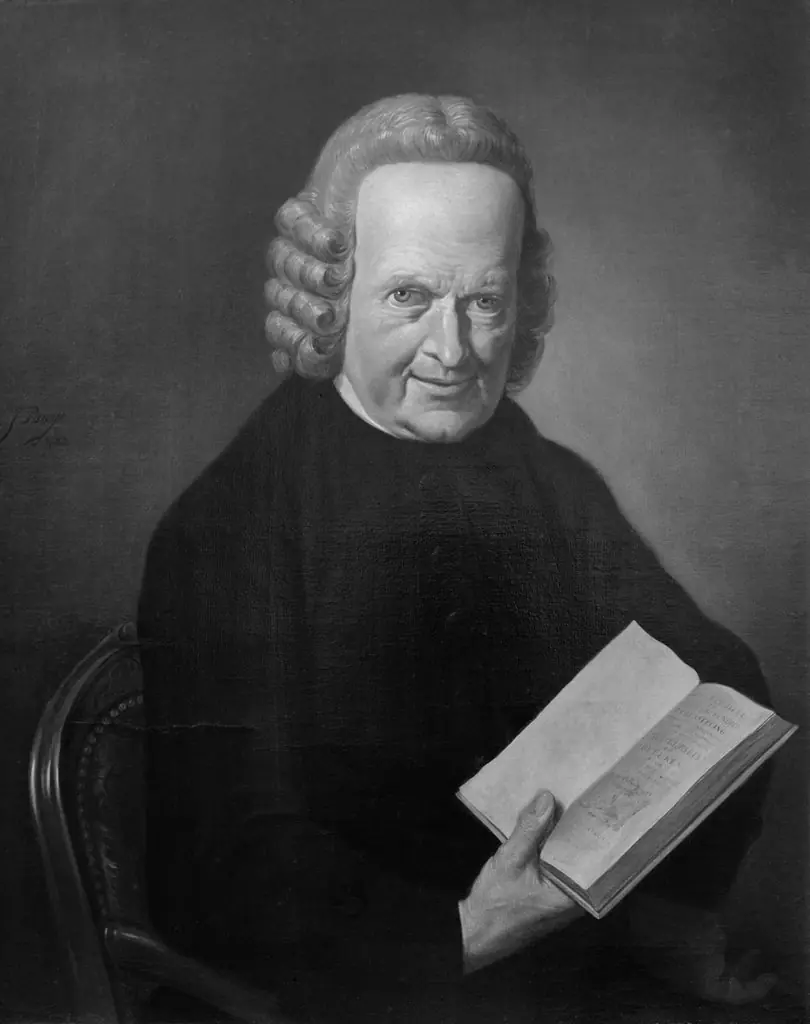 Johannes Monnikhoff (1707-1787)
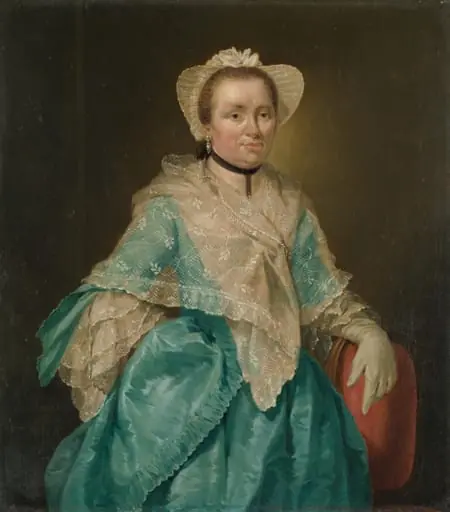 Portrait of Elisabeth Troost (1730-1790)
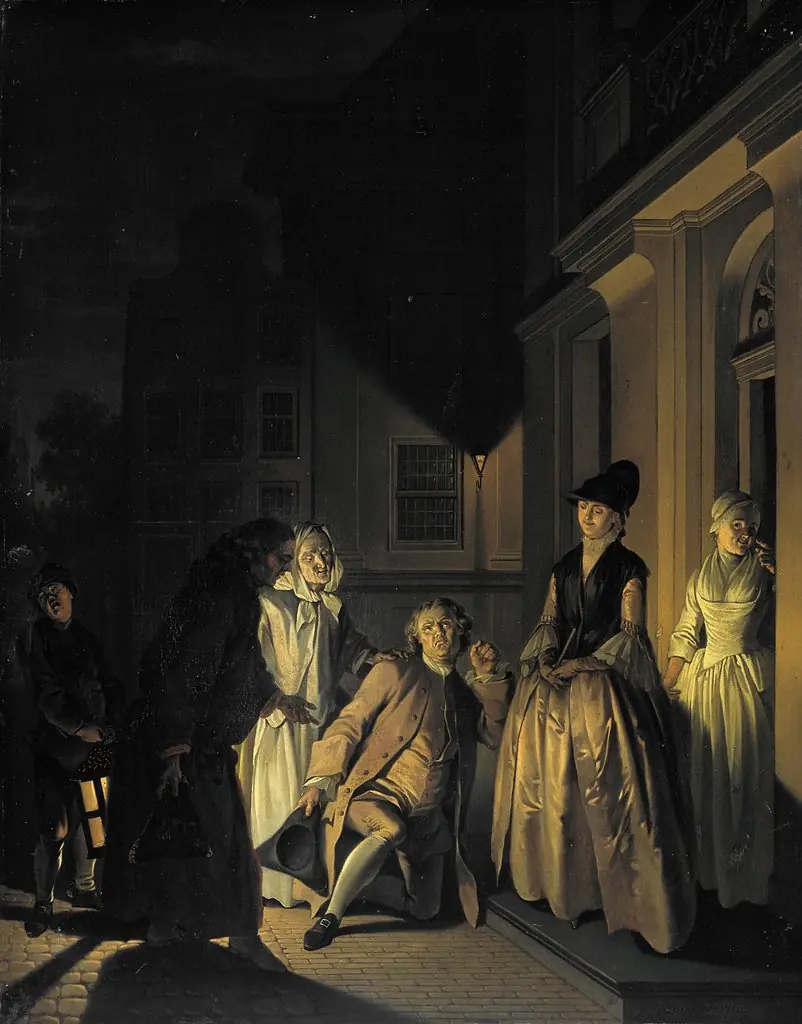 Scene from the Play 'Lubbert Lubbertse of de geadelde boer' by M. van Breda
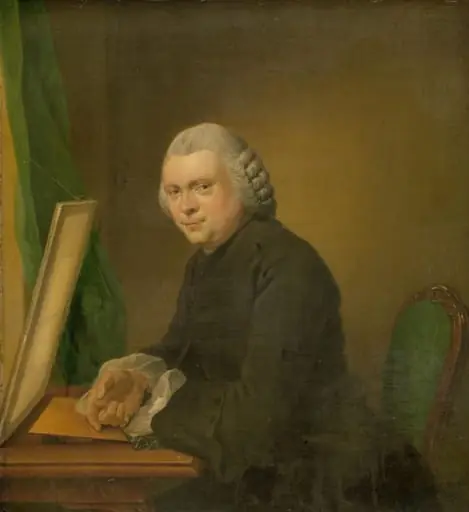 Portrait of Cornelis Ploos van Amstel
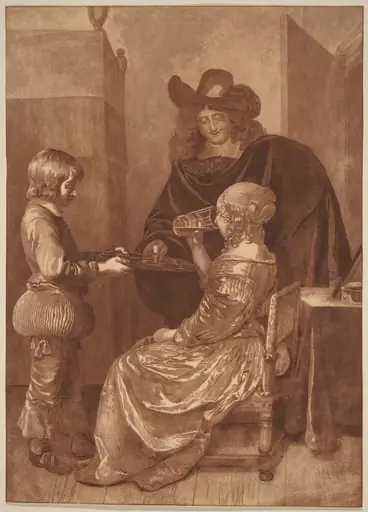 Cavalier and Lady with a Page
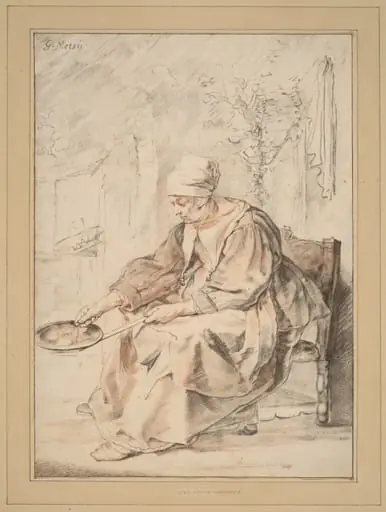 Pancake Woman