Artwork
Rojika
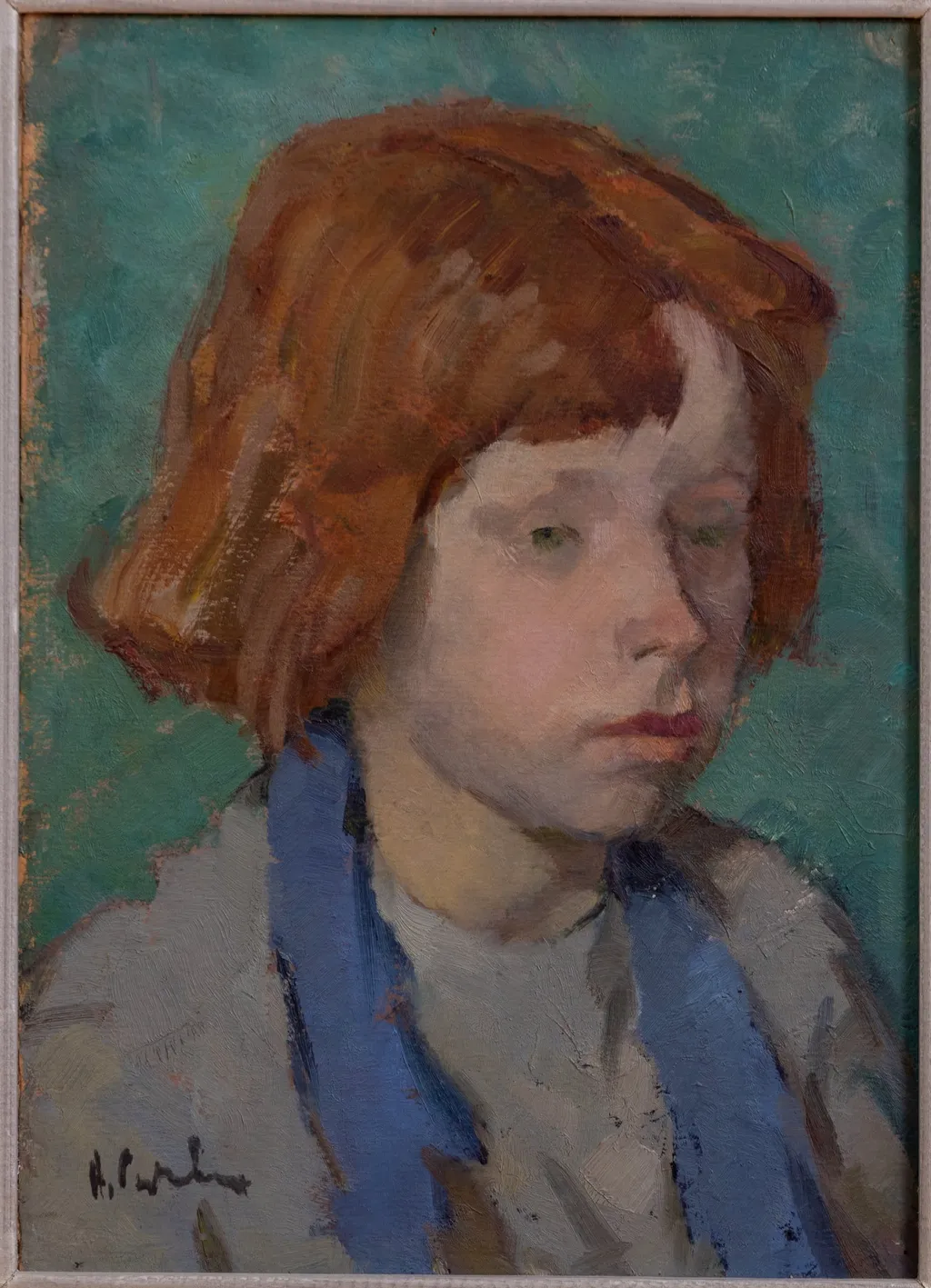
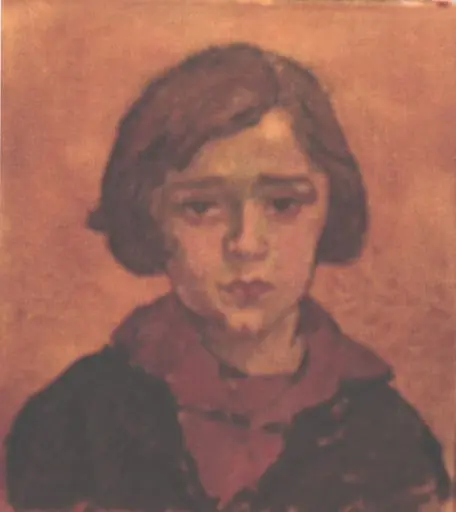
Rojika is a print by Podoleanu Adrian. It dates from 1928 and is held in the collection of the Moldova National Museum Complex.
About this work
Overview
The painting’s emphasis on texture and simplified form reflects a shift toward expressive realism, distancing itself from academic conventions of the time.
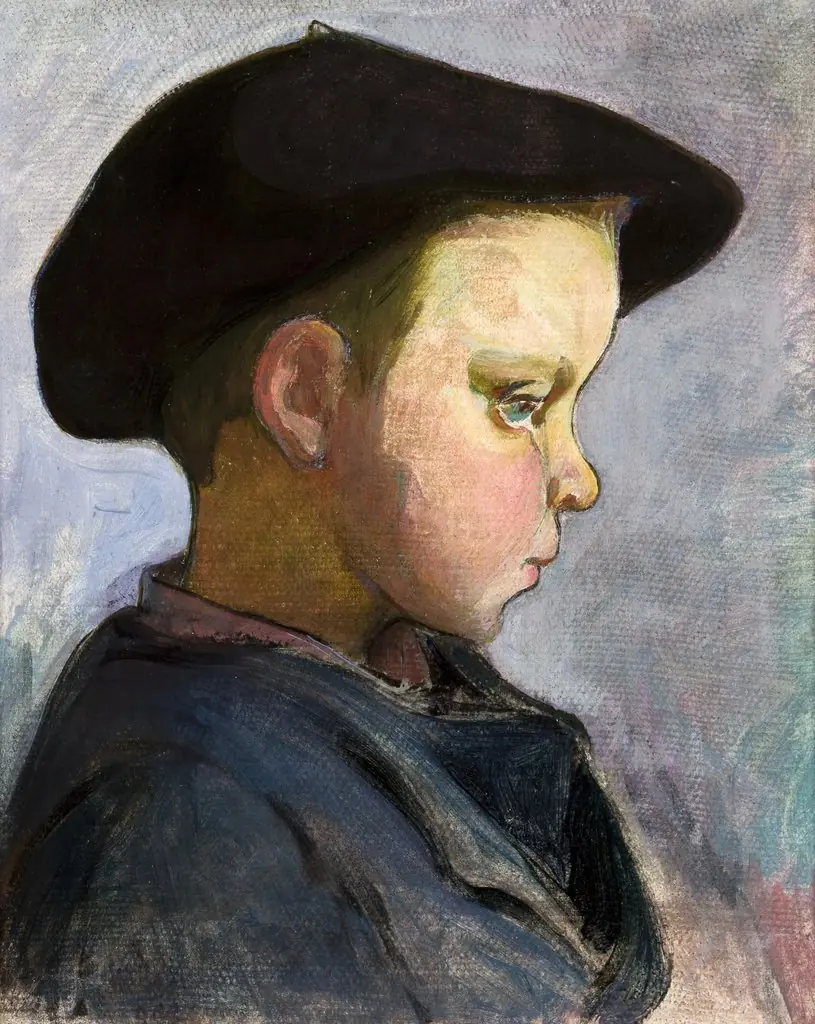
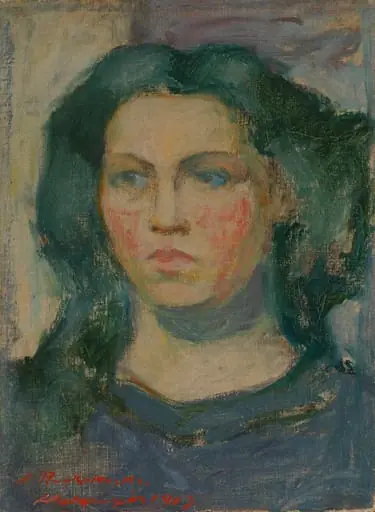
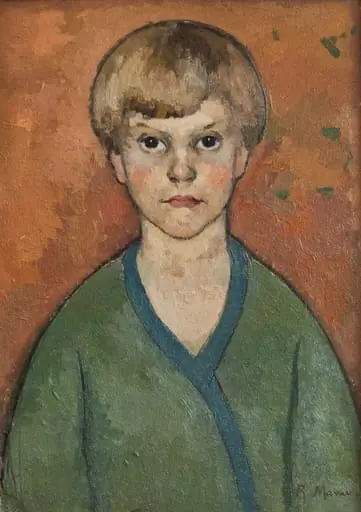
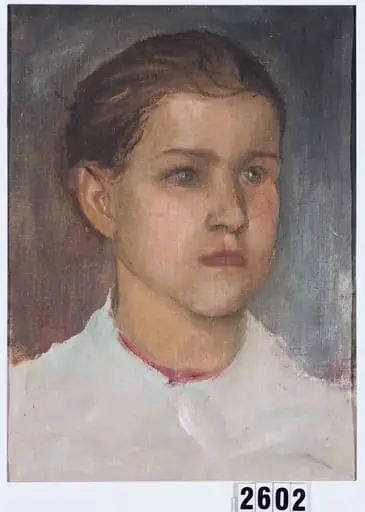
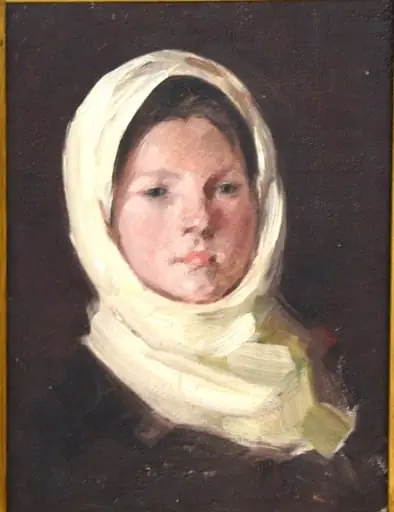
Rojika is a 1928 portrait by Romanian artist Adrian Podoleanu, depicting a woman in profile with her head partially veiled. The composition focuses tightly on her face and upper torso, set against a uniform green background that eliminates spatial depth. The painting’s emphasis on texture and simplified form reflects a shift toward expressive realism, distancing itself from academic conventions of the time.
Subject & Meaning
The subject is a woman whose identity remains unnamed, her features partially concealed by a dark blue shawl that frames her eyes and mouth. This partial veiling suggests modesty or introspection, while the direct gaze invites quiet engagement. The absence of context or narrative detail shifts focus to the psychological presence of the figure, emphasizing inner stillness over external circumstance.
Technique & Style
Podoleanu employed thick, tactile brushwork, particularly on the shawl and strands of hair, using impasto to create a sense of volume and material weight. The loose, visible strokes contrast with the flat, even green background, heightening the three-dimensionality of the figure. Color is restrained—light fabric against deep blue and muted green—enhancing the emotional gravity of the portrait.
History & Provenance
Rojika was painted in 1928 during a period of experimentation among Romanian modernists. It remained in private hands for much of the 20th century, with limited public exposure until later archival research brought renewed attention. Its survival through political upheavals in Romania underscores its significance as a personal, non-political work from a turbulent era.
Context
In late 1920s Romania, artists were navigating between traditional portraiture and emerging modernist idioms. Podoleanu’s approach in Rojika aligns with broader regional trends that favored emotional expression over idealized form. The painting reflects influences from Post-Impressionism and early Expressionism, adapted to local sensibilities without overt stylistic borrowing.
Legacy
Rojika is now recognized as an early example of Romanian modernist portraiture that prioritized psychological depth over narrative detail. Its restrained palette and textured surfaces influenced later generations of artists seeking to convey inner life through materiality. Though not widely exhibited, it remains a touchstone in studies of interwar Romanian art.