Artwork
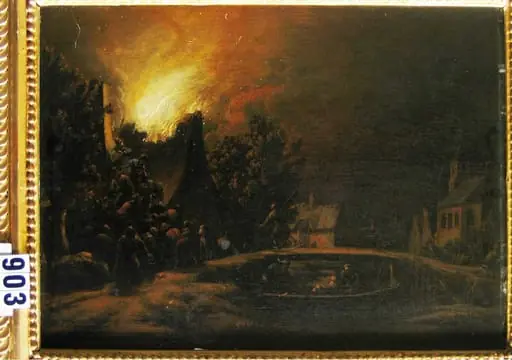
Șopron arzând noaptea
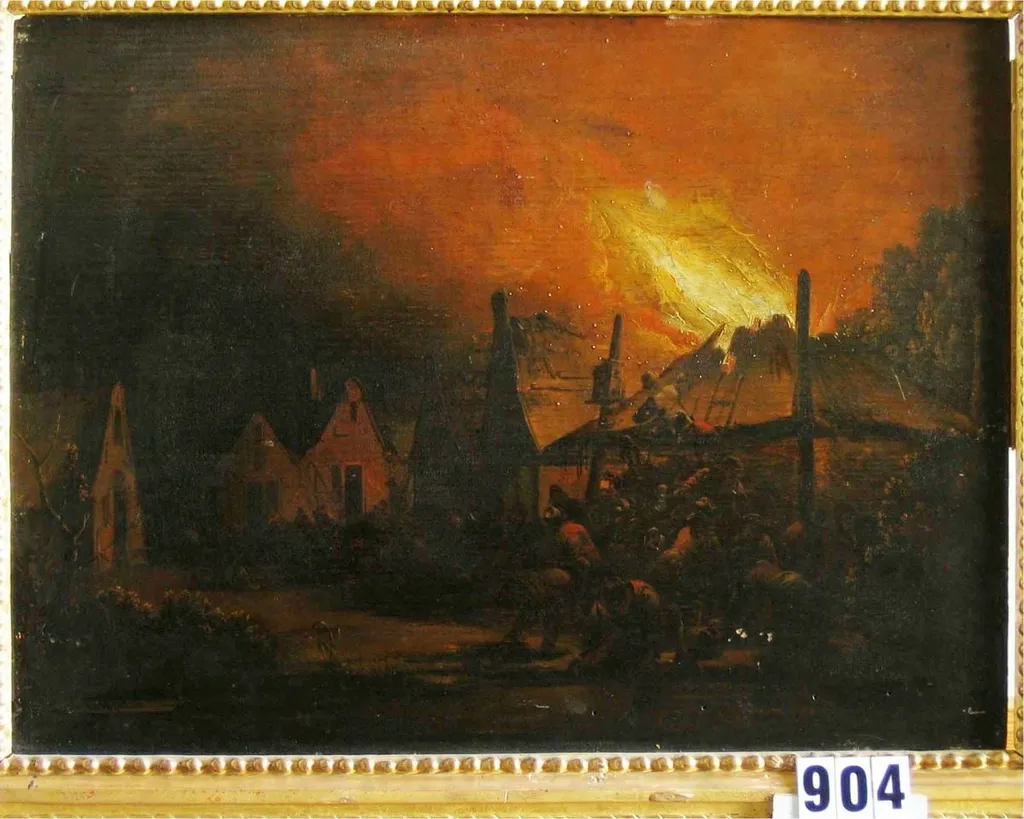
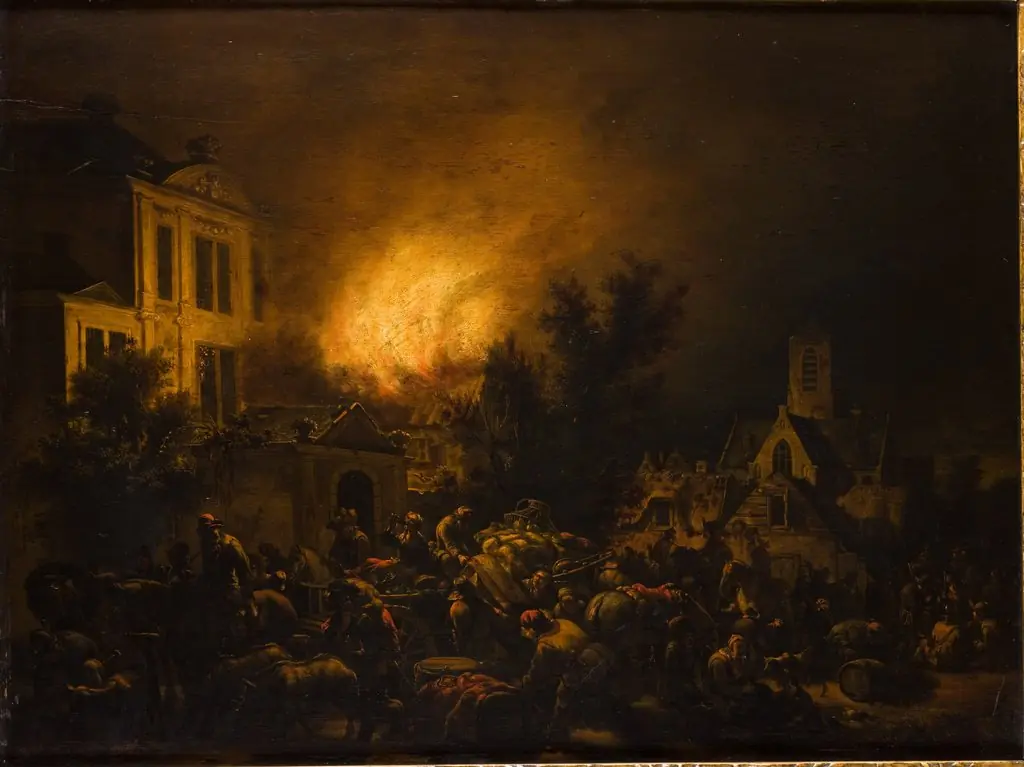
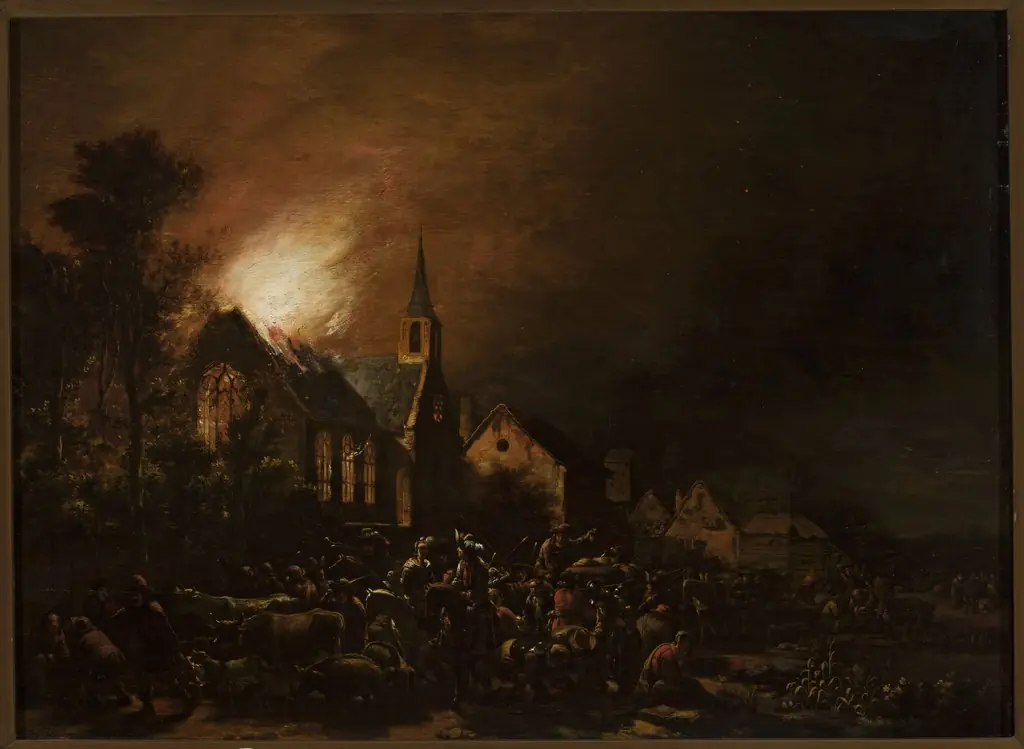
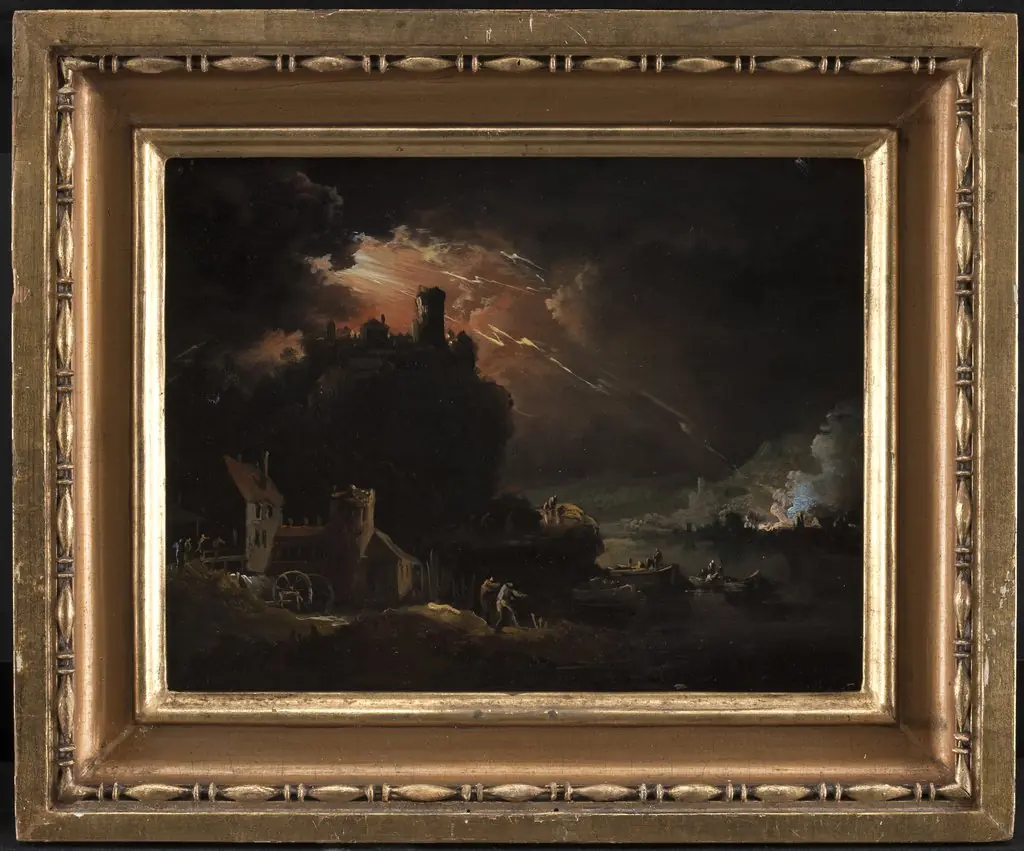
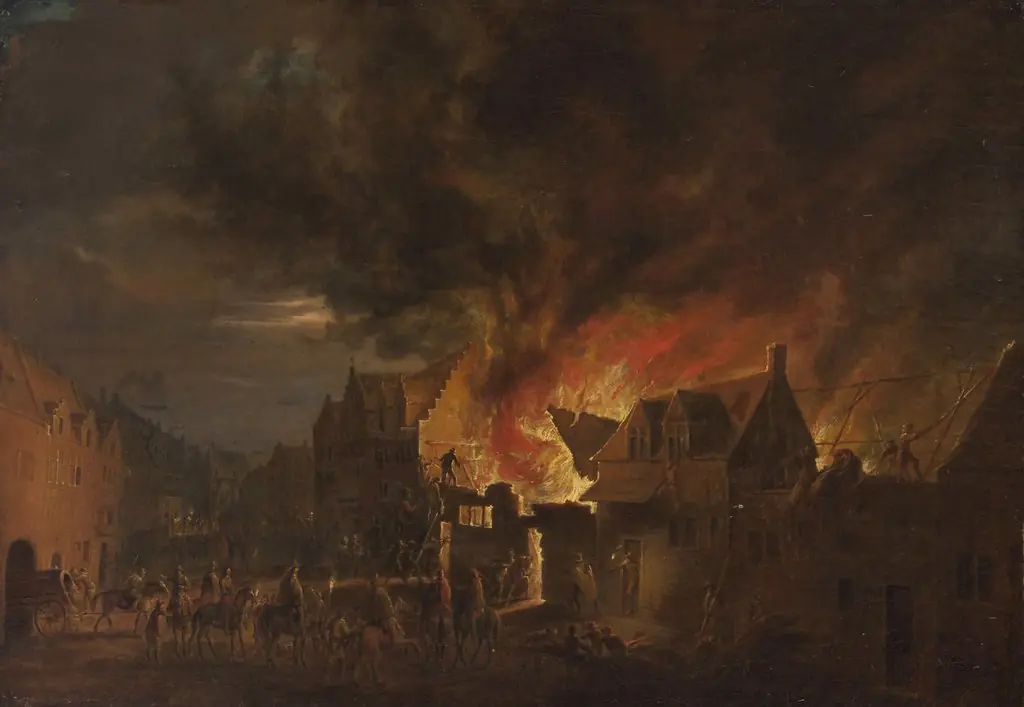
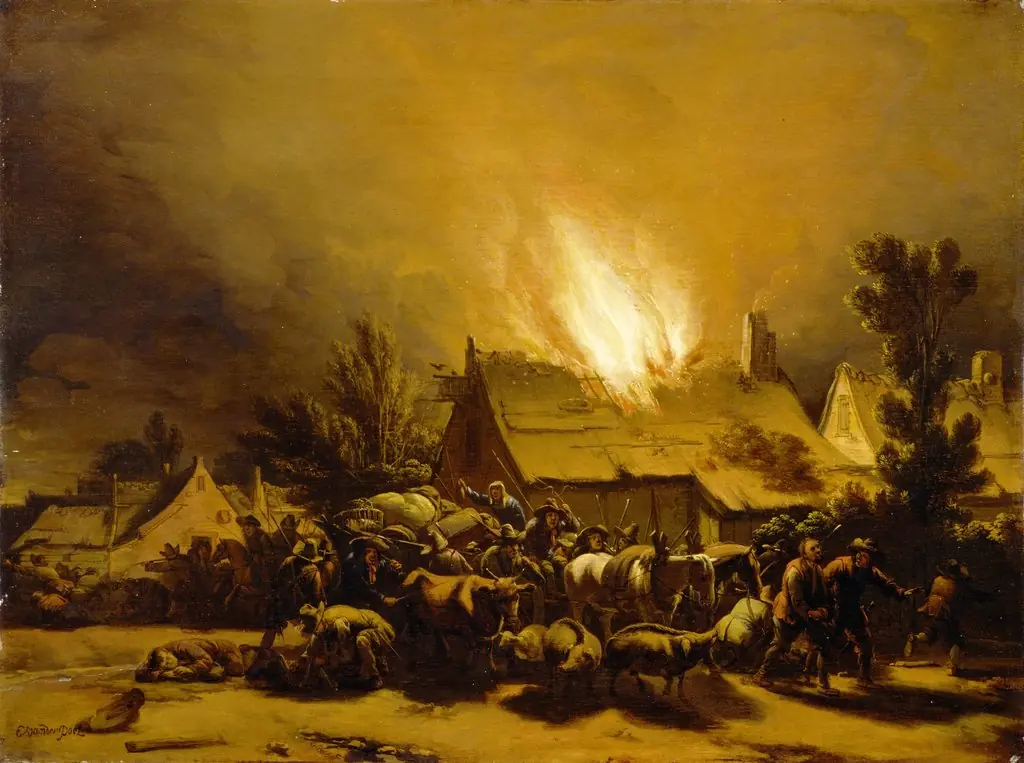
Șopron arzând noaptea is an unspecified painting by the Baroque artist Egbert van der Poel. It is held in the collection of the Brukenthal National Museum. This nocturnal scene depicts a village engulfed by an unnatural, skyward fire.
About this work
Overview
The composition contrasts the still, shadowed dwellings with the violent glow above, suggesting catastrophe rather than natural phenomenon.
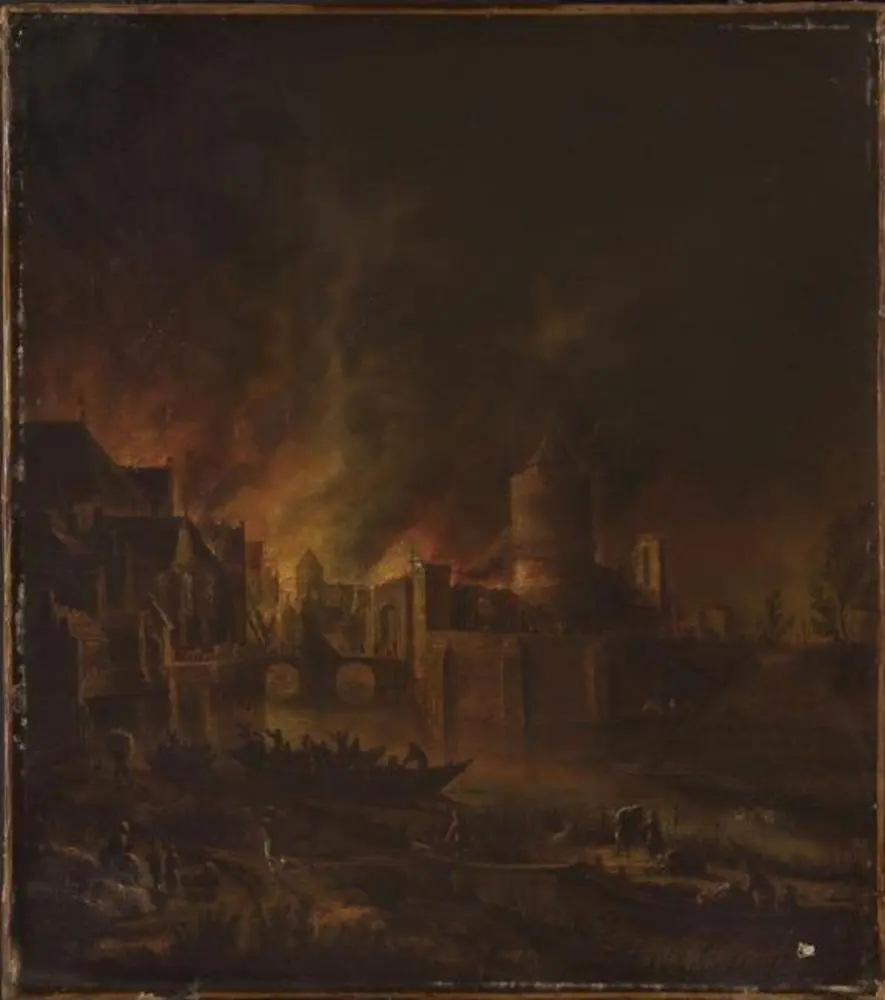
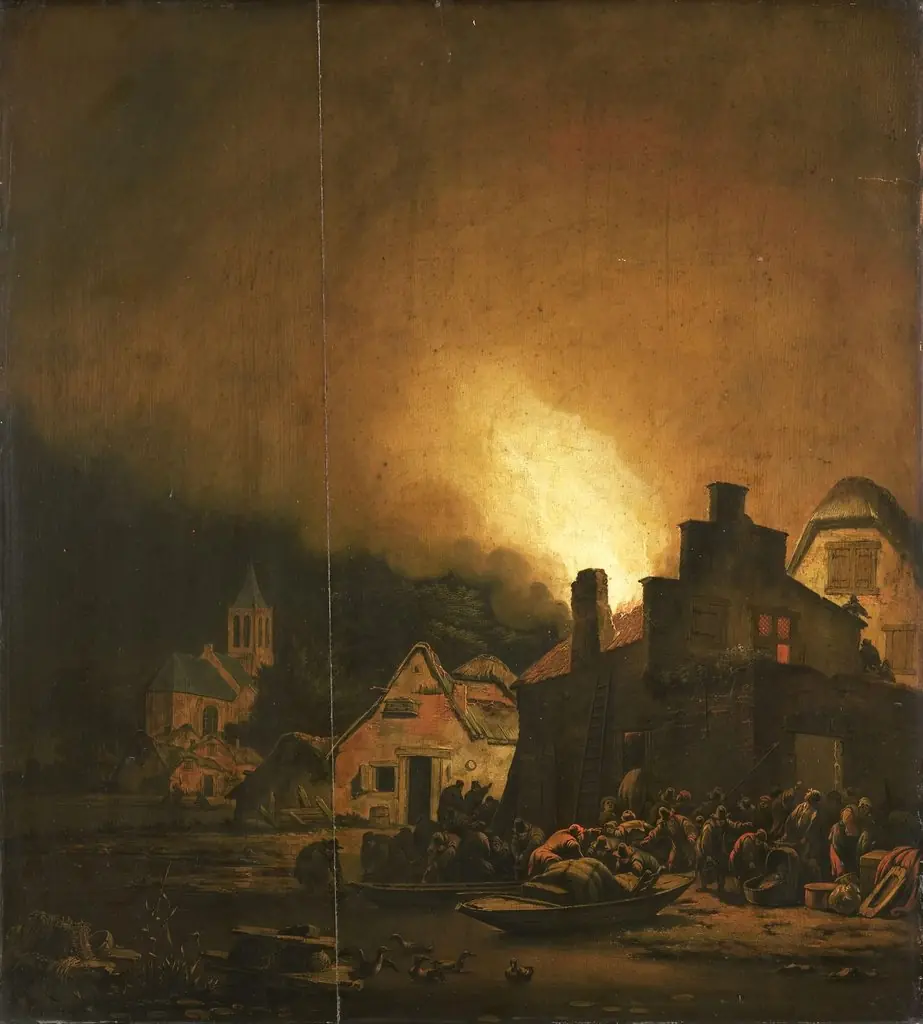
This nocturnal scene depicts a village engulfed by an unnatural, skyward fire. The composition contrasts the still, shadowed dwellings with the violent glow above, suggesting catastrophe rather than natural phenomenon. Figures and livestock appear diminished, emphasizing the scale of the event. The palette relies on deep reds, blacks, and yellows, with light acting as both illuminator and destroyer.
Subject & Meaning
The fire in the sky does not resemble a sunset or celestial event; its form suggests a burning urban center, possibly symbolizing war, destruction, or divine retribution. The quiet, dark village below implies helplessness or observation. The absence of clear human action invites interpretation as a moment of collective fate, where the natural order is disrupted by overwhelming force.
Technique & Style
Bold, energetic brushstrokes define the flames, creating texture and motion against the flat, dark forms of the village. The artist employs chiaroscuro to heighten drama, using stark contrasts between the fire’s glow and the surrounding night. Minimal detail in the buildings and figures directs focus to the light’s dominance, reinforcing emotional intensity over narrative clarity.
History & Provenance
The work’s origin and ownership history are not documented in available records. It is attributed to an artist associated with early 20th-century Romanian modernism, though no definitive exhibition or collection record confirms its early reception. Its title, referencing a village name, suggests local inspiration, but the imagery transcends specific geography.
Context
Created during a period of political instability in Eastern Europe, the painting reflects broader anxieties about violence and societal collapse. While not tied to a single event, its imagery resonates with wartime destruction and the fragility of rural life amid modern upheaval. The absence of identifiable landmarks allows the scene to function as a universal allegory.
Legacy
The painting remains a lesser-known work within its artist’s oeuvre, rarely reproduced or exhibited. Its emotional gravity and stylistic intensity have influenced later Romanian artists exploring trauma through landscape. It endures as a quiet, haunting meditation on destruction, more evocative than explanatory.
Artist & collection