Artwork
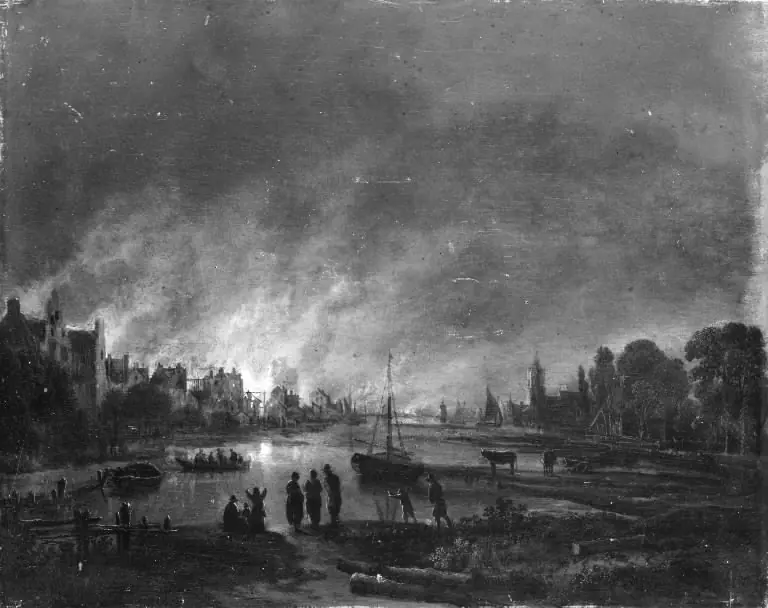
Nachtlandschaft mit Feuersbrunst
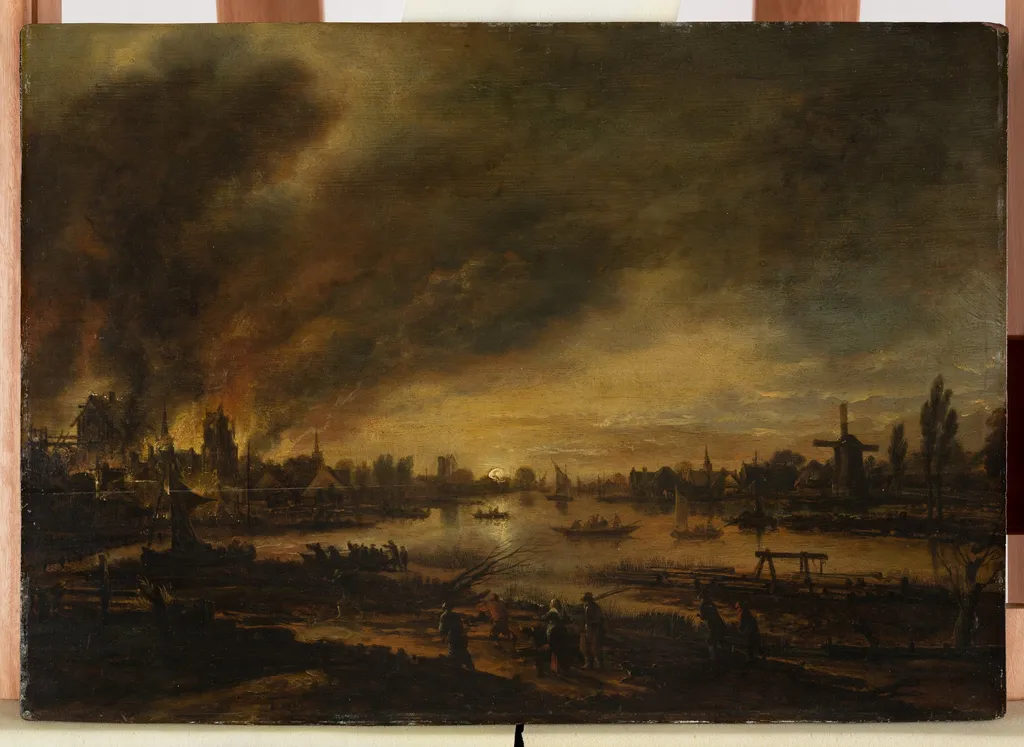
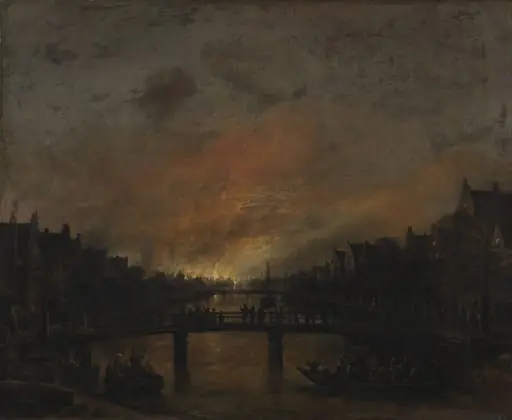
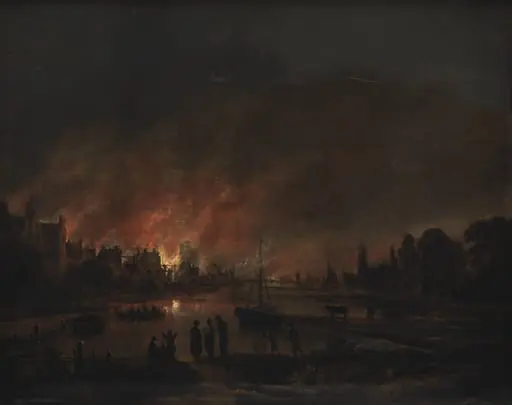
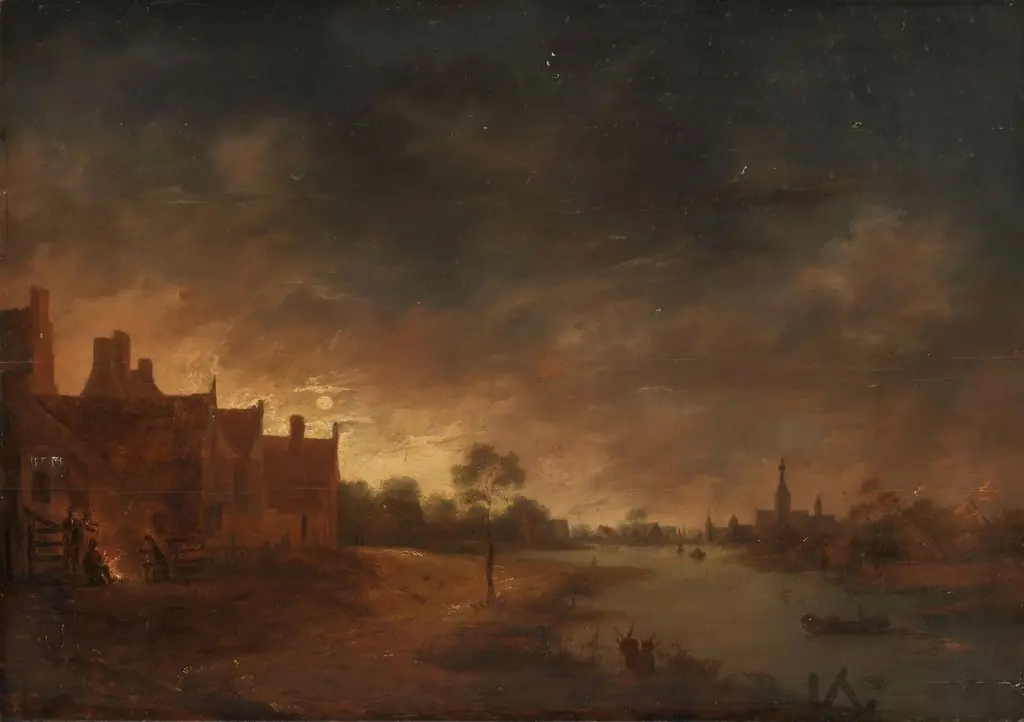
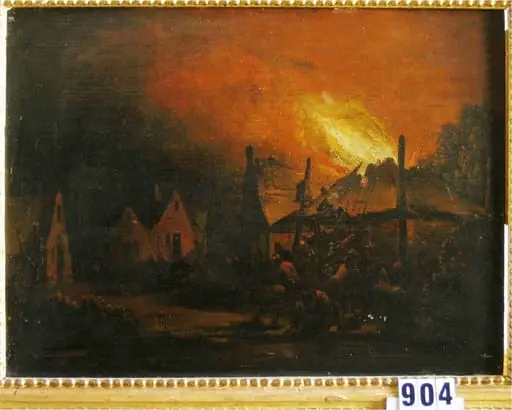
Nachtlandschaft mit Feuersbrunst is a drawing by Unknown. It dates from 1850 and is held in the collection of the Art Collection of the University Göttingen. This landscape depicts a nocturnal scene illuminated by a distant fire, set beside a quiet river at twilight.
About this work
Overview
The composition balances stillness and destruction, capturing a moment suspended between calm and catastrophe.
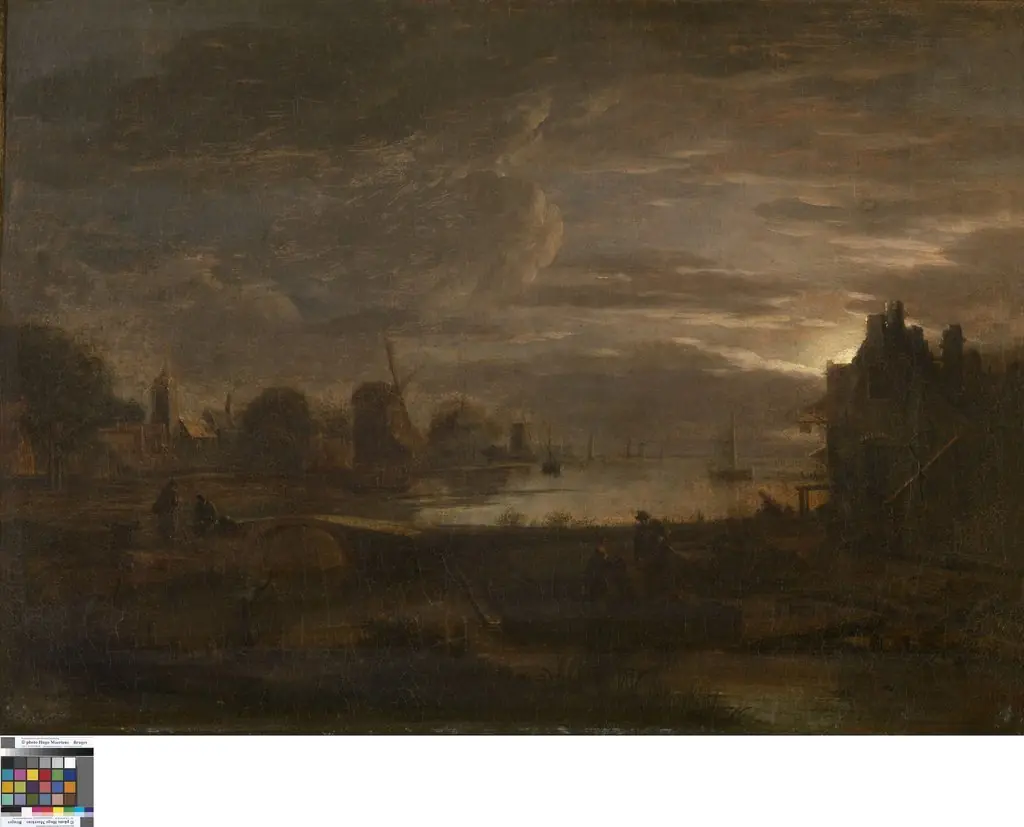
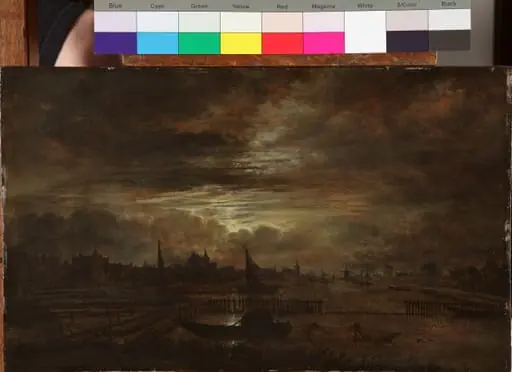
This landscape depicts a nocturnal scene illuminated by a distant fire, set beside a quiet river at twilight. Dark, turbulent skies loom over a smoky horizon, where flames rise from a burning town. Figures move along a shoreline path, and boats drift on still water, while windmills rise in the distance. The composition balances stillness and destruction, capturing a moment suspended between calm and catastrophe.
Subject & Meaning
The burning town suggests disaster—perhaps war, accident, or divine retribution—yet the figures continue their journey, indifferent or resigned. The windmills, symbols of industry and endurance, stand silent against the chaos. The scene evokes human fragility amid natural and man-made forces, offering no clear moral or narrative, only an atmosphere of unease and impermanence.
Technique & Style
Thick, agitated brushwork renders the sky and fire with raw energy, contrasting with the smoother, darker tones of water and land. The flames are suggested through layered strokes of orange and red, while cross-hatching in shadowed areas adds depth without detail. The lack of fine definition heightens the emotional intensity, prioritizing mood over realism.
History & Provenance
The painting’s origins are undocumented in public records, with no known exhibition history or collector lineage prior to its current attribution. Its style aligns with late 18th-century Northern European landscape traditions, though the artist remains unidentified. It entered institutional custody in the early 20th century, likely through a private donation or estate acquisition.
Context
Created during a period when landscape painting increasingly explored emotional and sublime themes, this work reflects a shift from idealized nature to scenes of disruption. Similar imagery appeared in prints and paintings responding to war, fire, and industrial change, though few captured such quiet tension between destruction and daily continuity.
Legacy
Though not widely reproduced or studied, the painting contributes to a lesser-known strand of Romantic-era landscape art that favored atmospheric unease over grandeur. Its restrained drama and ambiguous narrative have influenced later artists interested in psychological landscapes, where environment mirrors inner turmoil without explicit storytelling.
Artist & collection
Museum
Art Collection of the University Göttingen
Continue through works from the same source collection.
 Domestic Scene
 Giacomo and Cardinal Marco, investing Andrea, Abbot of San Zeno, with his Benefice
 The Nymph of Fontainebleau
 Portrait of a Woman
 Madonna and Child with Saints in the Enclosed Garden
 Venus and Minerva
 Family Group of Four on Sofa
 Wall painting from Room H of the Villa of P. Fannius Synistor at Boscoreale