Artwork
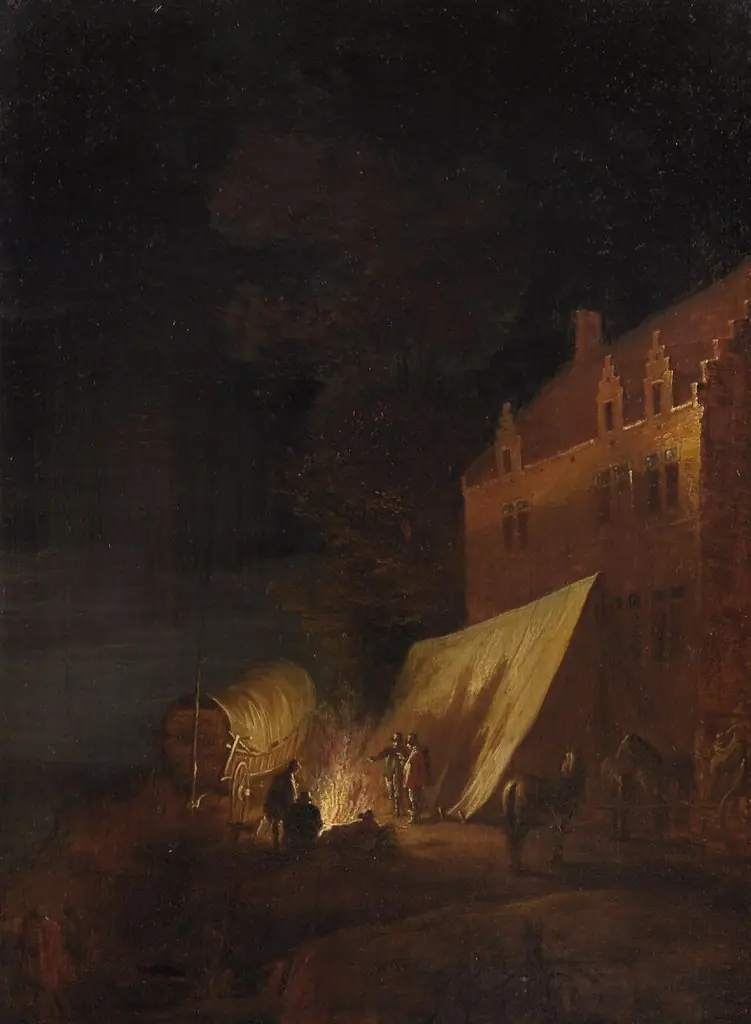
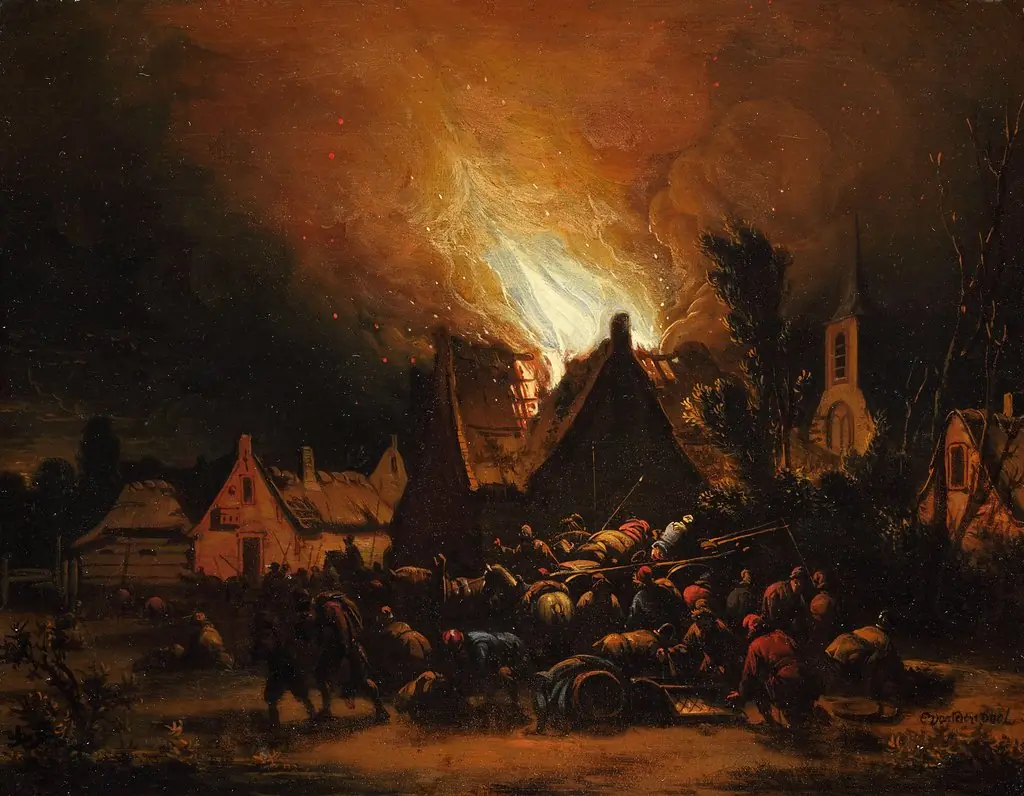
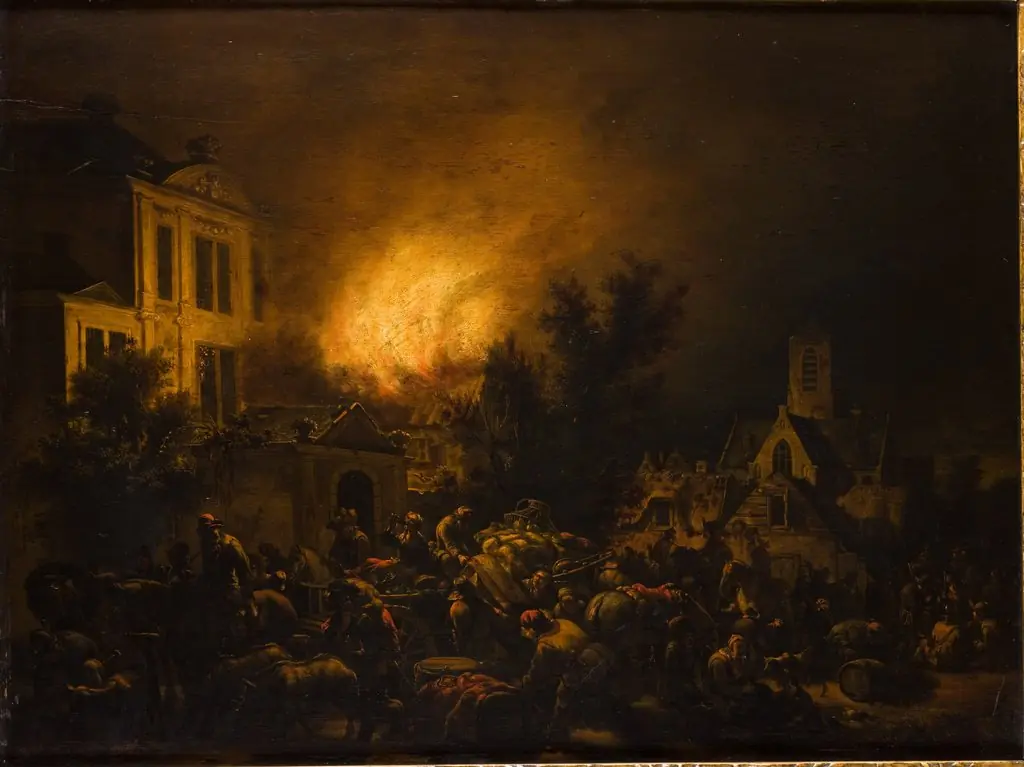
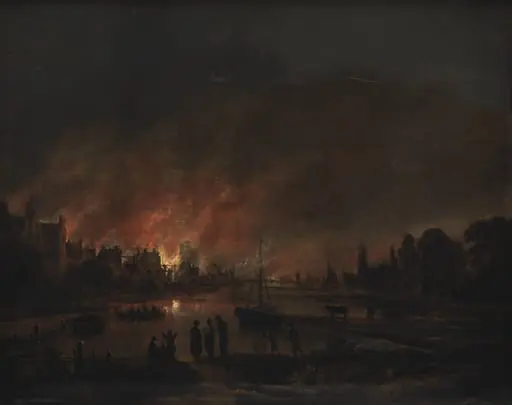
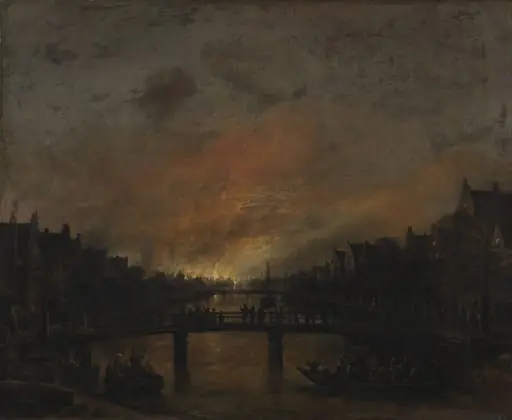
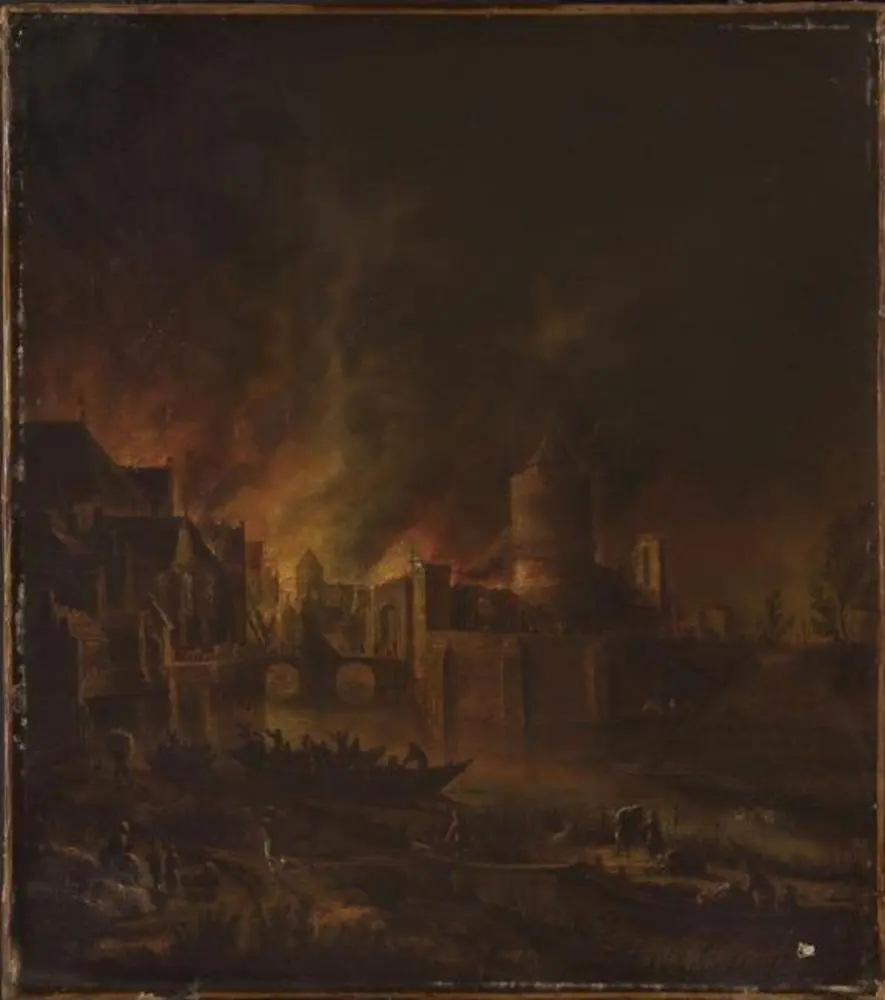
Archduke Leopold Wilhelm at a nocturnal fire
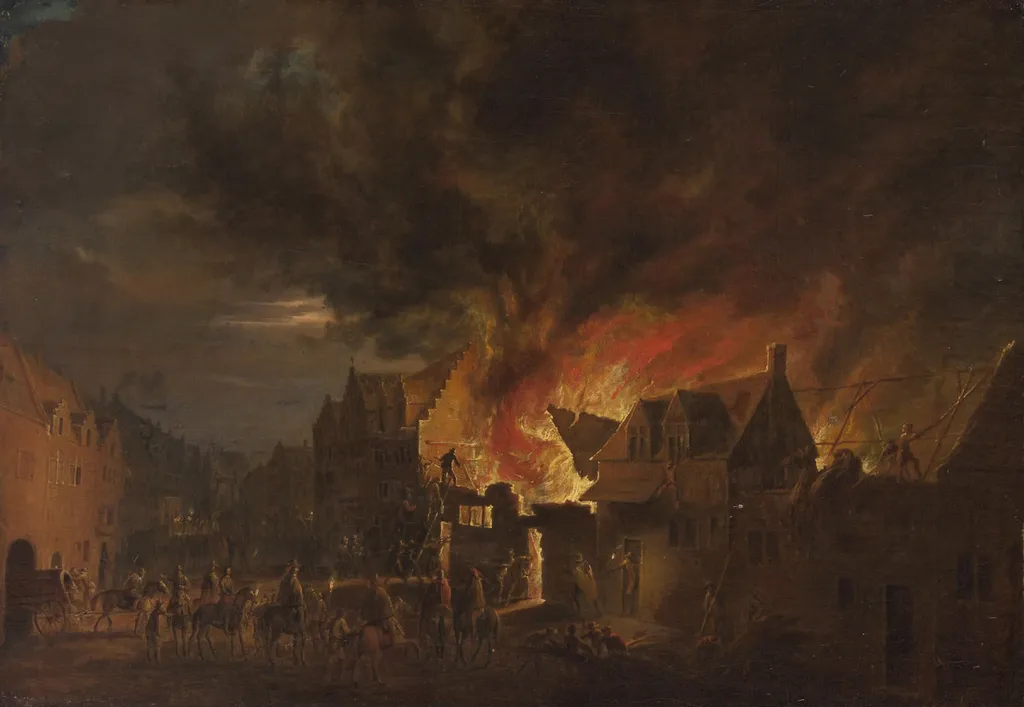
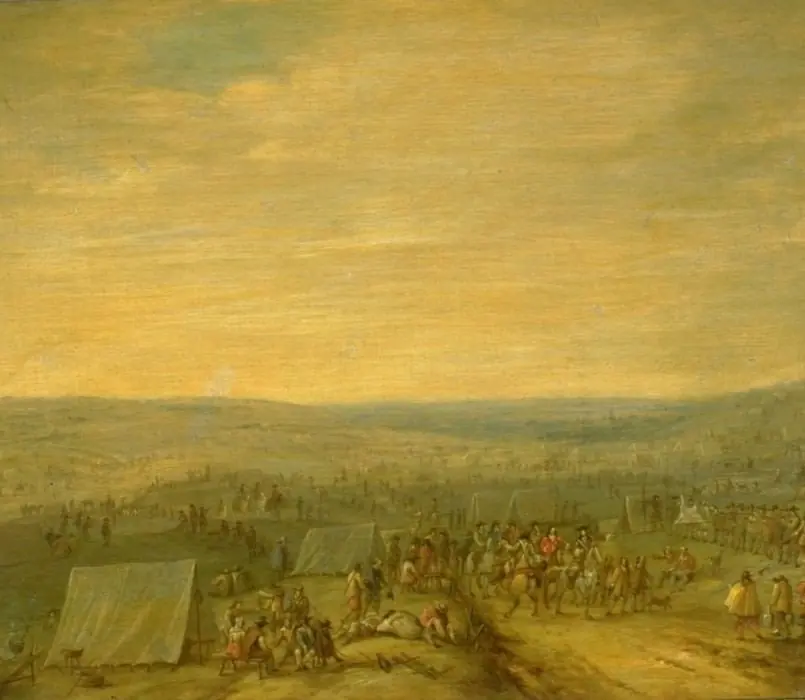
Archduke Leopold Wilhelm at a nocturnal fire is a color painting by the Flemish Baroque painting artist Robert van den Hoecke. It dates from 1656 and is held in the collection of the Kunsthistorisches Museum.
About this work
Overview
The painting reflects his specialization in military and landscape subjects, rendered with attention to atmospheric detail and nocturnal lighting.
Painted in 1656 by Robert van den Hoecke, this work captures a nighttime scene of a military encampment under observation. Van den Hoecke, active in the Habsburg Netherlands, combined his training in Antwerp with his role as court artist to Archduke Leopold Wilhelm. The painting reflects his specialization in military and landscape subjects, rendered with attention to atmospheric detail and nocturnal lighting.
Subject & Meaning
The Archduke is shown surveying a camp illuminated by firelight, suggesting vigilance and command during a moment of tension. The scene lacks overt battle action, instead emphasizing quiet authority and the logistical presence of troops. This restrained depiction aligns with the Archduke’s role as governor, highlighting order and control rather than conflict.
Technique & Style
Van den Hoecke employed chiaroscuro to model forms against the dark, using warm glows from fires to define tents and figures. His brushwork is precise yet fluid, balancing topographical accuracy with mood. The composition draws the eye toward the Archduke’s figure, framed by the encampment’s radial structure, a hallmark of his narrative landscape style.
History & Provenance
Commissioned during van den Hoecke’s tenure at the Archduke’s court in Brussels, the painting remained within Habsburg collections after the Archduke’s death. It entered the Kunsthistorisches Museum in Vienna as part of the imperial art holdings, preserving its original context and provenance without significant later alterations.
Context
Created during the Thirty Years’ War, the painting reflects the Habsburg administration’s emphasis on military readiness in the Southern Netherlands. Though no specific event is depicted, the scene echoes contemporary concerns with camp security and leadership visibility, common themes in courtly art of the period.
Legacy
Van den Hoecke’s work contributed to the development of military landscape painting in Flanders, influencing later artists who merged topographical detail with psychological presence. While not widely exhibited today, the painting remains a key example of how court artists translated administrative duties into visual form during the Baroque era.
Artist & collection
Artist
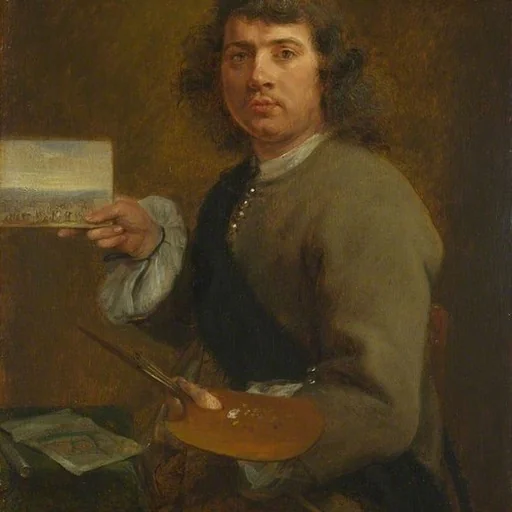
Robert van den Hoecke (30 November 1622 in Antwerp – 1668 in Bergues-Saint-Winoc) was a Flemish painter, engraver and architect.