Artwork
Sf. Apostol Pavel
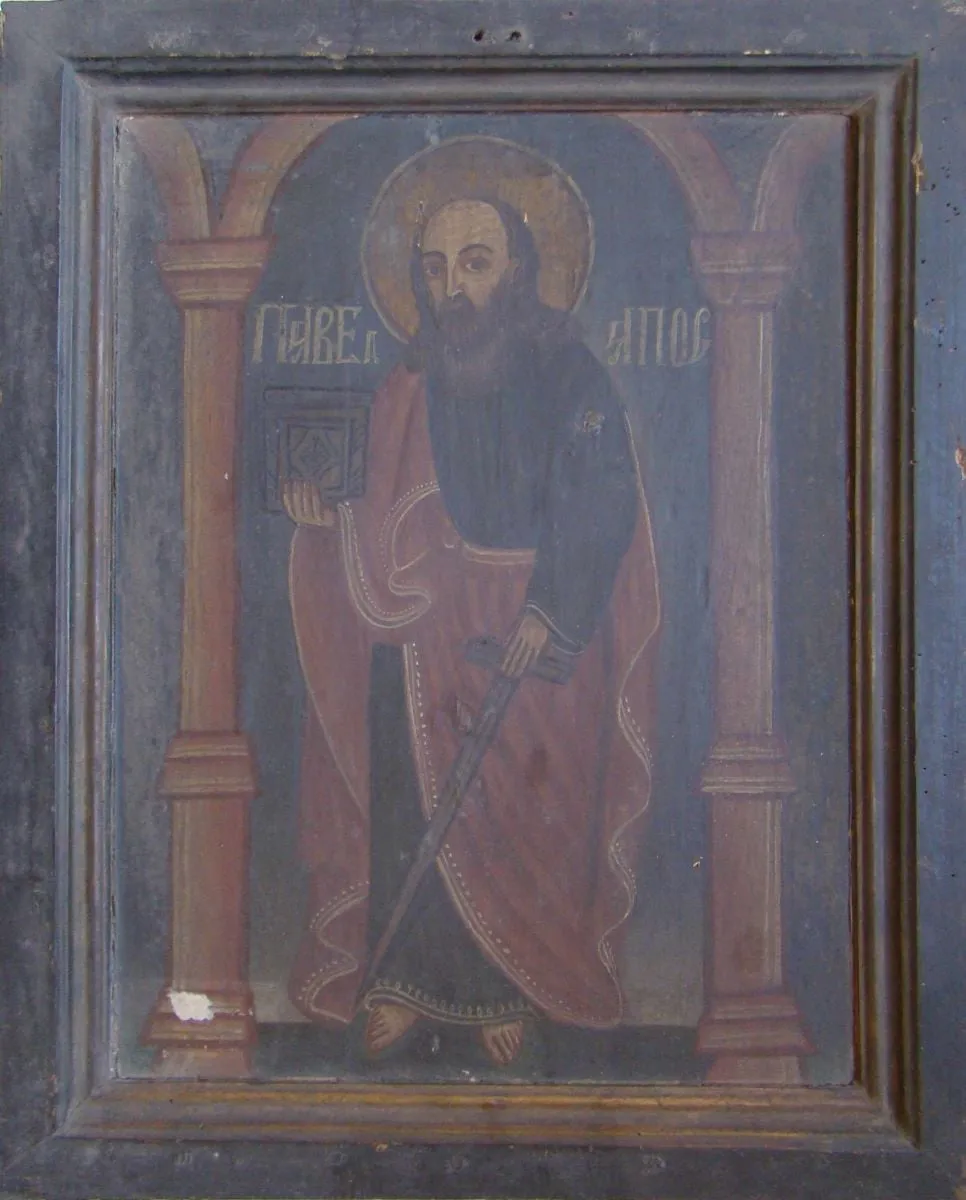
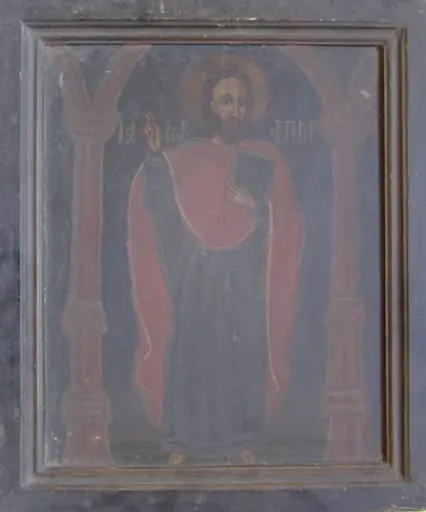
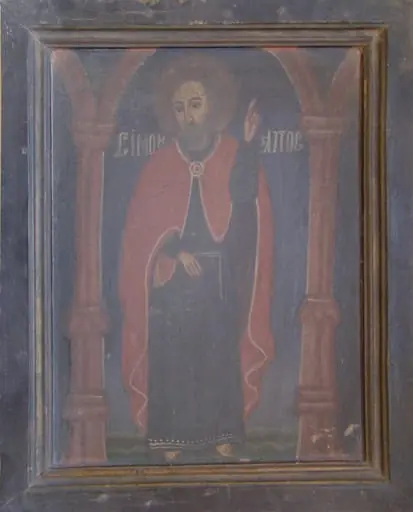
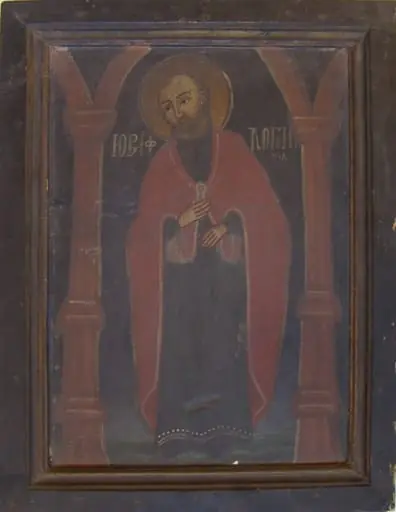
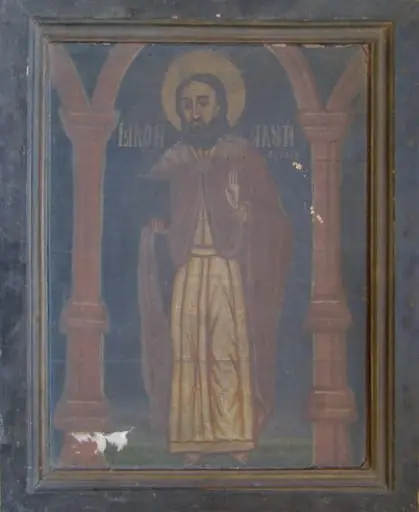
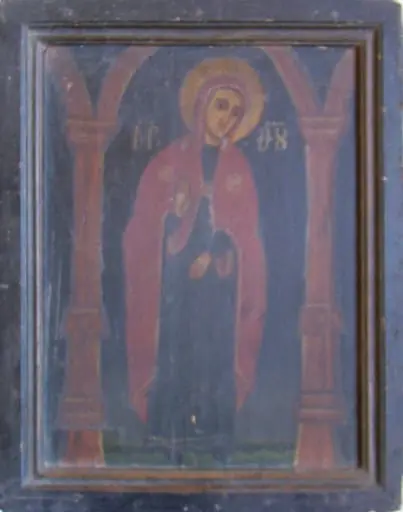
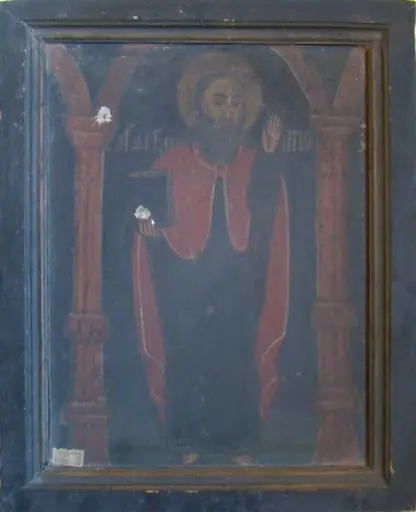
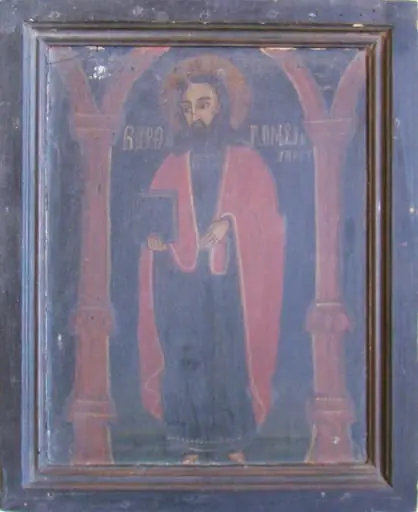
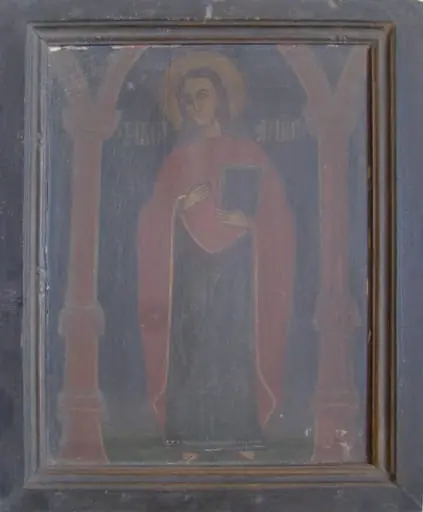
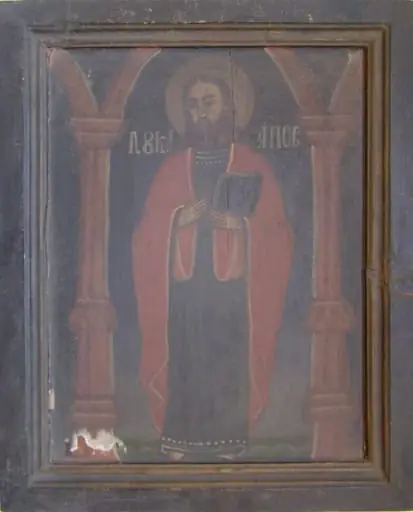
Sf. Apostol Pavel is a drawing by Toma Poienaru. It is held in the collection of the Alba Iulia Orthodox Archdiocese. The work depicts a bearded figure dressed in a purple garment, positioned between two red columns that suggest an architectural setting.
About this work
Overview
The work depicts a bearded figure dressed in a purple garment, positioned between two red columns that suggest an architectural setting. He holds a book in one hand and a scroll in the other, while a golden halo crowns his head. The background is a deep blue, highlighted by gold lettering above the figure.
Subject & Meaning
The central figure is identified as Saint Paul the Apostle, as indicated by the gold inscription of his name rendered in an archaic script. The halo signifies his sanctity, and the book and scroll reference his role as a writer of epistles and a teacher of Christian doctrine.
Technique & Style
The painting employs a limited palette of rich purples, reds, blues, and gold, creating a striking contrast. Linear detailing, such as the white stitching on the robe’s edges, defines form, while the gold lettering and halo are applied to emphasize sacred elements. The columns are rendered with simplified shading, suggesting a stylized architectural backdrop.
History & Provenance
The image is catalogued as an “IMAGE” type work titled “Sf. Apostol Pavel.” No further information on its creation date, artist, or ownership history is provided in the available data.
Context
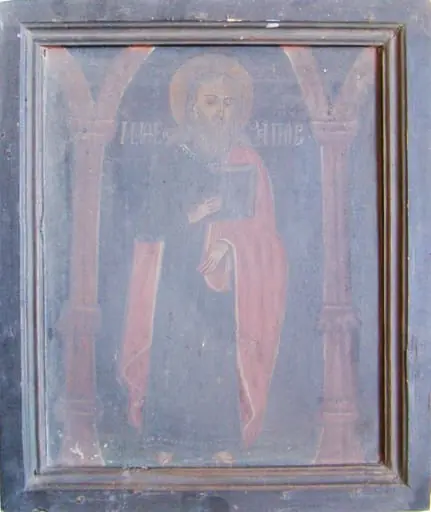
Depictions of Saint Paul often feature him with a book or scroll, symbols of his epistolary contributions to the New Testament. The use of a halo and gold lettering aligns with traditional iconographic conventions in Eastern Christian art, where saints are frequently presented against a dark, gold‑accented background.
Artist & collection
Artist
Toma Poienaru painted Christian religious scenes at a time when drawing and painting on paper were common for devotional prints.