Artwork
Sf. Apostol Andrei
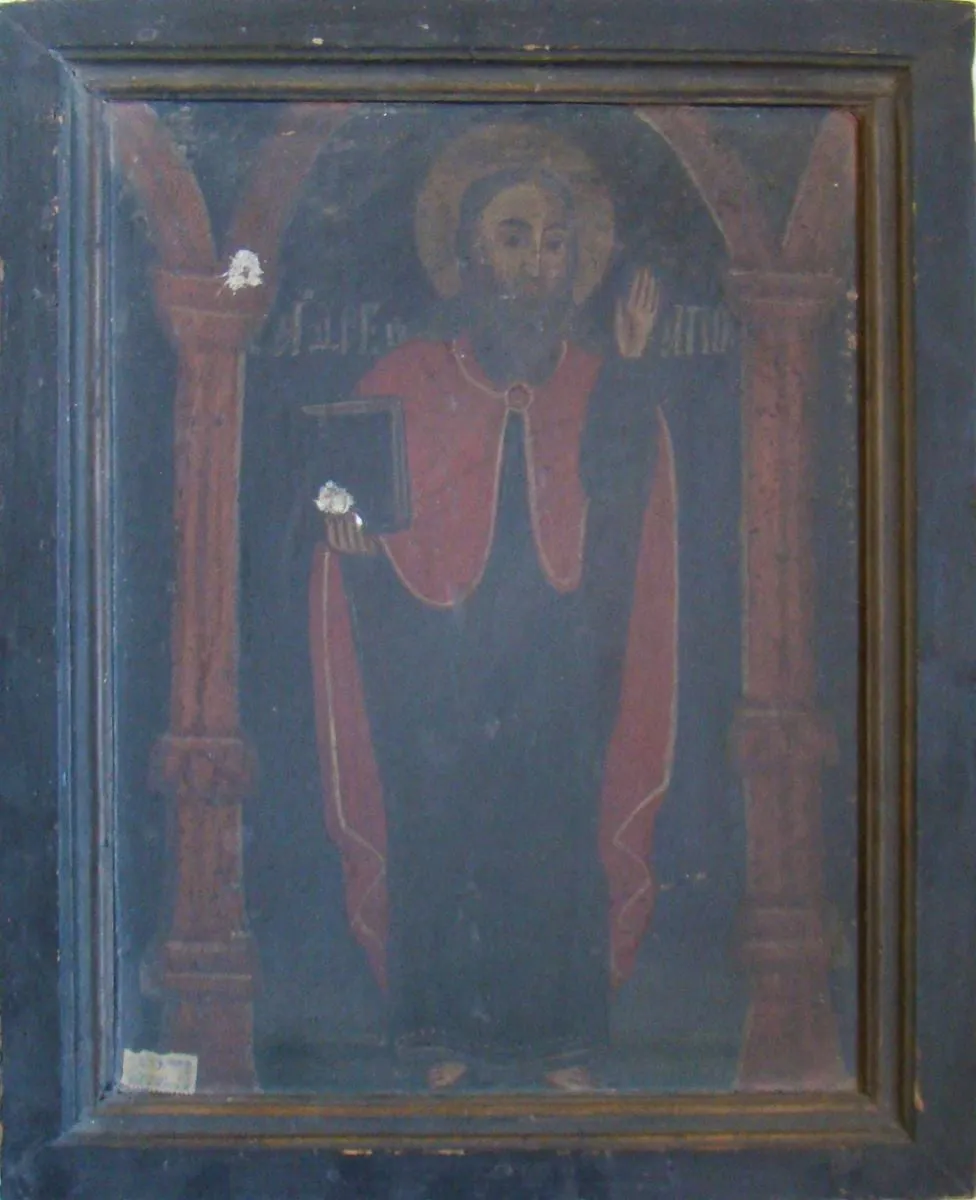
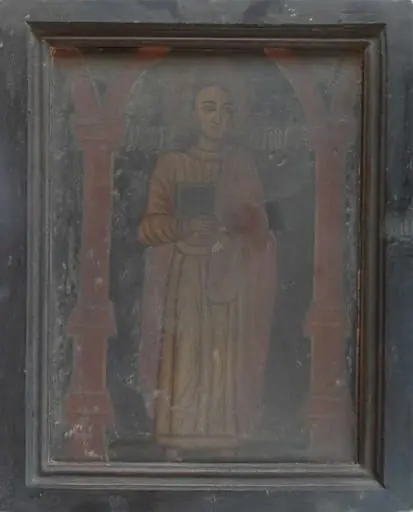
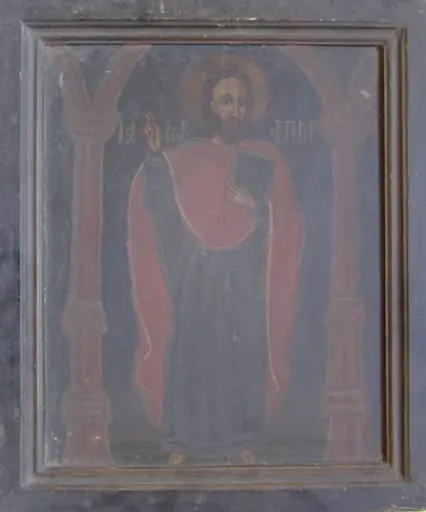
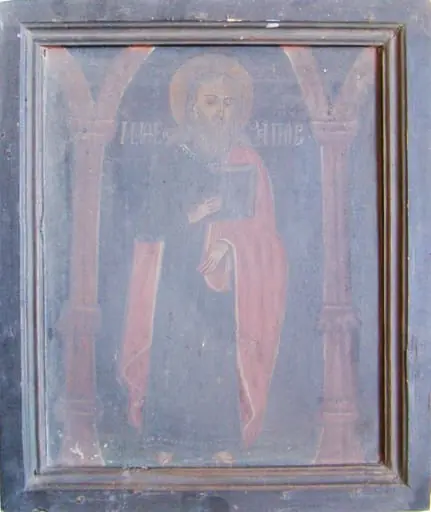
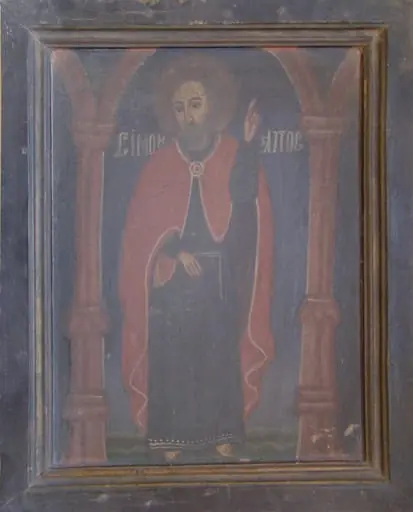
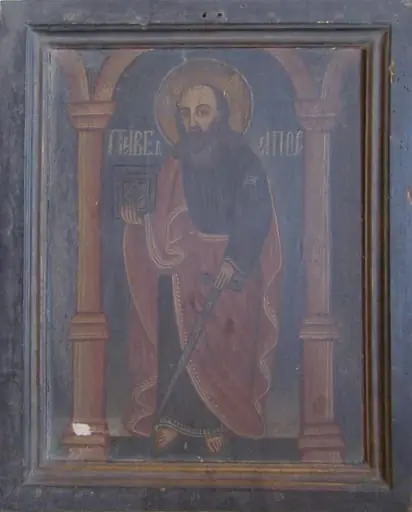
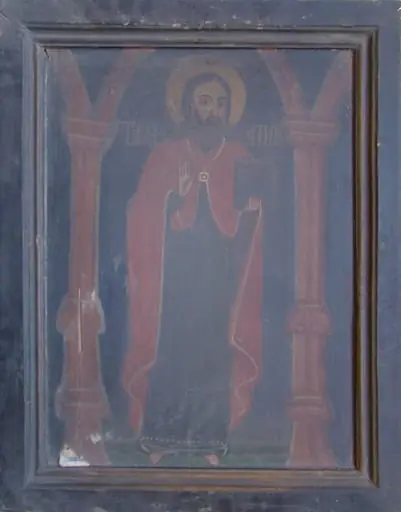
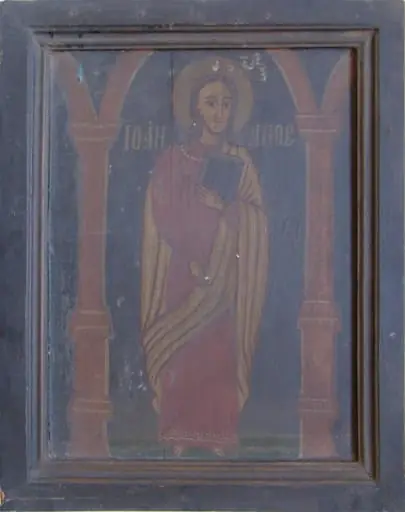
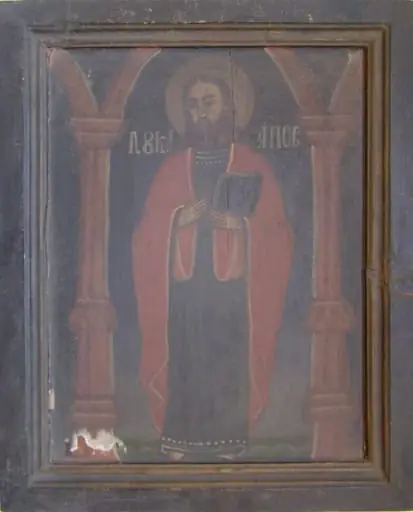
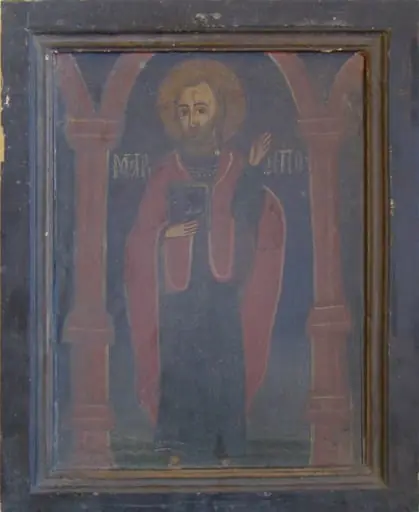
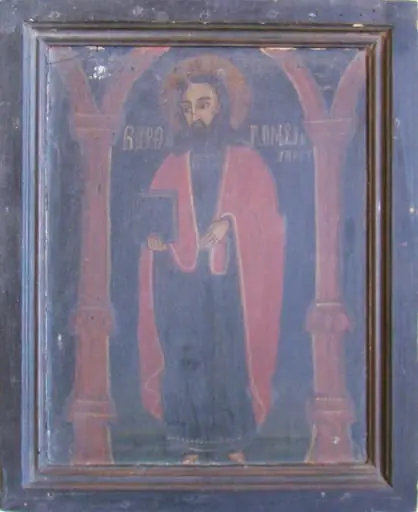
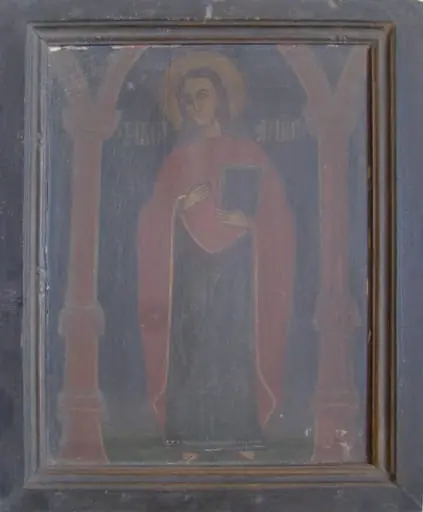
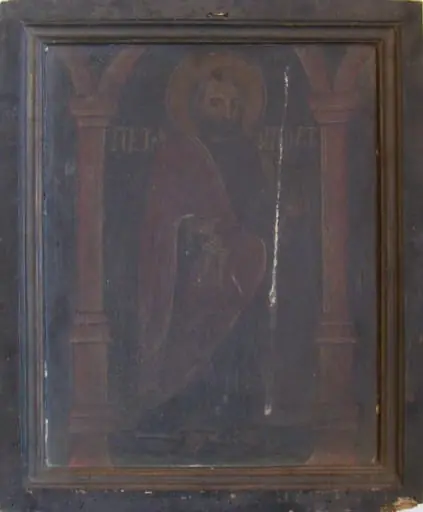
Sf. Apostol Andrei is a drawing by Toma Poienaru. It is held in the collection of the Alba Iulia Orthodox Archdiocese. This drawing depicts a single standing figure, likely Saint Andrew, rendered in monochrome with selective color accents.
About this work
Overview
The figure is centered between two vertical dark forms, set against a deep blue background that enhances the vibrancy of the purple robe.
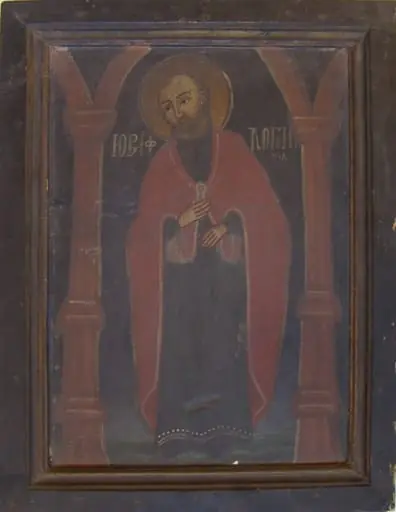
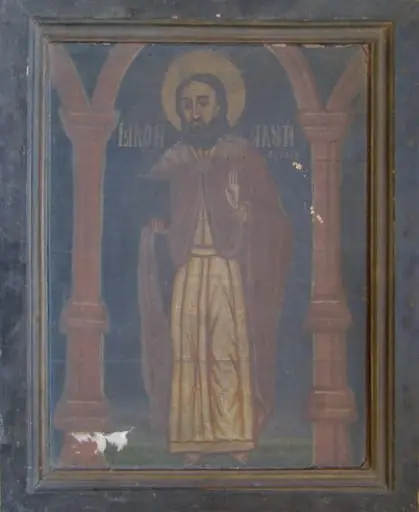
This drawing depicts a single standing figure, likely Saint Andrew, rendered in monochrome with selective color accents. The figure is centered between two vertical dark forms, set against a deep blue background that enhances the vibrancy of the purple robe. A golden halo encircles the head, signaling sacred status. The composition is sparse, emphasizing stillness and solemnity through minimal elements and controlled line work.
Subject & Meaning
The figure is identified as Saint Andrew, one of Christ’s apostles, based on traditional iconography: the halo, regal robe, and book. The small white object in the other hand may represent a scroll or a symbol of his martyrdom, such as a saltire cross. The calm gaze and upright posture convey spiritual authority and inner peace, aligning with devotional imagery meant to inspire contemplation rather than narrative action.
Technique & Style
The artist uses fine, deliberate lines to define form and texture, with shading achieved through controlled cross-hatching. The purple robe gains depth through layered strokes, while the dark columns and background recede visually, isolating the figure. Facial features are simplified—large eyes and a neutral expression—focusing attention on the figure’s presence rather than individualized detail.
History & Provenance
The work’s origin is undocumented, but its style suggests a late medieval or early Renaissance devotional drawing, possibly from a monastic scriptorium. It may have served as a preparatory sketch for a larger altarpiece or as a standalone object for private prayer. No known collection history or signature accompanies the piece, leaving its maker and exact date uncertain.
Context
In the religious art of the period, apostles were commonly depicted with halos, books, and symbolic attributes to aid identification and devotion. This drawing reflects a tradition of simplified, contemplative imagery used in personal or liturgical settings. The use of dark backgrounds and limited color palette aligns with practices in manuscript illumination and devotional panels of the time.
Legacy
Though unsigned and unattributed, the drawing exemplifies the quiet precision of pre-modern religious draftsmanship. Its emphasis on line, symbolism, and spatial economy influenced later devotional illustrations and remains a clear example of how spiritual figures were rendered with restraint to evoke reverence rather than spectacle.
Artist & collection
Artist
Toma Poienaru painted Christian religious scenes at a time when drawing and painting on paper were common for devotional prints.