Artwork
Sf. Apostol Petru
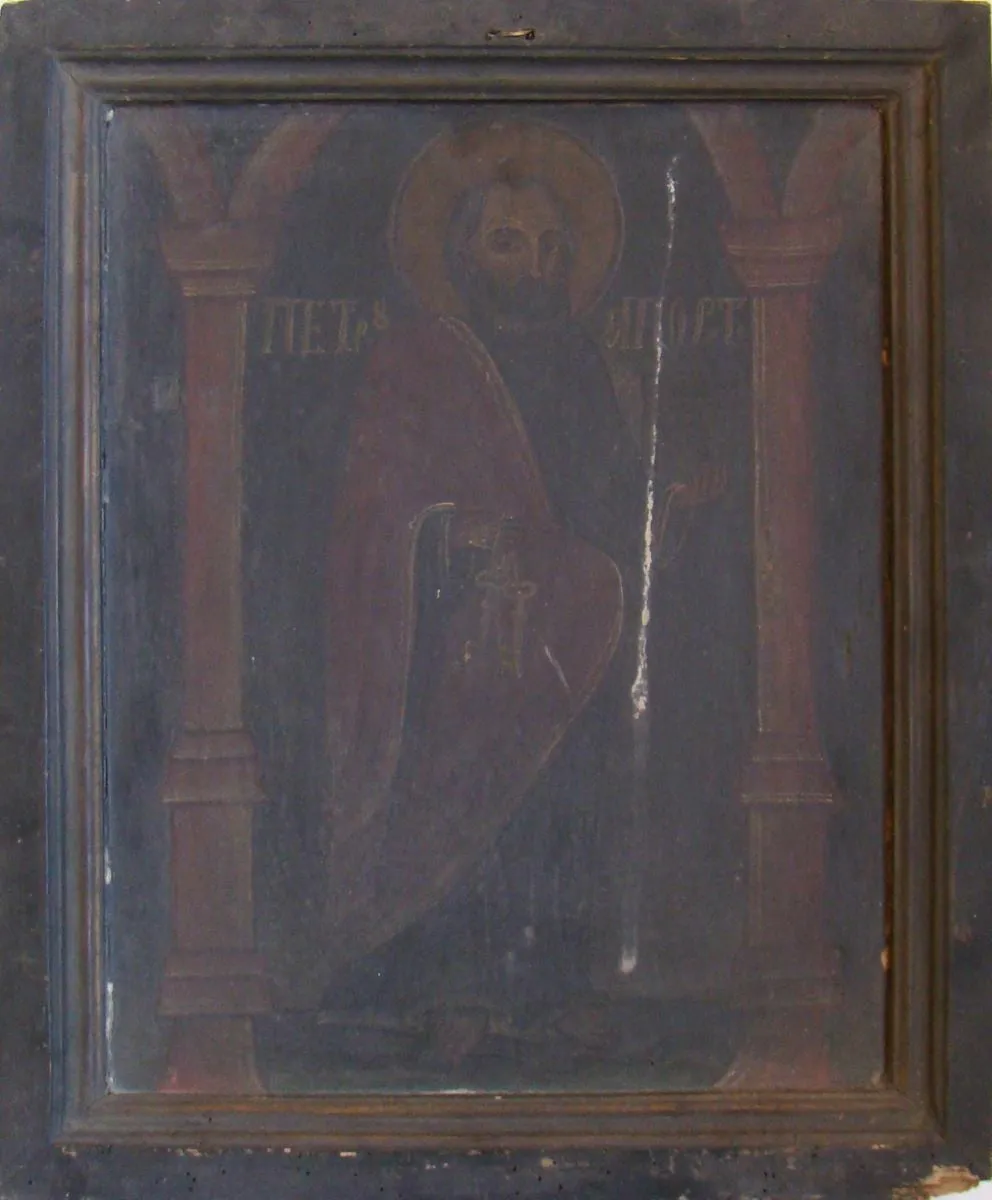
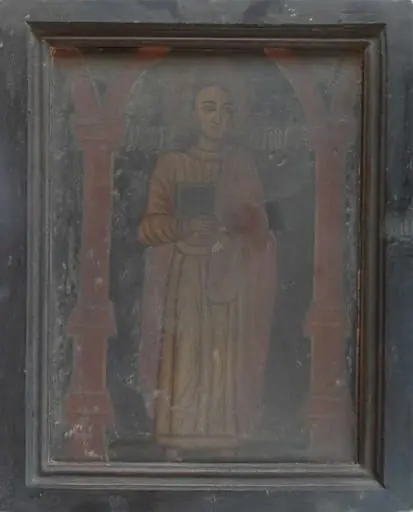
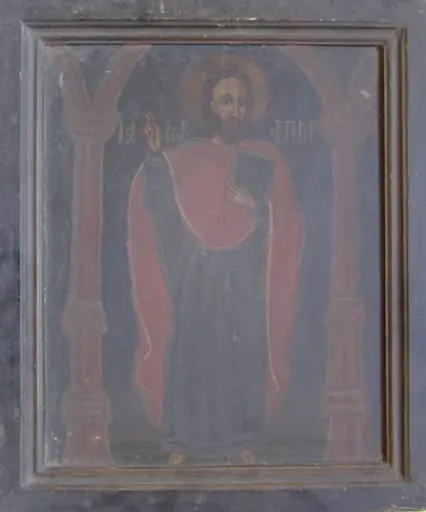
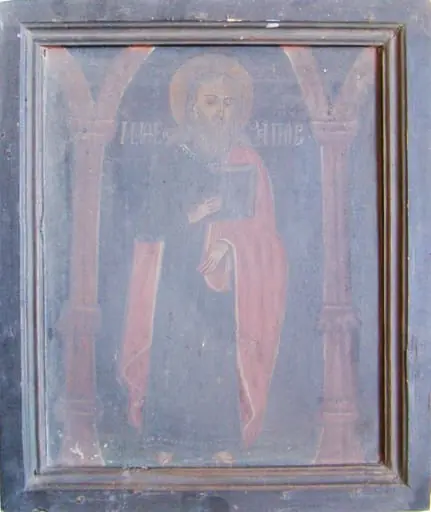
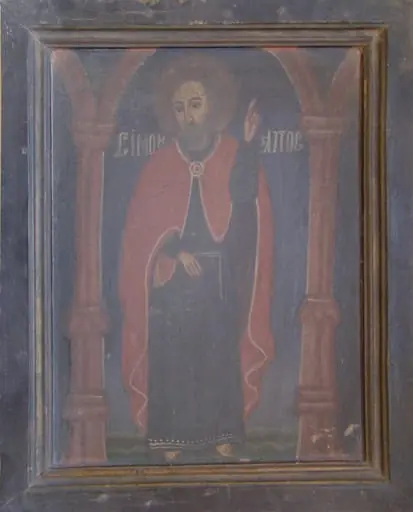
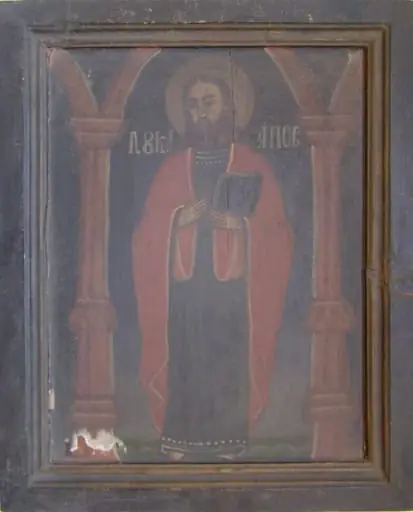
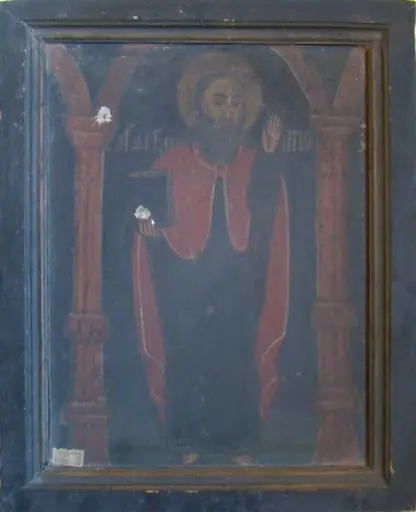
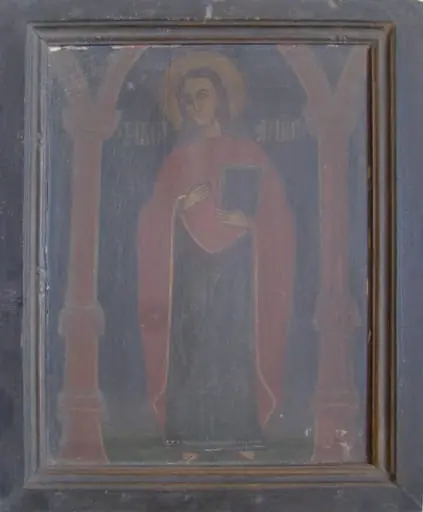
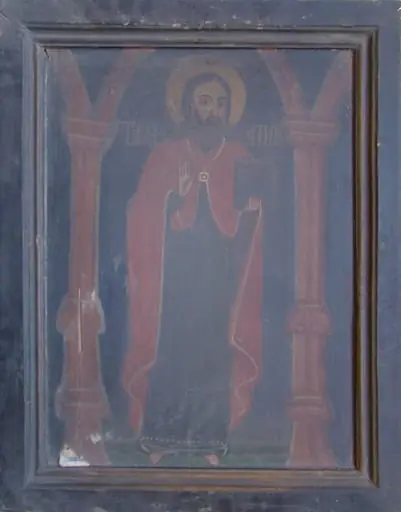
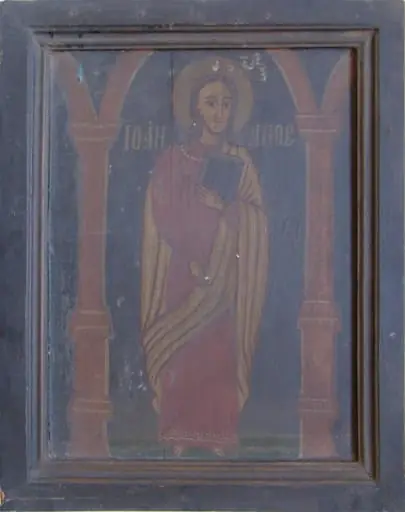
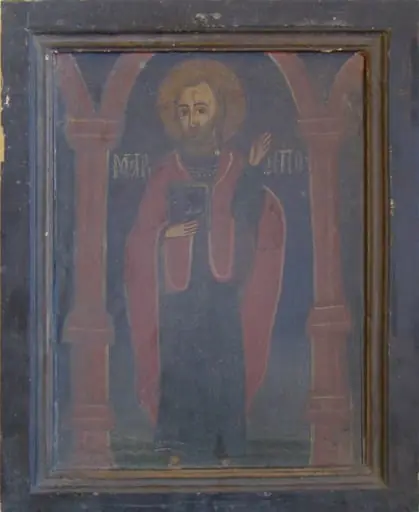
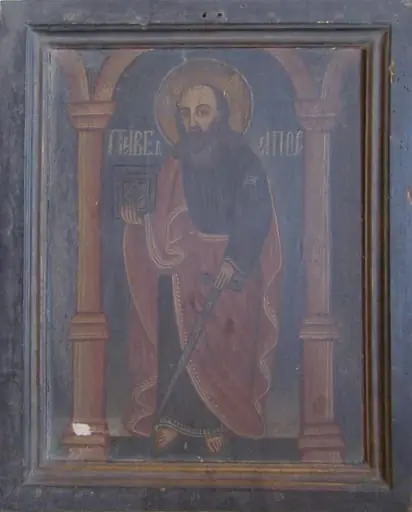
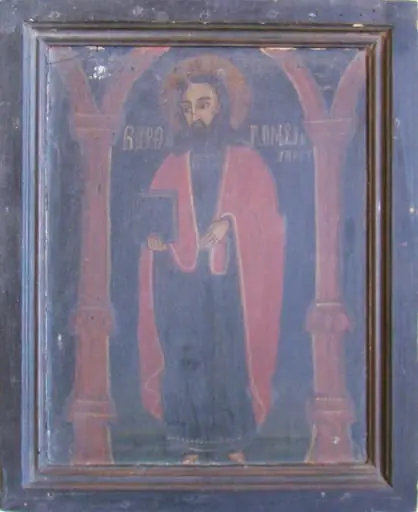
Sf. Apostol Petru is a drawing by Toma Poienaru. It is held in the collection of the Alba Iulia Orthodox Archdiocese. This image depicts Saint Peter, identified by his halo and the inscription above his head.
About this work
Overview
The figure is rendered in a flat, non-naturalistic style, with minimal modeling and no use of chiaroscuro.
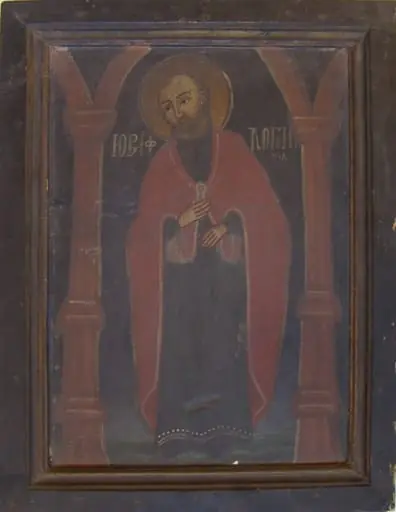
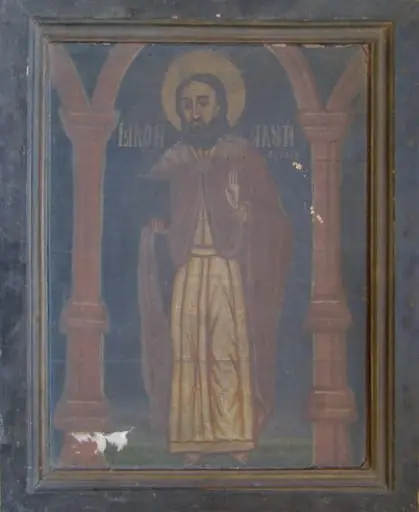
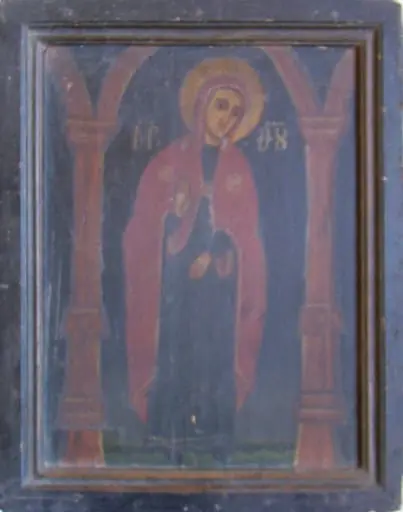
This image depicts Saint Peter, identified by his halo and the inscription above his head. He stands within a narrow architectural frame defined by two columns, set against a deep blue background. The figure is rendered in a flat, non-naturalistic style, with minimal modeling and no use of chiaroscuro. The edges of the frame show signs of age, suggesting the work’s historical use and handling over time.
Subject & Meaning
The figure represents Saint Peter, one of Christ’s apostles and traditionally regarded as the first pope. His holding of a scroll or book symbolizes his role as a transmitter of sacred teachings. The halo affirms his sanctity, while the formal, static pose and inscribed title reflect liturgical or devotional use, likely intended for private prayer or veneration in a religious setting.
Technique & Style
The painting employs a rigid, linear approach with no shading or perspective to model form. Facial features are simplified, and the drapery is rendered with minimal folds, emphasizing symbolic presence over realism. The background’s uniform blue enhances the figure’s isolation and spiritual focus. The use of fine, parallel lines—possibly cross-hatching—suggests an attempt to imply texture or depth through pattern rather than volume.
History & Provenance
Though exact origins are unrecorded, the style and materials align with late medieval or early Renaissance devotional panels from Eastern or Balkan traditions. The worn frame edges indicate repeated handling, possibly as part of a household altar or portable icon. The script above the head, though undeciphered here, would have been legible to contemporary viewers as a devotional identifier.
Context
Created in a period when religious imagery served as a bridge between the faithful and the divine, this image reflects the enduring tradition of iconography in Orthodox and Byzantine-influenced communities. Its compact size and frontal composition suggest it was meant for personal devotion rather than public display, consistent with practices in monastic or domestic settings during the late medieval era.
Legacy
This work exemplifies the continuity of stylized religious representation long after the rise of naturalism in Western art. Its preservation, despite physical wear, underscores its enduring spiritual function. Such images remain valuable as artifacts of belief systems that prioritized symbolic truth over visual realism, influencing later iconographic traditions in Eastern Christianity.
Artist & collection
Artist
Toma Poienaru painted Christian religious scenes at a time when drawing and painting on paper were common for devotional prints.