Artwork
Nicolas Parfait
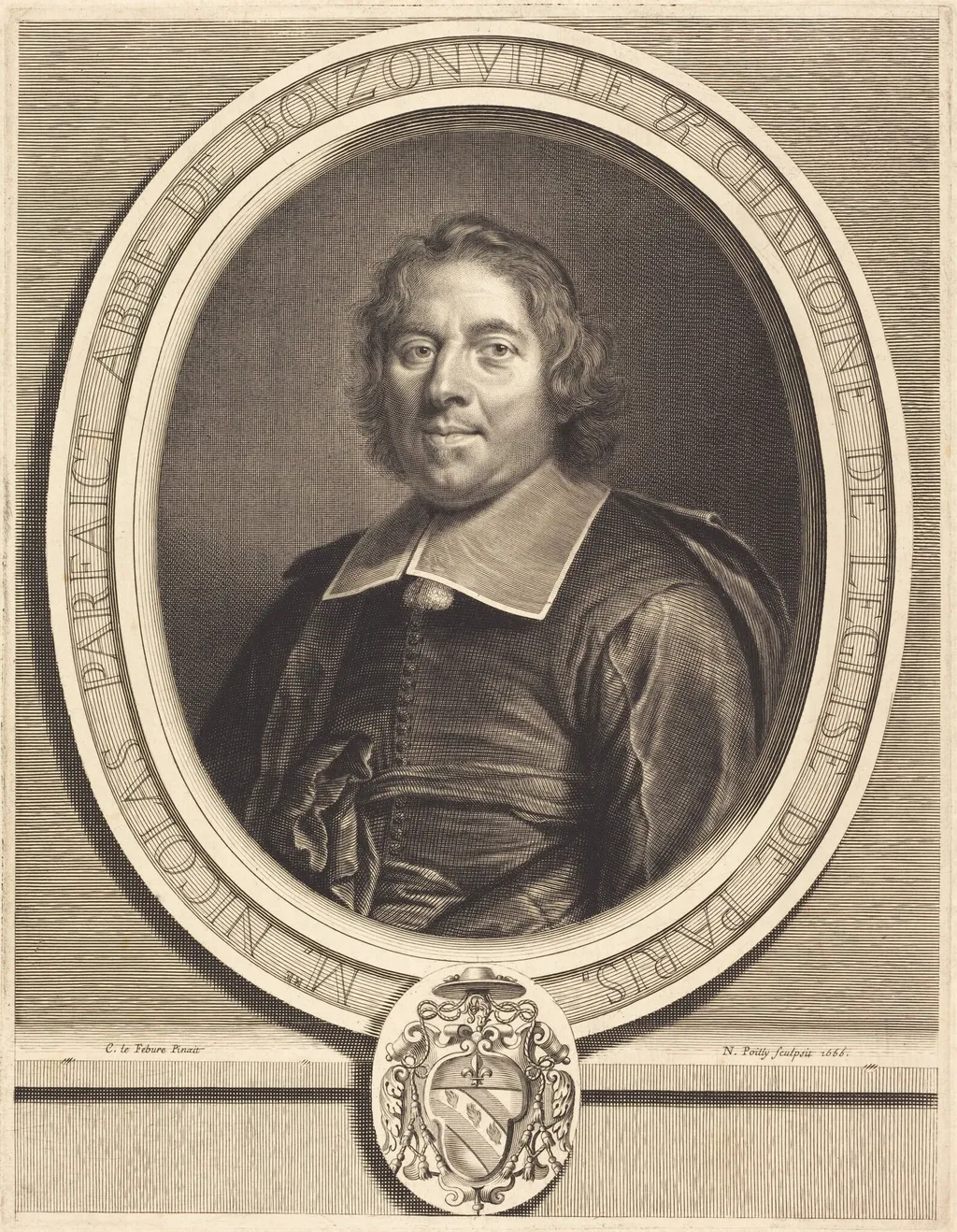
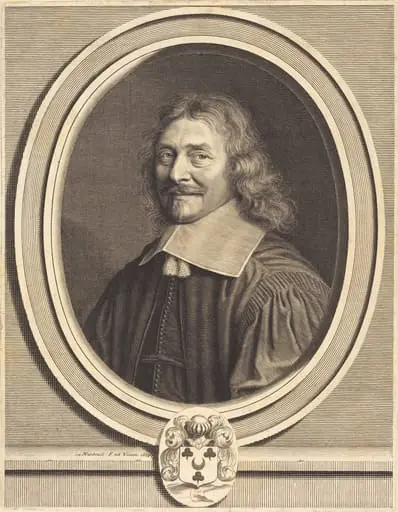
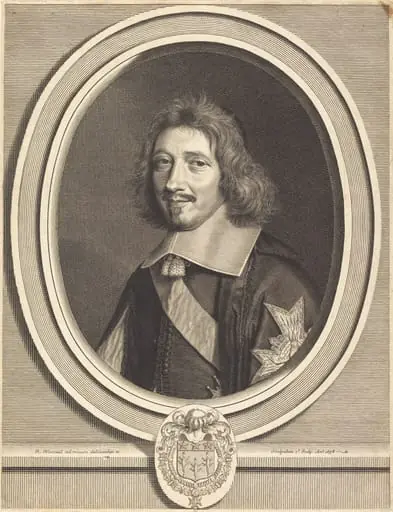
Nicolas Parfait is an ink print by the Baroque artist Nicolas de Poilly. It dates from 1666 and is held in the collection of the National Gallery of Art.
About this work
Overview
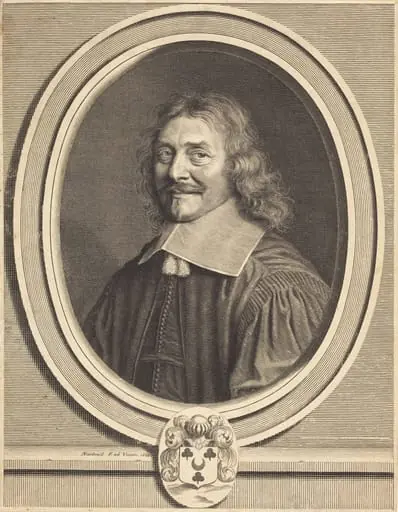
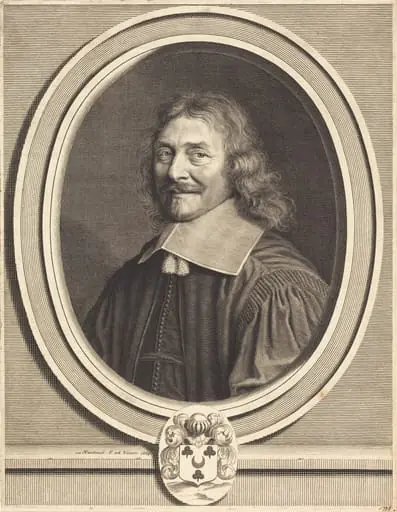
The portrait shows a man in a dark jacket with a white collar, his shoulder‑length wavy hair framing a direct, serious gaze toward the viewer.
Nicolas de Poilly’s 1666 engraving titled *Nicolas Parfait* presents a solitary male figure framed within a circular border. The portrait shows a man in a dark jacket with a white collar, his shoulder‑length wavy hair framing a direct, serious gaze toward the viewer. The background is uniformly dark, emphasizing the sitter’s features, while the rim of the circle bears an inscription and a heraldic coat of arms at its lower edge.
Subject & Meaning
The work depicts an individual, likely of some social standing, as suggested by the formal attire and the presence of a coat of arms. The solemn expression and straightforward pose convey dignity and authority, typical of 17th‑century portraiture intended to affirm the sitter’s identity and status.
Technique & Style
Executed in intaglio engraving, Poilly employed fine line work to render the textures of fabric, hair, and facial details. The contrast between the deep black background and the illuminated white collar creates a chiaroscuro effect that focuses attention on the face. The circular composition and surrounding text reflect the conventions of commemorative prints of the period.
History & Provenance
Created in 1666, the print is attributed to the French engraver Nicolas de Poilly, a member of a prominent family of printmakers. The inclusion of a heraldic device suggests the work may have been commissioned for a specific patron or family archive, though subsequent ownership records are limited.
Context
The engraving belongs to a broader tradition of French portrait prints that circulated among aristocratic and professional circles in the mid‑17th century. Poilly’s work aligns with contemporary practices of using engraved portraits to document lineage and personal achievement, often accompanied by textual identifiers around the frame.
Artist & collection