Artwork
William, First Duke of Newcastle
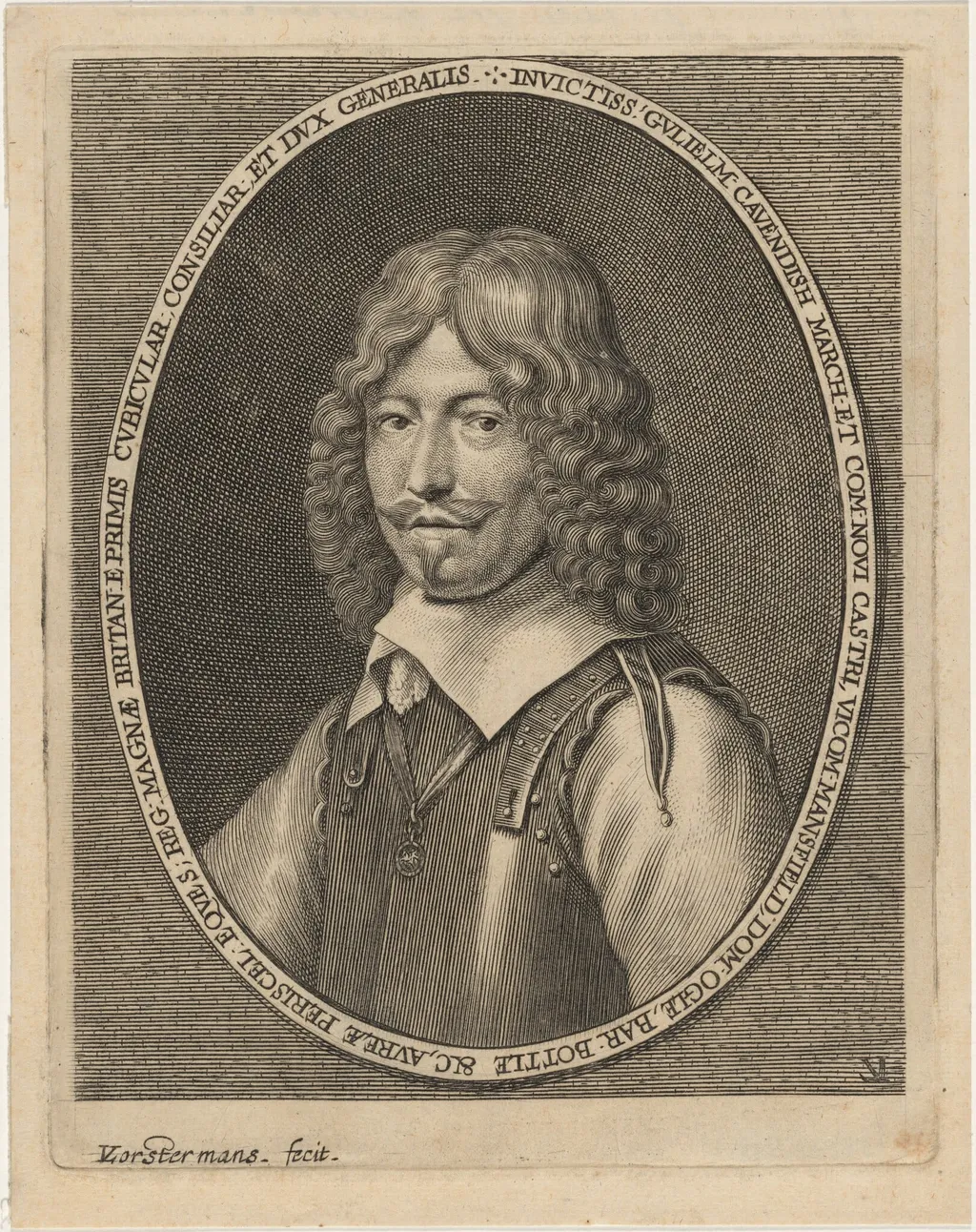
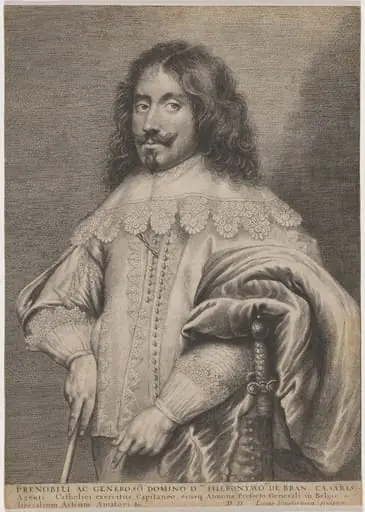
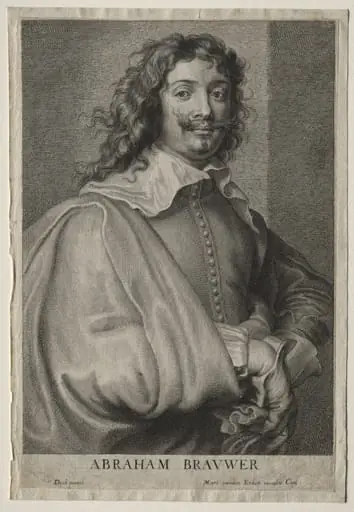
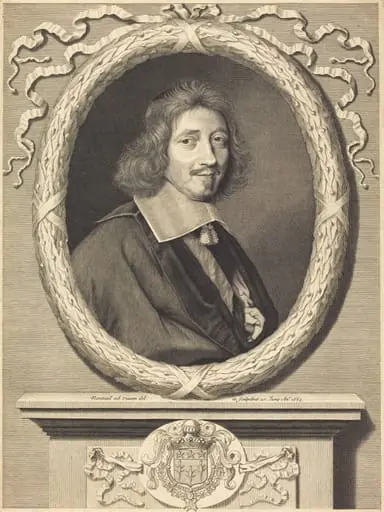
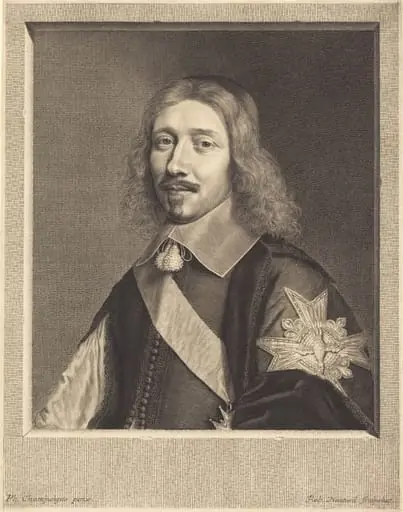
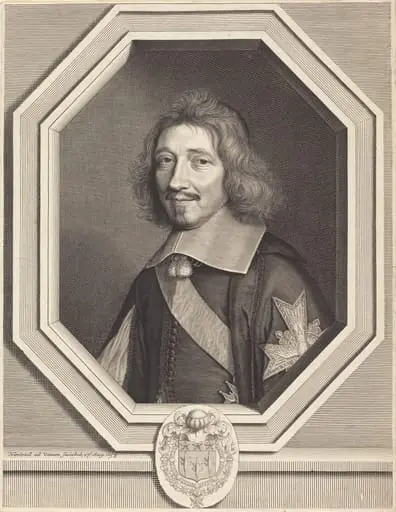
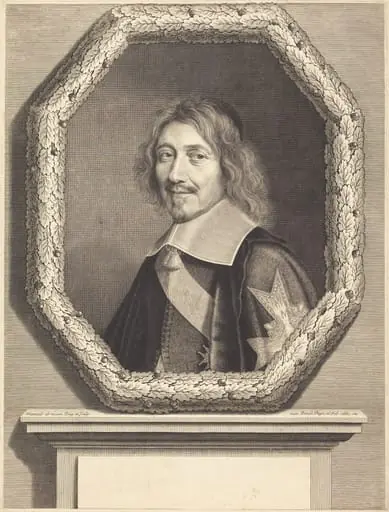
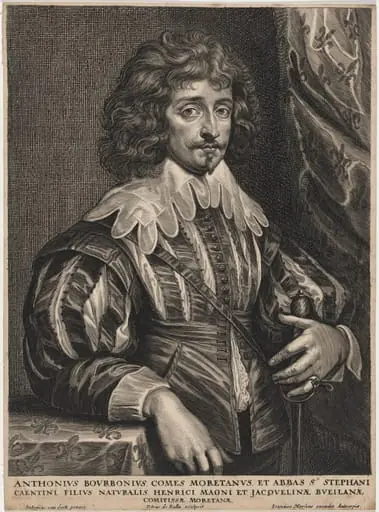
William, First Duke of Newcastle is an ink print by the Renaissance artist Lucas Emil Vorsterman. It dates from 1635 and is held in the collection of the National Gallery of Art.
About this work
Overview
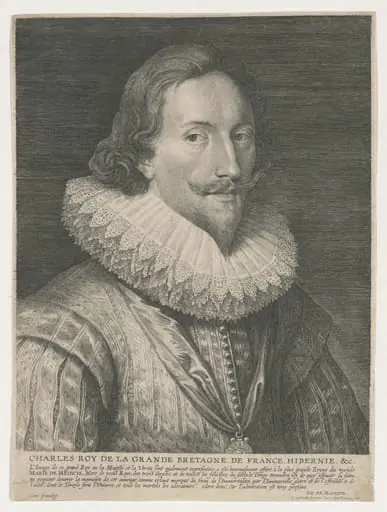
This 1635 engraving by Lucas Emil Vorsterman depicts William Cavendish, the First Duke of Newcastle, as a formal portrait in monochrome.
This 1635 engraving by Lucas Emil Vorsterman depicts William Cavendish, the First Duke of Newcastle, as a formal portrait in monochrome. Executed with fine linear precision, the image captures the nobleman in profile view, rendered entirely in ink on paper. The composition emphasizes facial detail against a neutral background, typical of early 17th-century print portraiture aimed at conveying status through restrained elegance.
Subject & Meaning
The Duke of Newcastle, a prominent courtier and military leader under Charles I, is portrayed with solemn composure, reflecting his political and social standing. His direct gaze and tightly controlled expression suggest authority and restraint. The absence of symbolic objects or elaborate settings focuses attention on his personal presence, aligning with the era’s preference for dignified individual representation over allegorical flourish.
Technique & Style
Vorsterman employed dense cross-hatching to model the Duke’s features, creating subtle gradations of light and shadow that lend volume to the face and neck. The ruffled collar and curly hair are rendered with intricate, controlled lines, while the background remains minimal, enhancing the figure’s prominence. This method, rooted in Northern European engraving traditions, prioritizes tonal depth over color, achieving a sculptural effect through line alone.
History & Provenance
Created during the Duke’s rise in royal favor, the engraving likely served as a diplomatic or personal gift among elite circles. Vorsterman, a Flemish artist active in England, was known for his collaborations with portraitists like Van Dyck. This print may have circulated among patrons to reinforce the Duke’s public image, though its early ownership records remain incomplete.
Context
In the 1630s, engraved portraits were a primary means of disseminating likenesses of nobility beyond courtly circles. With printing technology advancing, artists like Vorsterman bridged painting and print, translating oil portraits into reproducible forms. This work reflects the intersection of aristocratic identity and emerging print culture in early Stuart England.
Legacy
Though not widely reproduced today, the engraving exemplifies Vorsterman’s skill in translating three-dimensional form into linear notation. It stands as a representative example of how elite portraiture was adapted for print, influencing later generations of engravers who sought to capture character through meticulous line work rather than color or ornament.
Artist & collection
Artist
etching and engraving by Lucas Vorsterman II, NGA 10762), B1977.14.10539 - Yale etc