Artwork
Battle of the Nudes (2nd state)
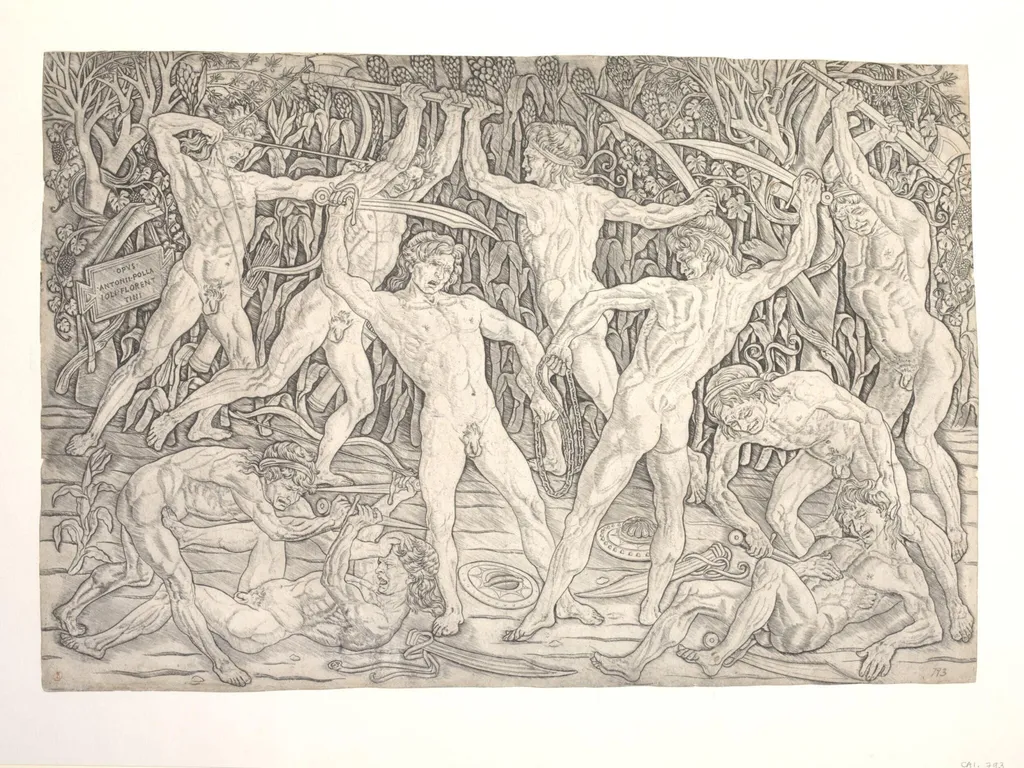
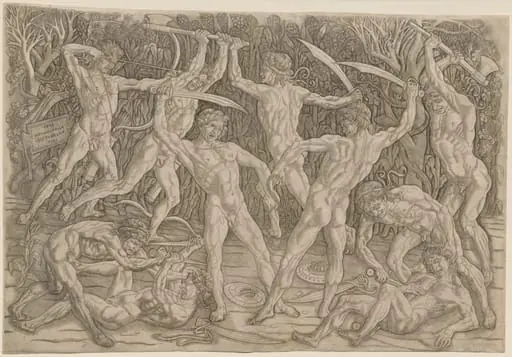
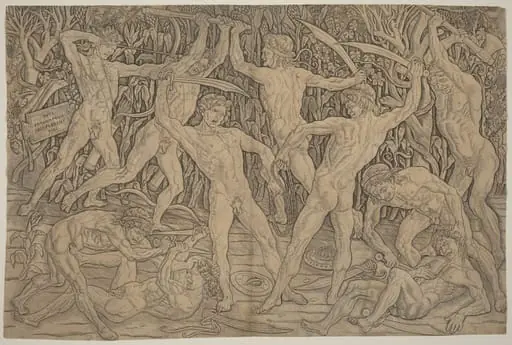
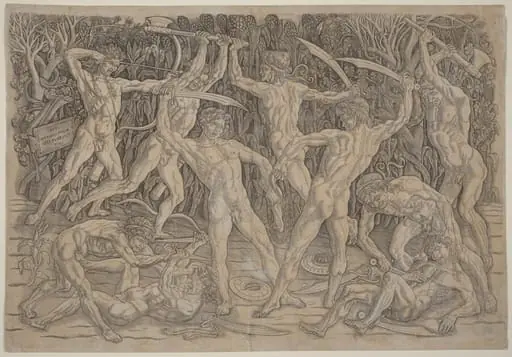
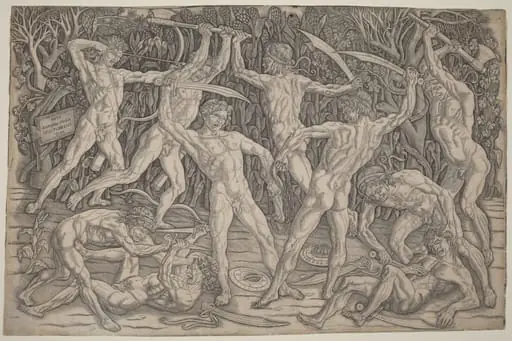
Battle of the Nudes (2nd state) is a print by the Renaissance artist Antonio del Pollaiuolo. It dates from 1468 and is held in the collection of the Victoria and Albert Museum. Created between 1467 and 1470 by Antonio Pollaiuolo, this engraving depicts ten nude male figures locked in violent combat.
About this work
Experts still debate who these men are, what battle this is, or if it even shows a real fight.
Antonio Pollaiuolo made this 1467-1470 engraving of ten nude men fighting. It’s one of the largest Renaissance prints, packed with weapons like bows, swords, and axes. Two shields lie on the ground.
The scene is a mystery. Experts still debate who these men are, what battle this is, or if it even shows a real fight. The artist may have used the image to test his engraving skills.
Look up the engraving process next.
Overview
Created between 1467 and 1470 by Antonio Pollaiuolo, this engraving depicts ten nude male figures locked in violent combat. At over 35 centimeters tall, it is among the largest prints of its era in Europe. The scene is densely packed with weapons—swords, axes, bows, and a coiled chain—while two shields lie discarded on the ground. It is the first European engraving to bear the artist’s full name and place of origin, inscribed on a hanging sign, marking a shift toward artist attribution.
Subject & Meaning
The identity of the figures and the nature of their conflict remain unresolved. No historical text or event definitively corresponds to the scene. Theories suggest it may reference classical mythology, ancient athletic contests, or allegorical representations of human struggle. The absence of armor or contextual details removes any clear narrative, leaving interpretation open. The nudity and aggression may serve as a study of physical tension rather than a depiction of a specific battle.
Technique & Style
Pollaiuolo employed fine, incised lines to render muscular anatomy with precision, emphasizing contour and dynamic movement. The figures are arranged in overlapping, mirrored compositions, particularly evident in the central pair gripping the chain. The engraving’s complexity lies in its dense patterning of lines, capturing both texture and motion. The aggressive postures and strained expressions convey visceral energy, showcasing the artist’s mastery of the human form under duress.
History & Provenance
The print emerged during a period of renewed interest in classical antiquity and anatomical study in Florence. Pollaiuolo, known for his work across multiple media, likely produced this as a technical demonstration for fellow artists. Its survival in multiple impressions suggests it was circulated among artists and collectors. The inclusion of his signature on the print reflects a growing cultural value placed on individual artistic identity in the late 15th century.
Context
In mid-Renaissance Italy, the nude was increasingly studied as a subject of scientific and aesthetic inquiry. Pollaiuolo’s engagement with anatomy, possibly through dissection, informed his depiction of the body in motion. This print aligns with broader humanist interests in classical ideals, yet its violent theme diverges from typical serene representations. It stands as a unique fusion of artistic ambition, anatomical observation, and the emerging print culture of the time.
Legacy
The engraving became a reference for later artists studying the male form in motion, influencing both printmakers and painters. Its technical sophistication raised the bar for engraving as a serious artistic medium. Though its narrative remains elusive, its formal innovations—particularly in conveying tension through line and posture—secured its place in the development of Renaissance graphic arts and the study of the human body in art.
Artist & collection
Artist
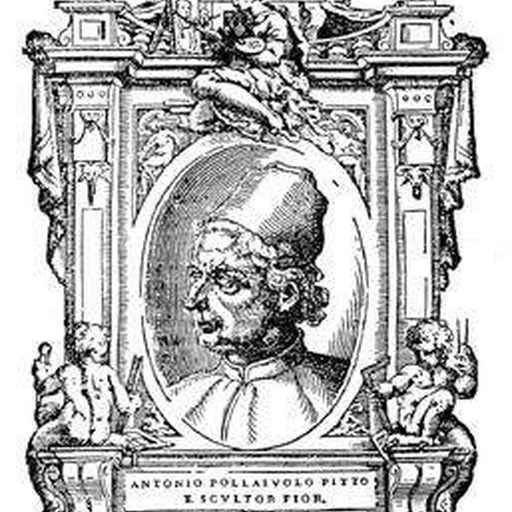
Antonio del Pollaiuolo (UK: POL-eye-WOH-loh, US: POHL-, Italian: ; 17 January 1429/1433 – 4 February 1498), also known as Antonio di Jacopo Pollaiuolo or Antonio Pollaiuolo (also spelled Pollaiolo), was an Italian…