Artwork
Floarea soarelui
Floarea soarelui is a print by Popa Nicolae. It dates from 1931 and is held in the collection of the Moldova National Museum Complex.
About this work
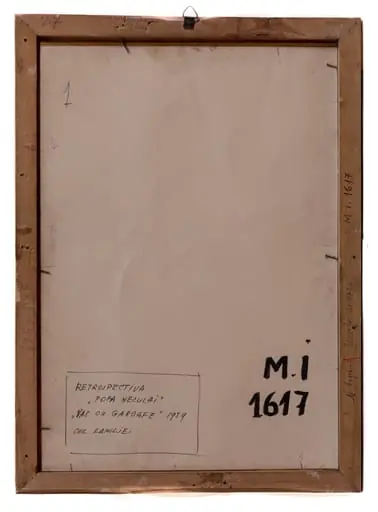
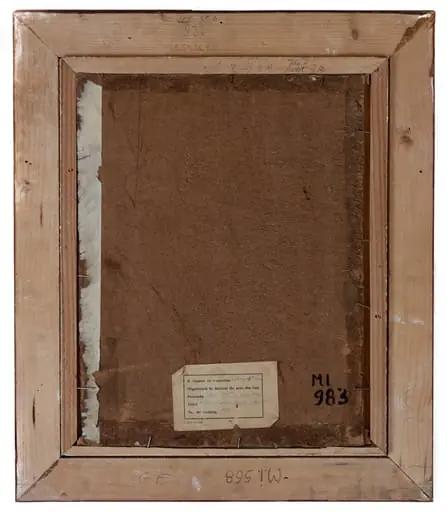
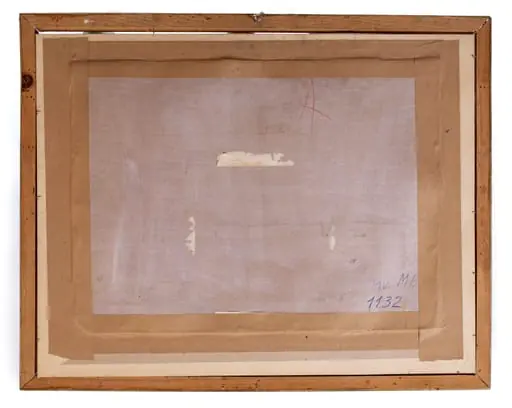
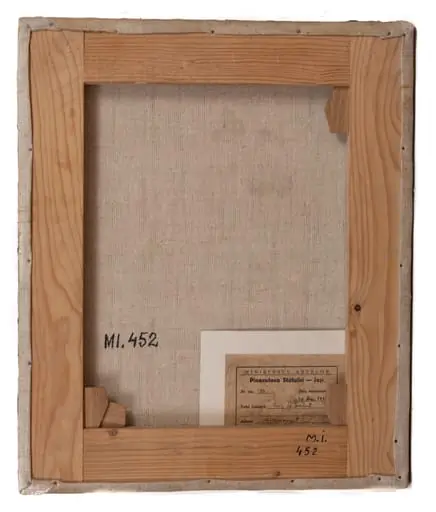
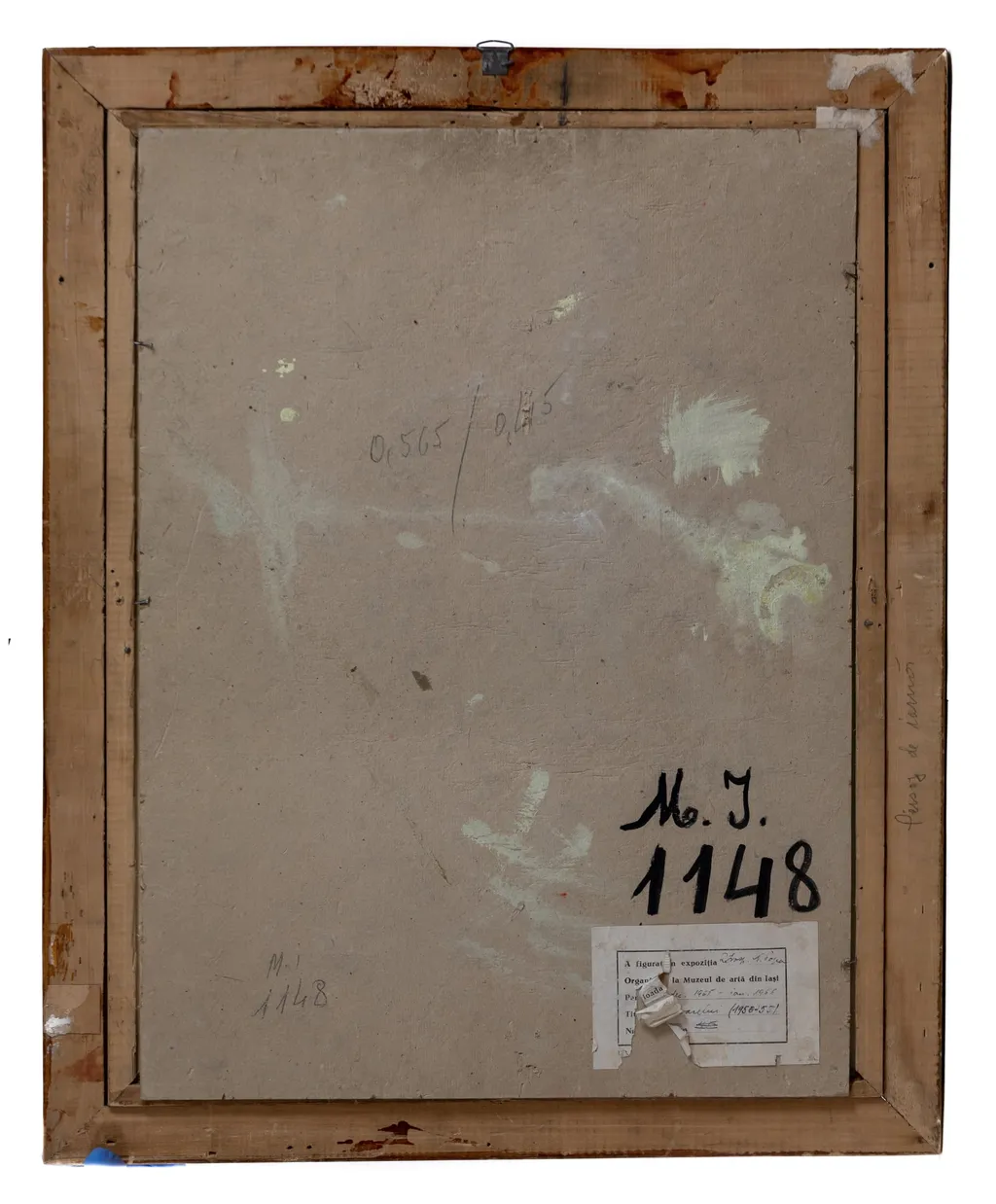
The canvas has a label with the number "1148" and a small paper tag, likely from a museum.
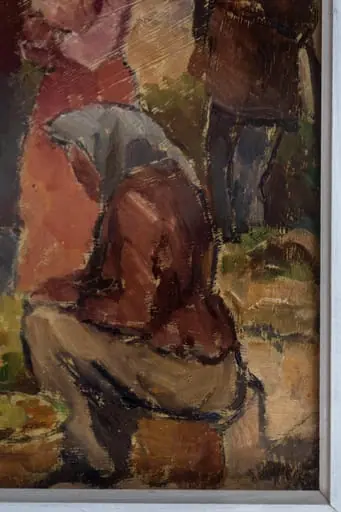
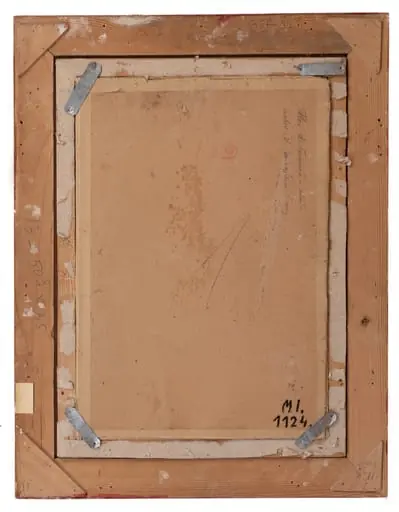
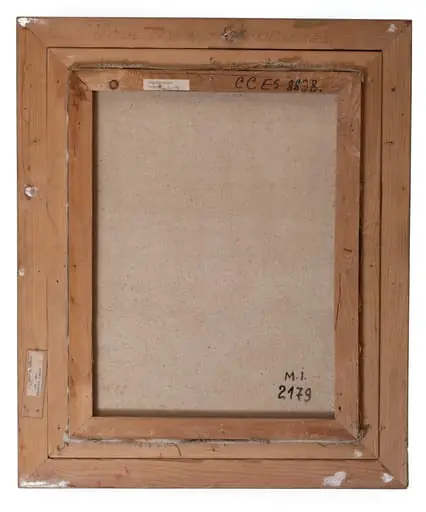
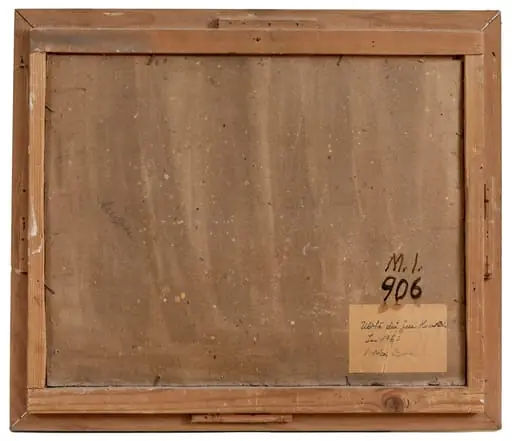
This is a blank canvas with faded paint marks. The surface shows light patches of yellow and white, like ghostly brushstrokes. The wood frame is worn, with some scribbles and numbers written in ink.
The canvas has a label with the number "1148" and a small paper tag, likely from a museum. The paint looks thin and uneven, as if it was never fully finished.
If you’re curious about unfinished artworks, check out impasto.
Overview
Created around 1931 by Popa Nicolae, this work consists of a canvas with minimal, faded pigment—primarily pale yellow and white—suggesting an abandoned or incomplete state. The surface bears faint traces of brushwork, barely discernible beneath layers of time. The wooden frame is aged, marked with handwritten ink notations, while a museum label and numerical identifier remain affixed, hinting at its archival history.
Subject & Meaning
The title, 'Floarea soarelui' (Sunflower), evokes a botanical subject, yet no clear image of the flower appears. The work resists literal representation, instead offering only spectral remnants of paint. Its ambiguity invites interpretation as a meditation on absence, memory, or the artist’s interrupted process, rather than a depiction of nature.
Technique & Style
The paint is applied thinly and unevenly, with no visible buildup or texture. Brushstrokes are faint and irregular, suggesting hurried or halting execution. The lack of impasto or deliberate layering implies the piece was left in an early stage, possibly abandoned. The surface’s fragility and uneven pigment distribution reflect an unfinished, experimental approach.
History & Provenance
The canvas carries a numbered label ('1148') and a small museum tag, indicating it entered institutional custody at some point. The frame bears inked scribbles, possibly inventory marks or annotations from collectors or handlers. Its survival in this state suggests it was preserved not for its completion, but for its evidentiary value as an artifact of artistic process.
Context
Produced in early 1930s Romania, the work emerges during a period of artistic experimentation and political change. While many contemporaries pursued realism or modernist abstraction, Popa’s fragmentary approach may reflect personal uncertainty, material constraints, or a deliberate rejection of finished form. Its survival in a museum context signals a later recognition of its conceptual significance.
Legacy
Though never completed, the work endures as a quiet testament to artistic process over product. Its preservation challenges conventional notions of artistic value, emphasizing the importance of trace, intention, and impermanence. It now functions as a document of hesitation and unfulfilled vision, resonating with later interest in unfinished or ephemeral art.
Artist & collection
Artist
Romanian printmaker and painter Nicolae Popa filled small canvases and sheets with quiet, precise scenes.