Artwork
Flori - cavaleri
Flori - cavaleri is a print by Popa Nicolae. It dates from 1931 and is held in the collection of the Moldova National Museum Complex.
About this work
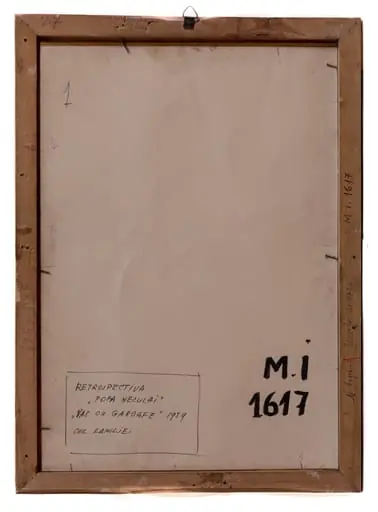
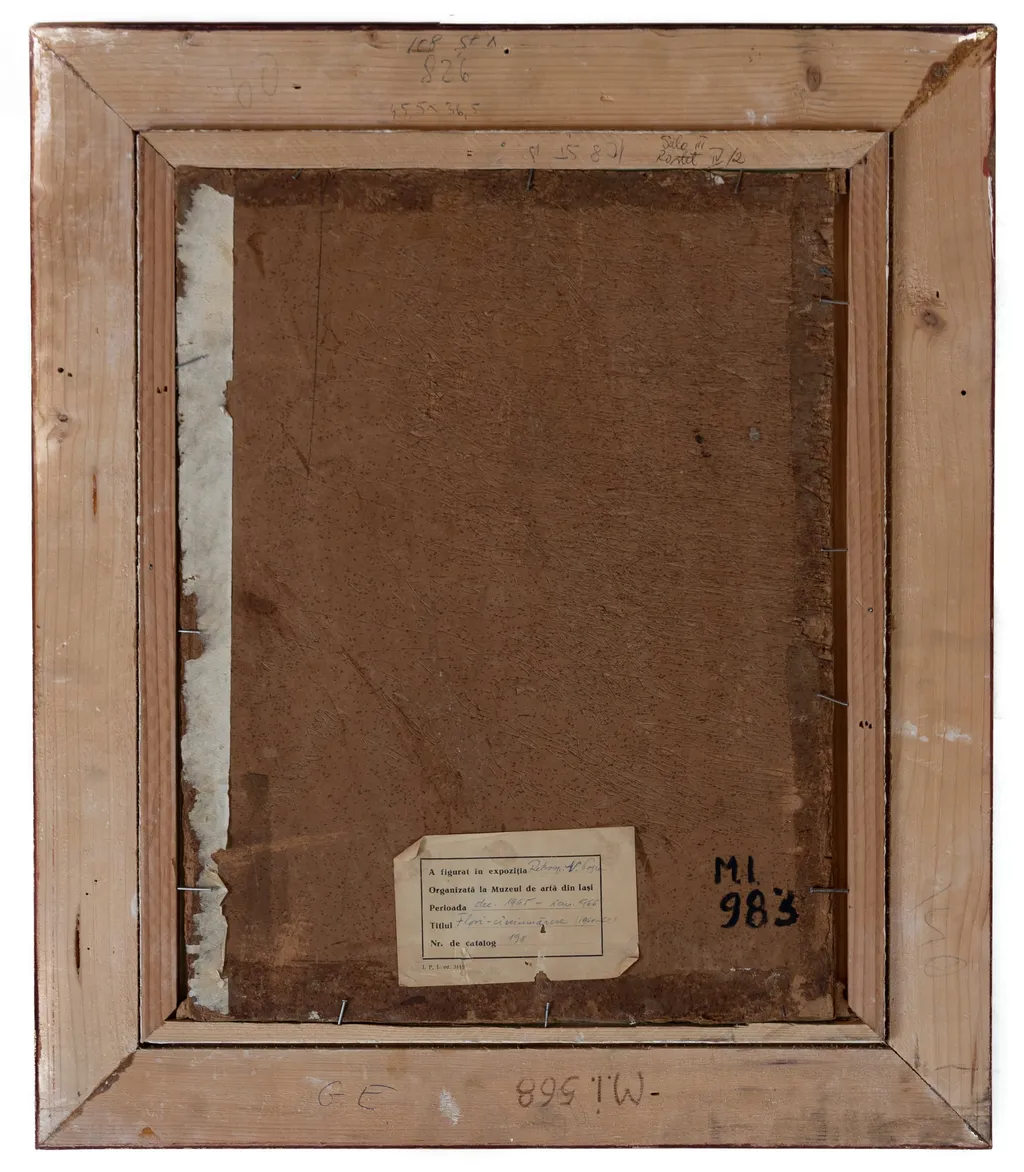
The label mentions an exhibition in 1966 and a title: *Flori - cavaleri* (flowers and horsemen).
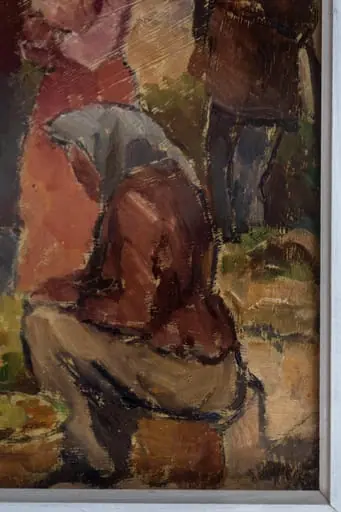
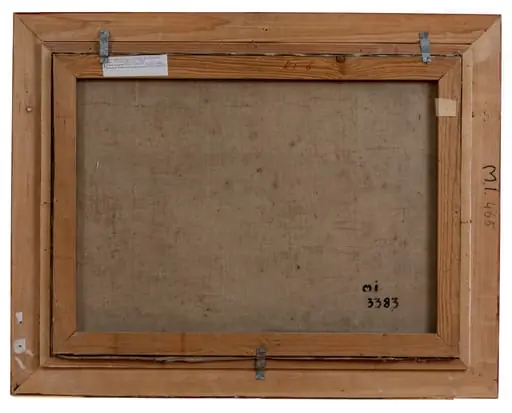
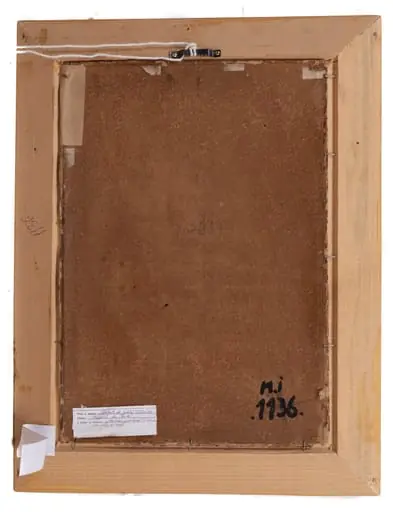
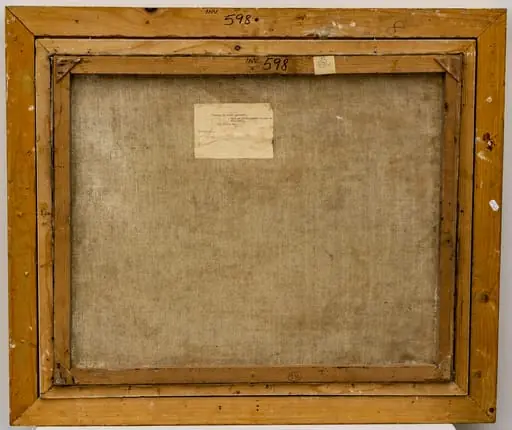
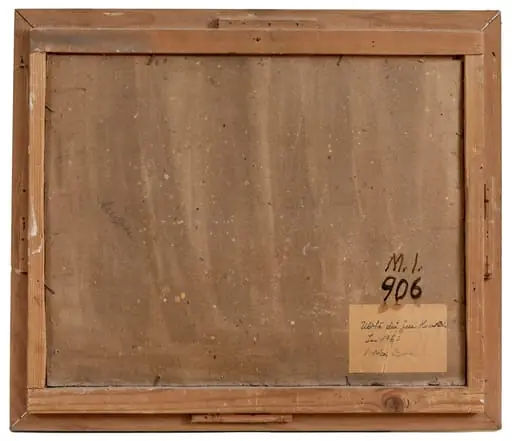
This is an empty wooden frame with a faded brown backing. The paint looks worn, with some peeling on the left side. A small paper label is stuck to the bottom center, but the image itself is missing.
The label mentions an exhibition in 1966 and a title: *Flori - cavaleri* (flowers and horsemen). The frame has numbers and notes written on it, like "M.I. 983" and "8991W-."
Look up Popa Nicolae next to see what their work usually looks like.
Overview
An empty wooden frame, dated circa 1931, bears the title *Flori - cavaleri* attributed to Popa Nicolae. The original image is absent, leaving only the frame and its faded brown backing. Paint along the left edge has peeled away, and a small paper label affixed to the center bottom references a 1966 exhibition. Handwritten notations, including 'M.I. 983' and '8991W-', appear on the frame’s surface, suggesting archival tracking.
Subject & Meaning
The title *Flori - cavaleri*—flowers and horsemen—implies a thematic contrast between natural delicacy and martial presence, common in interwar Romanian visual culture. Without the image, the intended narrative remains speculative. The label’s mention of a 1966 exhibition suggests the work was later contextualized as part of a retrospective or thematic survey, though its original meaning is now obscured by its physical absence.
Technique & Style
No visual composition survives to assess Popa Nicolae’s technique directly. The frame’s worn paint and peeling edges indicate age and possible exposure to environmental conditions. The absence of any surviving pigment or brushwork leaves stylistic analysis to inference, relying on known tendencies in the artist’s other works, which typically featured simplified forms and muted palettes rooted in rural symbolism.
History & Provenance
The frame carries a 1966 exhibition label and handwritten inventory codes, indicating institutional custody at some point after its creation. The work’s current state—devoid of its original image—suggests loss, damage, or deliberate removal. The persistence of the frame and its markings implies it was retained as a relic, possibly for its association with the artist or as a placeholder in a collection.
Context
Popa Nicolae worked during a period when Romanian artists increasingly engaged with national identity through folk motifs and symbolic imagery. The title *Flori - cavaleri* aligns with themes of rural life and historical memory prevalent in early 20th-century Romanian art. The survival of the frame, rather than the image, reflects broader patterns of loss among lesser-documented works from this era.
Legacy
The work exists now as a physical trace rather than a visual artifact. Its empty frame serves as a mute testament to the fragility of artistic records. Without the original image, it functions as an archival fragment, prompting questions about preservation, attribution, and the impermanence of cultural objects in mid-century Romania.
Artist & collection
Artist
Romanian printmaker and painter Nicolae Popa filled small canvases and sheets with quiet, precise scenes.