Artwork
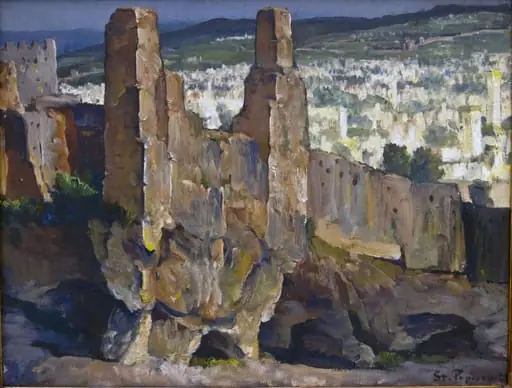
Peisaj în Maroc. Cimitir
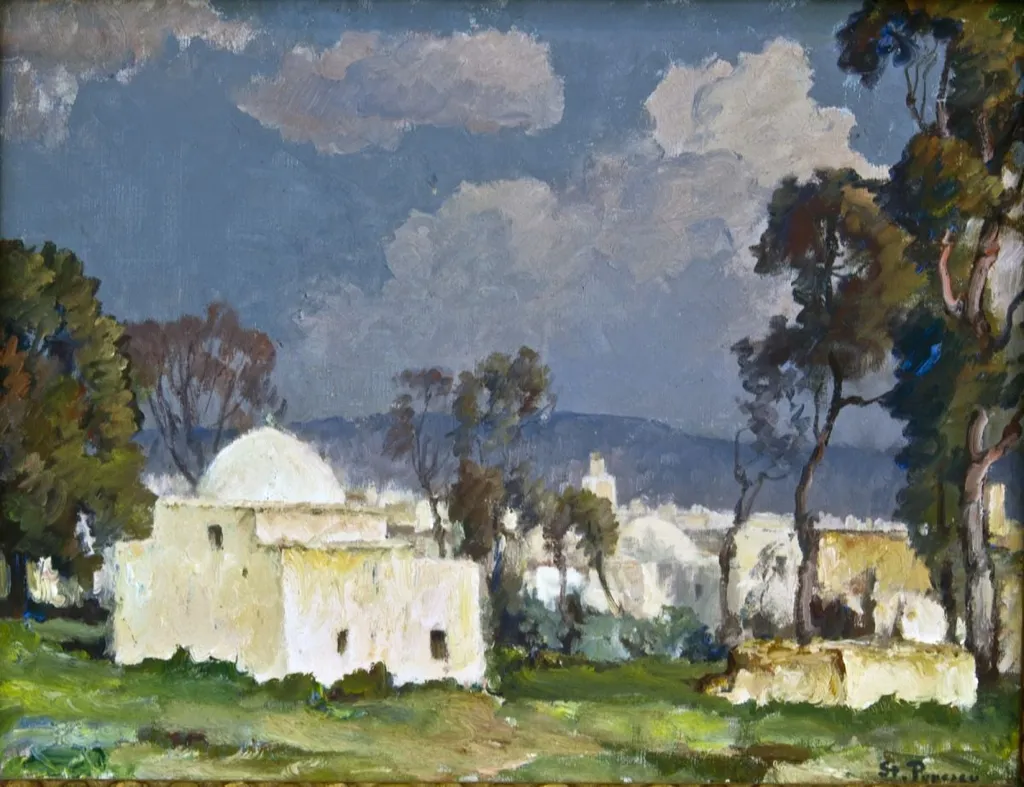
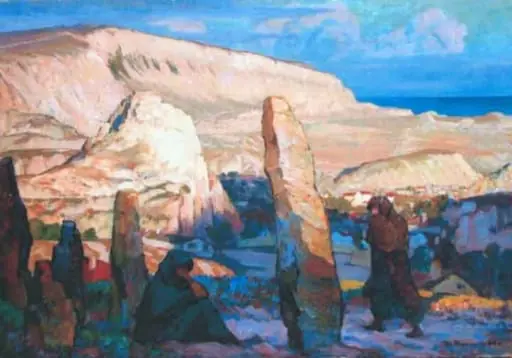
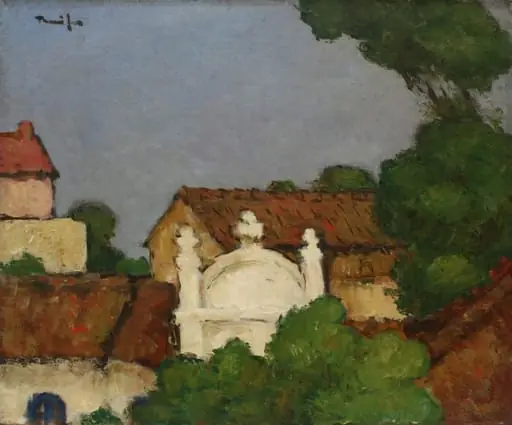
Peisaj în Maroc. Cimitir is a print by Ștefan Popescu. It dates from 1929 and is held in the collection of the National Museum of Art of Romania.
About this work
Overview
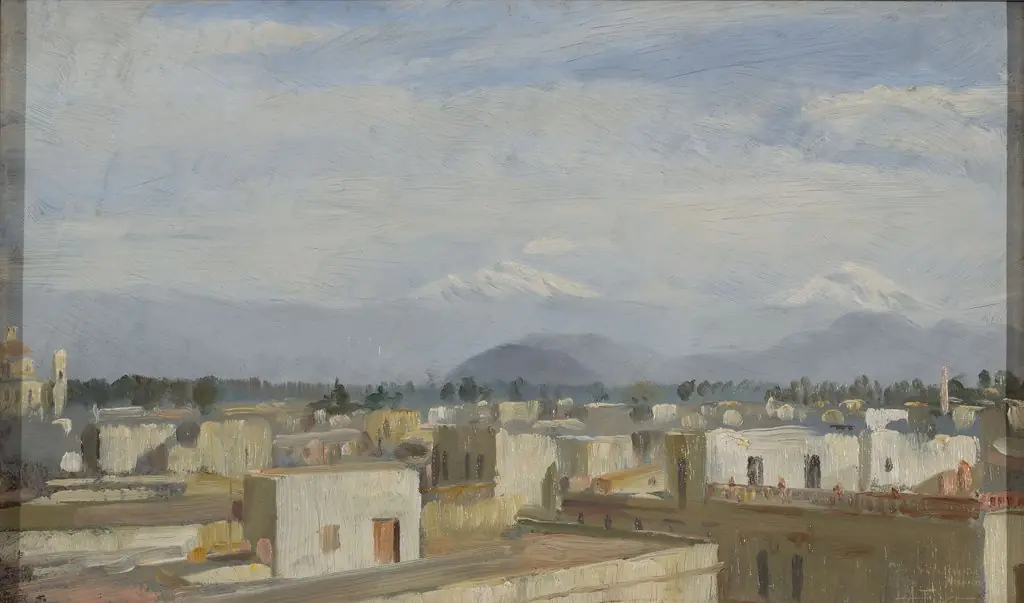
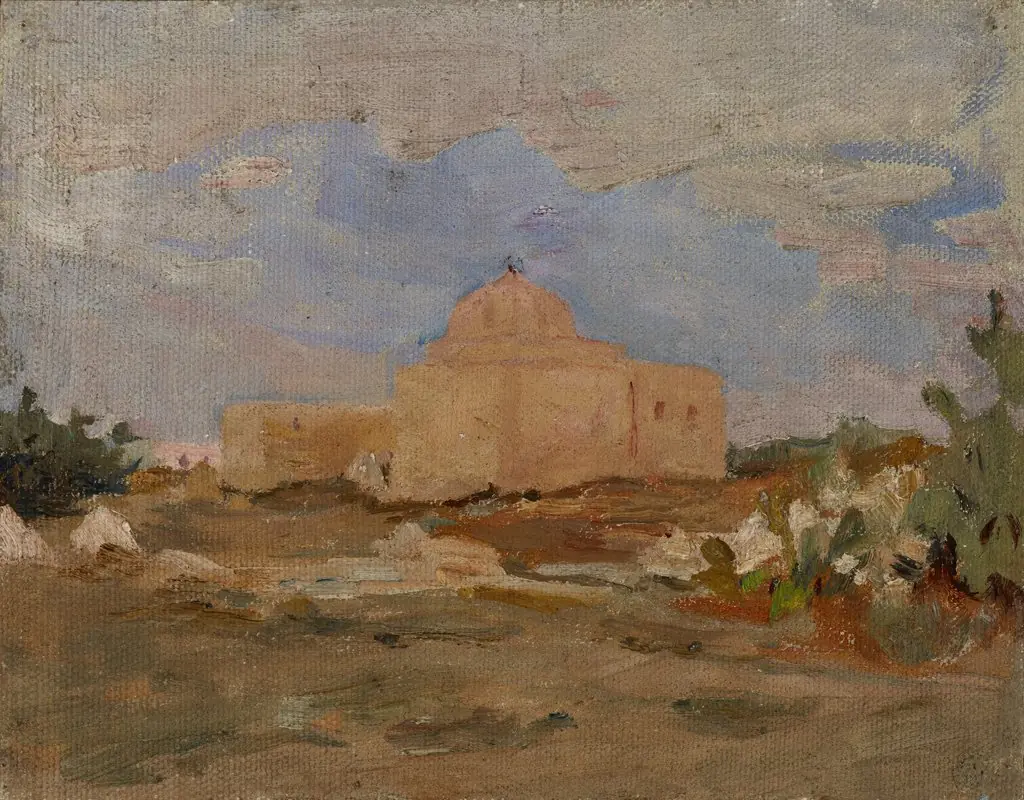
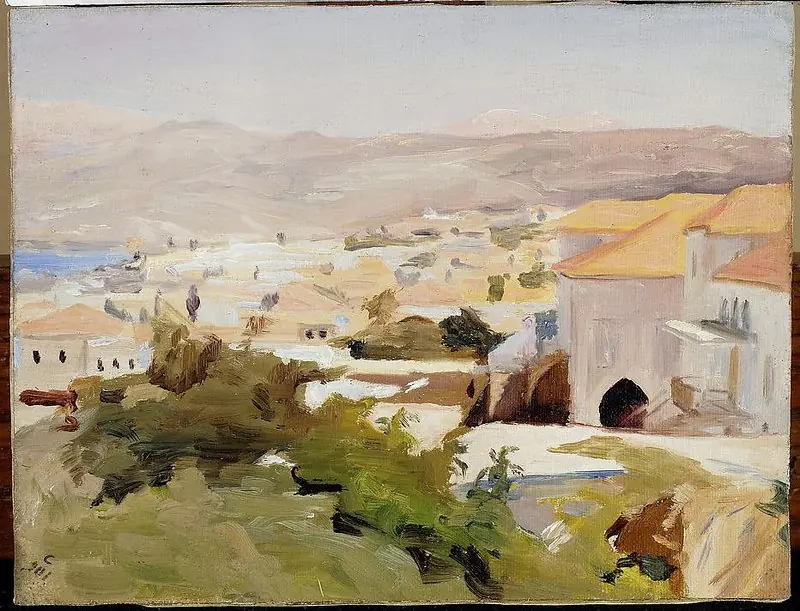
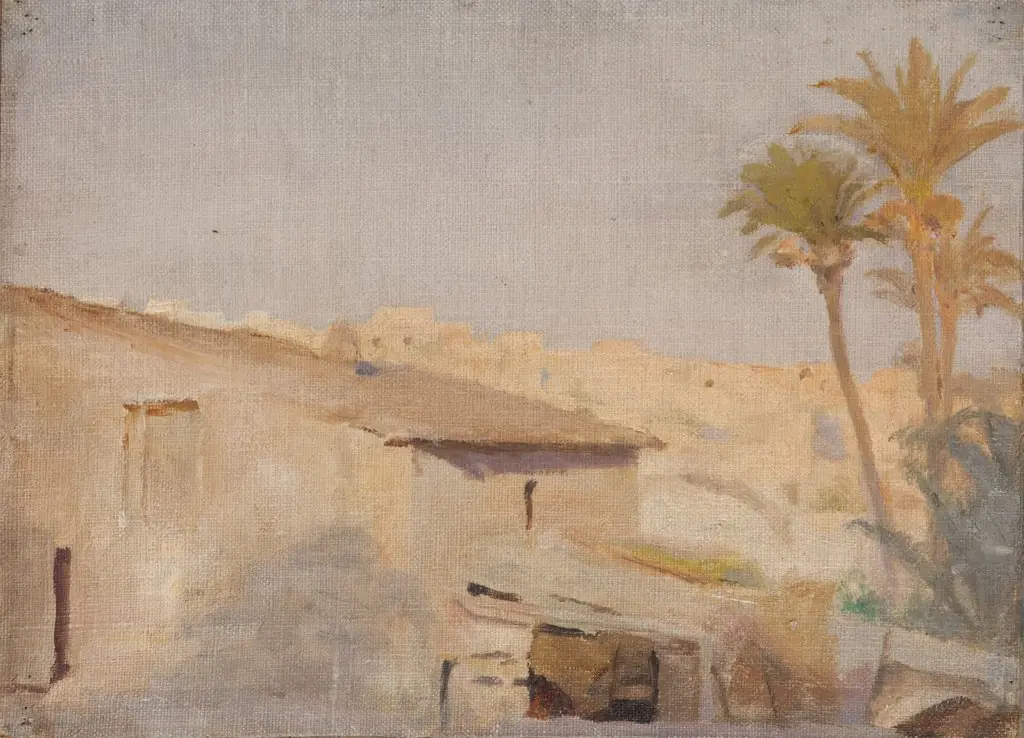
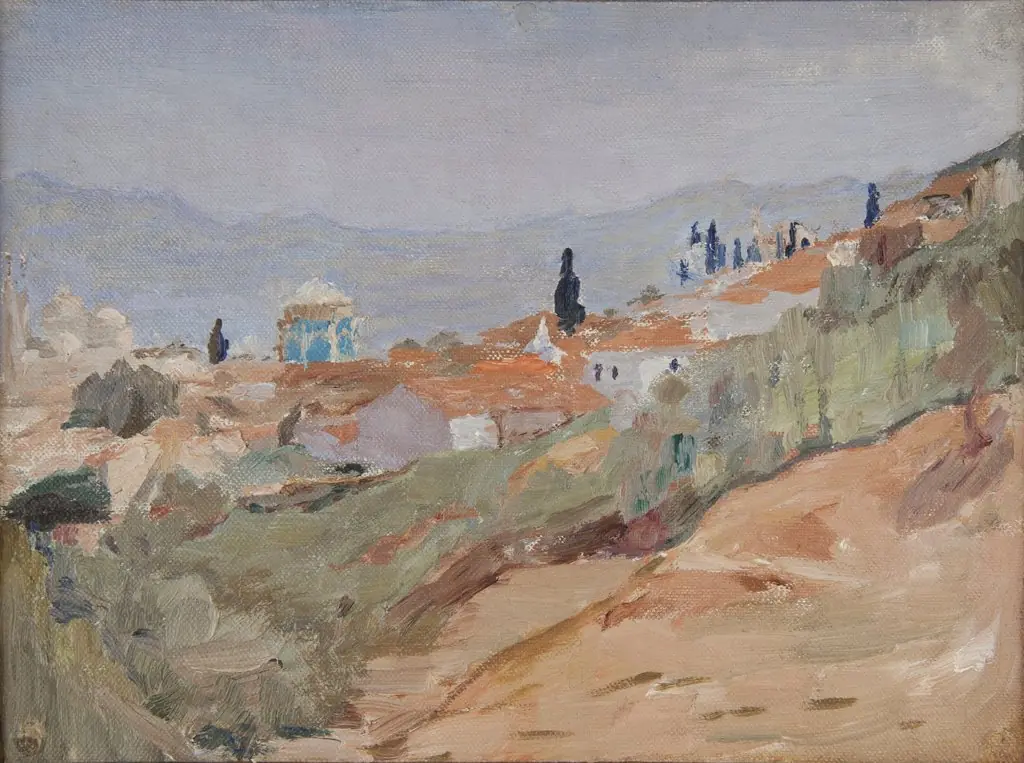
Painted around 1929 by Ștefan Popescu, this work depicts a Moroccan landscape centered on a white-domed structure amid trees and rolling hills. The composition balances natural elements with architectural form, rendered through a loose, energetic brushwork that conveys atmosphere rather than precise detail. Light and shadow play a central role in defining spatial depth and texture.
Subject & Meaning
The white building, likely a mausoleum or religious structure, stands as a quiet focal point within a serene, sunlit cemetery. Its isolation among dense foliage and distant hills suggests themes of stillness and remembrance. The absence of human figures reinforces a contemplative mood, inviting reflection on place, mortality, and cultural specificity in a North African setting.
Technique & Style
Popescu employs a painterly approach with visible, fluid brushstrokes that capture the play of sunlight across surfaces. The contrast between the bright dome and the shadowed trees reflects an interest in chiaroscuro, though not with dramatic intensity. Color is subdued, dominated by earth tones and sky blues, while the loose handling lends a sense of immediacy and atmospheric movement.
History & Provenance
Created during Popescu’s time in Morocco, the painting reflects his engagement with North African landscapes after travels abroad. It belongs to a series of works from this period that document his observations beyond Romania’s borders. The piece remained in private collections until entering institutional holdings, though its exact early ownership remains undocumented.
Context
In the late 1920s, Romanian artists increasingly sought inspiration beyond Europe’s borders, drawn to the light and architecture of Mediterranean and North African regions. Popescu’s work aligns with this trend, echoing broader European modernist interests in exotic locales while maintaining a personal, introspective tone distinct from Orientalist tropes.
Legacy
This painting contributes to Popescu’s reputation as a bridge between Romanian academic traditions and modernist experimentation. While not widely exhibited, it remains a significant example of early 20th-century Romanian travel painting, offering insight into how artists interpreted foreign landscapes through a lens of quiet observation rather than spectacle.
Artist & collection
Artist
Ștefan Popescu painted quiet scenes from the 1920s, blending everyday places with soft light.