Artwork
A Coffee House at Chemlane
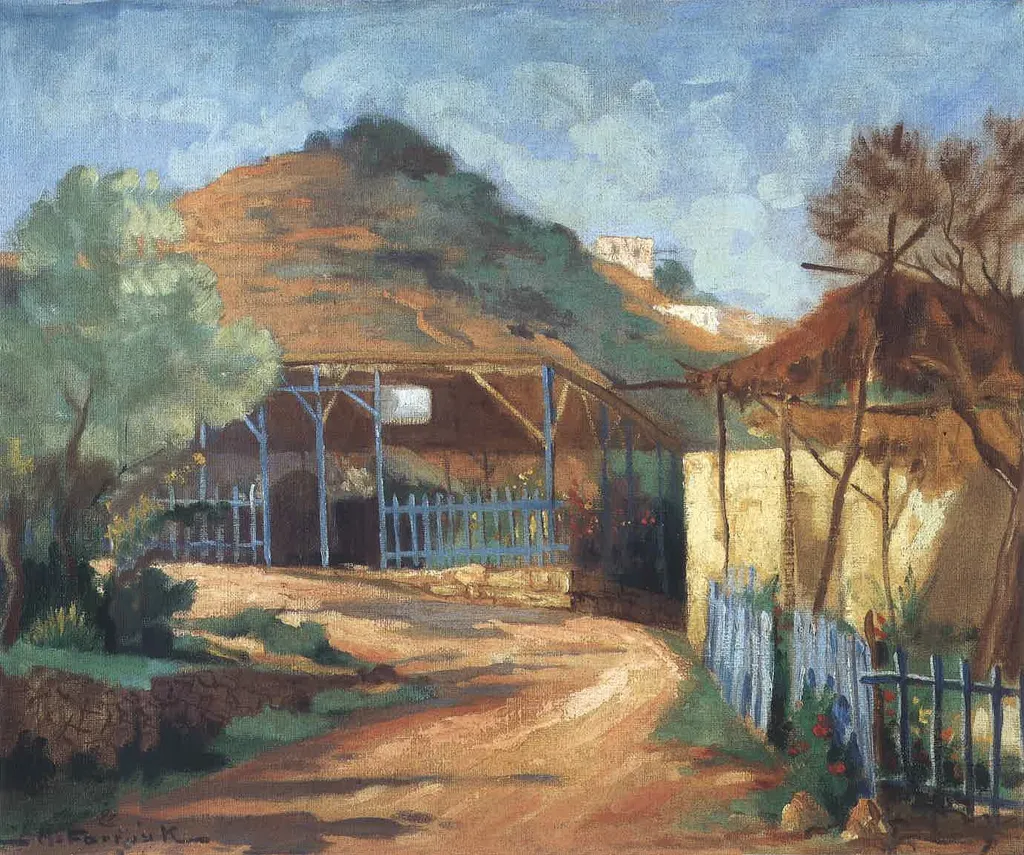
A Coffee House at Chemlane is an oil painting by Moustafa Farroukh. It dates from 1939 and is held in the collection of the Sursock Museum.
About this work
Overview
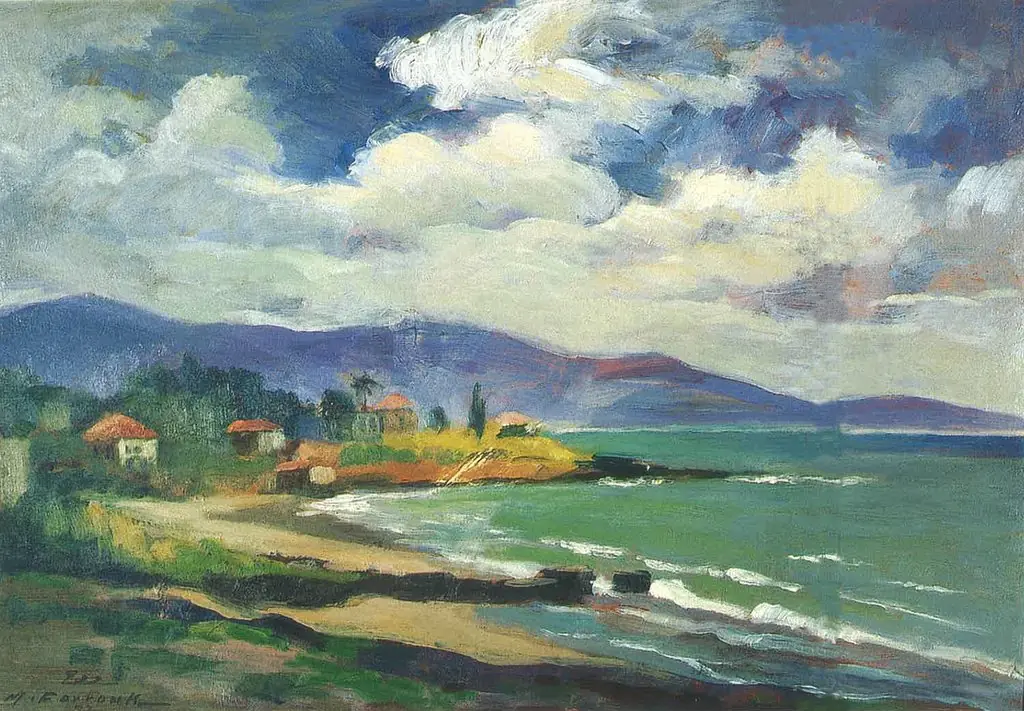
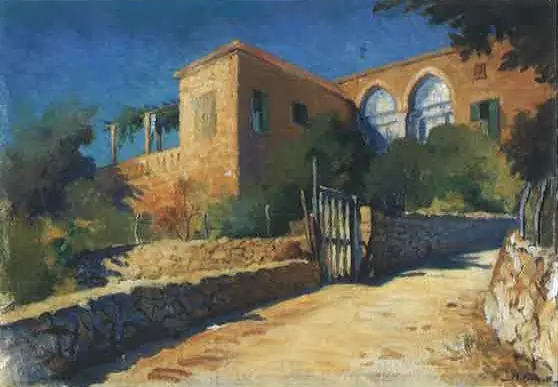
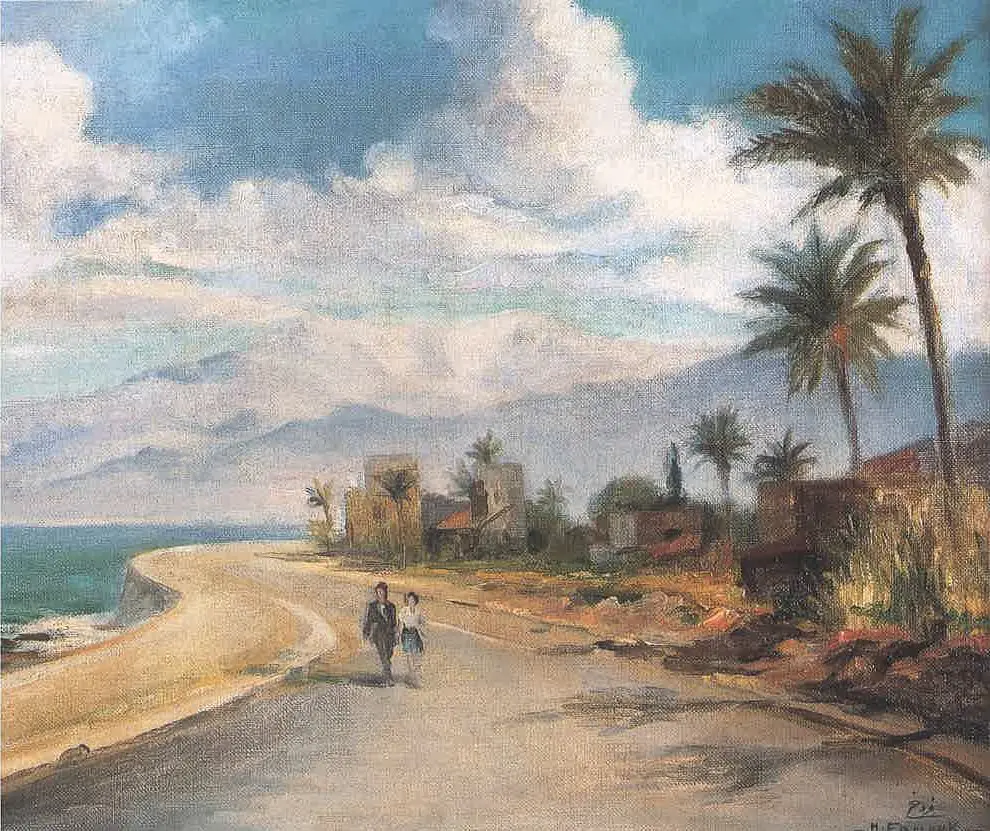
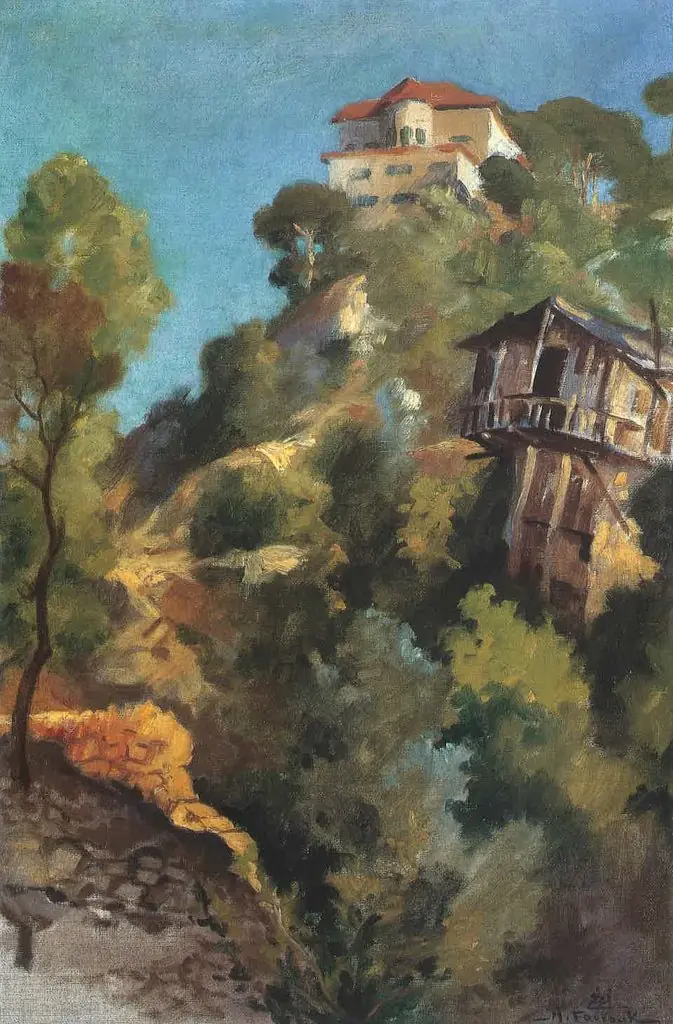
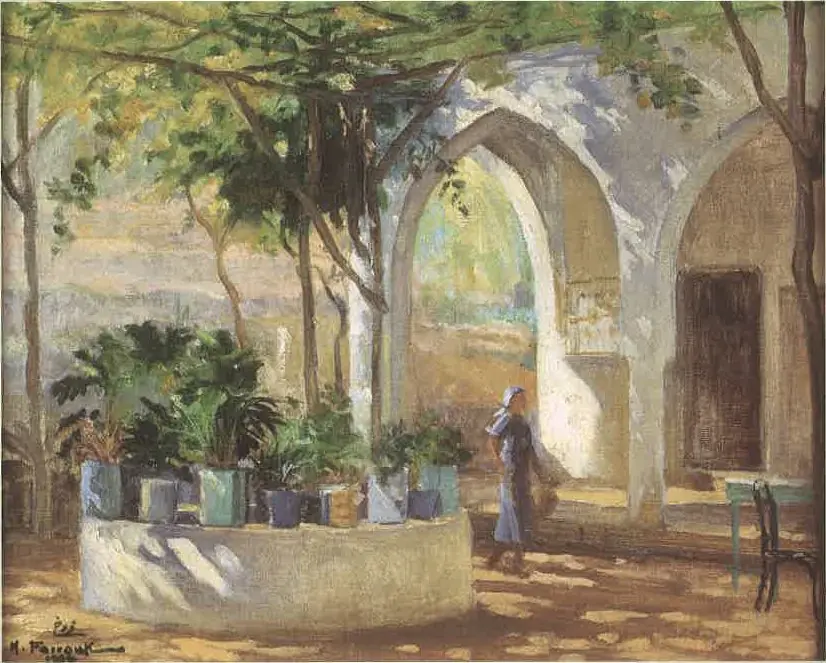
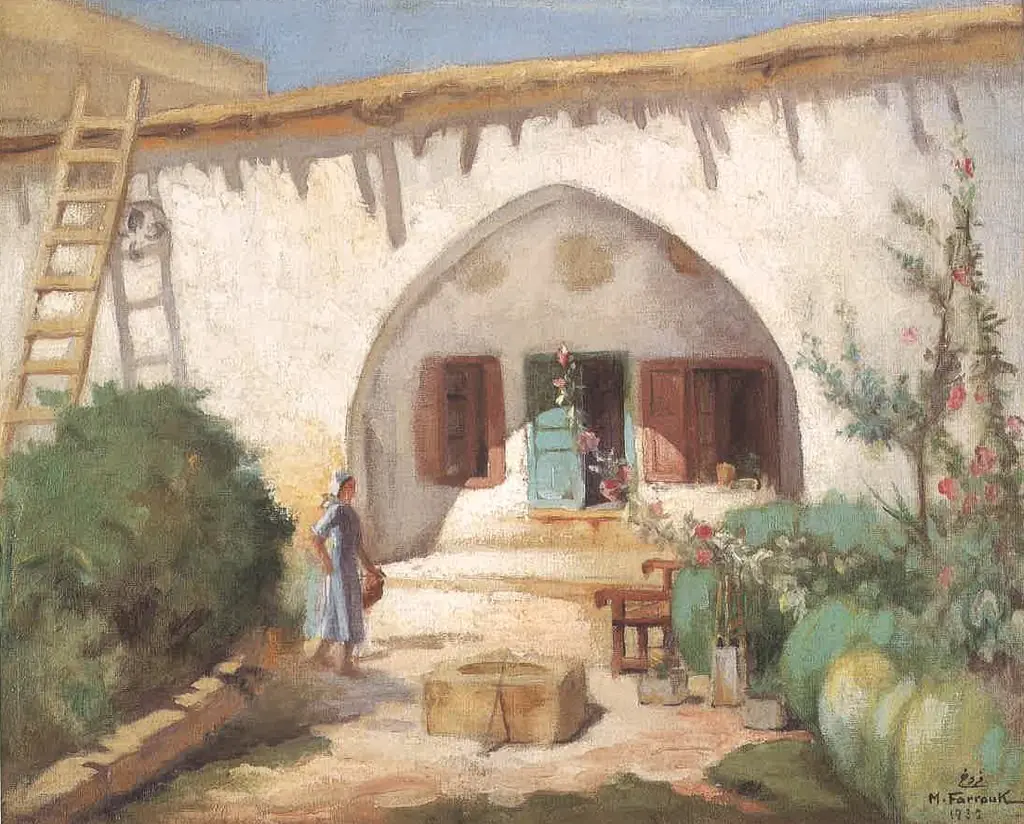
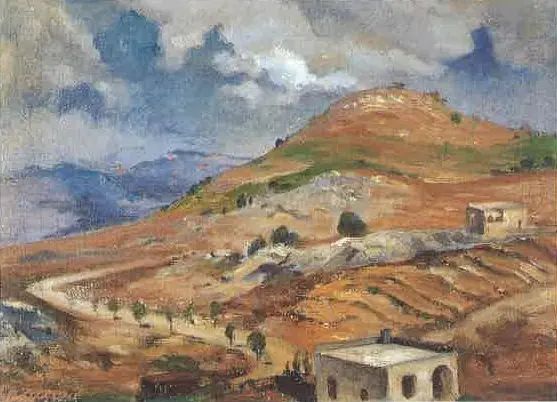
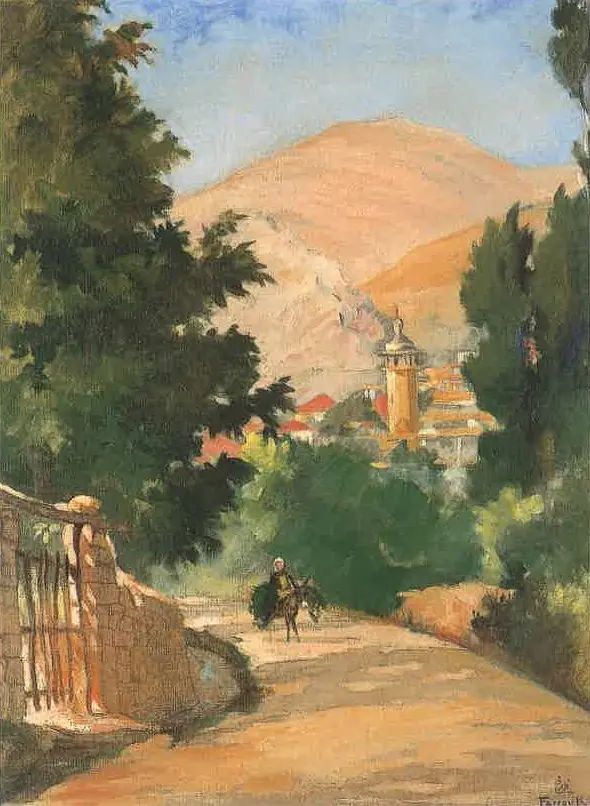
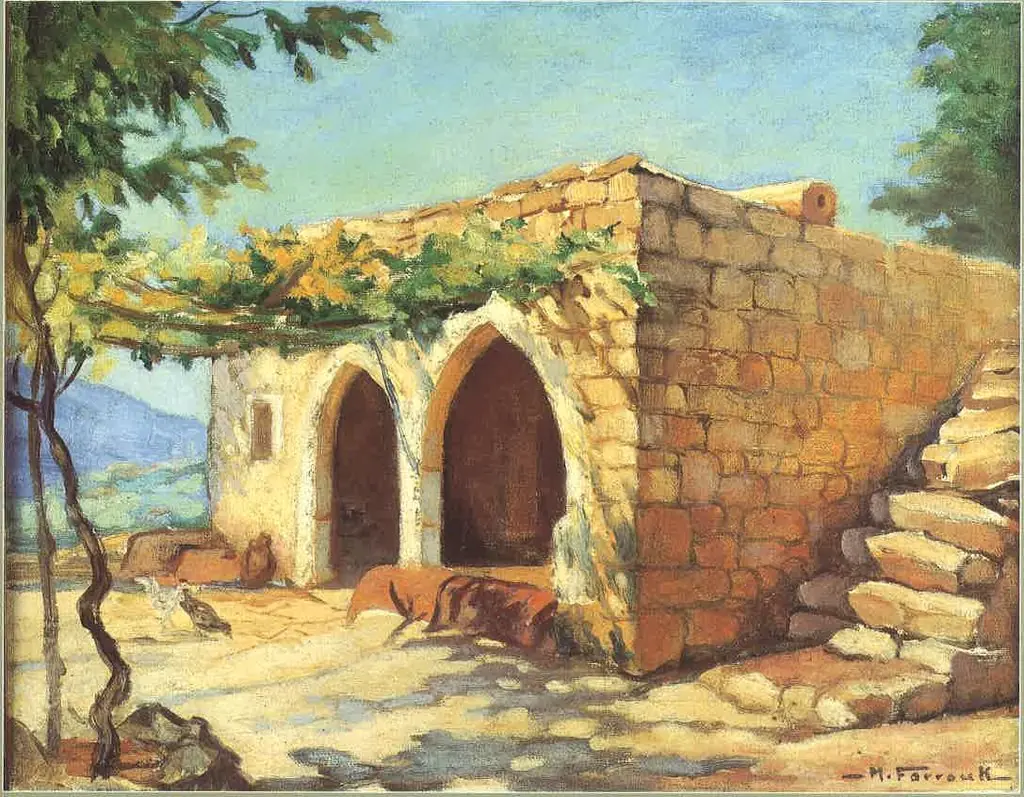
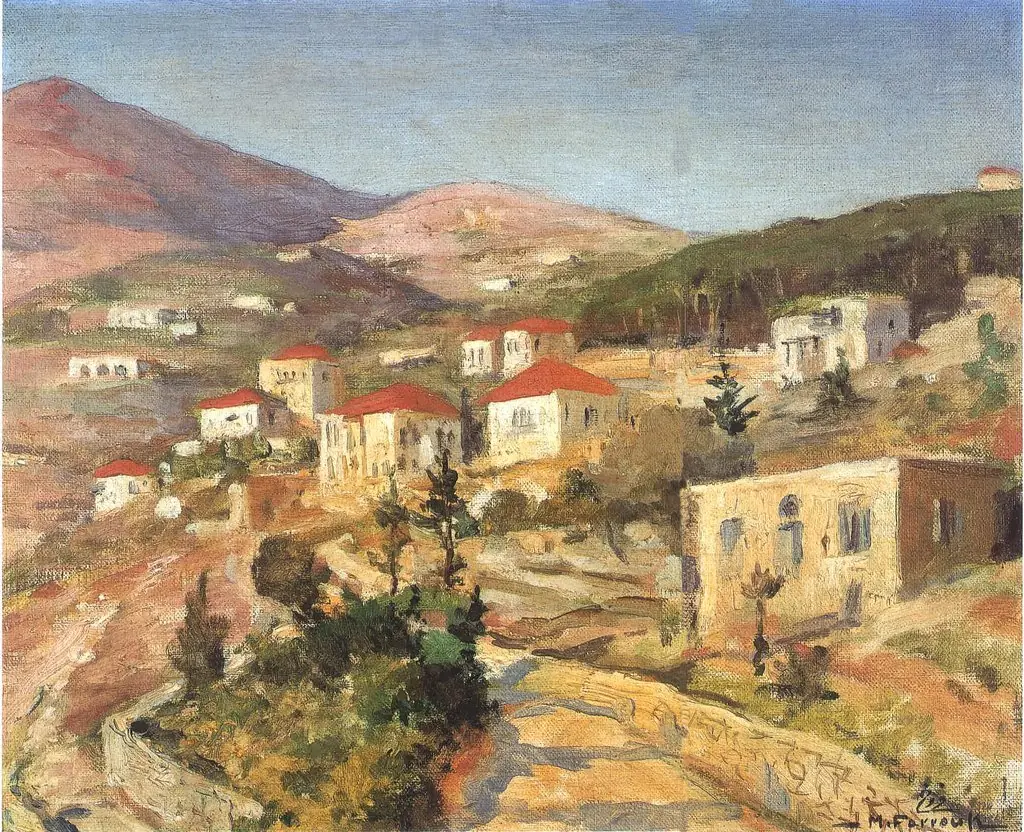
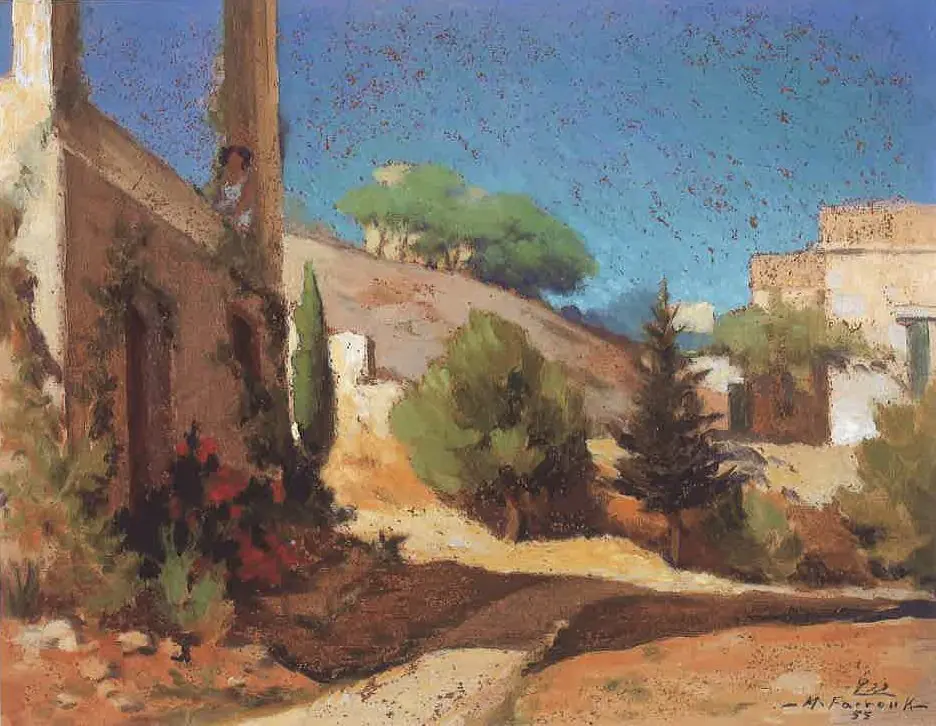
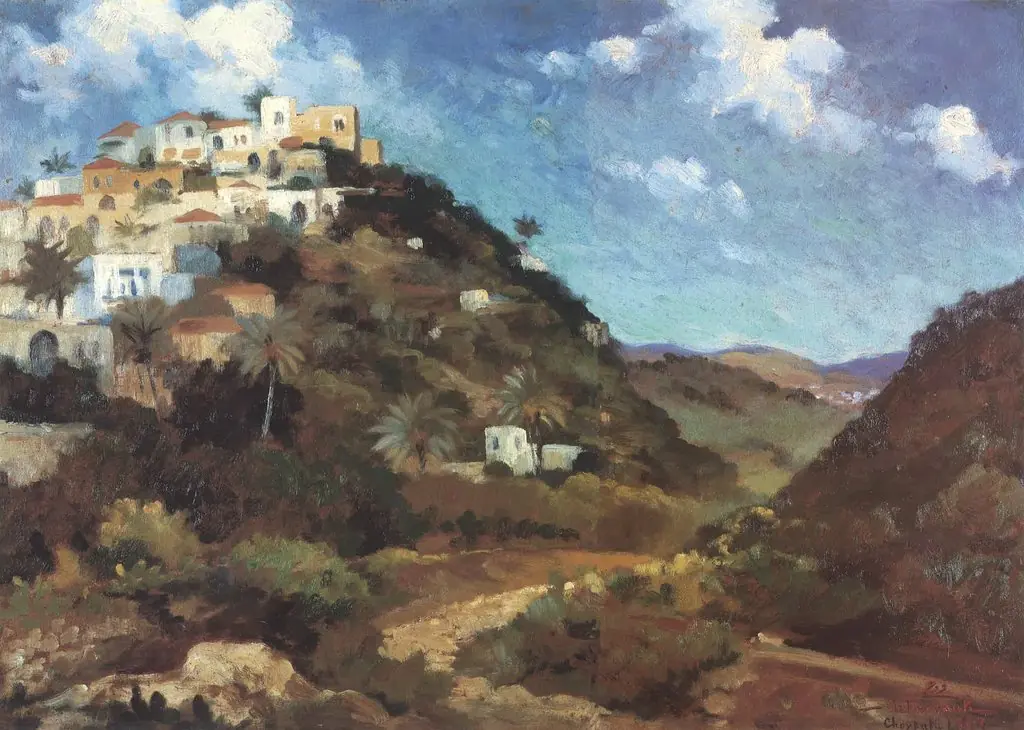
Painted around 1939 by Lebanese artist Moustafa Farroukh, *A Coffee House at Chemlane* is an oil-on-canvas work depicting a quiet hillside café.
Painted around 1939 by Lebanese artist Moustafa Farroukh, *A Coffee House at Chemlane* is an oil-on-canvas work depicting a quiet hillside café. Farroukh, known for his extensive body of work and writings on art, captured an ordinary moment with deliberate simplicity. The scene is framed by a chain-link fence, scattered trees, and a distant slope under a soft sky, reflecting his interest in everyday Lebanese life rather than grand narratives.
Subject & Meaning
The painting presents a modest café nestled in a rural landscape, suggesting a pause in daily routine. The absence of figures emphasizes solitude and stillness, inviting contemplation rather than narrative. The fence and dirt path imply boundaries and access, subtly grounding the scene in local social space. Farroukh’s choice of setting reflects a quiet reverence for the rhythms of provincial life, common in his broader oeuvre.
Technique & Style
Farroukh employed loose, expressive brushwork to convey texture and atmosphere, avoiding rigid detail. Warm earth tones for the hillside contrast with the cool blues of the fence and sky, creating a gentle tonal harmony. The sky is rendered with soft, sweeping strokes that suggest drifting clouds, while the path and foliage are suggested rather than defined. This approach aligns with post-impressionist tendencies, prioritizing mood over precision.
History & Provenance
The painting has remained in the collection of the Sursock Museum in Beirut since its acquisition, a testament to its significance in Lebanon’s modern art canon. Farroukh’s reputation as both artist and writer helped secure institutional recognition for his works. While little is documented about the painting’s early ownership, its continued presence in the museum underscores its role in preserving national artistic heritage.
Context
Created during the French Mandate period, the painting reflects a Lebanon still shaping its cultural identity. Farroukh, like many of his contemporaries, turned to local scenes rather than European models, seeking authenticity in domestic landscapes. The café, a common social node in Levantine towns, appears here not as a bustling hub but as a quiet anchor in nature — a subtle counterpoint to urban modernization.
Legacy
Farroukh’s *A Coffee House at Chemlane* contributes to a broader Lebanese modernist tradition that values quiet observation over spectacle. Its inclusion in the Sursock Museum’s permanent collection affirms its role in documenting early 20th-century rural life. Though not widely reproduced, the work remains a reference point for artists and scholars interested in how everyday spaces were rendered with emotional depth during Lebanon’s formative cultural years.
Artist & collection
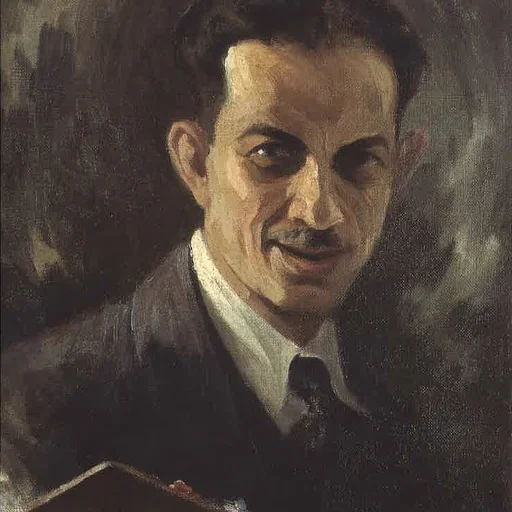
Artist
Moustafa Farroukh (Arabic: مصطفى فروخ; 1901 – 1957) was one of Lebanon's most prominent painters of the 20th century.